Toggle navigation
Opening Balance Sheets: A Foundational Guide
Why Filling in Opening Balances is Essential for Business Planning
Opening balances form the foundation for creating a forecast balance, which reflects the current financial state of the business and serves as a basis for further planning. Completing opening balances allows you to:
- Establish initial values for assets, liabilities, and equity.
- Identify financial imbalances and adjust your strategy.
- Create an accurate forecast for income, expenses, and liabilities.
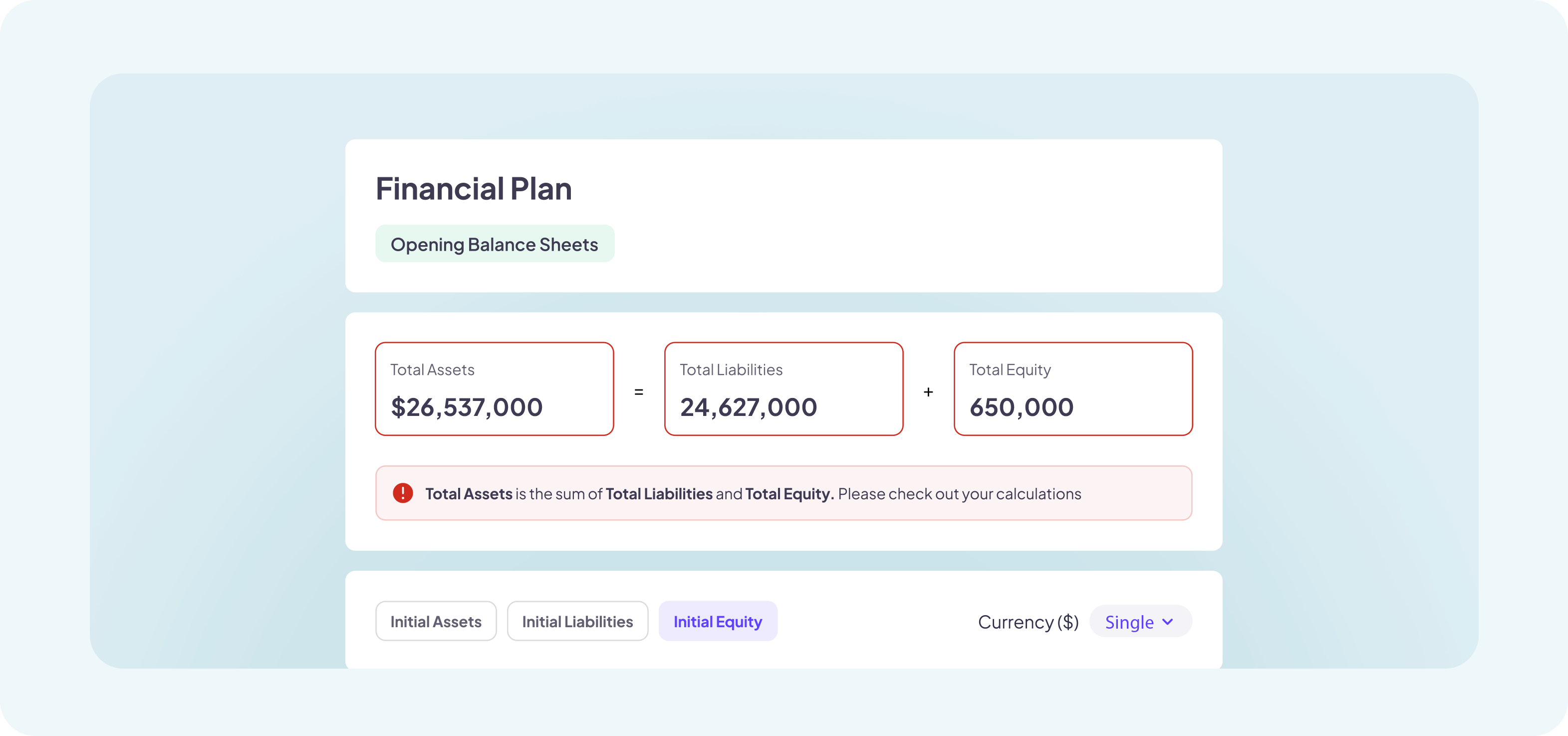
Why Assets = Liabilities + Equity Matters
The formula "Assets = Liabilities + Equity" is a fundamental principle of accounting. It helps to:
- Verify the accuracy of financial data.
- Ensure a balance between the company’s resources and their sources of funding.
- Understand the structure of capital and liabilities.
How and Why to Use the Dimension Selector
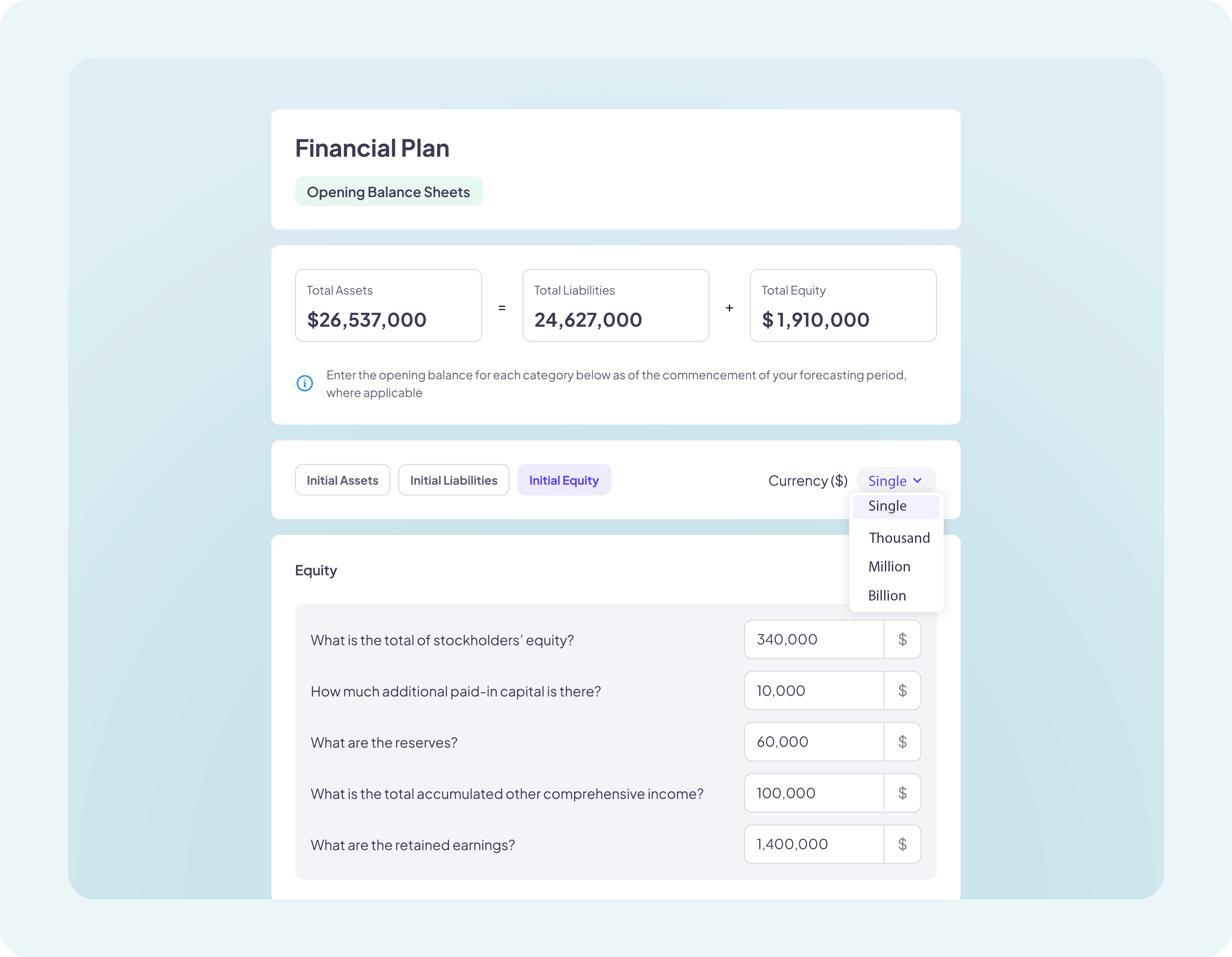
The dimension selector simplifies data input and interpretation:
- Single: Ideal for small amounts or startups with limited budgets.
- Thousand/Million/Billion: Suitable for companies with larger assets and operations.
This feature reduces visual clutter and enhances analysis accuracy.
Opening Balances for Startups vs. Mature Businesses
- Startups:
- Focus primarily on initial investments, cash, and liabilities.
- Equity mainly consists of contributions from founders.
- Mature Businesses:
- Involve more complex structures of assets and liabilities.
- Account for both long-term and short-term liabilities, accumulated capital, and depreciation.
Balance Forecasting Capabilities: Choosing Criteria
Financial planning involves forecasting based on key metrics:
Current Assets:
- How long will it take to get paid for your credit sales (30-60-90 days): Helps forecast income timelines.
- What percentage of sales is offered on credit terms (%): Determines how credit policy impacts cash flow.
- Inventory size as a percentage of average monthly income (%): Helps calculate working capital requirements.
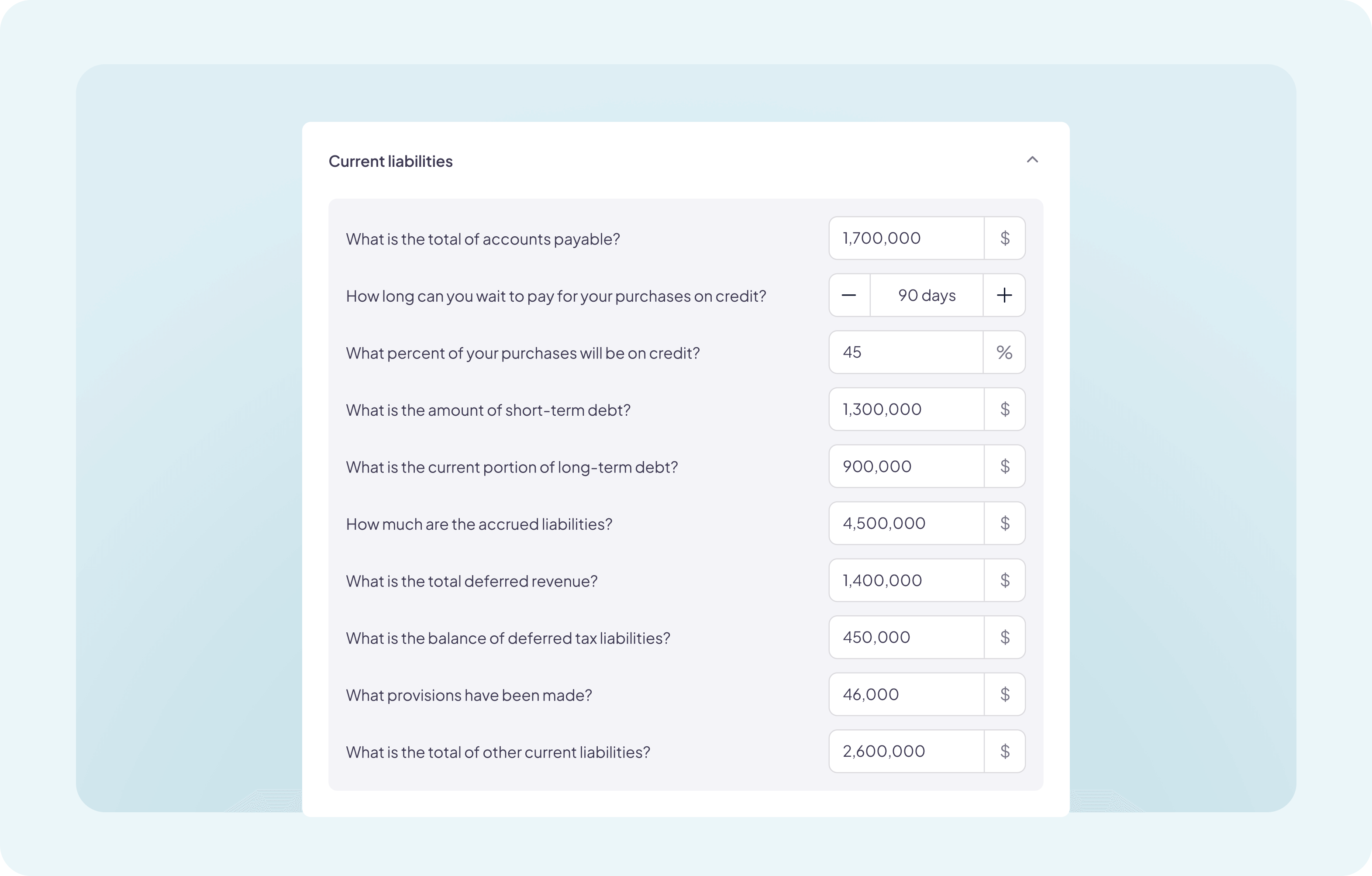
Current Liabilities:
- How long can you wait to pay for purchases on credit (30-60-90 days): Evaluates liquidity and debt management.
- What percentage of purchases will be on credit (%): Assesses the business’s debt burden.