
Stop editing templates
Start building a plan that gets approved
Turn this template into a complete business plan with:
- Financial projections
- Loan-ready structure
- Clear repayment logic
Based on 40+ bank requirements

Few businesses appear as simple — or as deceptively difficult — as running a coffee shop. At first glance, it seems like an accessible dream: a cozy space, great beans, steady foot traffic, and loyal customers sipping cappuccinos on repeat. But beneath that comforting aroma lies one of the most competitive retail segments in the world. Thousands of independent Coffee Shops open every year, and just as many quietly close their doors. What separates the survivors from the rest isn’t luck, or even latte art — it’s structure. A Coffee Shop Business Plan turns passion into process and daily rituals into long-term profit.
In essence, your Business Plan is not a formality for investors; it’s the operating manual for your vision. It connects your creative concept — what kind of Coffee Shop you want to build — with measurable economics: how you’ll make it work day after day, cup after cup.
Turn this template into a complete business plan with:
Based on 40+ bank requirements


Most business plans fail not because of the idea — but because the numbers don’t prove repayment.
Build a bank-ready business plan in minutes
(with projections, structure, and validation)
Coffee may be universal, but success in selling it is anything but guaranteed. The market is crowded, consumer expectations shift constantly, and cost pressures — from rent to raw beans — can squeeze even the best operators. A Coffee Shop Business Plan forces you to turn enthusiasm into discipline. It defines what your Coffee Shop stands for, who it serves, and how it will sustain growth in a market where margins are tight and loyalty is earned sip by sip.
For lenders and investors, the Business Plan provides proof of seriousness. It shows that you’ve done more than dream about latte art — you’ve studied your market, modeled your finances, and mapped out how to operate efficiently. For founders, it’s a compass. It helps you make daily decisions — from pricing to hiring — through a strategic lens rather than emotion. A Coffee Shop without a rigorous Business Plan is betting on intuition alone; a Coffee Shop with a clear Business Plan is building a system that outlasts trends.
But most importantly, a plan protects you from the illusion that good coffee alone guarantees success. It doesn’t. Operational consistency, community connection, and financial control are what keep the doors open when trends fade and traffic dips. Your Coffee Shop Business Plan becomes the accountability layer: the instrument panel for steering a Coffee Shop through volatility.
Every strong Coffee Shop Business Plan begins with concept clarity. Before you pick a location or purchase equipment, you need to articulate your identity. The word “coffee shop” covers everything from minimalist third-wave cafés to cozy neighborhood nooks and high-volume drive-thrus.
Start with the fundamentals. What atmosphere are you creating — communal, fast-paced, or contemplative? What emotions should customers feel when they walk in? How long do you expect them to stay? Your answers will define layout, pricing, and staffing for the Coffee Shop you plan to run.

Next, describe your product philosophy. Are you sourcing single-origin beans? Offering specialty drinks, alternative milks, or artisanal pastries? Will you roast in-house or partner with local roasters? The more specific your Coffee Shop concept, the easier it is to align everything else — from supplier relationships to branding. A Coffee Shop Business Plan that nails product identity sets a baseline for menu engineering, pricing logic, and throughput.
Every concept also carries a cultural message. A wellness-driven café emphasizing oat milk and adaptogens appeals to a different tribe than a retro espresso bar rooted in Italian tradition. Use your Business Plan to articulate not just what you serve, but what you represent. Investors fund clarity, not vagueness, and a Coffee Shop with a clearly stated purpose can sustain pricing power and retention.
Finally, your mission and vision should translate creativity into measurable ambition. A mission answers “What do we do every day?” — for example: “We craft ethically sourced coffee and create spaces where people pause, connect, and recharge.” A vision answers “Where are we heading?” — perhaps: “Within three years, our Coffee Shop will be the city’s most trusted specialty brand, expanding to multiple locations while maintaining community roots.” Put those into your Coffee Shop Business Plan so the concept becomes a roadmap, not a slogan.
The coffee industry thrives on routine — but its growth depends on reinvention. Globally, coffee consumption increases by 2–3% annually, driven by younger demographics and lifestyle branding. Yet competition is fierce: multinational chains dominate prime corners, while independents fight for differentiation through authenticity. In this setting, your Coffee Shop Business Plan must document why your Coffee Shop deserves attention and wallet share.
Your Coffee Shop Business Plan has to prove you understand your specific market niche — not just the global statistics. Begin by analyzing your geography. Urban centers often reward speed and convenience; suburban markets value familiarity and community. Rural or tourist regions rely on seasonal swings. Your Coffee Shop will only earn repeat visits if it fits local patterns.
Identify your target customer profile in detail: age, occupation, lifestyle, and motivations. Are they remote workers seeking Wi-Fi and quiet, commuters grabbing a to-go espresso, or weekend brunchers chasing ambiance? Define spending patterns — what’s their average ticket size, and how often do they return? Detail these buyer personas explicitly in the Business Plan so your Coffee Shop allocates inventory, labor, and marketing with precision.
Then move to competitor mapping. Visit nearby Coffee Shops. Note everything — from menu structure and pricing to seating and service speed. Identify not just who your competitors are but what gaps they leave. For example, perhaps your area lacks a vegan-friendly café, or all existing ones close too early for evening socializing. These gaps become your entry points and should be spelled out in the Coffee Shop Business Plan to anchor positioning.
Include a concise SWOT analysis (strengths, weaknesses, opportunities, threats). A well-written SWOT doesn’t show arrogance; it shows maturity. Recognizing that “rising bean costs” or “chain expansion” pose real threats makes your Business Plan more credible, not less. If your Coffee Shop knows its risks, your Coffee Shop can plan its defenses.
A Coffee Shop is both a retail business and a stage set. Every element — from square footage to lighting — must serve the customer experience and the economic model simultaneously. A Coffee Shop Business Plan should connect the dots between space, throughput, and margin.
Your Business Plan should justify your chosen location strategically. Discuss foot traffic patterns, parking availability, proximity to offices, schools, or gyms. Show that you’ve evaluated not only rent per square foot but also the revenue potential per hour of operation. For example, a 1,200-square-foot café in a high-density office district can outperform a larger suburban space if it captures morning commuters who define the Coffee Shop rush.
Layout planning is crucial. The barista counter, seating, and kitchen must balance aesthetics with efficiency. Explain how your layout supports your service model: whether it’s quick turnaround or linger-and-work. Every extra step in workflow increases labor cost; every awkward bottleneck frustrates customers. Investors understand this intimately — so should you, and so should your Coffee Shop Business Plan.
Think long-term. How easily can your space adapt — for events, evening pop-ups, or retail coffee sales? Flexibility increases revenue streams without requiring relocation. A Coffee Shop Business Plan that accounts for spatial adaptability signals foresight and resilience, giving your Coffee Shop options as demand patterns evolve.
In coffee, brand is everything — and it begins long before the first sip. Consumers aren’t just buying caffeine; they’re buying how it makes them feel. The strongest Coffee Shop brands tell a story that connects personal rituals with shared values. Your Coffee Shop is a cultural symbol as much as a beverage counter.
Use your Business Plan to define your aesthetic DNA. Are you Scandinavian-minimalist, bohemian, or nostalgic-industrial? How will color, furniture, and music shape your emotional signature? Investors need to picture the experience vividly enough to believe in it. A Coffee Shop Business Plan that paints a picture of ambiance gives stakeholders a tangible sense of what a day in your Coffee Shop feels like.

But branding extends beyond décor. It includes tone of voice on social media, packaging design, and customer interaction philosophy. Whether your Coffee Shop aims for “approachable expertise” or “urban craftsmanship,” the message must stay consistent everywhere — from napkin typography to barista language. Consistency is what turns a Coffee Shop into a habit.
Storytelling adds emotional equity. Perhaps your coffee is sourced from women-owned farms, or your menu celebrates local partnerships. These stories don’t just market your shop; they anchor it in purpose. The modern coffee consumer supports Coffee Shops that align with their values — sustainability, community, or craftsmanship. A Business Plan that articulates these values transforms marketing into meaning and sets your Coffee Shop apart.
The true test of a Coffee Shop isn’t how good the espresso tastes on opening day — it’s whether that quality holds up six months later. Operational discipline is what turns novelty into habit. Your Coffee Shop Business Plan should document how you’ll protect standards under pressure.
Your Coffee Shop Business Plan should detail how your operations sustain consistency and scalability. Outline key processes: bean sourcing, inventory rotation, quality control, and equipment maintenance. Show how your systems ensure freshness, prevent waste, and maintain hygiene. An operator who writes procedures in the Business Plan is an operator who keeps the Coffee Shop under control.
Staffing deserves its own attention. Define roles — baristas, shift supervisors, kitchen staff, and managers — and describe how they collaborate. Discuss training programs that build both technical and emotional intelligence. Great baristas aren’t just skilled; they’re storytellers and brand ambassadors. A strong training culture reduces turnover, which in turn stabilizes costs and customer experience inside your Coffee Shop.
Technology also shapes modern operations. Include POS systems, scheduling tools, digital inventory apps, and online ordering integrations. Automation can streamline repetitive tasks, freeing staff to focus on hospitality — the real differentiator in a world of identical espresso machines. A Coffee Shop that integrates technology intelligently will scale with less friction, and your Business Plan should demonstrate that architecture.
Finally, include capacity planning. How many drinks can you produce per hour? How will you manage rush hours and downtime? A Business Plan that anticipates fluctuations rather than reacts to them shows managerial maturity and keeps your Coffee Shop from being overwhelmed at peak.
A Coffee Shop without community is just another beverage outlet. The marketing section of your Coffee Shop Business Plan should demonstrate not only how you’ll attract customers but how you’ll keep them and compound their lifetime value to the Coffee Shop.
Start with pre-launch buzz: social media teasers, collaborations with local bakeries, or partnerships with lifestyle influencers. Visual storytelling is critical — people share images of coffee culture as much as they drink it. Your Instagram feed is your first menu and your Coffee Shop’s digital storefront.
But marketing isn’t a one-time splash; it’s a sustained relationship. Define how you’ll build loyalty — through digital rewards programs, subscription services for regulars, or personalized offers via mobile apps. Every repeat visit compounds profitability, and your Business Plan should translate those behaviors into predictable revenue for the Coffee Shop.
Consider your neighborhood as a marketing channel. Sponsor local events, host art exhibits, or offer discounts to nearby office workers. These gestures turn your Coffee Shop into a community anchor rather than just a business. The Coffee Shop Business Plan should frame community engagement as both brand strategy and revenue strategy.
Pricing strategy also belongs here. Whether you’re premium or accessible, ensure pricing aligns with perceived value. Cheap coffee can feel careless; overpriced coffee feels arrogant. Your Business Plan should show you know how to balance aspiration with approachability while protecting the Coffee Shop’s margin structure.
No connection between:
Growexa builds a complete, lender-ready business plan — with financial logic and a professionally formatted PDF
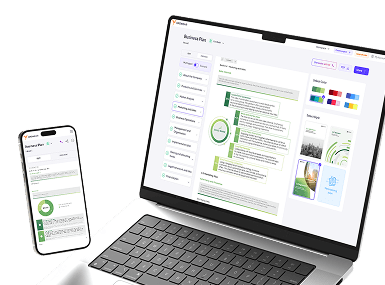
Behind every successful Coffee Shop is a team aligned by purpose. Investors back people more than they back ideas, so this section of your Coffee Shop Business Plan must radiate credibility and culture that can be taught and sustained inside the Coffee Shop.
Begin with leadership. Identify founders and key managers, summarizing their backgrounds and roles. A head barista with competition experience or a manager with hospitality expertise adds tangible value. Highlight complementary skills — creativity, finance, operations — to show balance within your leadership core. The Coffee Shop depends on that balance when things get busy.
Then, describe your team philosophy. In small-format businesses, culture is visible in every customer interaction. Define your internal values: respect, consistency, curiosity, or hospitality. How will you reinforce those values? Through training, recognition, or transparent communication? A Business Plan that explains culture signals a Coffee Shop that will keep standards high.
Hiring strategy matters too. Labor shortages hit Coffee Shops hard. Outline how you’ll attract and retain talent — flexible scheduling, tip pooling, mentorship, or career progression paths. A stable team equals consistent quality. Build that promise into the Coffee Shop Business Plan so staffing becomes a strategic system rather than a recurring emergency.
Lastly, note how accountability is managed. Regular staff meetings, performance metrics (speed, accuracy, customer satisfaction), and open feedback loops ensure alignment. A café that invests in people invests in longevity — and the Business Plan should codify those rhythms for the Coffee Shop to follow.
The menu is not just a creative expression — it’s your business model on paper. A Coffee Shop Business Plan must show that each item supports your financial goals and gives the Coffee Shop levers to protect gross margin without degrading quality.
Explain how your menu is designed for efficiency. Fewer, well-curated options often outperform endless variety. Every item should justify its existence — either by driving profit margin or reinforcing brand identity. The Business Plan should connect menu choices to throughput and average check so the Coffee Shop can manage peaks. Break down cost structures. Coffee typically has high margins but low ticket averages. Balancing this means pairing beverages with higher-margin add-ons like pastries, snacks, or merchandise. Demonstrate how cross-selling and bundling (like “coffee + croissant combos”) will lift average checks. When your Coffee Shop uses data to refine the menu, your Coffee Shop converts traffic into profit.
Include seasonal and experimental offerings to keep regulars engaged — but caution investors that innovation won’t disrupt consistency. A smart Coffee Shop evolves, but never confuses its audience. The Coffee Shop Business Plan should explain how experiments become ongoing items only after proving contribution margin.
Numbers make or break the dream. The financial section of your Coffee Shop Business Plan is where emotion meets arithmetic and your Coffee Shop earns investor trust. Start with startup costs — leasehold improvements, espresso machines, grinders, refrigerators, furniture, and licenses. Include contingencies for overruns. Coffee Shop builds often exceed initial budgets due to equipment delays or permitting costs. A transparent Business Plan acknowledges that reality.
Then project revenue. Calculate based on foot traffic, seat turnover, and average spend per visit. A well-positioned Coffee Shop might sell 400 cups daily at $5, producing $60,000–$70,000 monthly gross sales. Investors will test these assumptions against industry norms, so defend them in the Coffee Shop Business Plan with local data.
Outline operating expenses — rent, payroll (usually 35–40% of revenue), utilities, supplies, and marketing. Be conservative. Underestimating ongoing costs is the silent killer of Coffee Shops. Build sensitivity analysis into the Business Plan so your Coffee Shop can see the impact of a 10% rise in beans or a 5% dip in traffic.

Provide cash flow forecasts and break-even analysis. How many cups must you sell daily to cover expenses? When does the business move from loss to profit? Detail any funding requirements, specifying how capital will be used and repaid. Clarity equals credibility — and your Coffee Shop needs that when negotiating with lenders. Finally, discuss key performance indicators (KPIs) — labor ratio, food cost percentage, average transaction value, and customer retention rate. These metrics transform intuition into measurable control and keep the Coffee Shop tethered to the Business Plan.
Even a perfectly brewed plan can be disrupted by real-world volatility — rising bean prices, equipment breakdowns, or sudden shifts in foot traffic. A credible Business Plan acknowledges risk rather than ignoring it, and a credible Coffee Shop builds buffers.
Identify potential vulnerabilities and describe mitigation strategies: long-term supplier contracts to stabilize costs, insurance coverage for liability and equipment, or diversified revenue channels (retail coffee bags, online sales, workshops). These measures demonstrate foresight and keep the Coffee Shop operating under stress. Include compliance details: health inspections, local permits, food-safety standards, and environmental regulations. The more proactive your understanding, the less intimidating your risk profile appears to financiers. The Coffee Shop Business Plan should map timelines and renewal cycles so the Coffee Shop never stumbles on paperwork.
Adaptability is the real hallmark of success. Describe how you’ll monitor market trends — from non-dairy alternatives to digital loyalty tech — and adjust quickly without losing identity. Agility keeps small Coffee Shops competitive against corporate giants, and the Business Plan is where that agility becomes a process. Growth, Replication, and Future Vision
The best coffee entrepreneurs don’t just build cafés; they build ecosystems. Investors want to see scalability — not necessarily immediate expansion, but potential for it articulated in the Coffee Shop Business Plan so your Coffee Shop can seize momentum when it arrives.
Explain how your concept could evolve: a second branch, a mobile espresso cart, a branded coffee line, or wholesale distribution to local stores. Describe what operational systems and brand assets make replication feasible — standardized recipes, supplier networks, and training manuals. A Coffee Shop that documents these assets in the Business Plan can replicate without losing soul.
Growth also means deepening profitability within one location. Can you extend hours, host evening events, or rent the space for private functions? Multi-channel revenue strategies add resilience. Put that calculus in the Coffee Shop Business Plan so the Coffee Shop expands deliberately, not impulsively.
End this section by framing a long-term vision. Perhaps you aim to become a neighborhood institution, or a boutique brand known for ethical sourcing. Whatever the aspiration, ground it in numbers and systems — ambition that’s measurable earns trust, and a Coffee Shop with a grounded Business Plan earns investors.
A Coffee Shop Business Plan is only as valuable as the routine that sustains it. After opening, it must evolve through measurement and iteration so the Coffee Shop remains focused on what actually works.
Describe how you’ll track progress: monthly financial reviews, customer feedback loops, and quarterly strategy updates. Use data to guide adjustments — when to expand hours, when to refresh menus, or when to raise prices. The Business Plan becomes an operating cadence rather than a binder on a shelf.
Also define communication cadence: weekly staff check-ins, performance reviews, and maintenance schedules. These aren’t bureaucratic rituals; they’re the rhythm that keeps small teams synchronized. A Coffee Shop that manages cadence well compounds small advantages.
Finally, treat your Business Plan as a living contract between creativity and accountability. When new opportunities arise — a catering partnership, a pop-up, or a franchise inquiry — the plan becomes your decision filter. It keeps expansion smart, not reckless, and helps the Coffee Shop say yes to the right growth.
Once your Coffee Shop Business Plan is complete, how you present it matters almost as much as what it contains. The document is both a financial argument and a brand artifact. Investors, banks, and partners should feel your competence before they finish the first page, and they should recognize the Coffee Shop they’ll be funding from the plan’s visual cues.
Design your presentation to mirror your café’s identity. If your Coffee Shop values simplicity, keep layouts clean and typography modern. If your brand celebrates craftsmanship, include subtle textures, visuals of coffee origins, and real photos instead of stock imagery. Visual coherence signals that your attention to detail in presentation will extend to operations, reinforcing trust in the Business Plan.
Keep the executive summary crisp, evidence-driven, and emotionally resonant. Highlight key metrics — expected ROI, payback period, foot traffic projections — without drowning readers in jargon. Appendices can host the granular data that support the Business Plan. Practice pitching your plan aloud; investors don’t just read, they listen for clarity and conviction. Be ready to defend cost assumptions, staffing models, and scalability. Treat every pitch like a soft launch of your Coffee Shop — professional, authentic, and memorable.
Finally, keep the Business Plan current. Revisit it quarterly during the first year, then annually. Replace assumptions with real numbers, update visuals, and track how the plan performs against reality. Presentation is not a single event; it’s the evolving narrative of a Coffee Shop maturing into its market. A polished Coffee Shop Business Plan doesn’t just win the meeting — it guides the next twelve months.
A coffee shop is never just about selling drinks. It’s about crafting a daily ritual for customers, creating a space that blends convenience with connection, and ensuring financial viability behind the scenes.
The Coffee Shop Business Plan Template is more than a static document. It’s a guide for turning passion into a sustainable, investor-ready venture.
If you’re inspired to take the next step, you can download the template and tailor it to your concept. On the site, you’ll also find a fully completed example based on Morning Bean Coffee to see how each section works in practice. Or, use Growexa to build your own plan from scratch—making your idea not just viable, but launch-ready.
They’ll look for defensible inputs, not wishful totals: daily transaction volume by hour, average ticket (split between beverage/food/retail), product mix margins, labor as % of sales by daypart, occupancy costs as % of sales, and sensitivity to bean price and wage changes. Show a monthly cash-flow model (12–18 months), break-even by covers per day, and a payback window tied to realistic ramp (e.g., 3–6–9 months post-launch milestones). Include a downside case with corrective levers (menu engineering, hours, staffing model).
Beyond rent/SF, quantify walk-by counts, capture rates by time block, competitor radius, daytime population, transit proximity, and parking friction. Map demand drivers (offices, gyms, schools, hotels) to dayparts. Convert seat count and expected table turns into hourly throughput, then tie that to staffing and equipment capacity. A great plan shows the space can physically deliver the revenue implied by the model.
Set a cadence: 30-day operational review (throughput, waste, labor ratio), 90-day pricing/menu refresh using contribution margins, and a 6-month strategy update (hours, product mix, marketing channels). Replace assumptions with actuals, rerun break-even, and adjust hiring and inventory par levels. Treat the Business Plan as a living playbook; the café that iterates on data outperforms the one that clings to launch-day beliefs.

