Ukraine
 USA
USA
 Austria

Stop editing templates
Start building a plan that gets approved
Turn this template into a complete business plan with:
- Financial projections
- Loan-ready structure
- Clear repayment logic
Based on 40+ bank requirements


A successful restaurant requires more than a strong concept — it needs a clear system that turns your idea into a profitable and scalable business. This Restaurant Business Plan template helps you build a complete, investor-ready plan in minutes using Growexa AI. Whether you are opening a new restaurant or expanding an existing food business, it provides a practical framework to help you plan operations, manage costs, secure funding, and build a strong growth strategy — without starting from scratch.
The template is structured into key sections that guide you through every stage of creating a complete restaurant business plan, including concept development, operations, marketing strategy, financial planning, and long-term growth.
Turn this template into a complete business plan with:
Based on 40+ bank requirements
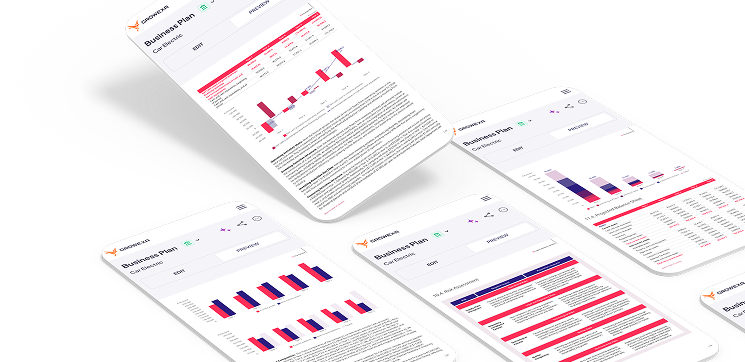


Most business plans fail not because of the idea — but because the numbers don’t prove repayment.
Build a bank-ready business plan in minutes
(with projections, structure, and validation)
The restaurant world moves fast, but investors, lenders, and landlords move on documentation. A well-written Restaurant Business Plan is the proof that your excitement has been distilled into executable logic. It’s what secures financing, aligns partners, and gives your management team a shared map of priorities. But the value extends beyond persuasion. A good business plan protects you from your own optimism. It forces you to ask hard questions about pricing, competition, staffing, and cash cycles before you spend a cent. Restaurants don’t fail because the food is bad; they fail because assumptions are wrong — about cost per cover, customer volume, or debt servicing. A Business Plan turns those assumptions into measurable, testable forecasts.
For new restaurateurs, it’s a blueprint; for experienced operators, it’s a recalibration tool. The best owners update their business plan annually, treating it as a living, breathing guide — not a one-time document.
Before spreadsheets or projections, there’s the idea. Every successful restaurant starts with a story — but the Business Plan transforms that story into a repeatable business model.
Define what your restaurant stands for. Are you offering a fine-dining tasting menu with seasonal ingredients? A neighborhood bistro with nostalgic comfort food? A fast-casual brand built on efficiency and digital ordering? Your concept dictates everything else — from kitchen layout to pricing, staffing, and marketing tone.
Investors want clarity. Write as if you’re explaining your restaurant to someone who’s never eaten there. Describe the cuisine, service style, ambiance, and target audience in concrete terms. For instance, “a 60-seat Mediterranean restaurant serving modern mezze and seafood, designed for weekday professionals and weekend families.”
From there, translate identity into differentiation. What sets your restaurant apart from the six others nearby? Maybe it’s sustainable sourcing, a celebrity chef, late-night service, or a compelling neighborhood story. In saturated markets, positioning is your most powerful ingredient.
The concept section of a Restaurant Business Plan should end with your mission and vision — not as slogans, but as operational promises. A mission explains what you do daily; a vision defines what success looks like in five years. Together, they become the spine of every decision you’ll make.
Even the most creative restaurant is only as strong as its market fit. The next part of the Business Plan must show you’ve done your homework — not just about cuisine trends, but about demographics, competition, and spending behavior.
Start with the big picture. Globally, dining out accounts for over $4 trillion in annual revenue. In the U.S. alone, more than 700,000 restaurants compete for attention, with customers spending roughly 50% of their food budget outside the home. Despite those vast numbers, eating habits are hyperlocal. A city block can have completely different micro-economies from one street to the next.
Identify your primary market segment. Are you serving urban professionals, college students, retirees, or families? Use actual data: median income, population density, age distribution, and consumer trends. Describe not only who your customers are but why they’ll choose your restaurant over others.
Then analyze competitors — directly and indirectly. Visit them. Note their pricing, menu, design, and service speed. A thoughtful competitive matrix adds credibility to your Business Plan, showing investors that you know your landscape. Recognize where gaps exist: perhaps delivery services lack authenticity, or fine dining lacks accessibility. Great positioning is simply recognizing an unfulfilled customer expectation and meeting it consistently.
Finally, include your SWOT analysis: strengths, weaknesses, opportunities, and threats. A restaurant that acknowledges risk seems far more bankable than one that promises perfection.
In the restaurant world, location is destiny. Rent, visibility, accessibility, and local foot traffic can make or break your entire operation. Your Restaurant Business Plan must show how the chosen space supports your concept and long-term viability.
A 1,500-square-foot café near a subway exit has a very different economic profile than a 3,000-square-foot steakhouse in a suburban mall. Include detailed reasoning: average pedestrian flow, parking availability, complementary businesses, and proximity to your target demographic.
Explain how many seats your space can accommodate and what revenue that translates to. For instance, a 60-seat restaurant turning tables 1.8 times per night with an average check of $45 produces roughly $145,000 monthly — a data point investors immediately understand.
Also address lease terms. Is rent a fixed rate or percentage-based? What’s included in CAM (common area maintenance) charges? A solid Business Plan should anticipate how occupancy costs — typically 6% to 10% of revenue — will affect profit margins.
Include a brief description of layout strategy: kitchen flow, bar placement, storage efficiency, and back-of-house logistics. Operational design is invisible to guests but vital for profitability. The smoother your flow, the fewer staff hours per cover — and the higher your net margin.
Every restaurant is a theater, and the customer is the audience. Your Business Plan should articulate the experience guests will have — sensory, emotional, and cultural.
Brand identity begins with narrative consistency. The logo, menu typography, lighting, music, and even staff uniforms should reflect a single personality. A minimalist sushi bar and a rustic barbecue joint can’t share the same aesthetic DNA. Investors don’t expect you to have the final logo designed, but they do expect evidence of cohesive thinking.
Your restaurant’s tone of voice — from social media captions to check presenters — communicates positioning. Is your tone playful and irreverent, or refined and understated? The Business Plan should make that clear.
Customer experience design extends beyond aesthetics. Discuss service rituals: how guests are greeted, how orders are presented, and how you manage complaints. These operational scripts define brand reputation more than décor ever could. Restaurants that codify hospitality are the ones that scale.
The glamour of hospitality hides a relentless grind. Successful restaurants are not powered by charisma alone; they rely on repeatable systems. This is where your Business Plan moves from inspiration to implementation.
Outline your management structure — who runs what and why. Define reporting lines between front and back of house. Include brief profiles of key team members if they’re confirmed: head chef, general manager, sommelier, operations director. Their credibility becomes part of your pitch.
Describe daily workflows. How are supplies ordered and received? How is inventory tracked? What are the sanitation and food-safety protocols? How are staff trained and evaluated? Investors want to see that you’ve thought through not just “what” but “how.”
Technology belongs here too. Modern restaurants rely on POS systems, reservation platforms, analytics dashboards, and HR tools. Explain which systems you’ll use and how they integrate — not as technical jargon, but as operational foresight.
Finally, include measurable KPIs: average check, table turns, labor-to-sales ratio, and food waste percentage. When your Business Plan quantifies success, it shifts from vision to discipline.
Behind every remarkable restaurant is not only a great menu but a disciplined, coordinated team that turns ambition into execution. The strength of a Restaurant Business Plan depends on how convincingly it defines the people who will bring that vision to life. Investors and partners understand that equipment, décor, and branding can all be replicated — but culture cannot. What sets enduring restaurants apart is leadership structure: a system of accountability that ensures consistency from the first plate to the thousandth service.
The management narrative should begin with ownership clarity. State who holds equity, who is actively involved, and how decisions flow between partners. Transparency here prevents future conflict and signals organizational maturity. Whether it is a single-founder operation or a partnership with investors, readers of your Business Plan want to see clearly who has authority over daily operations, finances, and strategic growth.

Leadership roles must be defined by outcomes, not titles. The Managing Partner or Founder represents vision and strategic direction — responsible for brand identity, investor relations, and long-term expansion. The Executive Chef serves as creative director of the kitchen, shaping the menu, setting sourcing standards, and maintaining food-cost discipline. The General Manager translates brand promise into daily guest experience, supervising front-of-house teams, ensuring service standards, and maintaining profitability targets. In larger operations, an Operations or Finance Director may oversee budgets, compliance, and performance analytics — roles that reassure lenders the numbers have adult supervision.
Each leader’s biography should demonstrate quantifiable results, not just enthusiasm. Replace “experienced” with “reduced labor cost by 6 percent while improving retention,” or “managed a 60-seat restaurant producing $2 million in annual revenue.” These metrics transform personality into competence and make your Restaurant Business Plan read like a professional dossier rather than a dream.
But even the most competent leaders succeed only through structure. A well-organized restaurant functions like an orchestra — every section distinct, yet synchronized. The kitchen brigade (executive chef, sous chefs, line cooks, dishwashers) executes precision and timing; the front of house (general manager, servers, hosts, bartenders, bussers) delivers hospitality and storytelling; and administrative support manages HR, payroll, and procurement. The organizational chart doesn’t need to be graphic, but it must show communication flow and responsibility boundaries. Investors are allergic to chaos; structure reassures them that your restaurant can grow without imploding.
Training is the invisible infrastructure of performance. Outline how onboarding, safety procedures, and service standards are taught. Describe the rhythm of pre-shift briefings, menu tastings, and performance reviews. Modern restaurants invest heavily in soft skills — empathy, communication, and composure under pressure — because guest satisfaction is a psychological product as much as a culinary one. A Business Plan that demonstrates a formal training philosophy implies that excellence will be reproducible, not accidental.
Culture, too, belongs in the business plan. Articulate the values guiding your team: respect, professionalism,
No restaurant, however brilliant, fills itself by luck. Visibility is strategy. A Restaurant Business Plan must show how you’ll attract, convert, and retain customers.
Start with pre-launch buzz. Will you host tasting events, collaborate with local influencers, or run soft openings? Momentum at launch is critical; first impressions define reputation.
Outline your digital presence — website, SEO, Google Maps optimization, and social media. A unified brand voice builds credibility faster than any ad spend. Discuss how you’ll manage reviews and respond to feedback. Restaurants live or die by online sentiment, and investors want reassurance that you understand digital reputation as seriously as food safety.
Retention is the hidden engine of profitability. Explain your loyalty mechanics — memberships, referral programs, or exclusive experiences for repeat guests. Returning diners lower acquisition costs and stabilize revenue across seasons.
Community integration matters too. Whether sponsoring local events, donating leftovers, or partnering with nearby artisans, these gestures aren’t just PR — they’re long-term relationship building. A great Business Plan proves that your restaurant isn’t a transaction; it’s a social anchor.
No connection between:
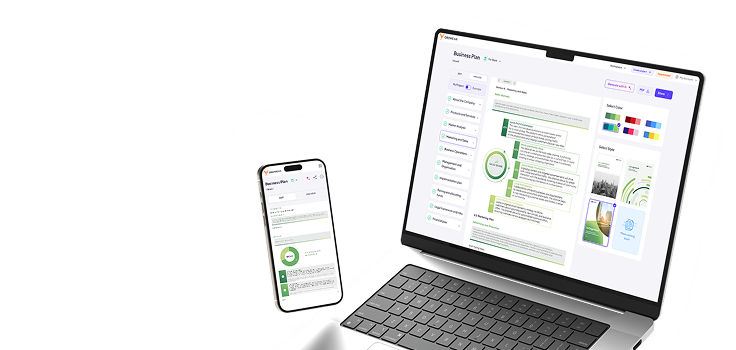
Growexa builds a complete, lender-ready business plan — with financial logic and a professionally formatted PDF
Menus are not artistic indulgences; they’re strategic documents that drive gross margins. In your Restaurant Business Plan, show that you understand the economics of every dish.
Detail your culinary philosophy — ingredient sourcing, portion control, and seasonal adjustments. Demonstrate balance between high-cost and low-cost items, ensuring overall profitability. If your food cost exceeds 32% of sales, justify it with pricing or volume rationale.
Your business plan should also outline beverage strategy. Alcohol sales can double profit margins if managed properly. Craft cocktails, curated wine lists, or locally brewed beers can distinguish your restaurant and increase average spend per guest.
Include notes on menu engineering: item placement, pricing psychology, and contribution margins. Explain how you’ll track performance and adjust offerings over time. A menu isn’t static; it evolves as data accumulates.
Investors reading your Business Plan should see that your creativity is supported by quantitative control — that every plate served moves the business closer to profitability.
The financial section is the heartbeat of your Restaurant Business Plan. It turns story into sustainability.
List everything from leasehold improvements and kitchen equipment to décor, permits, and pre-opening marketing. Be transparent about contingencies — most restaurant builds exceed estimates by 10–15%.
Base forecasts on realistic assumptions: average check, seat count, table turns, and operating days. For example, a 70-seat restaurant turning 1.5 times nightly at $55 per check yields roughly $170,000 per month — before adjusting for seasonality.
Include fixed and variable costs: labor (typically 30–35% of revenue), food (28–32%), rent (8–10%), utilities, maintenance, and marketing. Investors instantly recognize when numbers are fantasy.
Map inflows and outflows monthly for the first year, quarterly thereafter. Restaurants require high liquidity — suppliers need payment before revenue arrives. Show how you’ll manage working capital through reserves or credit lines.
Calculate how many monthly sales you need to cover total expenses. Demonstrate when profitability begins and how ROI is realized — typically within 24–30 months for stable operations.
If you’re seeking financing, specify how much, from whom, and for what purpose. Whether it’s build-out, marketing, or staffing, link every dollar to an outcome. The clarity of your financial story defines your credibility as a founder.

The restaurant sector rewards adaptability. Your Business Plan should address what happens when things go wrong — because they will.
Include regulatory compliance details: health department standards, liquor licensing, fire safety, waste disposal, and ADA accessibility. Anticipate inspection timelines and renewal costs.
Discuss external risks — food inflation, labor shortages, weather disruptions, or pandemics — and outline response strategies. Diversification (delivery, catering, takeout) can mitigate downturns. Insurance policies like business interruption and product liability should also appear in this section.
A crisis-tested restaurant is far more investable. When your business plan acknowledges volatility, it signals maturity, not pessimism.
Great restaurateurs don’t build one restaurant — they build platforms for growth. Even if your focus is a single flagship, outline scalability.
Could the model evolve into multiple units, a franchise, or a packaged product line? Will your brand translate to catering, e-commerce, or event hosting? A forward-looking Restaurant Business Plan makes expansion optional but possible.
Explain how you’ll preserve brand quality while scaling. Document standard operating procedures (SOPs), supplier contracts, and training programs to ensure consistency.
Growth also means leadership evolution. Describe how management roles will adapt as operations expand. A visionary restaurateur must also become an effective CEO — planning beyond menus into systems, data, and capital structure.
Restaurants reflect society’s values. Today’s diners want ethics with their entrées. Sustainability isn’t a trend — it’s table stakes. Your Business Plan should demonstrate environmental, social, and governance awareness.
Discuss sourcing transparency, waste reduction, energy efficiency, and fair employment practices. These not only improve reputation but often lower long-term costs.
Innovation belongs here too: contactless payment, predictive inventory tech, or AI-driven reservation analytics. The modern restaurant is as much a digital enterprise as a physical one.
Tie sustainability and innovation to customer loyalty. A restaurant that represents its community’s conscience commands deeper trust — and repeat visits.
Even the most refined business plan fails without disciplined execution. The final stage of your Restaurant Business Plan should describe how you’ll monitor performance and update strategies.
Quarterly reviews of financial statements, staff turnover, and guest satisfaction scores ensure agility. Build accountability systems — weekly manager meetings, KPI dashboards, and structured feedback loops.
A Business Plan isn’t a static binder; it’s a rhythm of review, revision, and reinvestment. The restaurateurs who endure aren’t those who predicted everything right — they’re those who kept adjusting when reality changed.

Once your Business Plan is complete, the real work begins — presenting it effectively. A strong plan should be clear, visually organized, and confident without arrogance. Avoid flowery language. Replace adjectives with numbers.
Keep your executive summary sharp and persuasive — this is often the only section busy investors will read in full. Then tailor the presentation:
Treat the Restaurant Business Plan as a living document. Update it quarterly during the first year, then annually. Real data will replace projections, revealing what’s working and what’s not. The discipline of revisiting the plan keeps you strategically aligned even amid chaos.
Every chef dreams of full tables, glowing reviews, and the quiet satisfaction of guests returning. But none of that endures without the framework beneath it. A great Restaurant Business Plan is that framework — part map, part mirror, part contract with your own discipline.
It translates creativity into cash flow, chaos into structure, and risk into foresight. It is your argument to investors, your manual for staff, and your compass when the market shifts.
In an industry defined by taste, timing, and turbulence, the Business Plan is the one constant that never goes out of style.
If you’re ready to move forward, you can start by downloading the template and adapting it to your own restaurant concept. If you’d like to see a fully developed example in action, explore the Sunrise Bistro & Grill plan in detail. And if your vision calls for building something entirely new, Growexa can help you design a business plan from scratch.
Even seasoned restaurateurs need a structured plan. Funding covers the start, not sustainability. A Restaurant Business Plan forces clarity on cost structure, menu profitability, market shifts, and staffing ratios — elements even veterans can misjudge. It also acts as an accountability framework, ensuring your restaurant remains operationally and financially aligned as it grows. Experience without structure often breeds complacency; structure without experience breeds discipline.
It should be as rigorous as any investor pitch deck. Go beyond total startup costs — include monthly cash-flow forecasts, projected sales by revenue stream (dine-in, delivery, catering), labor-to-sales ratios, and break-even calculations. Investors and lenders expect to see sensitivity analysis — how your margins react to a 10% increase in food costs or a 15% drop in traffic. Precision inspires confidence; vague optimism kills credibility.
The three classic errors are romanticism, replication, and underestimation.
Romanticism — focusing on décor or cuisine while ignoring cost per cover.
Replication — copying other concepts instead of identifying a unique market gap.
Underestimation — lowballing operating expenses or assuming consistent full capacity.
A good Restaurant Business Plan is grounded in brutal honesty: it balances enthusiasm with operational realism and contingency thinking.
Treat it as a living document. The first revision should come after six months of operations, once real data replaces assumptions. After that, review it annually — updating market trends, pricing models, technology tools, and staffing strategies. The restaurant landscape changes fast; your business plan should evolve faster. A static Business Plan belongs to a closed restaurant — a dynamic one belongs to a growing brand.