 Ukraine
 USA
USA
 Austria


Best US banks for small business loans
Compare lenders, understand approval requirements, and prepare your business for financing
Banks don’t approve business loans based on ideas — they approve structured, financially clear businesses.
This section helps you understand how US lending works, compare banks, and prepare everything needed for approval.
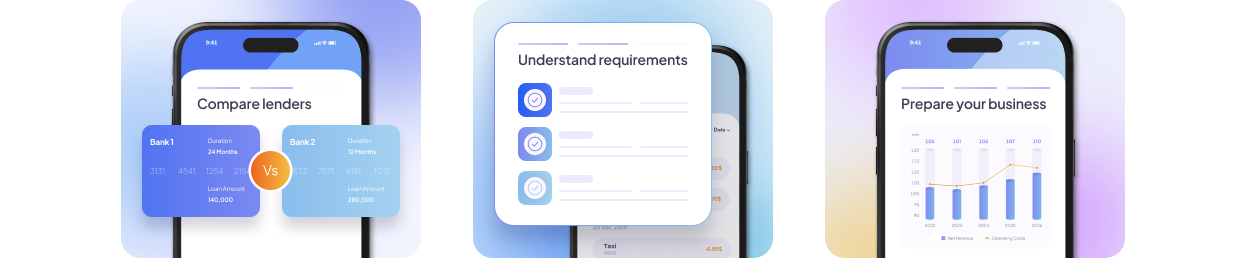
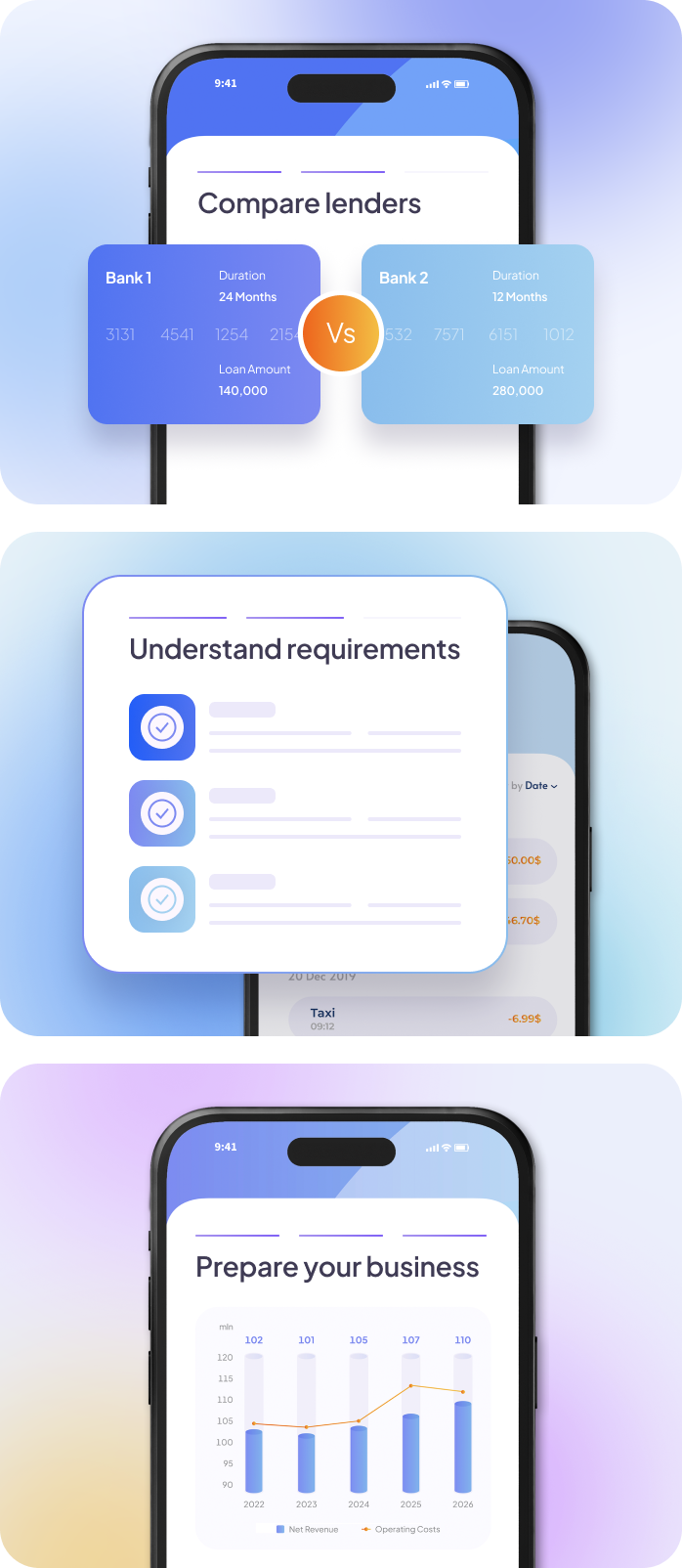
The United States offers a wide range of business lending options, from traditional commercial banks to SBA-focused lenders.
Each institution has its own requirements, loan limits, approval standards, and financing structures.















How to Choose a Bank for a Business Loan
Follow this sequence — it filters banks faster than any list.

Define how much you actually need
Start with the amount — this immediately eliminates half of your options.
- up to $100K → almost any bank or credit product will work
- $100K–$500K → focus on small business or SBA-oriented lenders
- $500K+ → only banks that handle larger commercial loans
 Does the bank issue loans in your range?
Match the loan type to your use
Don’t compare banks yet — compare products.
- ongoing expenses → line of credit
- expansion / hiring → term loan or SBA
- equipment → equipment financing
Does the bank offer this type of financing?
Check real eligibility (not generic requirements)
Yes, most banks say “2+ years” — but actual thresholds vary. Look deeper:
- minimum revenue expectations
- credit score sensitivity
- collateral requirements
How strict is this bank compared to others?
Compare total cost, not just the rate
The same “6–8%” can mean very different deals.
Look at:
- fees
- repayment structure
- term length
What will this loan actually cost you monthly?
Evaluate speed vs. complexity
Banks differ significantly here:
- some → fast, fully online, minimal interaction
- others → relationship-based, weeks of underwriting
How quickly do you need the funds?
Narrow down to 2–3 realistic options
After applying these filters, you’re not choosing from 20 banks — but from 2–3. Compare only those:
- where you meet the requirements
- that offer the right product
- within your loan range
Which lenders do you realistically qualify for?
Lending Requirements in the USA
Business lending in the United States follows structured underwriting standards that most commercial banks apply consistently. While specific criteria vary by lender and loan program, applicants are generally expected to demonstrate financial stability, operational history, and a clear repayment strategy.
Typical requirements for U.S. business loans include:

an established operating business (often 1–2+ years)

verifiable revenue and financial records

business and personal credit review

documented purpose of the loan

ability to demonstrate repayment capacity

U.S. business registration and tax identification (EIN)

financial statements and tax returns

collateral for certain loan types

compliance with industry and regulatory standards
See How Businesses Got Approved

What mattered most: structured financial projections
 Manufacturing business
What mattered most: consistency in financial records
 Retail company
What mattered most: repayment capacity
 Hospitality business
What mattered most: clearly defined loan purpose
 Healthcare practice
What mattered most: preparation before applying
 Construction company
Why Business Loan Applications Get Rejected
Loan rejection is rarely about the business idea. Most applications are declined because the financial story is unclear or doesn’t meet underwriting standards.
Common reasons include:
- insufficient or unstable cash flow
- inconsistent financial statements
- short operating history
- high existing debt
- weak credit profile
- unclear loan purpose
Most of these issues are not permanent barriers — they are preparation gaps.
How to Increase Chances to Get Approved with Growexa
A well-structured business plan helps organize financial data, clarify how funds will be used, and demonstrate how the loan will be repaid — all of which directly address the concerns lenders evaluate during underwriting.
A clear, structured business plan helps lenders understand:
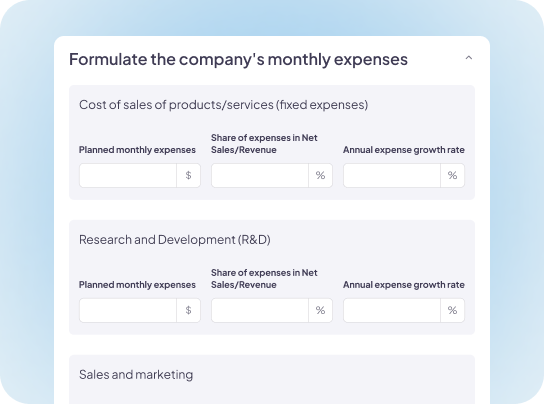
How funds will be used
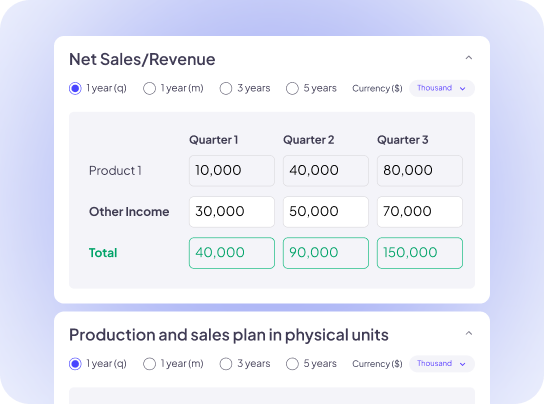
How revenue will grow
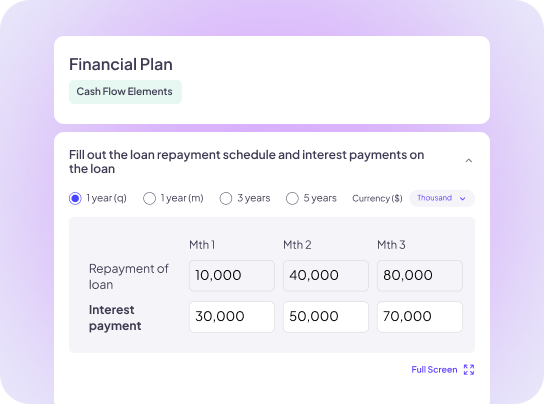
How the loan will be repaid
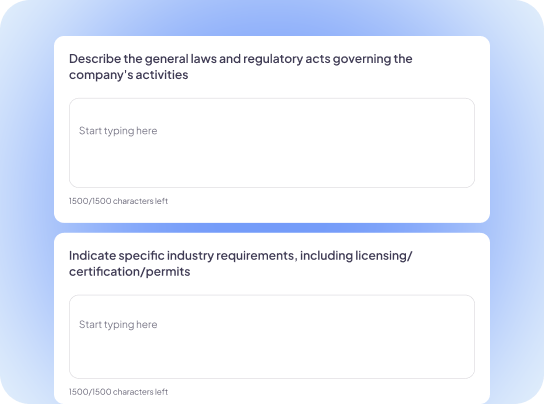
What risks exist and how they’re managed
FAQ
Create a Bank-Ready Business Plan — Before You Apply
Plans start from $19/month
Get Started