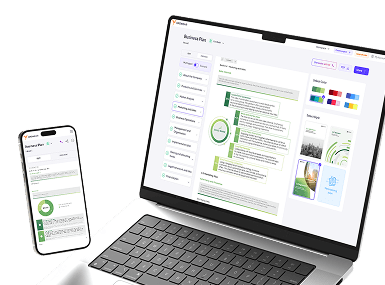
Start with a structured business plan
Download the template and replace the examples with actual costs, capacity, pricing, and revenue assumptions.

The residential maintenance industry is entering a structural transformation. For decades, home repair has been largely reactive—something homeowners engage with only when systems fail, comfort declines, or property value is at risk. Yet rising energy costs, aging housing infrastructure, and the rapid adoption of smart-home technologies are reshaping expectations. Increasingly, homeowners are not just repairing their homes. They are managing them as evolving technological and environmental assets.
In this context, a new generation of service providers is emerging—companies that treat home maintenance not as a collection of isolated repairs, but as an integrated system of performance optimization, digital monitoring, and sustainability upgrades. One example of this shift can be seen in Fixly, an Austin-based home maintenance company that is repositioning residential service delivery around proactive care, energy efficiency, and smart infrastructure integration.
Rather than functioning as a traditional handyman business, Fixly operates as a technology-enabled maintenance platform. Its model combines conventional repair expertise with IoT system integration, predictive diagnostics, and subscription-based sustainability services. The result is a hybrid service architecture designed to deliver recurring value to homeowners while generating scalable, predictable revenue streams.
This business plan example explores how a regional service provider can evolve into a data-driven, environmentally aligned home performance platform—and what that transformation reveals about the future of residential property management.
Download the template and replace the examples with actual costs, capacity, pricing, and revenue assumptions.


Start building a plan that gets approved
Fixly’s core premise is simple but strategically powerful: most residential maintenance problems are preventable. Energy inefficiencies, system failures, and costly repairs often result not from catastrophic events but from gradual performance decline—poor insulation, inefficient airflow, misconfigured smart systems, or unnoticed leaks. Traditional service providers respond to these issues after damage occurs. Fixly is designed to identify and correct them before they become expensive.
The company’s strategic expansion, known as the Austin Eco-Smart Initiative, formalizes this preventive philosophy. Instead of waiting for homeowners to request repairs, the initiative introduces structured monitoring and optimization services delivered through recurring maintenance programs.
The long-term ambition is not merely to perform services but to become a continuous performance partner for residential properties. Over time, homes serviced by the platform become more energy efficient, technologically integrated, and operationally stable. From a business standpoint, this transition transforms maintenance from episodic revenue into recurring lifecycle management.
Austin represents an unusually fertile environment for this model. The city combines several reinforcing market conditions: high property values, rapid smart-home adoption, and a large population of technology professionals with limited time for hands-on home maintenance. Annual spending on specialized residential upkeep and upgrades is estimated in the hundreds of millions of dollars, with homeowners typically allocating a meaningful percentage of property value toward maintenance and improvement.
At the same time, the housing stock across the United States is aging. As systems deteriorate and energy standards evolve, the economic rationale for proactive retrofitting becomes stronger. Homeowners increasingly recognize that ongoing optimization—insulation improvements, HVAC tuning, smart device coordination—can reduce operating costs while preserving long-term asset value.
Three structural trends are particularly influential. First is the normalization of smart-home ecosystems, which require technical expertise beyond conventional repair skills. Second is the rise of sustainability-driven consumption, with homeowners seeking measurable reductions in energy use. Third is the shift toward subscription-based services across industries, including property management.
Together, these forces create demand for providers capable of integrating mechanical, digital, and environmental performance into a single service framework.
Fixly’s service portfolio is organized around two complementary pillars. The first focuses on technical integration—installing and synchronizing smart-home systems, optimizing device interoperability, and securing network infrastructure. The second focuses on environmental performance, including thermal energy audits, efficiency upgrades, and seasonal system calibration.
This dual structure is central to the company’s differentiation. Most competitors specialize either in conventional repair or high-end technology installation. Few combine both capabilities within a unified operating model. Fixly positions itself precisely at that intersection.
The most strategically significant component of the offering is its recurring maintenance subscription. Through scheduled inspections and performance reviews, technicians monitor insulation effectiveness, airflow efficiency, and system configuration throughout the year. This approach stabilizes revenue while also increasing customer retention, as ongoing service relationships replace one-time transactions.
From an economic perspective, recurring monitoring improves asset utilization and reduces marketing dependence. From a customer perspective, it converts maintenance into a predictable, managed process rather than a reactive burden.
The company’s primary customers are affluent homeowners in technology-dense urban neighborhoods. These individuals tend to view their homes not merely as living spaces but as complex systems that require professional management. They value convenience, transparency, and technical competence more than the lowest possible price.
Many belong to dual-income households with limited time for do-it-yourself maintenance. Others are preparing properties for sale and require performance upgrades to remain competitive in a market where buyers increasingly expect energy-efficient, smart-ready homes.
Importantly, these customers exhibit strong alignment with subscription models. They prefer ongoing monitoring to periodic intervention and are willing to pay for predictable service quality. This behavioral pattern supports long-term revenue stability and reduces churn.
The competitive landscape in Austin includes specialized sustainability contractors and premium smart-home integrators, as well as traditional handyman services. Each occupies a distinct niche, but none fully replicate the integrated operational framework Fixly has constructed.
Some competitors emphasize environmentally responsible materials or zero-waste practices. Others focus on high-end automation systems. Fixly’s advantage lies in its ability to combine technical integration, general maintenance, and environmental optimization within a single service relationship.
This integration creates switching costs. Once a provider manages both infrastructure and monitoring, replacing that provider becomes operationally disruptive. Over time, the service relationship evolves from vendor status to long-term property partner.
A defining feature of the model is its digital backbone. The company’s proprietary platform coordinates scheduling, pricing, and technician deployment while maintaining performance records for each property. Automated reminders encourage preventive maintenance, and real-time tracking enhances service transparency.
Operational efficiency is further reinforced through logistics optimization and mobile service units equipped as fully functional diagnostic hubs. These mobile workspaces allow technicians to perform complex assessments and installations without repeated site visits.
In combination, these capabilities reduce downtime, increase billable utilization, and support scalable regional expansion.
The leadership structure reflects the technical complexity of the business. The founder’s background in systems engineering informs both the digital platform architecture and the company’s approach to service integration.
Technicians are selected for dual competency—practical repair skills combined with digital literacy. This hybrid workforce is essential to executing the company’s integrated service model but also represents one of its primary scaling challenges. Recruiting professionals capable of operating across both physical and digital domains requires specialized training and compensation strategies.
From an investment standpoint, the model is capital intensive during the early stages, particularly due to equipment acquisition, training, and platform development. However, once operational scale is achieved, margins improve through recurring revenue and higher asset utilization.
Projected financial performance reflects this dynamic. Revenue is expected to grow steadily as subscription penetration increases and operational efficiency improves. Profitability metrics suggest strong returns relative to industry benchmarks, supported by disciplined cost management and expanding service demand.
The investment thesis is therefore based on transition—from transactional service income to recurring lifecycle management revenue.
This business plan illustrates a broader structural shift in residential services. Homes are becoming technologically complex, environmentally regulated, and financially significant assets that require continuous management. As a result, maintenance is evolving from reactive labor into system optimization.
Fixly’s model demonstrates how traditional trades can be reconfigured around digital infrastructure, sustainability principles, and subscription economics. The company does not simply repair homes. It manages their performance over time.
For entrepreneurs, the central lesson is clear: future service businesses will succeed not by delivering isolated tasks but by maintaining long-term operational relationships with physical assets.
The transition from repair provider to performance partner reflects one of the most important transformations in service economics. When a business assumes responsibility for ongoing system health, revenue becomes recurring, customer relationships deepen, and operational data accumulates over time.
In residential maintenance, this transformation is only beginning. But models like Fixly suggest what the next phase may look like—digitally coordinated, environmentally aligned, and structured around continuous optimization rather than episodic intervention.
For founders exploring service innovation, the opportunity lies not in performing more repairs, but in designing systems that make repairs less necessary in the first place.
To dive deeper into the operational model, financial structure, and investment logic behind this concept, explore the complete eco-smart home retrofitting business plan or use a Handyman Services Business Plan Template to apply the framework to your own market conditions.
If you’re ready to transform a maintenance or sustainability-focused idea into a well-structured, scalable company, Growexa offers ready-to-use templates, financial planning tools, and step-by-step guidance to help you build a professional, investor-ready business plan.