
Stop editing templates
Start building a plan that gets approved
Turn this template into a complete business plan with:
- Financial projections
- Loan-ready structure
- Clear repayment logic
Based on 40+ bank requirements

Launching a coffee shop in today’s saturated urban market is no longer a matter of simply serving quality beverages or choosing a convenient location. It requires a comprehensive understanding of customer behavior, operational efficiency, and long-term positioning. This coffee shop business plan example demonstrates how a small-format café can be transformed into a structured and scalable business when supported by a clear concept and disciplined execution.
Turn this template into a complete business plan with:
Based on 40+ bank requirements


Most business plans fail not because of the idea — but because the numbers don’t prove repayment.
Build a bank-ready business plan in minutes
(with projections, structure, and validation)
Morning Bean Coffee, a 30-seat shop located in a busy Dallas neighborhood, serves as a practical case study of how a well-developed plan can turn a simple idea into a sustainable business model. As shown in this business plan example for coffee shop, success is not driven by product alone but by the integration of experience, convenience, and consistency.
The modern coffee market has evolved into a hybrid of retail and lifestyle. Customers no longer choose cafés solely based on coffee quality; instead, they evaluate the entire experience — how fast they are served, how comfortable the space is, and how well the brand aligns with their daily routine. This example of business plan coffee shop reflects this shift by treating the café not as a transactional space but as a recurring destination embedded in customers’ habits.
Morning Bean Coffee positions itself between large chains and boutique cafés, combining efficiency with atmosphere. This balanced positioning is what defines a strong business plan cafe example, where differentiation is achieved not through extremes but through integration. The concept avoids competing directly with major players and instead focuses on creating a distinct niche that appeals to both convenience-driven and experience-driven customers.
Another important aspect of this example of business plan for cafe is its focus on repeat behavior. The business is designed around the assumption that long-term success depends not on one-time visits but on daily or weekly customer return. This influences everything from menu design to pricing and service speed.
From a structural perspective, this is also an example of a cafe business plan that prioritizes clarity over complexity. Every element of the concept is aligned with a single goal: creating a predictable, repeatable customer experience that can generate stable revenue.
At the center of Morning Bean Coffee is a clearly defined mission — to create a welcoming, accessible, and efficient coffee destination that becomes part of customers’ everyday lives. This section operates as a refined coffee shop business plan example, where the vision is translated into concrete operational and financial objectives.
The café is positioned as a “third place,” a concept that has become increasingly relevant in urban environments. It is neither home nor office, but a space where people can spend time comfortably, whether working, studying, or socializing. This positioning increases both customer retention and average transaction value, as visitors are more likely to stay longer and return frequently.
As a strong business plan example for coffee shop, this section clearly defines target segments without overextending the concept. Morning Bean Coffee focuses on residents, students, and professionals within walking distance, ensuring that the customer base is both accessible and consistent.
Revenue expectations are grounded in realistic assumptions. Break-even within 12–15 months is achievable due to a balanced mix of walk-in traffic, online orders, and delivery services. This reflects the logic found in a solid example of business plan coffee shop, where projections are tied directly to operational capacity.
Customer experience is treated as a measurable driver of growth. Seasonal offerings, consistent product quality, and a recognizable atmosphere contribute to building habits. This is what transforms a café from a place people visit occasionally into one they rely on daily.
This section also reflects a clear cafe business plan structure, where the executive summary functions as a compressed version of the entire strategy, providing clarity for investors and stakeholders without unnecessary detail.
Morning Bean Coffee is structured as a lean and focused operation, designed to maximize efficiency without compromising quality. This reflects a core principle of any effective example of business plan coffee shop, where simplicity enables better execution.
The business is not positioned as just another coffee shop. Instead, it is presented as a consistent and reliable part of customers’ routines. This distinction is critical in differentiating it from competitors and is a defining feature of a strong business plan cafe example.
The company profile emphasizes operational discipline. Staffing is optimized to handle peak hours efficiently while minimizing idle time during slower periods. The menu is intentionally limited, allowing for faster preparation and higher consistency. These choices are not constraints but strategic decisions aligned with the overall concept.

In this example of business plan for cafe, the SWOT analysis is not treated as a formal exercise but as a practical tool for decision-making. Strengths such as location and concept clarity are leveraged to maximize visibility and retention. Weaknesses, including limited marketing resources, are addressed through targeted digital strategies rather than broad campaigns.
Opportunities are identified in changing consumer behavior, particularly the rise of remote work and the increasing demand for local, personalized experiences. Threats from established competitors are mitigated by avoiding direct competition on scale and instead focusing on differentiation.
This section also reinforces the idea that a strong example of a cafe business plan is not about eliminating risk but about understanding and managing it effectively.
The Dallas coffee market, valued at over $1.2 billion, provides both opportunity and pressure. This section demonstrates how a coffee shop business plan example must go beyond surface-level data and interpret market dynamics in a meaningful way.
Competition is not uniform. Large chains dominate high-traffic areas with standardized offerings and strong brand recognition, while independent cafés compete through uniqueness and atmosphere. Morning Bean Coffee positions itself between these models, combining speed with a more personal experience.
This positioning reflects the logic of a strong business plan cafe example, where the goal is not to outperform competitors on their own terms but to redefine the terms of competition.
Consumer behavior analysis reveals a consistent pattern: customers value convenience, but they also seek familiarity and comfort. They want quick service, but they do not want to feel like they are part of a mass-production system. This tension creates an opportunity for businesses that can deliver both efficiency and individuality.
In this example of business plan for cafe, the market is not treated as a static environment but as a system of evolving preferences. Morning Bean Coffee aligns itself with trends such as digital ordering, local branding, and experiential consumption.
The result is a concept that fits naturally into its environment rather than forcing itself into an existing competitive structure. This is a key takeaway from any high-quality example of business plan coffee shop.
Marketing for Morning Bean Coffee is not treated as a secondary function but as a core driver of demand, visibility, and long-term stability. In a modern coffee shop business plan example, marketing is inseparable from the product itself, because customer perception begins forming long before the first purchase is made. The café is designed to exist both physically and digitally, ensuring that it remains visible and relevant within its local ecosystem.
The strategy is built around continuity rather than short-term campaigns. Instead of relying on isolated promotions, Morning Bean Coffee focuses on maintaining a consistent presence in the daily lives of its customers. Social media plays a central role in this process, functioning as an extension of the physical space. The tone, visuals, and messaging are aligned with the in-store experience, reinforcing brand identity at every touchpoint. This reflects a strong business plan cafe example, where marketing is integrated into the core operations rather than treated as an external activity.
Customer acquisition is closely tied to location and routine. The café benefits from foot traffic, but it does not rely on it entirely. Digital ordering and delivery services extend its reach, allowing the business to capture demand beyond its immediate surroundings. This integration of channels is a defining feature of a well-structured business plan example for coffee shop, where revenue is not limited by physical capacity alone.
Pricing strategy is carefully calibrated. Morning Bean Coffee positions itself between large chains and premium boutique cafés. This allows it to remain accessible while still maintaining a perception of quality. In this example of business plan coffee shop, pricing is not simply a financial decision but a strategic tool that shapes customer expectations and influences positioning within the market.
Local engagement further strengthens the brand. Partnerships with nearby businesses, participation in community events, and collaboration with local suppliers help build recognition and trust. This hyperlocal approach reduces dependency on expensive advertising and creates a more organic growth trajectory. Such a method is typical of a thoughtful example of business plan for cafe, where relevance and consistency drive expansion.
Over time, the focus shifts from acquisition to retention. Loyalty programs, personalized communication, and consistent service ensure that customers return regularly. This transition is critical, as long-term profitability depends more on repeat visits than on constant new customer acquisition. This dynamic is clearly reflected in a mature example of a cafe business plan, where customer lifetime value becomes a central metric.
Operational efficiency is the foundation of the entire business. While customers interact only with the visible aspects of the café, the success of Morning Bean Coffee depends on the precision and consistency of its internal processes. This section represents a practical example of business plan coffee shop, where execution is given the same level of attention as strategy.
The layout of the café is designed to support a seamless workflow. Each step, from order placement to preparation and delivery, is optimized to minimize delays and unnecessary movement. This becomes especially important during peak hours, when operational bottlenecks can directly impact customer satisfaction and revenue.
Equipment investment is focused rather than excessive. Every piece of equipment is selected based on its contribution to efficiency, reliability, and product quality. In this coffee shop business plan example, capital allocation is aligned with operational priorities rather than aesthetic considerations.
Staffing is structured to balance flexibility and consistency. Employees are trained to perform multiple roles, ensuring that the café can adapt to fluctuations in demand without compromising service standards. This approach reduces labor inefficiencies while maintaining a high level of service quality.
Inventory management is handled with precision. The café operates with controlled stock levels, reducing waste and improving cash flow. Supplies are aligned with demand patterns, ensuring that resources are used efficiently. This reflects the discipline found in a strong business plan cafe example, where operational control directly supports financial performance.
Adaptability is another key element. The café adjusts its operations based on seasonal demand, time of day, and customer behavior. This flexibility allows it to remain responsive to external changes without disrupting internal stability.
Ultimately, operations are about reliability. Customers return to places where they know what to expect. In this example of business plan for cafe, consistency becomes a competitive advantage that is difficult for competitors to replicate.
The financial model of Morning Bean Coffee is designed to balance growth potential with realistic assumptions. A total investment of $200,000 provides the foundation for both launch and early-stage operations. This reflects a disciplined approach typical of a strong coffee shop business plan example, where financial planning is grounded in actual business needs.

Founder contribution plays a critical role in the structure. By investing their own capital, the founders demonstrate commitment and reduce perceived risk for external investors. This alignment of interests is a common feature of a credible business plan example for coffee shop.
Revenue projections are based on conservative estimates. Growth is expected to occur gradually, supported by increasing customer retention and brand recognition. In this example of business plan coffee shop, financial forecasts are not inflated but reflect a realistic trajectory that can be sustained over time.
Cost management is carefully structured. Fixed costs such as rent and salaries are balanced with variable costs, ensuring that the business remains flexible under different market conditions. This balance is essential for maintaining stability during slower periods.
Profitability improves as operations become more efficient and marketing efforts begin to generate consistent results. This progression demonstrates the long-term viability of the concept and reinforces investor confidence. A strong example of business plan for cafe does not focus solely on initial performance but clearly shows how the business evolves financially.
Investment metrics provide additional clarity. Indicators such as return on investment and payback period help quantify the attractiveness of the project. These metrics are essential for communicating value to potential investors.
This section also reinforces the importance of a clear cafe business plan structure, where financial transparency supports both internal planning and external communication.
No connection between:
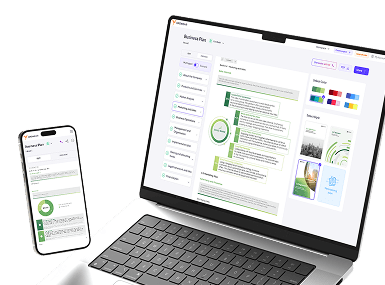
Growexa builds a complete, lender-ready business plan — with financial logic and a professionally formatted PDF
Morning Bean Coffee demonstrates how a small café can evolve into a stable and scalable business when supported by clear strategy and disciplined execution. This coffee shop business plan example highlights the importance of aligning concept, operations, marketing, and finance into a single cohesive system.
The business succeeds not by competing directly with larger players but by defining its own position within the market. As a business plan cafe example, it shows that differentiation and focus are more effective than attempting to match competitors on scale.
For entrepreneurs seeking an example of business plan coffee shop, this case provides both structure and practical insight. It illustrates how a concept can be translated into a functioning business without unnecessary complexity.
Ultimately, this is also an example of a cafe business plan that prioritizes sustainability and consistency over rapid expansion. It demonstrates that long-term success is built on repeat behavior, customer trust, and operational reliability.
Download the full Morning Bean Coffee business plan to see how each section — from market positioning to financial forecasts — is structured for growth. Or, start with the coffee shop business plan template and adapt it to your own dining concept.
Ready to create your own business plan? Visit Growexa to access customizable templates, guided tools, and expert frameworks designed to help you turn your idea into a launch-ready business.

