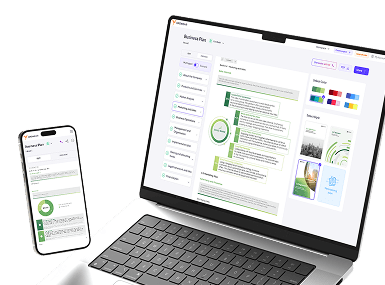
Start with a structured business plan
Download the template and replace the examples with actual costs, capacity, pricing, and revenue assumptions.

The gluten-free food industry continues to expand across major American cities, driven by a combination of medical necessity and lifestyle-driven demand. This transformation has created a strong foundation for niche bakery concepts that are built around specialization rather than mass production. In this context, well-structured bakery business plan examples illustrate how focused positioning can translate into long-term commercial success.
Download the template and replace the examples with actual costs, capacity, pricing, and revenue assumptions.


Start building a plan that gets approved
Austin, Texas, represents a particularly favorable environment for such ventures. Its population combines high purchasing power with a strong orientation toward health-conscious consumption. This creates a demand profile that aligns directly with the core concept of Whisk & Bloom Bakery. As demonstrated in leading bakery business plan examples, the success of a specialized bakery depends not only on product quality but also on its ability to communicate value and build trust within a clearly defined customer segment.
Whisk & Bloom Bakery is designed as a business that operates at the intersection of health, safety, and quality. Unlike traditional bakeries, which compete primarily on variety and price, this concept is built around reliability and dietary compliance. This distinction is critical and reflects the structure seen in a strong business plan for bakery example, where differentiation is achieved through specialization rather than scale.
The underlying bakery business model example is intentionally focused. By limiting production to gluten-free and allergen-friendly goods, the business reduces complexity while strengthening its value proposition. Customers are not simply purchasing baked products; they are purchasing assurance that those products meet specific dietary requirements.
At the same time, this concept follows the logic of a small bakery startup plan, where initial resources are allocated carefully to ensure operational stability. Rather than overextending in the early stages, the business prioritizes controlled growth supported by consistent demand.
This approach is also reflected in the financial structure. A detailed bakery financial plan example demonstrates how investment in specialized equipment and certified production environments can be balanced against long-term profitability. The result is a business that is both focused and scalable, capable of growing without losing its core identity.
Whisk & Bloom Bakery is a limited liability company registered in Austin, Texas, specializing exclusively in gluten-free and allergen-friendly baked goods. The business is built around a clear and consistent mission: to provide safe, high-quality products to customers who are often underserved by traditional bakeries. This positioning is a defining feature of many successful bakery business plan examples, where clarity of purpose directly supports brand development.
The company operates within a structured business plan for bakery example, where every aspect of the operation is aligned with its core value proposition. From sourcing ingredients to designing production workflows, each decision is made with the goal of ensuring product safety and consistency.
The operational setup reflects a refined bakery business model example. Production takes place in a certified gluten-free facility, eliminating the risk of cross-contamination and reinforcing customer trust. This level of control is essential in a niche market where credibility is directly tied to compliance.
In addition to its physical storefront, the bakery extends its reach through digital channels. E-commerce, delivery services, and partnerships with local retailers allow the business to serve a broader audience without significantly increasing operational complexity. This hybrid approach is commonly seen in advanced bakery business plan examples, where multiple channels support revenue diversification.
The early-stage development follows a structured small bakery startup plan, focusing on recipe refinement, regulatory compliance, and brand positioning. These foundational steps ensure that the business enters the market with a clear identity rather than attempting to define itself after launch.
Financial discipline is embedded from the beginning. A carefully constructed bakery financial plan example ensures that resources are allocated efficiently, supporting both initial operations and future growth. This balance between investment and control is critical for maintaining stability in the early stages.
The United States gluten-free market has reached a valuation of approximately $5.6 billion, with continued growth driven by increasing awareness of dietary restrictions and health-conscious lifestyles. This expansion creates a strong foundation for specialized bakery concepts. As seen in leading bakery business plan examples, market demand must be clearly understood and aligned with the business offering.

Austin’s local market presents a particularly strong opportunity. Demand for gluten-free products continues to grow, yet supply remains limited in terms of quality and specialization. This gap creates a favorable environment for Whisk & Bloom Bakery, which is positioned to serve a clearly defined customer base.
The target audience includes individuals with medical dietary restrictions as well as consumers who choose gluten-free products as part of a broader lifestyle. This dual demand structure strengthens the business model, as it is not dependent on a single customer segment. In a well-developed business plan for bakery example, such diversification reduces risk and increases resilience.
Consumer behavior in this segment is characterized by consistency. Customers who find reliable gluten-free products are more likely to become repeat buyers, as switching alternatives carries both inconvenience and risk. This creates a strong foundation for customer retention and long-term revenue stability.
The concept also reflects a focused bakery business model example, where depth of specialization replaces breadth of offering. Instead of competing across a wide range of products, the bakery concentrates on delivering excellence within a specific category.
At the same time, the market supports gradual expansion. As awareness increases and brand recognition grows, the business can extend its reach without fundamentally changing its positioning. This scalability is a key characteristic of successful bakery business plan examples, where growth is built on a strong foundation rather than rapid diversification.
The demand dynamics also support a structured small bakery startup plan, where initial operations are designed to capture a core customer base before expanding further. This phased approach ensures that growth is supported by actual demand rather than projections alone.
The commercial success of Whisk & Bloom Bakery depends not only on product quality but on its ability to communicate value effectively and consistently. In competitive urban environments, even highly differentiated products require structured positioning to reach the right audience. This is why leading bakery business plan examples treat marketing as a strategic function rather than a supporting activity.

Whisk & Bloom operates within a clearly defined bakery marketing strategy, where every channel serves a specific role in building awareness, trust, and repeat engagement. The brand does not attempt to appeal to the mass market but instead focuses on a targeted audience that values allergen-free reliability. This precision reduces marketing inefficiency and ensures that resources are directed toward customers with the highest likelihood of conversion.
The bakery’s positioning is built around credibility. Unlike traditional bakeries that rely on variety or price competition, Whisk & Bloom emphasizes safety, certification, and consistency. In a strong business plan for bakery example, this type of positioning is essential because the customer decision is based not only on taste but also on trust.
Digital presence plays a central role in this strategy. Online visibility allows the bakery to reach customers beyond its immediate location, while also reinforcing brand identity through consistent messaging. Content, product presentation, and customer interaction are aligned to create a coherent experience that extends beyond the physical store.Whisk & Bloom operates within a clearly defined bakery marketing strategy, where every channel serves a specific role in building awareness, trust, and repeat engagement. The brand does not attempt to appeal to the mass market but instead focuses on a targeted audience that values allergen-free reliability. This precision reduces marketing inefficiency and ensures that resources are directed toward customers with the highest likelihood of conversion.
The bakery’s positioning is built around credibility. Unlike traditional bakeries that rely on variety or price competition, Whisk & Bloom emphasizes safety, certification, and consistency. In a strong business plan for bakery example, this type of positioning is essential because the customer decision is based not only on taste but also on trust.
Digital presence plays a central role in this strategy. Online visibility allows the bakery to reach customers beyond its immediate location, while also reinforcing brand identity through consistent messaging. Content, product presentation, and customer interaction are aligned to create a coherent experience that extends beyond the physical store.
At the same time, local engagement remains critical. Partnerships with health-focused communities, wellness centers, and local businesses help establish credibility within the target market. This integration into the local ecosystem reflects the approach seen in advanced bakery business plan examples, where growth is driven by relevance rather than scale.
Customer retention is a key priority. The bakery focuses on building long-term relationships rather than maximizing one-time transactions. Repeat customers are more valuable, as they provide predictable revenue and reduce the need for constant acquisition efforts. In this example of food business proposal, loyalty is not incentivized artificially but earned through consistent performance.
Over time, marketing transitions from awareness-building to reinforcement. As the brand becomes established, the emphasis shifts toward maintaining visibility and strengthening existing relationships. This evolution is characteristic of a mature bakery business model example, where customer lifetime value becomes a central metric.

The financial structure of Whisk & Bloom Bakery reflects a disciplined approach to both investment and growth. A total project cost of $350,000 is allocated across facility setup, equipment, compliance, and initial operations. This structured allocation is a defining feature of professional bakery business plan examples, where financial planning supports both launch and long-term sustainability.

Founder contribution represents a significant portion of the investment, reinforcing commitment and reducing perceived risk for external stakeholders. This alignment is a common element in a credible business plan for bakery example, where investor confidence is closely tied to founder involvement.
Revenue projections are based on realistic assumptions about market penetration and customer acquisition. Growth is expected to occur progressively, supported by increasing brand awareness and customer retention. This approach reflects the logic found in a strong bakery financial plan example, where projections are grounded in operational capacity rather than optimistic forecasts.
The bakery revenue model is structured to combine multiple streams, including in-store sales, online orders, and partnerships. This diversification reduces dependency on a single channel and strengthens overall stability. It also allows the business to adapt to changes in consumer behavior without requiring structural changes.
Cost management is carefully controlled. Fixed costs such as rent and staffing are balanced against variable costs related to ingredients and logistics. This balance ensures that the business can remain resilient under different demand conditions. In well-developed bakery business plan examples, this flexibility is critical for long-term survival.

Profitability improves as the business matures. Operational efficiency increases, waste is reduced, and marketing becomes more effective. These improvements contribute to expanding margins over time. A strong bakery financial plan example does not focus only on initial results but demonstrates how performance evolves with scale. Financial metrics further reinforce the attractiveness of the project. Indicators such as return on investment, internal rate of return, and payback period provide a clear picture of potential outcomes. These metrics are essential for communicating value to investors and validating the business model.

Whisk & Bloom Bakery demonstrates how a focused concept can evolve into a structured and scalable business when supported by strategic clarity and disciplined execution. This case reflects the principles seen in the most effective bakery business plan examples, where success is built on alignment between concept, operations, and financial planning.
The business highlights the importance of specialization. By concentrating on gluten-free and allergen-friendly products, it creates a clear identity that differentiates it from traditional competitors. This approach is central to a strong business plan for bakery example, where positioning defines competitive advantage.
At the same time, the concept illustrates how a well-designed small bakery startup plan can balance ambition with control. Growth is pursued gradually, supported by real demand rather than projections alone. This ensures that expansion does not compromise quality or operational stability.
The structure of the business also reflects a scalable bakery business model example, where systems and processes can be replicated without losing consistency. This scalability is essential for long-term development and potential expansion into additional locations or product lines.
From a financial perspective, the project demonstrates the importance of a realistic bakery financial plan example, where investment, revenue, and cost management are aligned. This alignment ensures that the business remains viable under different conditions and continues to generate value over time.
Download the full Whisk & Bloom business plan to explore every section in detail — from product strategy to financial projections. Or, start with the bakery business plan template and adapt it to your own concept.
Ready to build your own business plan? Visit Growexa to access customizable templates, guided tools, and expert-backed frameworks that help you structure your idea with clarity and confidence. Make your business not just viable — make it launch-ready.