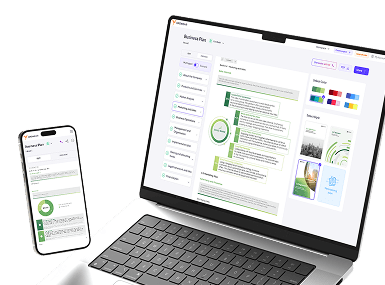
Start with a structured business plan
Download the template and replace the examples with actual costs, capacity, pricing, and revenue assumptions.

In cities like Austin, food trucks are no longer a novelty but a fully established segment of the food and beverage industry. What once started as a low-barrier entry point for entrepreneurs has evolved into a competitive and structured market where only well-positioned concepts survive. This shift makes it essential to approach the business with a clear strategy, as demonstrated in strong food truck business plan examples that go beyond simple ideas and focus on execution.
Download the template and replace the examples with actual costs, capacity, pricing, and revenue assumptions.


Start building a plan that gets approved
The Frosty Wheels concept illustrates how a mobile dessert business can be transformed into a scalable and disciplined venture. This is not just another casual concept but a carefully structured example of food business plan, where product, mobility, and customer demand are aligned into a cohesive model.
The rise of food trucks has been driven by changing consumer behavior. People increasingly value convenience without sacrificing quality. They expect restaurant-level products delivered in flexible, accessible formats. This creates an opportunity for operators who can balance creativity with operational discipline. As seen in leading food truck business plan examples, success depends on more than menu innovation — it requires a system that supports consistency, speed, and visibility.
Frosty Wheels positions itself precisely at this intersection. By focusing on artisanal ice cream made from natural ingredients, the brand appeals to customers seeking both indulgence and quality. At the same time, the mobility of the truck allows it to follow demand rather than wait for it. This adaptability is a defining feature of any strong example of food business proposal, where flexibility becomes a competitive advantage.
The concept also reflects the logic behind a modern food truck startup plan, where initial constraints such as limited space and mobility are not treated as limitations but as design principles. Every operational decision, from menu size to equipment selection, is influenced by the need to maximize efficiency within a compact environment.
At its core, Frosty Wheels is built around the idea of making premium ice cream accessible in everyday settings. The product itself is intentionally positioned between mass-market offerings and high-end dessert parlors. This balance allows the business to appeal to a wide audience without diluting its identity.
Unlike traditional dessert locations, the truck does not rely on customers coming to it. Instead, it moves to where demand is strongest. This fundamental shift in approach is what defines the concept as a strong food truck business plan example pdf, where location strategy becomes dynamic rather than fixed.
The menu is based on small-batch production, ensuring quality and freshness. Rotating flavors keep the offering relevant and encourage repeat visits. This constant variation also creates a sense of anticipation, turning the product into an experience rather than a routine purchase.
This approach reflects the principles seen in high-quality food truck business plan examples, where differentiation is achieved through both product and delivery model. The truck becomes not just a point of sale but a moving brand that interacts with customers across different environments.
Another important aspect is accessibility. While the product is premium, pricing is designed to remain approachable. This balance ensures that the brand does not become niche or exclusive but instead integrates into everyday consumption patterns.
In this example of food business plan, the concept is carefully aligned with customer expectations. It recognizes that modern consumers are willing to pay for quality, but only if it is delivered in a convenient and engaging format.
Austin’s dining market continues to grow, supported by population increase, tourism, and a strong culture of eating out. However, within this expansion, certain gaps remain. Dessert options are often polarized between low-cost, high-volume chains and more traditional sit-down establishments. This leaves a space for concepts that combine quality with mobility.
Frosty Wheels identifies this gap and positions itself to fill it. By offering artisanal ice cream in a mobile format, the business captures demand that is currently underserved. This insight is central to any effective example of food business proposal, where market opportunity is clearly defined and supported by observable trends.
Consumers are increasingly drawn to experiences that are both convenient and memorable. A food truck naturally fits into this behavior, as it combines accessibility with novelty. At the same time, the product must meet expectations of quality, which is why the emphasis on natural ingredients and small-batch production is critical.
This positioning is consistent with successful food truck business plan examples, where understanding the gap between existing offerings leads to a stronger value proposition. Frosty Wheels does not attempt to compete directly with established dessert brands. Instead, it creates its own category within the market.
The mobility of the truck also allows the business to respond to fluctuations in demand. Weekday operations can focus on high-traffic urban areas, while weekends and evenings can target events and gatherings. This flexibility reduces dependency on a single location and increases revenue potential.
In this example of food business plan, the market is not treated as static. Instead, it is seen as a dynamic environment where demand shifts throughout the day and week. The ability to adapt to these shifts is what gives the business its competitive edge.

For a mobile food concept, visibility is not simply a marketing tool — it is the foundation of consistent revenue. Frosty Wheels operates in an environment where customers rarely plan their purchase in advance, which means demand is often driven by immediate awareness and accessibility. In this context, successful food truck business plan examples emphasize that staying visible is not optional but essential for survival.
Frosty Wheels approaches visibility as a continuous process rather than a series of campaigns. The truck itself is designed to function as a moving brand asset, instantly recognizable and visually consistent across different locations. Every appearance reinforces brand memory, and over time, this repetition creates familiarity. In a strong example of food business proposal, this kind of visual consistency is directly linked to customer trust and repeat behavior.
Digital presence supports and amplifies this physical visibility. Real-time location updates, consistent communication, and active engagement ensure that customers always know where the truck is operating. This reduces uncertainty and removes friction from the decision-making process. In a well-developed food truck business plan example pdf, solving the problem of customer uncertainty is a key factor in stabilizing demand.
Customer loyalty is built through reliability rather than incentives. When customers receive the same level of quality and service every time, they begin to associate the brand with consistency. Frosty Wheels reinforces this by maintaining strict standards in both product preparation and customer interaction. This approach reflects the logic found in mature food truck business plan examples, where long-term success depends on predictable experiences.
At the same time, the business introduces controlled variation. Rotating flavors and limited-time offerings create anticipation and encourage repeat visits without compromising the core identity. This balance between stability and change ensures that the brand remains both familiar and engaging.
Local integration further strengthens loyalty. Frosty Wheels actively participates in community events and collaborates with local organizers, positioning itself as part of the local culture rather than an external vendor. This approach builds emotional connection, which is significantly more valuable than transactional relationships. In this example of food business plan, community presence becomes a driver of organic growth.
Over time, the relationship between the brand and its customers evolves. Instead of relying on visibility alone, the business begins to benefit from intentional visits, where customers actively seek out the truck. This transition reflects the maturity seen in advanced food truck business plan examples, where brand equity becomes a key asset.
Operations within a food truck require a level of precision that differs significantly from traditional restaurant models. Limited space, fluctuating demand, and constant movement create a complex environment where efficiency must be carefully engineered. Frosty Wheels addresses this challenge by designing operations as an integrated system. This section represents a detailed example of food business plan, where execution is aligned with real-world constraints.
Inside the truck, workflow is optimized to reduce time and effort. Each action, from order intake to product delivery, follows a structured sequence that minimizes delays. This becomes particularly important during peak demand periods, when even minor inefficiencies can lead to lost sales. In a high-quality food truck business plan example pdf, operational clarity is essential to maintaining service speed and consistency.
Equipment selection follows the same logic. Rather than investing in excessive tools, Frosty Wheels focuses on a compact and efficient setup that supports the core menu. Each piece of equipment is chosen based on its ability to contribute to speed, reliability, and product quality. This disciplined approach reflects best practices found in leading food truck business plan examples, where capital efficiency directly impacts profitability.
Staffing is designed to support flexibility. Employees are trained to perform multiple roles, allowing the business to adapt quickly to changes in demand. This reduces dependency on specific individuals and ensures that operations remain stable even under pressure. In this example of food business proposal, team structure is treated as a strategic element rather than a logistical detail.
Inventory management is tightly controlled. Frosty Wheels operates with carefully planned stock levels, aligned with expected demand for each location and time period. This reduces waste and improves cost efficiency, which is particularly important for perishable products. Such discipline is a defining feature of a strong example of food business plan, where resource management is closely linked to financial performance.
Mobility introduces both challenges and opportunities. The ability to change locations allows the business to respond to demand patterns in real time. Over time, data and experience help identify the most profitable locations and time slots, enabling more accurate planning. This data-driven approach is a key characteristic of advanced food truck business plan examples, where decisions are based on measurable patterns rather than assumptions.
Seasonal variation is also addressed through operational adjustments. Changes in menu, scheduling, and event participation ensure that the business remains relevant throughout the year. This adaptability prevents stagnation and supports consistent revenue generation.
Ultimately, operations are designed to deliver reliability under changing conditions. In this example of food business plan, consistency becomes the primary competitive advantage.

The financial model of Frosty Wheels is built on realistic assumptions and disciplined cost management. Unlike traditional restaurant businesses, food trucks operate with lower entry costs but higher variability in revenue. This section provides a structured example of food business proposal, where financial planning reflects both opportunity and risk.
Initial investment includes the purchase and customization of the truck, equipment, permits, and initial marketing activities. These costs are carefully allocated to ensure that the business can operate effectively from day one. In well-developed food truck business plan examples, this balance between investment and readiness is critical.
Revenue projections account for fluctuations in demand. Factors such as location, time of day, and external events influence daily performance, making it necessary to adopt a flexible forecasting approach. Frosty Wheels mitigates this variability by incorporating multiple revenue streams, including event catering and private bookings. This diversification strengthens financial stability.
Cost management remains a priority. Ongoing expenses such as fuel, maintenance, permits, and labor are monitored closely. By maintaining efficient routes and lean operations, the business minimizes unnecessary spending and protects margins.
Profitability improves as the brand gains recognition and operations become more efficient. Repeat customers reduce the need for continuous marketing investment, while refined processes lower operational costs. This progression is typical of successful food truck business plan examples, where growth is supported by both revenue expansion and efficiency gains.
The long-term financial strategy includes scalability. The business model is designed to support expansion through additional trucks operating under the same brand. This allows revenue to increase without a proportional rise in overhead costs, creating strong growth potential.
This scalability transforms Frosty Wheels from a single-unit operation into a platform for expansion. In this example of food business plan, financial planning extends beyond initial survival to long-term development.
Frosty Wheels is not positioned as a temporary venture but as a brand with long-term potential. The transition from a single truck to a recognizable presence requires consistency, strategic focus, and disciplined execution. This vision is what distinguishes the concept from less structured competitors.
Brand identity is built through repetition and reliability. Customers begin to associate the truck with a specific experience, and over time, this association strengthens into trust. The business becomes part of the local environment rather than an occasional attraction.
This evolution reflects the trajectory seen in the strongest food truck business plan examples, where growth is driven by brand recognition as much as by operational performance.
The concept demonstrates that a food truck can move beyond its initial format and become a scalable business. By combining mobility, quality, and strategic planning, Frosty Wheels shows how a focused idea can develop into a structured and sustainable operation.
For entrepreneurs, this case serves as both inspiration and guidance. It highlights the importance of clarity, consistency, and adaptability in building a successful venture.
Ultimately, this is not just a food truck concept but a complete example of food business proposal that shows how a simple idea can be transformed into a long-term business with real growth potential.
Entrepreneurs looking at the food truck sector can learn from this example: define a niche, anchor operations in efficiency, and present a financial case that inspires confidence. Want to dig deeper? You can download the full Frosty Wheels business plan to see every section in detail. Or start with the food truck business plan template and adapt it to your own idea. For those ready to go further, Growexa offers customizable tools to help build a launch-ready plan from the ground up.