
Stop editing templates
Start building a plan that gets approved
Turn this template into a complete business plan with:
- Financial projections
- Loan-ready structure
- Clear repayment logic
Based on 40+ bank requirements

A Coffee Shop runs on rhythm. Mornings bring loyal commuters; afternoons host laptop nomads; weekends draw families seeking connection. Behind every perfect latte and clean countertop lies an intricate web of systems — people, schedules, suppliers, and timing. The difference between a charming café and a failing one isn’t coffee quality — it’s consistency. And consistency comes from one thing: a structured Coffee Shop Operations Plan.
The Coffee Shop Operations Plan is the invisible architecture that keeps hospitality predictable. It defines how beans become profits, how culture becomes habit, and how a small team sustains excellence day after day. For owners and investors alike, it’s proof that artistry is backed by arithmetic.
Turn this template into a complete business plan with:
Based on 40+ bank requirements


Most business plans fail not because of the idea — but because the numbers don’t prove repayment.
Build a bank-ready business plan in minutes
(with projections, structure, and validation)
Many first-time founders build a Coffee Shop around design or flavor — and underestimate logistics. But the daily reality is operational: staffing shifts, supplier deliveries, cash reconciliation, and hygiene audits. A written Coffee Shop Operations Plan converts these moving parts into a system.
It provides clarity to every barista, manager, and investor. For the team, it’s a rulebook; for leadership, a dashboard; for financiers, a control document. The Coffee Shop Operations Plan defines who does what, when, and to what measurable standard.

Without it, even great Coffee Shops fall victim to inconsistency. One day’s overstaffing becomes the next day’s shortage; inventory expires unseen; the espresso tastes different depending on who’s on shift. With it, the Coffee Shop operates like a clock — adaptable but disciplined.
Every Coffee Shop begins with a philosophy — minimalism, sustainability, local pride, or craft precision. The Coffee Shop Operations Plan translates that philosophy into procedures.
If your Coffee Shop emphasizes speed, your workflow should minimize touchpoints: pre-dosed coffee, dual registers, mobile ordering. If your identity is slow coffee and community, your plan must prioritize ambiance, seating comfort, and conversational service pace.
Document how the concept affects each layer: procurement, menu design, staffing, and layout. For example, a Coffee Shop that promotes transparency might use open bar counters and visible grinders — and the Coffee Shop Operations Plan must reflect how to maintain cleanliness in that exposure.
Operationalizing brand identity ensures that every sensory detail aligns with your market promise. Guests don’t just taste your concept — they experience its structure.
No Coffee Shop thrives without motivated people. The Coffee Shop Operations Plan transforms culture into a reproducible system.
Start with organizational clarity. Define roles: head barista, shift supervisor, kitchen lead, and general manager. Describe responsibilities — from opening checklists to end-of-day cash counts.
Create hiring criteria that reflect brand personality. A specialty Coffee Shop may value curiosity and craft over speed; a commuter kiosk may prize punctuality and multitasking. Include interview guides and trial-shift evaluation methods in the Coffee Shop Operations Plan.
Training is the backbone. Standardize onboarding, from espresso calibration to guest interaction. A well-trained team reduces variance and protects brand equity. Document mentorship systems — how senior baristas transfer skill to new hires.
Culture maintenance belongs here too. The Coffee Shop Operations Plan should include rituals — pre-shift tastings, monthly coffee cuppings, or staff learning sessions. These build pride and retention. When a Coffee Shop codifies culture, it turns turnover into continuity.
The Coffee Shop Operations Plan is a map of movement. Every extra step adds cost; every bottleneck steals time. Diagram the entire service flow — from bean storage to cup delivery. A high-volume Coffee Shop might use a “U-shaped” bar for speed; a boutique café might favor linear flow to emphasize craft.
Document station responsibilities: who steams milk, who preps food, who restocks condiments. Define peak-hour protocols — for example, one barista handles only espresso pulls while another runs the till.
Include capacity metrics: drinks per hour, average wait time, and seating turnover. An efficient Coffee Shop targets under three minutes from order to handoff.
Layout choices — counter height, trash placement, backroom shelving — are operational decisions disguised as design. The Coffee Shop Operations Plan ensures form always serves function.
Behind every cappuccino is a logistical choreography. The Coffee Shop Operations Plan should systematize sourcing, delivery, and inventory to prevent waste and shortages.
Start with vendor structure. Document primary and backup suppliers for beans, dairy, pastries, and disposables. Include delivery frequency and contact details.
Use par-level tracking: the minimum and maximum stock per item. When beans drop below threshold, reorders trigger automatically. A data-driven Coffee Shop never runs out of milk at rush hour.
Inventory controls also protect profitability. Waste logs should record every spill or expired product. The Coffee Shop Operations Plan should require weekly variance analysis — comparing usage to sales — to detect shrinkage or over-portioning.
Finally, include storage and rotation rules: FIFO (first in, first out) and temperature logs for perishables. Supply discipline ensures that the Coffee Shop remains consistent regardless of who orders or receives goods.
Consistency defines a great Coffee Shop. The Operations Plan must codify how excellence is repeated under pressure. Standardize every recipe: grams of coffee, water temperature, extraction time, milk type, and serving vessel. Include calibration schedules for grinders and espresso machines.
Develop a daily tasting ritual — one manager or head barista samples espresso shots each morning and logs notes. This keeps flavor aligned across shifts and suppliers.
Create a feedback loop: if customers comment on bitterness or weak texture, staff record it and test corrections. A living Coffee Shop Operations Plan treats feedback as data, not criticism.
Your coffee may express passion, but consistency expresses professionalism. That’s what builds trust — cup after cup.
In a Coffee Shop, every guest interaction is a moment of truth. The Coffee Shop Operations Plan must define how service flows from greeting to farewell.
Outline guest path mapping: entry points, signage, queue structure, pickup zones, and seating logic. Each touchpoint should reduce confusion and friction.
Train staff on micro-gestures: how to acknowledge waiting guests, handle complaints, and deliver drinks by name. The Coffee Shop Operations Plan should script these standards without killing authenticity.

Include guest segmentation strategies — commuters want speed, remote workers want Wi-Fi and calm. Adjust staffing and seating zones accordingly.
Finally, integrate digital channels: order-ahead apps, loyalty systems, and review management. The best Coffee Shops extend hospitality from counter to cloud, and the Coffee Shop Operations Plan ensures both worlds stay in sync.
Art without arithmetic is bankruptcy. Every Coffee Shop must manage cash flow with rigor, and the Coffee Shop Operations Plan is where that rigor lives.
Set financial KPIs: labor cost ≤ 35%, cost of goods ≤ 30%, and occupancy ≤ 10%. Record daily sales and variance. Include cash-handling rules: dual counts, till balancing, and end-of-day reconciliation. Assign accountability for deposits and petty cash.
Document forecasting routines — weekly sales projections based on weather, holidays, and local events. The Coffee Shop Operations Plan should instruct how to adjust staffing and purchasing accordingly.
Integrate technology: POS analytics, inventory dashboards, and digital bookkeeping. A transparent Coffee Shop spots trends before they become problems.
Financial discipline isn’t about austerity — it’s about precision. A Coffee Shop that measures controls its destiny.
Cleanliness is credibility. The Coffee Shop Operations Plan formalizes maintenance and hygiene so standards never depend on memory.
List daily, weekly, and monthly tasks: equipment cleaning, drain flushing, refrigerator checks, and surface sanitization. Define inspection protocols — who verifies, when, and how issues are reported. Include vendor schedules for espresso servicing, HVAC, and pest control.
Safety is part of hospitality. The Coffee Shop Operations Plan should include fire procedures, first-aid access, and food-safety compliance (temperature logs, allergen labeling, storage rules).
Customers notice what you don’t: dusty corners, sticky counters, burnt milk smell. A Coffee Shop that maintains impeccable order signals professionalism far louder than any marketing.
A Coffee Shop doesn’t sell caffeine; it sells belonging. The Coffee Shop Operations Plan ensures marketing isn’t improvisation — it’s embedded in rhythm.
Document customer retention systems: loyalty cards, app points, or member-only events. Define who manages data and how often offers refresh.
Include a content cadence: daily social media updates, seasonal campaigns, and collaboration schedules. A consistent digital voice amplifies the Coffee Shop’s offline experience.
Community engagement sustains visibility. The Coffee Shop Operations Plan should allocate time and budget for local partnerships — sponsoring events, donating grounds for composting, or showcasing local art.
Marketing consistency creates reputational equity — every smile online or offline strengthens the Coffee Shop’s brand identity.
No connection between:
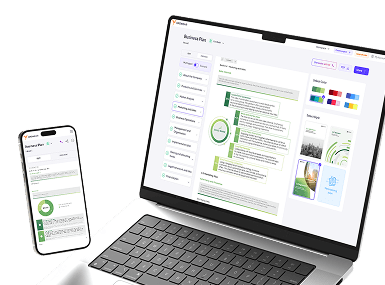
Growexa builds a complete, lender-ready business plan — with financial logic and a professionally formatted PDF
Modern Coffee Shops are half analog, half algorithm. The Operations Plan should outline how tech enhances both speed and quality.
Define your core stack: POS, scheduling, inventory, and CRM systems. Detail permissions, update routines, and data backups.
Include automation guidelines — for example, predictive ordering that triggers restocks when sales thresholds hit, or digital temperature sensors that alert staff to fridge fluctuations.
Ensure tech aligns with human workflow. A Coffee Shop overloaded with apps loses focus; the Operations Plan should prioritize simplicity.
When technology supports rather than dictates, the Coffee Shop achieves scale without losing soul.
Every Coffee Shop operates under fragile conditions: equipment failure, staffing gaps, or sudden regulation changes. The Operations Plan must forecast these realities.
List all required permits and licenses — health, occupancy, food handling, and signage — with renewal dates. Include contingency planning: backup power, emergency suppliers, and cross-training to cover absences. Insurance coverage should be explicit: liability, property, and business interruption.
Finally, outline crisis communication: who speaks publicly, how refunds are handled, and when to close temporarily. A resilient Coffee Shop doesn’t fear chaos; it rehearses it.
Excellence is repetition with reflection. The Coffee Shop Operations Plan should institutionalize learning. Schedule weekly reviews: discuss sales trends, guest feedback, and operational challenges. Monthly meetings evaluate KPIs and update forecasts.
Create feedback loops — suggestion boards, staff surveys, and quarterly innovation sessions. Encourage everyone, from barista to manager, to propose improvements.
Leadership cadence sustains focus. A stable Coffee Shop doesn’t react emotionally; it adjusts systematically. The Operations Plan is both manual and mirror — it documents how the business runs today and how it will run better tomorrow.
The strongest Coffee Shops grow because their systems scale. The Operations Plan should define replication mechanics from day one.
Document SOPs (Standard Operating Procedures) for every core process — brewing, service, accounting, hiring. Store them digitally for access across locations.

Establish central purchasing, training templates, and shared brand standards — while allowing local adaptation for community relevance.
When expansion comes — a second Coffee Shop, a kiosk, or a roasting arm — your Operations Plan becomes the operating DNA. It’s the difference between a repeatable success and an inconsistent franchise.
Great Coffee Shops feel effortless — but that effortlessness is engineered. The Coffee Shop Operations Plan transforms intuition into infrastructure. It turns every pour, greeting, and playlist into a disciplined ritual that compounds over time. A truly modern Coffee Shop operates as both craft and company — balancing human warmth with process precision. The Operations Plan is the thread connecting them, ensuring that creativity survives scale, and every guest, every day, feels the same dependable rhythm.
Your coffee is your art; your Operations Plan is your architecture. Together, they make a business that doesn’t just open — it endures.

