
Stop editing templates
Start building a plan that gets approved
Turn this template into a complete business plan with:
- Financial projections
- Loan-ready structure
- Clear repayment logic
Based on 40+ bank requirements

The specialty beverage market in the U.S. continues to evolve as consumers seek healthier, more mindful alternatives to coffee culture. In Norristown, Pennsylvania, Tea Haven is at the forefront of this transformation. Its concept fuses tradition and innovation — merging the ritual of tea drinking with a contemporary appreciation for wellness, craftsmanship, and community. This Tea House Business Plan explores how Tea Haven transforms a simple cup of tea into an experience rooted in authenticity and connection.
Turn this template into a complete business plan with:
Based on 40+ bank requirements


Most business plans fail not because of the idea — but because the numbers don’t prove repayment.
Build a bank-ready business plan in minutes
(with projections, structure, and validation)
Tea Haven was founded in 2020 by Emma Collin, a former marketing executive who traded spreadsheets for steeping leaves. What began as a side passion — creating custom herbal blends for friends — quickly evolved into a mission to transform the perception of tea among younger American consumers.
The brand’s flagship concept centers around its Tea House, a modern sanctuary where customers can both unwind and explore. The environment feels more like an art gallery than a café: soft lighting, natural woods, botanical accents, and open shelves displaying loose-leaf blends like works of art. Behind the counter, trained “tea curators” prepare customized drinks and guide guests through a sensory experience that connects aroma, flavor, and mood.
At the core of the Tea Haven Business Plan is the idea that tea is not just a beverage but an emotional experience — a medium for creativity, health, and social connection. The company’s tagline, “Where Calm Meets Craft,” encapsulates that philosophy.
The first Tea Haven location quickly became a Norristown favorite, drawing both regular locals and weekend visitors from nearby Philadelphia. Now, with strong proof of concept and customer loyalty, the company is planning its second tea house — designed to replicate the success of the original while refining operational efficiency and profitability.
The U.S. tea market — valued at approximately $3 billion — is entering a new phase of premiumization. While traditional tea bags still dominate volume, the fastest-growing segment lies in specialty loose-leaf teas, herbal blends, and functional infusions featuring adaptogens and botanicals. Industry data suggests that millennials and Gen Z consumers are driving this shift, associating tea with wellness, authenticity, and self-expression rather than formality or ritual.
Tea Haven’s Business Plan builds directly on this momentum. The company positions itself between two dominant industry archetypes:
Tea Haven occupies the middle ground — approachable luxury. Its model is built around experience and emotional value rather than caffeine dependence. Customers don’t just come for a drink; they come for meaning, atmosphere, and belonging.
Within Norristown, competition is limited. Leaf & Bean Café caters primarily to coffee lovers, while Harmony Tea Room serves an older clientele in a more traditional “afternoon tea” format. Tea Haven bridges those worlds, offering a contemporary, inclusive, and versatile experience — suitable for a solo study session, a meeting, or a weekend date. This positioning allows the company to command premium pricing while maintaining steady daily traffic. In an industry often challenged by low margins, that combination is critical.
Every detail of Tea Haven’s identity reflects its Business Plan philosophy: human-centered, sensorial, and sustainable. From the first step inside, the experience feels carefully orchestrated yet effortless. The scent of jasmine and bergamot greets guests; minimalist wood interiors evoke calm.
The design mirrors the tea-making process itself — slow, deliberate, layered. Customers can order classic teas or build custom blends by choosing a base (green, black, or rooibos) and complementing herbs, flowers, or spices. The preparation area is visible, turning each order into a mini performance.
But what truly defines the Tea House is its balance between analog charm and digital convenience. A custom-built mobile app allows users to pre-order drinks, subscribe to monthly tea boxes, or even schedule “personal steeping sessions” — guided tastings with the house tea curator. Loyalty points convert into discounts or invitations to limited events, blending gamification with genuine community building.
Tea Haven’s brand voice avoids the pseudo-spiritual tone common in wellness marketing. Instead, it leans on authenticity — small details, real stories about sourcing, and transparency in operations. Packaging is clean and modern, featuring handwritten blend names and origin notes for each ingredient.
Through its design and storytelling, Tea Haven differentiates itself from both generic coffee shops and pretentious luxury lounges. It positions itself as something new: a tea house for the next generation.
The Tea Haven Business Plan outlines a multi-layered approach to marketing — one that combines digital reach with physical presence and emotional resonance.
Online, the company relies on organic storytelling. Its Instagram page, followed by over 20,000 users, serves as both visual diary and education hub. Posts feature behind-the-scenes footage of blending sessions, photos of local farms, and customer spotlights — building an emotional bridge between brand and audience.
Paid advertising focuses on metropolitan spillover markets — targeting wellness enthusiasts in Philadelphia suburbs who seek authentic experiences outside crowded chains. Meanwhile, local SEO optimization ensures Tea Haven ranks high for searches like “tea house near me” or “best herbal tea Pennsylvania.”
Offline, Tea Haven thrives on partnerships. The company collaborates with yoga studios, independent bookstores, and artisan food markets to host pop-ups and co-branded experiences. These events introduce the brand to new audiences in organic, community-driven settings.
To convert foot traffic into long-term revenue, Tea Haven operates on a hybrid model:
Pricing reflects a balance between exclusivity and accessibility: $5–$7 per cup, $15–$25 per boxed blend, and $30 monthly for subscription deliveries.
This structure ensures healthy margins while maintaining loyalty through perceived value.
At the operational level, Tea Haven’s strength lies in its balance of creativity and precision. Behind the serene atmosphere is a highly systematized workflow designed for efficiency without compromising artistry.
Each tea curator undergoes formal training that covers everything from tea origin and brewing methods to customer psychology and sensory presentation. Their role is closer to that of a sommelier than a barista — combining technical expertise with hospitality.
Founder Emma Collin leads the company with a philosophy of “calm leadership.” She emphasizes mindfulness not only as a marketing message but as an internal management style. Team meetings begin with a one-minute pause — a literal breath before business. It’s symbolic but effective, reinforcing the brand’s identity at every level. The company operates with a lean structure:
Even the water filtration and heating systems are energy-efficient, reflecting Tea Haven’s commitment to holistic sustainability — not just as a marketing slogan, but as a business standard.
No connection between:
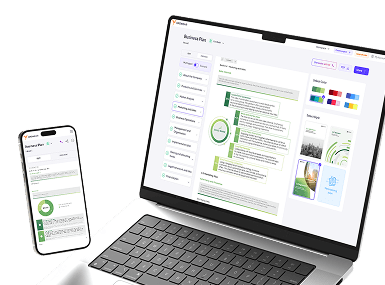
Growexa builds a complete, lender-ready business plan — with financial logic and a professionally formatted PDF
Tea Haven’s Business Plan presents a financially disciplined path to growth. The total expansion cost for the second tea house is estimated at $85,000, broken down as follows:
Funding will come through a mix of founder equity (60%) and private investment ($34,000). Projected performance metrics are strong. In year one, the second location is expected to generate $310,000 in revenue, with gross margins around 45%. By year three, total company revenue — combining both tea houses and online sales — should surpass $5.7 million, with a net profit margin above 18%.
The financial model anticipates a Payback Period of 22 months, a Return on Investment (ROI) of 150%, and an Internal Rate of Return (IRR) of 43%. These figures outpace most independent café benchmarks, underscoring Tea Haven’s operational efficiency and brand scalability.
As the network grows, economies of scale will further enhance profitability — especially in procurement, packaging, and logistics. The company is also exploring the introduction of branded merchandise and retail distribution through boutique grocers, both of which promise strong incremental revenue with minimal overhead.
Tea Haven’s long-term strategy goes beyond replication — it’s about evolution. The company envisions a network of tea houses across Pennsylvania and neighboring states, each designed to reflect its local environment while maintaining a consistent brand ethos.
Within five years, the brand aims to open five locations in high-traffic, culture-forward communities like Bethlehem, Lancaster, and Princeton. Each new Tea House will serve as both a retail space and a micro-hub for community events, workshops, and sustainability initiatives.
Simultaneously, Tea Haven plans to grow its digital footprint. Its e-commerce platform will evolve into a full tea lifestyle marketplace, featuring not just house blends but teaware, books, and collaborations with local artisans. The brand’s storytelling will extend into editorial content — think essays on tea culture, sustainability, and mindfulness — helping position Tea Haven as a thought leader in the North American tea movement.
The company also sees potential in franchising, but with selectivity. Any partner must align with Tea Haven’s philosophy and aesthetic; growth, for this brand, is never just about numbers. It’s about preserving soul while scaling smartly.
The Tea Haven story is a case study in how modern consumers reward brands that align commerce with consciousness. Its success rests not on aggressive advertising or discount-driven tactics but on authenticity, emotional value, and intelligent structure.
For entrepreneurs crafting their own Business Plan, the takeaways are clear:
Tea Haven proves that even the simplest concept — a cup of tea — can become a thriving, scalable business when vision and execution align.
Tea Haven’s journey shows how a well-structured Business Plan — grounded in market insight, design thinking, and financial discipline — can turn passion into profit. Whether you’re dreaming of your own Tea House, wellness brand, or boutique food venture, the same blueprint applies: clarity, strategy, and authentic storytelling.
Ready to build your own business plan? You can start from scratch using Growexa or adapt a ready-made Tea House Business Plan template to fit your unique market.
Turn your idea into more than a dream — make it steeped in success.

