
Stop editing templates
Start building a plan that gets approved
Turn this template into a complete business plan with:
- Financial projections
- Loan-ready structure
- Clear repayment logic
Based on 40+ bank requirements

The American egg industry is at a turning point. For decades, production was driven primarily by efficiency, with little regard for animal welfare or environmental impact. Today, consumer expectations are reshaping that model. Shoppers increasingly demand cage-free, organic, and ethically sourced eggs, creating both challenges and opportunities for producers. According to industry forecasts, the cage-free egg sector in the United States will surpass $10 billion in value by 2030, fueled by both retail demand and regulatory changes mandating higher welfare standards.
Golden Nest Farm, a new entrant in this evolving marketplace, is positioned to ride this wave of transformation. Established in 2025, the farm is designed to combine large-scale efficiency with humane, sustainable practices. By focusing on cage-free production, eco-friendly operations, and a transparent brand narrative, Golden Nest aims to supply both retail chains and local markets while carving out a distinctive reputation in a crowded industry.
Turn this template into a complete business plan with:
Based on 40+ bank requirements


Most business plans fail not because of the idea — but because the numbers don’t prove repayment.
Build a bank-ready business plan in minutes
(with projections, structure, and validation)
Golden Nest Farm is located on the outskirts of Des Moines, Iowa, one of America’s most important agricultural hubs. The company was founded by a group of entrepreneurs and agricultural specialists with a shared mission: to provide high-quality, cage-free eggs that meet the growing demand for sustainable protein.
The farm launches with a capacity of 50,000 hens, housed in modern aviary systems that give birds room to move freely while maintaining rigorous sanitary and safety standards. Daily output is projected at 45,000 eggs, with scalability built into the infrastructure to double production within five years.
Golden Nest operates as a limited liability company with an initial investment of $3 million, including $2 million from external investors and $1 million in founder equity. The investment covers land, construction of facilities, automated feeding and egg collection systems, and marketing for brand development. The company’s business model combines wholesale contracts with retailers and food service companies alongside direct-to-consumer sales through farmers’ markets and subscription boxes.
The U.S. egg market is valued at approximately $17 billion annually, with cage-free and organic eggs representing the fastest-growing segments. This growth is driven not only by consumer preferences but also by major retailers such as Walmart, Costco, and Kroger, which have pledged to sell only cage-free eggs by 2030. Restaurants and hospitality companies are following suit, seeking suppliers that align with their sustainability commitments.
Golden Nest Farm’s target market is twofold. First, it seeks wholesale distribution deals with regional grocery chains and institutional buyers, supplying consistent volumes at competitive prices. Second, it aims to build a recognizable consumer brand, offering cartons of cage-free eggs under the Golden Nest label. The latter approach is especially important in urban centers, where consumers are willing to pay a premium for products perceived as ethical, fresh, and environmentally responsible.
Competition in Iowa and neighboring states is strong, with established players like Vital Farms dominating the organic segment and large producers pivoting toward cage-free systems. Yet, many smaller farms struggle with scaling up to meet consistent demand. Golden Nest’s hybrid model—combining industrial efficiency with ethical production—allows it to position itself as both a reliable partner for large buyers and an aspirational brand for end consumers.
Golden Nest’s sales goals are ambitious but grounded. In its first year, the company expects to produce revenues of $1.2 million, driven by wholesale contracts and supplemented by direct consumer sales. By the third year, revenues are projected to reach $3.5 million, with profitability achieved by the end of year two.
Marketing efforts focus on building a brand identity that resonates with values-driven consumers. Packaging highlights the cage-free environment, the farm’s sustainability practices, and nutritional quality. Digital campaigns on Instagram and Facebook target urban millennials and families, while partnerships with local influencers emphasize the “farm-to-table” story.
Beyond branding, Golden Nest will leverage partnerships with grocery chains, restaurants, and hotels. Trade shows and industry expos are key channels for securing wholesale contracts. On the consumer side, subscription-based deliveries—offering weekly or monthly egg boxes—will create recurring revenue streams and strengthen brand loyalty.
Pricing is carefully calibrated to balance affordability and profitability. Wholesale contracts will be priced at competitive market rates, while retail products will carry a modest premium, reflecting the added value of cage-free production.
The core of Golden Nest’s operations lies in its investment in state-of-the-art poultry management systems. Aviary housing provides hens with space to perch, nest, and roam, while automated feeders, water systems, and egg conveyors ensure efficiency. Environmental controls regulate temperature, humidity, and ventilation, reducing bird stress and enhancing productivity.
Waste management is another cornerstone of the operation. Manure is collected and processed into organic fertilizer, creating an additional revenue stream and reducing environmental impact. Energy efficiency is supported through solar panels installed on facility rooftops, cutting electricity costs and reinforcing the farm’s sustainability narrative.
Daily operations are streamlined through digital monitoring systems that track flock health, feed consumption, and egg output. This data-driven approach allows the management team to make quick adjustments, minimizing waste and maximizing productivity.
No connection between:
Growexa builds a complete, lender-ready business plan — with financial logic and a professionally formatted PDF
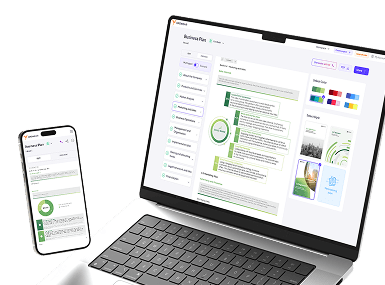
Golden Nest Farm’s team combines agricultural expertise with business acumen. The founding group includes a veterinarian specializing in poultry health, an agronomist with experience in sustainable farming, and two entrepreneurs with backgrounds in logistics and consumer marketing. Together, they provide the blend of skills required to navigate both the production and commercial sides of the business.
The workforce will launch with 25 full-time employees, covering animal care, facility management, logistics, and sales. Hiring prioritizes individuals with agricultural experience, supplemented by in-house training programs to align staff with the farm’s commitment to animal welfare and quality assurance.
Compensation is competitive, and employees participate in a profit-sharing scheme after year two. This approach is designed not only to attract skilled labor but also to build long-term loyalty in an industry where staff retention can be challenging.
Golden Nest Farm’s financial structure reflects both ambition and prudence. The $3 million in initial investment is allocated across infrastructure, equipment, working capital, and marketing. The company seeks $2 million from external investors in exchange for a 30 percent equity stake, offering dividends after three years and a buyback option after five.
Revenue projections are robust. In year one, sales are expected to hit $1.2 million, rising to $3.5 million in year three and $6 million by year five. Gross margins are projected at 35 percent initially, climbing to 45 percent as operations scale and efficiency improves. Net profit margins are expected to reach 15 percent by year five.
Return on investment is forecast at 162 percent, with an internal rate of return (IRR) of 28 percent and a payback period of 30 months. These metrics position Golden Nest as an attractive investment in a sector that traditionally delivers slower returns due to capital intensity.
Golden Nest Farm’s business plan illustrates how a traditional industry can reinvent itself around modern values. By combining cage-free production with sustainability, technology, and a strong brand identity, the company is creating a blueprint for growth in an evolving marketplace.
For entrepreneurs, the lesson is clear: even in sectors dominated by established players, innovation and execution can carve out meaningful opportunities. Whether your venture is in agriculture, wellness, or consumer goods, the same principles apply—align with consumer demand, invest in operational excellence, and structure finances to attract investor confidence.
Download the full Golden Nest Farm business plan to explore each section in detail—from operations to financial projections. Or, begin with an poultry farm business plan template and adapt it to your own vision.
Ready to build your own business plan? Visit Growexa to access customizable templates, guided tools, and expert-backed frameworks that help you shape your idea with clarity and confidence. Turn your concept into more than viable—make it launch-ready.

