
Stop editing templates
Start building a plan that gets approved
Turn this template into a complete business plan with:
- Financial projections
- Loan-ready structure
- Clear repayment logic
Based on 40+ bank requirements

The childcare industry has expanded steadily over the past decade, driven by rising dual-income households and increasing demand for high-quality early education. While the market opportunity is strong, it is also competitive, requiring providers to combine trust, curriculum innovation, and operational discipline.
Little Stars Daycare illustrates how a well-structured business plan can transform an idea into a viable venture. Positioned in suburban Denver, the daycare offers families a nurturing environment with small class sizes, structured learning programs, and digital parent engagement tools. Its model responds directly to shifting expectations — parents want more than supervision, they seek developmental support and transparency.
Turn this template into a complete business plan with:
Based on 40+ bank requirements


Most business plans fail not because of the idea — but because the numbers don’t prove repayment.
Build a bank-ready business plan in minutes
(with projections, structure, and validation)
Little Stars is designed as a licensed daycare with capacity for 40 children, serving families with children ages six months to five years. Its mission is to provide more than childcare — it aims to foster early learning and social development in a safe, supportive, and stimulating environment.
The program combines play-based activities with structured learning modules, ensuring that children build both cognitive and social skills. The center also differentiates itself through strong parent engagement, using digital communication tools to share daily updates, progress reports, and schedules. By integrating transparency into its model, Little Stars addresses one of the most important concerns of today’s parents: knowing exactly how their children are cared for and what they are learning.
The value proposition rests on three pillars: quality programming led by qualified educators, small group sizes that allow personalized attention, and modern conveniences such as flexible scheduling and app-based communication.
The Denver daycare market continues to expand, driven by population growth and the rising number of working parents. Yet many families still report frustration with limited options that balance safety, affordability, and educational enrichment.
Cherry Creek, where Little Stars is positioned, reflects this gap clearly. While the area is home to a mix of affluent households and busy professionals, parents often struggle to find providers that combine reliable supervision with structured early education. Competitors include larger centers with standardized programming and smaller providers that may lack formal curricula. Little Stars enters the market with a hybrid approach — boutique-level attention paired with a structured, modern program.
The plan’s market analysis shows strong demand for STEM-oriented and bilingual early learning initiatives, alongside a growing interest in eco-friendly and health-conscious practices. By weaving these priorities into its strategy, Little Stars appeals to parents who see daycare not as a convenience but as a critical part of their child’s development.
Winning parental trust is central to any daycare’s success, and Little Stars integrates this principle into its sales and marketing approach. Outreach efforts are designed to build credibility as well as visibility.
The plan outlines digital strategies such as a professional website, targeted social media campaigns, and parent testimonials. These are paired with community-based initiatives like open house events, partnerships with pediatric clinics and family organizations, and referral incentives that reward satisfied parents for spreading the word.

Revenue diversification also plays a role. In addition to full-time daycare enrollment, Little Stars plans to offer after-school care, summer programs, and weekend enrichment activities. These services not only meet family needs but also help stabilize revenue streams throughout the year, smoothing seasonal fluctuations.
Behind every strong daycare is a capable team. The Little Stars plan emphasizes the importance of leadership with backgrounds in early childhood education, safety compliance, and small business management.

Staff recruitment is built around maintaining low child-to-teacher ratios, ensuring personalized care and adherence to licensing requirements. Training programs are planned to emphasize safety, developmental milestones, and consistent communication with parents. This focus on professional staff development positions the daycare as a trusted, high-quality provider in its community.
No connection between:
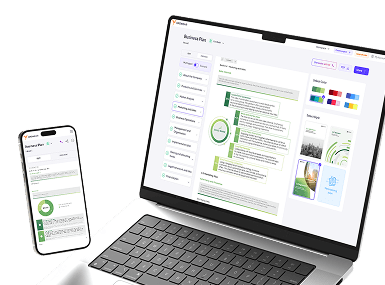
Growexa builds a complete, lender-ready business plan — with financial logic and a professionally formatted PDF
Operating a daycare involves significant upfront investment: facility renovation, licensing, equipment, curriculum resources, and staffing. Little Stars’ financial plan breaks these costs down clearly and matches them with realistic revenue assumptions based on enrollment growth.
Cash flow forecasts account for seasonality, while margin targets are aligned with industry benchmarks. The projections indicate that as enrollment reaches full capacity, the daycare can move from covering operational costs to generating sustainable profit. For investors, the plan balances mission-driven intent with credible financial returns.
The Little Stars business plan proves that a daycare can be both mission-driven and financially sound. It combines a clear educational philosophy with operational rigor and realistic financial planning — a model that can inspire entrepreneurs in childcare or any service-based sector where trust and quality define success.
Download the full Little Stars Daycare business plan to review every section in detail — from curriculum strategy to financial projections. Or begin with the Daycare Business Plan Template and adapt it to your own concept. Ready to create a plan from scratch? Visit Growexa to access customizable tools and frameworks that make your idea launch-ready.

