
Stop editing templates
Start building a plan that gets approved
Turn this template into a complete business plan with:
- Financial projections
- Loan-ready structure
- Clear repayment logic
Based on 40+ bank requirements

Opening a daycare today is about much more than providing safe supervision. Parents expect a holistic approach: nurturing environments, innovative learning methods, transparency in communication, and measurable developmental outcomes. To meet these expectations—and to attract both investors and families—entrepreneurs must ground their idea in a carefully structured business plan.
The Daycare Business Plan Template provides the framework. But to truly transform it into a launch-ready strategy, it must be adapted with clear positioning, operational detail, and financial foresight specific to your concept.
Turn this template into a complete business plan with:
Based on 40+ bank requirements


Most business plans fail not because of the idea — but because the numbers don’t prove repayment.
Build a bank-ready business plan in minutes
(with projections, structure, and validation)
The executive summary of a daycare is more than an introduction—it’s a trust-building statement for parents and a credibility marker for investors. Instead of simply stating that you will provide childcare, emphasize what makes your offering unique.
Do you offer bilingual early education, STEM-focused preschool programs, or outdoor learning environments? Will parents benefit from digital tools that provide real-time updates? Alongside your vision, outline tangible milestones such as enrollment targets, satisfaction ratings, or break-even timelines. These metrics demonstrate that your idea is both aspirational and achievable.
In the “About the Company” and “About the Project” sections, credibility is critical. Include legal structure, ownership, and leadership qualifications, but go further—show why your team is equipped to operate a daycare successfully. Highlight experience in early childhood education, safety management, or operations leadership.
Your project description should also define the gap you are addressing. Larger facilities may struggle with personalized attention, while smaller providers often lack structured programs. A well-developed SWOT analysis here turns vision into grounded opportunity, showing that you understand not only your strengths and opportunities but also your weaknesses and external threats.
In the daycare sector, the market is defined by values as much as demographics. Parents increasingly prioritize small class sizes, bilingual or STEM-focused programs, and transparency in communication. Many also seek providers who integrate nutrition, wellness, and eco-friendly practices into the daily routine.
When adapting the template, go beyond broad growth statistics. Segment your audience: dual-income households with limited time, health-conscious families, or parents seeking advanced early learning opportunities. Demonstrating that you understand these groups—and how your daycare meets their needs—shows investors and parents alike that your concept is market-ready.
For a daycare, marketing is as much about credibility as visibility. A strong strategy blends online presence with community engagement. A professional website, active social media, and testimonials establish confidence, while open houses, local partnerships, and referrals create a personal connection.

The sales strategy should reflect seasonality and retention. Back-to-school periods may drive spikes in enrollment, while after-school and enrichment programs can help smooth demand throughout the year. Loyal families become your strongest ambassadors, making retention as important as acquisition.
Operations are the backbone of a daycare’s reputation. When adapting the template, detail how your facility design supports safety and learning, how staffing ratios ensure personalized care, and what investments in curriculum and equipment will set you apart.
Staff recruitment and training deserve particular focus. Parents judge a daycare by the quality of its caregivers, and a strong culture of safety, empathy, and professionalism is critical to long-term success.
No connection between:
Growexa builds a complete, lender-ready business plan — with financial logic and a professionally formatted PDF
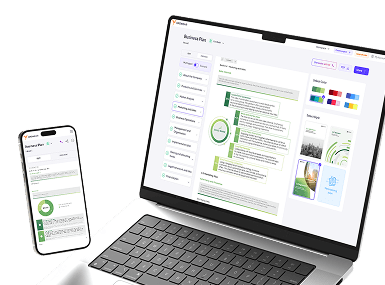
Daycares are capital-intensive ventures, with costs spanning facility build-out, equipment, staffing, and regulatory compliance. A clear funding plan should break down startup costs by category, balance owner contributions with outside investment, and present realistic revenue projections tied to enrollment targets.
Equally important is acknowledging seasonality and cash flow needs. Transparent assumptions and a thoughtful financial model reassure investors that your daycare is designed for sustainability, not just launch.
Launching a daycare is about more than revenue—it’s about shaping communities, supporting families, and nurturing the next generation. By adapting the business plan template to your unique strengths and market realities, you create not only a roadmap for investors but also a reassuring promise for parents. Use the Daycare Business Plan Template to shape your own project or download the completed A Business Plan Example for a Daycare for inspiration, or take advantage of Growexa to build a plan that is not only viable but ready to launch.

