
Stop editing templates
Start building a plan that gets approved
Turn this template into a complete business plan with:
- Financial projections
- Loan-ready structure
- Clear repayment logic
Based on 40+ bank requirements

If you’re looking for a Consulting Business Plan Template, this guide helps you turn your consulting business idea into a structured, investor-ready plan in minutes using Growexa AI. Whether you are starting a new consulting firm or expanding an existing consulting practice, this template provides a clear framework to plan operations, define your services, secure funding, and support long-term growth — without starting from scratch.
The template is organized into clear sections that cover every stage of building a complete consulting business plan.
Turn this template into a complete business plan with:
Based on 40+ bank requirements


Most business plans fail not because of the idea — but because the numbers don’t prove repayment.
Build a bank-ready business plan in minutes
(with projections, structure, and validation)
The Executive Summary is the most important section of the Consulting business plan because it defines the vision, value proposition, and strategic direction of the Consulting firm in concise and compelling terms. It is not a description of services; it is a strategic statement that answers three critical questions: Why does this Consulting firm exist? Whom does it serve? And how will it generate measurable results and profitability? The Executive Summary sets the tone for the entire business plan by clearly articulating the market opportunity for Consulting, the core positioning of the Consulting practice, and the financial outlook that demonstrates viability and scalability.
A strong Consulting business plan begins by establishing the strategic purpose of the firm. Consulting is not simply about providing advice; it is about enabling transformation. The Executive Summary should communicate the Consulting firm’s mission in terms of impact and market differentiation—what unique expertise the Consulting firm brings, what problems it solves that competitors do not, and why clients will choose this firm over large consulting giants or independent advisors. This section introduces the Consulting model not as a service provider, but as a strategic partner capable of driving outcomes.
Next, the Executive Summary outlines the core Consulting offering and business model. A Consulting business plan must demonstrate clarity around how value will be packaged and delivered—whether through retainer-based strategy Consulting, project-based advisory engagements, performance-based Consulting models, or hybrid offerings. This clarity is essential because Consulting revenue is directly tied to positioning and perceived value, not to hours worked. A well-crafted Consulting business plan will communicate exactly how the firm plans to generate predictable cash flow, retain clients long term, and build intellectual property that increases profit margins over time.
Finally, the Executive Summary must present a high-level financial and strategic outlook. This includes revenue projections, expected profitability timelines, and long-term scaling potential. Unlike conventional plans that rely on physical infrastructure, a Consulting business plan emphasizes intellectual scalability—the ability to grow revenue without proportionally increasing costs, through digital Consulting products, group advisory models, licensing, and strategic partnerships. This is where the Consulting business plan transforms into an engine of growth, articulating not just how the firm will enter the market, but how it will dominate it.
The Company Overview section of a Consulting business plan establishes the strategic foundation of the firm by articulating its identity, positioning, and structural intent. Unlike traditional businesses that rely heavily on physical assets or production capabilities, a Consulting firm is defined by intellectual capital, strategic focus, and market relevance. Therefore, this section is not a generic company summary—it is a strategic declaration of purpose, designed to create confidence among stakeholders, clients, and potential investors.

A well-crafted Company Overview begins by clearly defining the Consulting firm’s core mission in terms of transformation, not transaction. Rather than stating “we provide advisory services,” the business plan should communicate the strategic outcome the Consulting firm exists to produce. For example, a Consulting firm may be established to help organizations accelerate digital transformation, improve profitability through operational restructuring, or scale internationally through strategic partnerships. The key is to demonstrate that Consulting services are not offered as generic solutions, but as high-impact interventions aligned with market demand.
The Consulting business plan should then present the firm’s value proposition and positioning. In Consulting, differentiation is essential because clients are not buying deliverables; they are buying trust, expertise, and strategic clarity. Positioning defines who the Consulting firm serves, what specific problems it solves, and how it delivers results more effectively than alternatives. This may involve niche specialization (e.g., Consulting for tech startups), methodology leadership (e.g., data-driven transformation Consulting), or market authority (e.g., thought leadership-led Consulting). A strong Consulting business plan makes it clear that the firm is not competing on price, but on expertise and outcomes.
Additionally, this section outlines the organizational structure and operating model. Even if the Consulting firm is launching with a single founder, the business plan should present a future-oriented architecture—phases of growth, service expansion pathways, and integration of scalable Consulting models such as licensing, digital advisory platforms, or strategic joint ventures. This creates the perception not of a freelance practice, but of an intentional Consulting enterprise with long-term market ambition.
A Consulting business plan is only credible if it demonstrates a deep, data-informed understanding of the market landscape. Consulting is a knowledge economy business, and clients expect to engage with firms that understand macroeconomic shifts, emerging industry pressures, and strategic opportunities. Therefore, the Market Analysis section must showcase intelligence, not description. It should validate market demand, identify key drivers of Consulting growth, and highlight the structural inefficiencies that create Consulting opportunities.
A powerful market analysis begins by identifying the forces driving demand for Consulting. Across global markets, businesses are navigating digital disruption, regulatory complexity, competitive saturation, and economic volatility. These forces create a consistent need for external expertise. The Consulting industry has historically grown faster than GDP, and in economic downturns, the demand for strategic Consulting often increases as organizations seek guidance to adapt and survive. The business plan should therefore position Consulting not as a discretionary expense, but as a strategic necessity for companies seeking growth or transformation.
The analysis must also segment the Consulting market into clearly defined client categories: startups seeking market entry strategy, mid-market firms requiring operational optimization, and large enterprises undergoing restructuring or digital transformation. Rather than presenting broad statements, the Consulting business plan must demonstrate strategic insight into the unique needs and spending behaviors of these segments. For instance, startups prioritize Consulting that drives funding readiness and go-to-market execution, whereas established corporations invest in Consulting focused on cost reductions, M&A strategy, or ESG compliance.
A critical aspect of this section is competitor analysis. However, in a Consulting business plan, competitive analysis is not about listing other firms—it is about identifying gaps in current Consulting offerings and showing how your Consulting model fills those gaps. The document should demonstrate how boutique Consulting firms are gaining market share by offering specialized services that large firms cannot deliver efficiently, and how digital delivery models are disrupting traditional Consulting engagement structures. Clients are no longer looking solely for prestige; they are seeking Consulting partners who can provide clarity, customization, and measurable outcomes efficiently.
The Market Analysis should conclude by demonstrating the scalability of the opportunity. A Consulting business plan must present Consulting not as a saturated market, but as an expanding frontier shaped by global trends, where new consulting models—subscription advisory, hybrid Consulting + software models, and results-based engagements—are unlocking unprecedented profitability for firms that are strategically positioned.
In the Consulting industry, marketing is not about promotion—it is about positioning authority. While traditional businesses compete for visibility, Consulting firms compete for credibility. This section of the business plan must demonstrate how the Consulting firm will establish itself as a trusted strategic advisor rather than another service provider. The most effective Consulting firms do not chase clients; they attract them by demonstrating insight, expertise, and results.
A Consulting business plan must therefore articulate a marketing strategy rooted in thought leadership, strategic visibility, and relationship-driven acquisition. In Consulting, clients do not buy advertisements—they buy expertise. This means the marketing strategy should prioritize credibility-building mechanisms such as white papers, executive webinars, keynote speaking, strategic LinkedIn presence, case study publishing, and industry-specific insights. A Consulting firm that positions itself as a source of clarity in a noisy market immediately differentiates itself and increases perceived value.
Sales strategy in a Consulting business plan must reflect the reality that Consulting sales are not transactional—they are consultative. Decisions are made at the executive or ownership level and are based on trust, urgency, and perceived ROI. This requires a defined client acquisition pathway: initial insight-driven visibility, value-led engagement, diagnostic consultations, and proposal-driven conversion. Rather than focusing on high-volume lead generation, the Consulting business plan should emphasize high-conversion touchpoints with qualified decision-makers.
Pricing strategy is a key component of marketing and sales positioning. A Consulting business plan should clearly articulate the value-based pricing approach, where fees are aligned not with time invested, but with outcomes delivered. This model reinforces the advisory nature of a Consulting practice and supports scalability through retainers, performance-based fees, and recurring advisory agreements. Marketing and sales, when aligned in this manner, transform the Consulting firm from a vendor into a strategic partner—this is the positioning that leads to high-margin engagements and recurring revenue.
The Operations Plan is where the business plan transitions from strategic intent to executable structure. In a Consulting firm, operations are not defined by physical assets or manufacturing processes; they are defined by intellectual workflows, client delivery systems, and scalable methodologies. This section must explain how Consulting engagements will be delivered with consistency, efficiency, and measurable client outcomes.
A strong Consulting operations framework begins with methodology. The business plan should outline how Consulting services are structured—from initial discovery and diagnostic phases to solution development, implementation guidance, and performance tracking. Unlike ad hoc consultants who rely on unstructured advice, a professionally designed Consulting firm standardizes delivery to ensure predictable value creation and scalability. This operational clarity enhances brand trust and allows the Consulting firm to replicate success across multiple engagements, regardless of client size or industry.
Resource allocation is another critical component. The Consulting business plan should detail how talent will be structured—whether through core in-house consultants, strategic partnerships, or subcontracted experts. Because Consulting success depends on intellectual capacity, the operations plan must demonstrate how the firm will ensure quality control, knowledge management, and continuous optimization of Consulting deliverables. As the firm scales, operational systems such as client onboarding frameworks, project tracking tools, and knowledge repositories become key assets in maintaining Consulting excellence.
Client relationship management is also an essential operational function. A Consulting firm’s growth is dependent not only on acquiring clients but on retaining and expanding accounts. The operations plan should explain how client engagement will be maintained through consistent communication, performance reporting, and long-term strategic advisory. The objective is to position the Consulting firm not for one-time engagements, but for ongoing strategic partnerships.
Ultimately, this section of the business plan proves that the Consulting firm is not just capable of generating ideas—it is equipped to consistently execute them at a professional level. Operations become the engine through which Consulting expertise is transformed into scalable, recurring revenue.
The Management and Organization section of a Consulting business plan defines the intellectual infrastructure of the firm. In Consulting, leadership is not evaluated solely by organizational hierarchy, but by strategic competence, client influence, and the ability to drive outcomes. Therefore, this section must clearly articulate how leadership, advisory roles, and operational functions will be structured to maximize expertise and efficiency.

A strong Consulting business plan presents management not as administrative roles, but as strategic assets. The founding partners or lead consultants should be positioned as thought leaders with deep domain knowledge and a demonstrated ability to influence executive decision-making. Their expertise, credibility, and networks form the foundation of the firm’s market positioning. Unlike traditional businesses, where the organization is defined by departments, a Consulting firm’s organizational structure is designed to optimize intellectual capital, client delivery, and business development.
This section of the business plan should explain how Consulting talent will be recruited, developed, and retained. Consulting is a human capital business; therefore, the Consulting firm must demonstrate a strategy for securing top-tier consultants, subject matter experts, analysts, and project managers—either in-house or through strategic partnerships. Moreover, the firm must articulate a knowledge management system designed to institutionalize intellectual property, methodologies, and frameworks to ensure that client results are not dependent on any single individual.
A well-structured Consulting organization is often lean, yet highly leveraged through systems, automation, and intellectual frameworks. The business plan should illustrate potential future roles as the firm scales—such as engagement leads, consulting partners, digital product managers, or training directors—to showcase how the Consulting model can evolve into a multi-dimensional professional enterprise. This demonstrates to stakeholders that the organization is designed not only to operate—but to grow strategically and sustainably in alignment with the business plan vision.
No connection between:
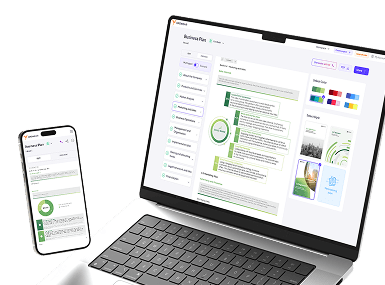
Growexa builds a complete, lender-ready business plan — with financial logic and a professionally formatted PDF
While Consulting is one of the lowest-capital industries to enter, the strategic allocation of funding is what transforms a Consulting practice from a personal service into a scalable enterprise. Whether the Consulting firm is self-funded, investor-backed, or seeking strategic partnerships, this section of the business plan must clearly articulate how capital will be raised, justified, and deployed to maximize return on investment.
A Consulting business plan should begin by explaining the purpose of capital—not as a means of survival, but as an accelerator of growth. Funding may be required for brand development, market expansion, acquisition of proprietary tools, development of digital Consulting products, recruitment of senior consultants, or global scaling initiatives. In Consulting, capital is not spent on inventory or infrastructure—it is invested in reputation, intellectual property, and client acquisition capacity. Therefore, every dollar allocated must be tied directly to measurable growth outcomes.

Potential funding sources for a Consulting firm include personal investment, private equity, strategic partners, or client-based financing models such as prepaid retainers or licensing agreements. A forward-thinking Consulting business plan presents funding not as debt, but as strategic leverage. For example, a Consulting firm may raise capital to launch an online advisory platform or to develop a proprietary Consulting methodology that can be licensed internationally—both significantly scalable with low marginal cost.
The allocation strategy is equally important. The business plan must detail how funds will be distributed across marketing, operations, technology, and intellectual capital development. Capital invested in marketing should not be viewed as an expense but as revenue generation infrastructure. Funds directed toward Consulting frameworks, certification programs, and digital assets enhance the long-term enterprise value of the firm. A compelling Consulting business plan will demonstrate that the firm knows not only how to raise capital, but how to deploy it intelligently to create exponential returns.
The Financial Plan is the defining pillar of any Consulting business plan, transforming strategic intent into measurable economic outcomes. While Consulting is uniquely profitable due to low overhead requirements and high-margin service delivery, this advantage is only realized when supported by a disciplined financial framework. A Consulting business plan must demonstrate not only financial feasibility, but financial scalability—showing how Consulting expertise is converted into sustainable, predictable revenue over time.
A strong financial section begins with revenue modeling. Unlike traditional industries, Consulting revenue is not solely dependent on volume; it depends on value creation, client retention, and the ability to build recurring revenue streams. The business plan should outline how consulting engagements will be packaged financially—whether through retainers, project fees, performance-based compensation, advisory subscriptions, or hybrid models. Revenue projections must reflect realistic assumptions about client acquisition rates, average engagement value, and conversion cycles, while also demonstrating how pricing is tied to strategic positioning rather than commodity billing.
Cost forecasting is equally important. Although Consulting requires minimal physical infrastructure, costs related to marketing, technology platforms, staff compensation, strategic partnerships, and intellectual property development must be clearly outlined in the business plan. The goal is not to minimize costs arbitrarily, but to align expenses with growth acceleration. The financial plan should show controlled operating costs, strong contribution margins, and a clear pathway to achieving high profitability through efficient Consulting delivery systems and leveraged revenue models.
The final component of this section is financial scalability. A Consulting business plan must demonstrate how the firm will transition from linear income (time-for-fee engagements) to scalable income through proprietary frameworks, digital consulting programs, group advisory models, and licensing. These streams allow the Consulting practice to multiply profit without proportionately increasing costs, creating exponential enterprise value. Financial projections should communicate this transition clearly—showing how initial consulting engagements generate working capital, which is then reinvested into scalable assets that extend revenue beyond traditional consulting hours.
Ultimately, the Financial Plan section signals to stakeholders that the Consulting firm is not a freelance service—but a financial asset designed for consistent cash flow, strategic reinvestment, and long-term enterprise value creation. This is where the business plan proves its credibility and transforms Consulting expertise into a sustainable economic engine.
A consulting firm is more than a business—it is a promise of clarity in complexity. Clients don’t just buy recommendations; they buy trust, perspective, and execution. To deliver that consistently, you need more than expertise—you need a business plan that translates knowledge into a strategy for growth.
Ready to take the next step? You can download the consulting business plan template and adapt it to your own practice. Or, explore a fully completed example to see how the framework applies in real life. And if you’d like to create something entirely unique, visit Growexa to build a plan with customizable tools and expert guidance.
Even though Consulting requires minimal physical investment, it is one of the most competitive industries in the world. A Consulting business plan is not about securing real estate or equipment—it is about positioning, differentiation, pricing power, and scalability. Without a clear strategic roadmap, a Consulting practice defaults to reactive work and low-value engagements. A strong business plan transforms Consulting expertise into a structured business with recurring revenue and long-term enterprise value.
Absolutely. In the Consulting industry, clients choose firms based on perceived competence and strategic clarity. A well-developed consulting business plan communicates expertise, methodology, and business maturity. It acts as proof that the Consulting firm operates with executive-level discipline and is capable of delivering measurable outcomes. Clients view firms with a clear business plan as more credible, reliable, and strategically aligned.
The key to scalability is the revenue model. A Consulting practice relying solely on hourly billing is limited by time. A business plan that incorporates subscriptions, retainers, performance-based fees, and digital Consulting assets creates exponential growth. Scalability is designed in the financial section of the business plan—it does not happen accidentally during operations.
Solo consultants need a business plan even more than large firms. Without one, they become dependent on inconsistent referrals and time-based income. A business plan helps solo Consulting professionals define niche positioning, build authority, implement predictable client acquisition systems, and establish pricing strategies that elevate them from “freelancer” to “trusted advisor.” It is the foundation for transitioning from one-person practice to scalable Consulting firm.
Unlike traditional businesses, the Consulting industry evolves rapidly due to technological change, regulatory shifts, and economic cycles. A consulting business plan should be reviewed at least annually and adjusted quarterly to reflect new opportunities, service innovations, revenue performance, and evolving client needs. A static business plan limits growth; a dynamic one drives strategic decision-making and keeps the Consulting business aligned with market trends and profitability targets.

