
Stop editing templates
Start building a plan that gets approved
Turn this template into a complete business plan with:
- Financial projections
- Loan-ready structure
- Clear repayment logic
Based on 40+ bank requirements

The consulting world runs on trust — not transactions. Clients don’t buy packages; they buy perspective. They choose consultants who see further, explain clearer, and deliver faster. That’s why every thriving consulting business is built not only on expertise, but on visibility — and the engine behind that visibility is a well-structured marketing strategy.
Unlike product companies, consultants sell something intangible: insight. Convincing clients to invest in advice requires more than credentials; it demands authority, proof, and emotional confidence. A strong marketing strategy for a consulting business turns knowledge into influence, positioning your firm as the natural choice before you ever send a proposal.
In a marketplace crowded with self-proclaimed experts, the ability to communicate expertise clearly — across digital channels, conversations, and content — is what differentiates sustainable firms from invisible ones. The modern consultant doesn’t just compete on reputation; they scale it. And to do that, they need a framework — a deliberate system for attracting, nurturing, and retaining clients through insight, consistency, and credibility.
This article explores how to build that system step by step — how to position your brand, define your audience, and design a marketing strategy that doesn’t just bring leads, but builds a business that sells trust at scale.
Turn this template into a complete business plan with:
Based on 40+ bank requirements


Most business plans fail not because of the idea — but because the numbers don’t prove repayment.
Build a bank-ready business plan in minutes
(with projections, structure, and validation)
Every powerful marketing strategy begins with clarity — not about your product, but about your promise. In a consulting business, that promise defines your entire identity. Why should clients listen to you? What transformation do you enable? What problem do you solve better than anyone else?
The consulting industry is full of sameness — strategy firms sound like operations firms, HR consultants mimic leadership coaches, and digital agencies call themselves “partners in growth.” But in truth, differentiation isn’t found in buzzwords; it’s found in focus. A great marketing strategy starts with knowing exactly where you fit — and having the courage to say where you don’t.
Your value proposition must connect logic with emotion. “We improve efficiency by 25%” is a result; “We help companies regain control of their time” is a mission. Clients rarely buy consulting deliverables; they buy outcomes, confidence, and peace of mind. So when defining your consulting business identity, translate your expertise into a narrative that resonates with their real-world stakes — revenue, reputation, risk, or resilience.
Positioning is equally critical. Are you a boutique specialist competing on depth? A scalable consultancy competing on systems? Or a visionary brand competing on innovation? Each type demands a different marketing strategy — the boutique relies on personal branding and referrals; the scalable firm on digital authority and inbound content; the visionary on thought leadership and PR.
Your positioning should live everywhere: your website, proposals, tone, and case studies. It should define the conversations you start and the opportunities you attract. Once your consulting business owns a clear identity, the market begins to find you — not the other way around.
A successful marketing strategy in consulting doesn’t chase everyone — it speaks directly to those who are ready to listen. Defining your Ideal Client Profile (ICP) is not just about demographics; it’s about decision-making behavior. Who feels the pain you solve most urgently? Who has the authority and budget to act?

Start by mapping your experience. Every consultant has patterns — industries where you succeed, problem types you solve best, or client mindsets that align naturally with your process. These patterns are the blueprint of your consulting business. From there, refine your audience into tiers:
Understanding your audience shapes the tone of your marketing strategy. A CFO in a manufacturing company responds to ROI metrics and case studies. A startup founder, meanwhile, seeks agility and speed. The way you communicate value must align with how each audience perceives risk and reward.
In consulting, one-size-fits-all messaging kills credibility. That’s why the best firms build segmented content ecosystems — specific articles, webinars, and offers for each audience tier. When your consulting business speaks the client’s language — their metrics, milestones, and mindset — trust builds before the first meeting.
Modern tools make this process measurable. CRM systems, LinkedIn analytics, and website heatmaps can reveal which industries engage with your brand most. Use that data to adjust your marketing strategy dynamically. Remember: in the consulting world, precision beats presence. You don’t need everyone — just the right few who see your expertise as indispensable.
In consulting, expertise is invisible until you make it visible. That’s why every serious marketing strategy for a consulting business begins with authority. People hire those they trust — and they trust those they’ve seen, read, or heard long before a pitch ever lands in their inbox.
Brand authority is not about slogans or color palettes; it’s about credibility, repetition, and generosity. The more knowledge you give away, the more valuable your expertise becomes. In today’s attention economy, a consultant’s strongest currency is proof of competence — shared publicly, consistently, and intelligently.
To build thought leadership, begin by identifying your core themes — the intersection of what you know best and what your clients care most about. Publish insights regularly: market analyses, frameworks, predictions, or post-project reflections. Each piece of content is a signal — a quiet reminder that your consulting business doesn’t just follow trends; it defines them. Over time, these signals accumulate into brand gravity, attracting inbound interest from clients who already believe in your capability.
A modern marketing strategy turns this gravity into a system. A strong LinkedIn presence reinforces reputation among decision-makers. Podcasts and webinars build intimacy and authority. Guest appearances in industry media expand reach. But thought leadership only works when it’s real — your tone should be educational, not promotional. Clients can sense authenticity from a single paragraph.
And don’t underestimate the role of design and consistency. When every visual, headline, and case study aligns with your brand’s tone, your consulting business projects cohesion — and cohesion signals confidence. Authority is built not in grand gestures but in details repeated over time.
A well-designed marketing strategy for a consulting business functions like an ecosystem — a set of channels that feed each other, not compete. Gone are the days of relying solely on word-of-mouth. Today’s consultants must exist where their clients think, search, and decide.
The goal is integration. Your website is the core — the digital headquarters of your credibility. Every LinkedIn article, email campaign, and conference appearance should direct back to it. But instead of flooding every channel, focus on depth. Two or three consistently active platforms outperform ten half-hearted ones.
A truly effective marketing strategy blends visibility with depth. SEO ensures you appear in relevant searches when decision-makers seek your services. Email nurturing keeps prospects warm through useful insights rather than generic follow-ups. Social content humanizes your expertise — sharing not only frameworks but stories, lessons learned, and perspectives from real engagements. Clients don’t want perfection; they want proximity to experience.
Offline channels still matter. Speaking engagements, industry roundtables, and strategic partnerships with complementary firms can open doors digital ads never could. A consultant’s handshake still carries weight — especially when supported by a strong digital trail that validates it.
What distinguishes elite consulting businesses from struggling ones is systemization. Every marketing action — a post, a webinar, a white paper — must have purpose and measurement. The question isn’t “Did we publish this week?” but “Did it bring us closer to the right clients?” That’s the shift from activity to strategy.

When your marketing strategy becomes an ecosystem — unified, data-driven, and human — leads stop feeling like random wins. They become outcomes of design, not luck.
A powerful marketing strategy doesn’t end with visibility — it translates awareness into structured opportunity. Most consultants understand how to attract attention, but few know how to guide it. That’s where the sales funnel becomes the backbone of your consulting business.
The consulting sales journey is unique because clients rarely act impulsively. They deliberate, compare, and consult peers before making a decision. A smart marketing strategy acknowledges this psychology. It doesn’t push; it educates. The top of the funnel should focus on thought leadership and insights — white papers, guides, and articles that help clients articulate their problem. The middle deepens trust through webinars, case studies, and diagnostic tools that show your process. The bottom — proposals and consultations — must reinforce one thing: confidence that you’ve solved this problem before.
The nurturing process is where consulting firms win or lose deals. Clients often go cold not from lack of interest, but from lack of clarity. They need reassurance, not reminders. Automated email sequences or personalized follow-ups that share relevant success stories can reactivate dormant leads. The goal is to keep your consulting business at the front of their mind — not as a vendor, but as a partner waiting for the right moment.
CRM systems turn this nurturing into a measurable science. You can track open rates, engagement patterns, and readiness signals. But technology alone isn’t enough. Every touchpoint — every email, call, or message — should reflect empathy and expertise. Your marketing strategy should feel like an ongoing conversation, not a campaign.
When built correctly, the funnel becomes more than a lead generator — it’s a reputation amplifier. Prospects who don’t convert still leave impressed, often referring others. That’s the compounding magic of a consulting funnel done right: every contact, even the ones that don’t close, strengthens your brand authority.
In a consulting business, your results are your résumé. No ad or email can compete with the credibility of a client story told with clarity and data. That’s why a mature marketing strategy turns past projects into future opportunities — through well-crafted case studies, testimonials, and visible proof of impact.
Case studies are not vanity pieces; they are conversion tools. They should show not only the success but the struggle — the problem that existed, the process applied, and the measurable outcome achieved. The best stories make potential clients see themselves in the narrative. “They helped a business like mine” is the thought that turns interest into inquiry. Testimonials and reviews serve a different but equally vital role in your marketing strategy. They humanize success. A two-sentence quote from a credible executive or founder carries enormous persuasive weight. Include these across your digital touchpoints — website, proposals, and social media. Each fragment of social proof reinforces one message: “This firm delivers.”
In a digital-first world, reputation circulates fast. Encourage satisfied clients to leave public reviews, tag your firm in their announcements, or share collaborative content. This not only boosts visibility but creates a sense of momentum around your consulting business. People are drawn to motion — and nothing signals motion like visible success.
Importantly, authenticity beats perfection. Prospects can detect exaggerated claims instantly. A modest, specific case study (“we reduced reporting time by 30%”) often outperforms a dramatic but vague one (“we transformed their business”). Real metrics, real names, and real outcomes — that’s what elevates a marketing strategy from noise to influence.
When your consulting track record becomes part of your public identity, you no longer have to “sell” your services. Your clients — past and present — do it for you.
No connection between:
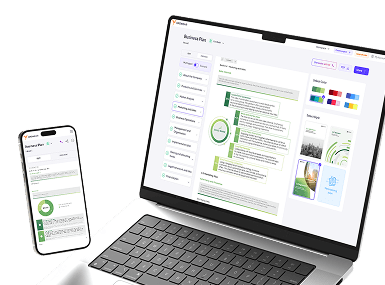
Growexa builds a complete, lender-ready business plan — with financial logic and a professionally formatted PDF
In consulting, pricing isn’t just financial — it’s psychological. It tells clients how to perceive your value before you’ve even spoken. A well-defined pricing framework is therefore a silent pillar of every great marketing strategy for a consulting business.
Many consultants make the mistake of pricing by time — hourly or daily rates that reduce expertise to labor. But clients don’t pay for hours; they pay for outcomes. Value-based pricing communicates confidence: you understand the magnitude of the problem and the worth of the solution. It also aligns your incentives with the client’s success — the foundation of long-term relationships.
Packaging is equally vital. Instead of offering an endless list of services, group them into clear, outcome-driven packages — for example, “Operational Turnaround Sprint,” “Leadership Alignment Program,” or “Digital Strategy Blueprint.” This transforms abstract consulting into tangible solutions. A smart marketing strategy makes the buying process effortless by turning complexity into clarity.
Retention, meanwhile, is the quiet engine of profitability. Acquiring a new client can cost five times more than keeping an existing one. The best consulting businesses nurture relationships long after the initial project ends — through quarterly check-ins, performance reviews, and proactive insights. When you continue adding value, you stay indispensable.
Automation supports this effort. A well-designed CRM and content system can track client milestones and trigger personalized follow-ups. But no technology replaces sincerity — handwritten notes, exclusive updates, or invitations to private briefings carry emotional weight. In consulting, loyalty isn’t built on discounts but on respect, reliability, and recognition.
The firms that master this balance — premium pricing, seamless packaging, and genuine retention — become magnets for clients who value quality over cost. They don’t chase business; business chases them.
Every effective marketing strategy for a consulting business lives and dies by its metrics. You can’t scale what you don’t measure. Yet many consultants track vanity indicators — likes, views, impressions — instead of the numbers that actually move revenue.

True performance measurement starts with clarity of purpose. If your goal is lead generation, track conversion rates and cost per acquisition. If your focus is brand authority, monitor speaking invitations, inbound referrals, and press mentions. The right marketing strategy connects every metric to a business objective, not to a dashboard.
Modern analytics tools — from HubSpot to Google Data Studio — allow you to visualize performance across campaigns and channels. But data only matters when it drives decisions. If LinkedIn posts generate engagement but not leads, pivot. If webinars attract attention but don’t convert, refine the topic. The strength of your consulting business lies in agility — the ability to adapt faster than the competition.
Scaling marketing means turning individual success into repeatable systems. Document your campaigns, messaging, and workflows. Train team members or external partners to replicate what works. Over time, your marketing strategy becomes an asset — a living playbook that multiplies reach without diluting quality.
As your firm grows, allocate budget to strategic hires or outsourced specialists — copywriters, designers, data analysts — so your consultants can focus on client excellence. Remember, the goal is not to do more marketing but to do smarter marketing.
The ultimate sign of a scalable consulting business is one that generates predictable demand — not because of hustle, but because of structure. When your marketing runs like a well-oiled system, growth stops being a surprise and starts being a rhythm.
The most powerful marketing strategy in consulting isn’t about ads or algorithms — it’s about alignment. Alignment between what you promise, what you deliver, and what your clients believe about you. When those three elements synchronize, marketing becomes invisible; reputation takes over.
A modern consulting business must think of marketing not as an external effort, but as an extension of its expertise. Every touchpoint — a proposal, a LinkedIn post, a keynote speech — is a proof of concept. The firms that win aren’t the loudest; they’re the clearest, the most consistent, and the most useful.
Building that kind of presence requires patience. Strategy compounds slowly — like trust, it grows in layers. But once established, it becomes a moat competitors can’t cross. Your brand becomes a magnet for opportunity; your insights, a currency; your systems, a shield against chaos.
Ready to elevate your visibility and credibility? Download the Consulting Business Marketing Strategy Template, explore real-world examples, or create a fully customized plan using Growexa — the platform designed to turn your expertise into momentum and your strategy into measurable success.
The most effective marketing strategy is one built on trust and clarity, not volume. Focus on demonstrating expertise through content — insights, case studies, and client stories — rather than selling aggressively. The best-performing consulting businesses combine thought leadership on LinkedIn, client referrals, and long-term relationship marketing with data-driven digital campaigns that attract the right kind of leads.
There’s no universal number, but a healthy benchmark is 8–12% of annual revenue reinvested into your marketing strategy. Early-stage consultants may invest more to build visibility, while established firms focus on refining brand authority and retention. The smartest consulting businesses treat marketing as infrastructure — something that grows equity, not just traffic.
In consulting, people buy people. A strong personal brand amplifies your marketing strategy by humanizing expertise. Partners and senior consultants should publish insights, speak at events, and stay visible in professional communities. When your team members become recognizable experts, your entire consulting business benefits from multiplied trust.
Nimbleness and focus are your biggest advantages. Large firms rely on reputation; small ones thrive on specialization. Build a marketing strategy that highlights niche mastery, faster delivery, and personal attention. Many mid-size clients prefer specialized consultants who move quickly and understand their exact industry dynamics. The right narrative can make a small consulting business look indispensable, not small.
Consistency beats intensity. A well-structured marketing strategy for a consulting business usually takes three to six months to build traction, and twelve months to show measurable returns. Thought leadership, SEO, and networking are long-term investments — their compounding effect is what transforms a consultant into a recognized authority. The firms that win are the ones that stay visible, patient, and strategic.

