
Stop editing templates
Start building a plan that gets approved
Turn this template into a complete business plan with:
- Financial projections
- Loan-ready structure
- Clear repayment logic
Based on 40+ bank requirements

Every economic cycle creates new waves of opportunity, and consulting thrives in all of them. When uncertainty grows, companies seek clarity. When industries change, they seek guidance. And when entrepreneurs scale, they seek structure. That’s why understanding how to start a Consulting Business today isn’t just about launching a service — it’s about building an authority platform in a world that runs on insight.
Consulting is one of the few business models that require almost no capital but unlimited intellectual equity. You can start from experience — a career’s worth of expertise, an industry you know intimately, or even a skill you’ve mastered solving real problems. Yet, while anyone can call themselves a consultant, only those who structure it as a business — with clear positioning, pricing, marketing, and systems — build something enduring. This is the essence of knowing how to start a Consulting Business strategically.
Starting a Consulting Business is like constructing a professional ecosystem around your expertise. It combines brand design, client acquisition, delivery process, and value measurement into a coherent framework. You’re not just selling advice; you’re monetizing perspective and trust. But to do that sustainably, you need a clear roadmap — one that takes you from concept to consistent clients, from credibility to scale.
This guide breaks down exactly how to start a Consulting Business — step by step — blending practical structure with strategic thinking. It’s built not for theorists but for doers: consultants who want to create profitable, resilient practices that grow beyond word-of-mouth and one-off projects.
Turn this template into a complete business plan with:
Based on 40+ bank requirements


Most business plans fail not because of the idea — but because the numbers don’t prove repayment.
Build a bank-ready business plan in minutes
(with projections, structure, and validation)
The first principle of how to start a Consulting Business is focus. The consulting market rewards specialization, not generalization. Clients pay for clarity — not for someone who can do “everything,” but for the person who deeply understands one thing that matters to them. Defining your niche is therefore the cornerstone of a credible consulting practice.
Start with self-inventory: What industries have you worked in? What measurable results have you produced? What challenges do people already ask your advice on? The goal is to align your expertise with a problem that has financial weight — something your target clients are willing to pay to fix. A narrow niche might seem risky, but in consulting, it’s what creates premium pricing and reputation velocity.
The second layer of this step is the value proposition. Most consultants describe what they do; the best describe what changes because of what they do. Your business plan, pitch deck, and marketing all flow from this foundation. For example:
That’s the difference between a service and a solution. When you define your consulting value proposition, you answer two core client questions: Why you? and Why now?

A powerful niche also creates the narrative backbone for your brand. It shapes the language on your website, the examples in your proposals, and even the content you publish. A consulting brand built around “strategic clarity” or “growth execution” sounds different from one focused on “operational optimization” — and it should. The clearer you are, the faster your market finds you.
In other words, how to start a Consulting Business begins not with a business card or a website, but with conviction — clarity about the exact outcome you help others achieve, and confidence that your knowledge has commercial value.
Knowing how to start a Consulting Business is impossible without market validation. Every successful consultant begins not with what they want to sell but with what clients urgently need and can budget for. This is where most aspiring consultants fail: they fall in love with their idea instead of testing whether there is demand strong enough to sustain a real Consulting Business.
Start by mapping your potential client universe. Who are the decision-makers? What triggers them to seek external help? How large is the budget they typically allocate to consulting? The answers shape your go-to-market plan and pricing logic. A consultant who serves funded startups will design very different packages from one working with regional manufacturers or public-sector programs.
Analyzing the market also means listening, not guessing. Study LinkedIn discussions, business forums, RFP databases, and competitor portfolios. Identify what language clients use when describing their pain points. If you understand their vocabulary — “reduce churn,” “scale efficiently,” “comply with ESG standards” — your proposals will resonate instantly. That’s the kind of market intelligence that transforms how to start a Consulting Business from theory into execution.
Validation comes through early conversations and pilot work. Offer discovery sessions or diagnostic audits at a limited rate to test both your hypothesis and the client’s willingness to pay. When you can convert conversations into contracts, you know your niche is viable. Consulting isn’t about abstract demand; it’s about confirmed transactions. Market validation ensures that every hour you spend building infrastructure supports a service people actually want.
Once the market confirms there’s space for you, the next stage of how to start a Consulting Business is designing what, exactly, you sell — and how you’ll get paid for it. Services without structure create confusion; structure creates perceived value. The way you define your offer signals professionalism before you ever speak to a client.
Begin with clarity of outcomes. Each Consulting engagement should have a measurable result: improved metrics, solved problems, or accelerated decisions. Package those results into service types — strategic assessments, implementation support, executive coaching, or project oversight. The more clearly each service connects to ROI, the more confident clients feel about investing.
Pricing is where consulting moves from expertise to entrepreneurship. A thoughtful Consulting Business never charges solely by the hour; it prices by value, not time. Fixed-fee projects, retainers, and tiered packages communicate predictability and align incentives. Early on, you may use blended approaches — hourly work for diagnostics, retainers for long-term advisory — but your business plan should aim toward recurring revenue.
Remember that your price tells a story about your positioning. Low fees imply risk or inexperience; strategic pricing conveys authority. If you’re still learning how to start a Consulting Business competitively, benchmark against peers, but factor in your own efficiency, overhead, and perceived specialization. Include annual adjustments for inflation or scope expansion in your agreements — small details that turn a practice into a proper enterprise.

Finally, build optional add-ons and follow-up phases into each offer. Consulting is rarely one-and-done; clients’ needs evolve as they implement your advice. A clear service menu with modular pricing allows you to grow accounts organically and increase lifetime value without constant prospecting.
Brand is credibility you can scale. In consulting, reputation is currency — and that means the way you present your firm online determines how seriously prospects take you. One of the most overlooked aspects of how to start a Consulting Business is realizing that your website, profile, and content aren’t decoration; they’re proof of competence. Start by defining your brand narrative. What transformation do you enable? What industries do you serve? What tone represents your personality — analytical, visionary, or practical? Everything from your logo to your LinkedIn summary should reinforce one consistent story: this is the person or firm that helps organizations move from confusion to clarity.
Your digital presence is your modern business card. A clean website should communicate what you do, who you serve, and what results you create — within 10 seconds of landing on it. Showcase case studies, testimonials, and a simple process outline (diagnose → plan → implement → measure). When potential clients see process, they infer structure — and structure builds trust. That’s what separates a freelancer from a professional Consulting Business. Beyond visuals, thought leadership is the engine of brand authority. Publishing insightful articles, participating in panels, or sharing frameworks on social media all contribute to visibility. Remember, consulting buyers don’t want to be sold to; they want to be educated by someone smarter than themselves. This is the heart of how to start a Consulting Business that grows through reputation rather than advertising.
Your brand should live where your audience is. If your clients read industry journals, publish there. If they gather on LinkedIn, engage there. A focused online footprint beats a scattered one. Build authority slowly but deliberately — every post, every webinar, every client review compounds into credibility.
The fifth step in understanding how to start a Consulting Business is to operationalize your expertise — to build repeatable systems that deliver consistent results. Many consultants fail not because of poor advice, but because they rely on improvisation. A true Consulting Business runs on structure.
Your delivery framework should define how engagements flow from inquiry to completion. Think of it as a consulting production line: intake, discovery, proposal, execution, reporting, and review. Each phase has deliverables, timelines, and communication checkpoints. When clients know what to expect and when to expect it, satisfaction — and referrals — skyrocket.
Choosing the right tools is another operational pillar. Project management software, CRM systems, contract templates, and secure cloud storage streamline delivery. Your business plan should list the specific platforms that support your workflow — because scalability in consulting depends less on headcount and more on process.
A critical but often ignored part of how to start a Consulting Business is client onboarding. The first two weeks set the tone for the entire relationship. Establish clear communication norms, reporting formats, and escalation paths from day one. This turns clients into partners rather than managers.
Finally, think ahead: what happens after delivery? The best Consulting Businesses implement post-project reviews, measuring ROI and identifying expansion opportunities. This not only validates your value but also seeds the next engagement — transforming one project into a long-term relationship.
Efficiency is not cold automation — it’s professional predictability. The more precise your delivery framework, the more confidence clients will have in your Consulting Business.
At some point, every new consultant discovers the uncomfortable truth: no matter how brilliant your expertise is, your business lives or dies by client flow. Learning how to start a Consulting Business that consistently attracts and closes clients means mastering relationship-driven sales — not hard selling, but intelligent, authority-based outreach.
Consulting clients rarely appear from cold ads. They buy trust first, then services. That’s why your client acquisition strategy should start with warm networks: former employers, colleagues, industry associations, and professional events. A single warm introduction often has more lifetime value than a hundred cold emails. Your Consulting Business depends on reputation capital, and reputation spreads through genuine conversations, not mass marketing.
Still, scalable growth demands systems. Build a CRM to track leads, conversations, and follow-ups. Create a repeatable discovery process that quickly identifies whether a lead fits your expertise and budget level. The goal isn’t to chase every prospect but to focus energy on those whose problems your consulting model truly solves. That’s the heart of how to start a Consulting Business strategically — turning business development from a scramble into a process.
Position yourself as a problem-solver, not a vendor. Instead of pitching, diagnose. Instead of promising, demonstrate insight. Offer value upfront: a short assessment call, a benchmark analysis, or an executive summary of industry trends. Each act of generosity positions you as indispensable. When your pipeline is built around helping, not hunting, closing becomes a natural outcome of trust.
Once you’ve established early wins, formalize your referral system. Satisfied clients are your best marketers. Ask for introductions at project completion, build testimonials into contracts, and document measurable outcomes that clients are proud to share. The more you systematize word-of-mouth, the more your Consulting Business becomes self-propelling.
No connection between:
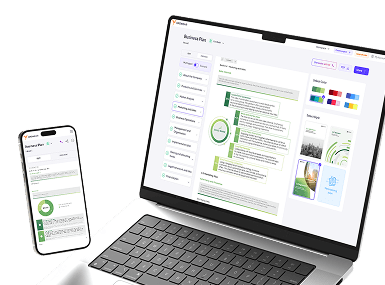
Growexa builds a complete, lender-ready business plan — with financial logic and a professionally formatted PDF
Even the sharpest consultants underestimate this step when learning how to start a Consulting Business. Managing finances and compliance isn’t glamorous, but it’s what transforms you from a freelancer into a real enterprise. A Consulting Business that fails to structure its money, contracts, and risks properly eventually collapses under its own growth.

Start with legal foundation. Register your business under a structure that fits your goals — sole proprietorship for simplicity, LLC for liability protection, or corporation if you’re targeting institutional clients. Draft a standard client agreement that defines scope, payment terms, confidentiality, and intellectual property ownership. Every clause you clarify upfront prevents tension later. In consulting, ambiguity is expensive.
Financial systems should be simple but disciplined. Use professional accounting software, maintain separate business accounts, and plan your tax obligations quarterly. Create a rolling 12-month cash flow projection to anticipate lean periods and reinvestment opportunities. Your Consulting Business is an asset — treat it like one by tracking profit margins, utilization rates, and effective hourly yield.
Risk management is the invisible armor of your operation. Secure professional liability insurance, use NDAs for sensitive projects, and comply with data privacy laws if you handle client information. Even if you’re just starting, embed these protocols early — they project professionalism and attract corporate clients who require compliance assurance.
Finally, remember that the purpose of financial discipline isn’t bureaucracy; it’s freedom. The more structured your backend, the more confidently you can scale, hire, and negotiate. Mastering this stage of how to start a Consulting Business ensures that growth becomes sustainable, not chaotic.
The final stage of learning how to start a Consulting Business is mastering the art of scaling without losing quality. The consulting industry rewards expertise but punishes inconsistency — so growth must be designed, not improvised. True scalability begins the moment you start thinking of your Consulting Business as a system, not a solo act.
The first dimension of scale is capacity. Once your pipeline stabilizes, define your delivery bandwidth — how many clients you can serve without compromising standards. Then, begin delegating non-core tasks: scheduling, research, reporting, or presentation design. Hiring part-time analysts or virtual assistants doesn’t dilute your consulting brand; it expands your productive focus. The earlier you systemize support roles, the faster you transform from a personal brand into a firm.
The second dimension is intellectual property. Every Consulting Business produces methods, frameworks, and insights. Package them. Create templates, training programs, or proprietary models that turn your expertise into repeatable assets. These become the building blocks of your firm’s identity — and can later evolve into courses, workshops, or licensing opportunities. In the world of consulting, scalability is not just about more hours; it’s about multiplying the impact of your ideas.
Third, embrace strategic partnerships. Collaborate with complementary consultants, agencies, or software providers. Partnerships allow your Consulting Business to bid on larger contracts, diversify capabilities, and access new markets without massive overhead. Shared credibility builds faster than solo networking ever could.
Finally, measure scale by freedom, not just revenue. The most sustainable consulting firms are those that run on process, brand equity, and recurring relationships — not constant hustle. A consultant who can step away for a week while operations continue smoothly has achieved true scalability.
The ultimate secret of how to start a Consulting Business that lasts is this: start small, but build as if you were already big. Structure early. Document everything. Protect your standards. Each client interaction, each deliverable, and each process refinement moves you closer to being not just a consultant, but a founder of a professional institution.
Consulting isn’t simply about advice — it’s about transformation. It’s the discipline of diagnosing complex challenges, bringing clarity, and creating measurable progress. Behind every successful consultant stands a foundation of systems, reputation, and trust. Learning how to start a Consulting Business means learning to balance expertise with execution, independence with structure, and vision with discipline.
A Consulting Business is one of the rare ventures where knowledge becomes equity. With a laptop, a network, and a clear process, you can build a practice that generates income, influence, and impact. But only when structured strategically — with positioning, pricing, operations, and branding — does it evolve from a side project into a lasting enterprise.
A consulting career doesn’t start when you print business cards; it starts when you treat your knowledge like an asset worth managing. Build the systems, create the brand, master delivery, and protect your time. That’s the formula for longevity in consulting — and for transforming expertise into entrepreneurship.
Ready to launch your own Consulting Business? Download the Consulting Business plan template and see how each step aligns with your goals. Or visit Growexa to design a fully tailored plan with AI-powered strategy, practical tools, and guided frameworks that help you turn expertise into a thriving consulting brand.
One of the biggest advantages of learning how to start a Consulting Business is its low overhead. You can begin with minimal investment — a laptop, a website, professional software, and liability insurance. What truly matters is not capital, but clarity: who your clients are, what you solve, and how you deliver measurable results.
Your first clients often come from your professional network. Reach out to former colleagues, employers, and industry contacts with a clear value proposition, not a generic pitch. When you understand how to start a Consulting Business strategically, you realize that trust precedes sales — and credibility spreads faster through relationships than through ads.
Specialization wins. When you define a clear niche, your marketing becomes sharper and your perceived value increases. One of the core lessons in how to start a Consulting Business is that focus scales faster than flexibility. Start narrow, master your segment, then expand horizontally into related domains once your brand has traction.
Typically, a Consulting Business can become cash-flow positive within the first six months if managed efficiently. Profitability depends on client retention, pricing discipline, and operational consistency. Consultants who structure their delivery early and document repeatable processes reach stability far faster than those improvising each engagement.
Absolutely. Understanding how to start a Consulting Business in the modern era means embracing lean, flexible models. You can build a powerful consulting practice using part-time specialists, subcontractors, and automation tools. Scale is not about staff size — it’s about systems, intellectual property, and recurring client relationships.

