
Stop editing templates
Start building a plan that gets approved
Turn this template into a complete business plan with:
- Financial projections
- Loan-ready structure
- Clear repayment logic
Based on 40+ bank requirements

The U.S. floral industry may appear timeless, but it’s undergoing a quiet renaissance. As customers move away from mass-produced arrangements and turn toward personalization, local sourcing, and sustainable design, small florists are seizing an opportunity to redefine the art of gifting. The $15 billion American flower market is increasingly shaped by consumers who value authenticity and story over volume — a shift that plays directly into the hands of creative entrepreneurs like Riverton Blossoms, a new floral brand emerging from the heart of Wyoming.
Founded in early 2025, Riverton Blossoms aims to transform the everyday flower-buying experience into something more personal, local, and artful. By blending accessibility with artisanal craftsmanship, the shop demonstrates how small businesses can turn local culture into a competitive edge — and build a financially sustainable model in the process.
Turn this template into a complete business plan with:
Based on 40+ bank requirements




Most business plans fail not because of the idea — but because the numbers don’t prove repayment.
Build a bank-ready business plan in minutes
(with projections, structure, and validation)
Riverton Blossoms was founded by Samantha Fox, a florist with a background in event coordination and retail design. Her vision was clear from the start: to build a florist shop that not only sold flowers but also told stories through design. She imagined a place where bouquets reflected the personality of each customer, blending the textures and colors of Wyoming’s natural landscape with contemporary floral artistry.
Located in downtown Riverton, the shop serves as both a retail storefront and a design studio. It offers two primary product lines: basic bouquets for everyday gifting and designer arrangements for weddings, events, and corporate clients. The brand’s signature “Local Inspiration Line” uses seasonal blooms and native plants, drawing on the aesthetic of the Wind River Range and Wyoming’s open plains.
The business plan emphasizes accessibility without compromising sophistication. The initial investment of $90,000—including $22,500 in owner equity and $67,500 from investors—covers interior design, refrigeration equipment, inventory, and marketing. The company expects to achieve profitability within its first two years of operation, supported by a strong mix of walk-in retail, event contracts, and online orders.
The floral industry in Wyoming, while smaller in scale than in major urban centers, mirrors broader national trends. Consumers today are more intentional with purchases: they seek products that convey meaning and sustainability. Nationwide, sales of locally sourced flowers have risen by 18 percent over the past three years, reflecting a move away from imported, mass-farmed blooms.
Within Riverton’s $1.8 million local flower market, opportunities are growing for boutique florists that can offer originality and reliability. Riverton Blossoms positions itself squarely at the intersection of these demands—bringing the craftsmanship of a boutique with the consistency of a professional operation.
The target market is divided between individuals and businesses. Local residents, primarily women aged 25–55, form the backbone of the retail base, purchasing flowers for holidays, anniversaries, and gifts. Corporate clients—ranging from event planners to hotels and real estate agencies—represent the second pillar of growth, drawn by the company’s ability to deliver custom arrangements on schedule and at scale.
Competitors include Flower Shoppe, which focuses on affordability, and Sunrise Florals, known for novelty bouquets like edible or scented arrangements. Yet, both struggle to connect deeply with the growing demographic that values storytelling and sustainability. Riverton Blossoms’ brand narrative, built around “local beauty made by local hands,” gives it a distinct voice in a market often dominated by generic products.
In developing its Florist Shop Business Plan, Riverton Blossoms recognized that success would depend on visibility as much as on artistry. The company’s marketing strategy blends digital storytelling, community engagement, and customer retention.
Online marketing channels—particularly Instagram, Facebook, and Google Local—serve as primary touchpoints. Roughly one-third of the annual marketing budget is dedicated to digital campaigns aimed at achieving a reach of 50,000 potential customers per month. Posts focus on visual storytelling: close-ups of fresh bouquets, time-lapse videos of arrangements being created, and behind-the-scenes moments from weddings and events. These assets do more than advertise—they create emotional connection and brand identity.
Offline, Riverton Blossoms engages directly with its community. The shop partners with wedding planners, local artists, and event venues, providing custom designs and establishing recurring contracts. Seasonal displays—Valentine’s Day, Mother’s Day, harvest festivals—draw foot traffic and reinforce the brand’s local character.
Pricing follows a layered approach that caters to a wide demographic. Everyday bouquets are priced around $50, while premium designs range from $60–$120, depending on seasonality and customization. Subscription boxes for weekly or monthly deliveries create recurring revenue and strengthen brand loyalty.
By combining online and offline engagement, Riverton Blossoms aims to secure 1,000 regular customers within three years—enough to support sustainable profitability while maintaining artisanal quality.
Behind the storefront charm lies an efficient, well-structured operation. The retail space doubles as a floral workshop and small warehouse, equipped with modern refrigeration systems, design tables, and a POS platform that integrates sales, inventory, and online orders. This integration ensures real-time tracking of stock and helps manage perishability, one of the key challenges in the floral business.
Sourcing is a core component of the operation. Riverton Blossoms maintains partnerships with local farms within a 100-mile radius, sourcing lilies, roses, and wildflowers grown under ethical and sustainable conditions. During off-season months, the company supplements inventory through vetted regional distributors that meet its freshness and traceability standards.
Sustainability extends to waste reduction. The shop composts organic waste and uses recyclable packaging materials, appealing to eco-conscious customers and reinforcing the authenticity of its brand.
During peak seasons—Valentine’s Day, wedding months, and the December holidays—the staff expands with temporary floral designers and delivery assistants. This flexible structure enables scalability without burdening the business with unnecessary fixed costs during slower months.
The leadership of Riverton Blossoms reflects both passion and professional acumen. Founder Samantha Fox oversees creative direction and customer relations, ensuring that the artistic integrity of each arrangement aligns with the brand’s identity. Her decade of experience in floral design and event management gives the business both operational insight and aesthetic vision.
The core team consists of two full-time florists, one sales associate, and a part-time marketing assistant. Each team member undergoes in-house training focused on customer experience, design principles, and digital literacy—skills essential in a hybrid brick-and-click retail model.
Team culture is central to the company’s success. Employees are encouraged to experiment with design ideas and share creative input. This open approach not only drives innovation but also fosters loyalty. The company plans to introduce a profit-sharing program after year two, rewarding staff for meeting performance and customer satisfaction targets.
The Business Plan for Riverton Blossoms outlines a disciplined financial roadmap designed for both short-term viability and long-term expansion. The total launch cost of $90,000 includes $20,000 for space renovation, $18,000 for equipment, $15,000 for initial inventory, and $10,000 for marketing. The remaining funds serve as working capital and buffer reserves for the first six months of operations.
In its first year, the florist shop projects revenues of $270,000, growing to $400,000 by year three as event contracts and subscription services mature. Gross margins are expected to increase from 45% in the initial phase to 55% through improved supplier terms and operational efficiency.
Net profits are forecast at $11,700 in the first year, rising to $31,700 in year three, with a payback period of 28 months. Return on investment (ROI) is estimated at 143%, supported by consistent demand and high repeat purchase rates.
The company plans to reinvest early profits into e-commerce development and regional partnerships, laying the foundation for eventual expansion into nearby towns such as Lander and Casper.
No connection between:
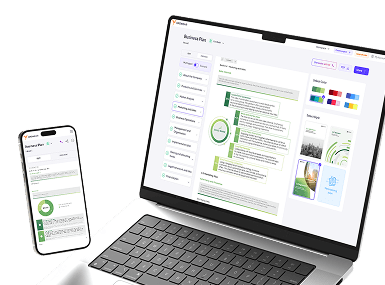
Growexa builds a complete, lender-ready business plan — with financial logic and a professionally formatted PDF
Riverton Blossoms stands as a reminder that the right Business Plan can turn even a small-town florist shop into a model of modern entrepreneurship. Its success doesn’t depend on aggressive scale but on clarity of purpose: local sourcing, strong branding, and operational excellence.
By staying close to its roots while embracing digital transformation, the company is building something rare in retail—a brand that feels both personal and scalable. It’s proof that creativity and commerce can coexist harmoniously when guided by strategy and heart.
For investors and aspiring entrepreneurs alike, Riverton Blossoms offers more than a case study; it’s an invitation to rethink how traditional businesses can thrive in the 21st century.
Riverton Blossoms’ story demonstrates how a focused idea—backed by market insight, financial discipline, and creative storytelling—can evolve into a profitable enterprise. Whether you’re developing a Florist Shop Business Plan, a restaurant concept, or an artisanal retail brand, the same principles apply: know your audience, structure your operations intelligently, and let your brand narrative speak louder than your marketing budget.
Ready to build your own business plan? You can start from scratch using Growexa or adapt a ready-made florist shop business plan template to fit your own vision and market.
Make your business not just viable — make it unforgettable.

