
Stop editing templates
Start building a plan that gets approved
Turn this template into a complete business plan with:
- Financial projections
- Loan-ready structure
- Clear repayment logic
Based on 40+ bank requirements

Opening an eatery in the United States has never been a simple undertaking, yet it remains one of the country's most dynamic entrepreneurial opportunities. Americans continue to spend heavily on food prepared outside the home, even as consumer expectations shift toward convenience, healthier options, digital ordering, and memorable dining experiences. At the same time, operators face persistent challenges, including labor shortages, fluctuating food costs, higher interest rates, and increasing competition from ghost kitchens, meal delivery platforms, and fast-casual brands.
Turn this template into a complete business plan with:
Based on 40+ bank requirements




Most business plans fail not because of the idea — but because the numbers don’t prove repayment.
Build a bank-ready business plan in minutes
(with projections, structure, and validation)
Those competing forces make preparation more valuable than enthusiasm alone. A thoughtfully developed business plan helps founders evaluate whether an eatery concept is financially viable before signing a lease, purchasing equipment, or hiring staff. More importantly, it demonstrates to lenders, investors, and strategic partners that management understands the economics of the restaurant businessrestaurant business rather than relying on optimistic assumptions.
Recent industry data reflects both opportunity and caution. According to the National Restaurant Association, the U.S. restaurant industry is expected to generate well over $1.5 trillion in annual sales during 2026, supported by continued consumer spending and population growth. Digital ordering now represents a meaningful share of revenue for many restaurants, while loyalty programs and mobile applications have become standard competitive tools rather than optional marketing initiatives. At the same time, inflation has permanently altered cost structures, requiring owners to monitor food costs, labor efficiency, and cash flow with greater discipline than in previous decades.
Banks have responded by becoming increasingly selective when financing hospitality businesses. Institutions such as Bank of America, JPMorgan Chase, Wells Fargo, and Live Oak Bank rarely evaluate an eatery solely on the appeal of its menu. Instead, they examine projected cash flow, management experience, location analysis, operational planning, and financial resilience. Private investors follow a similar approach, looking beyond culinary creativity to determine whether the proposed business can generate consistent returns under different economic conditions.
This is why an Eatery Business Plan should be treated as a strategic management document rather than a funding requirement. Throughout this template, each section explains not only what belongs in a professional business plan, but also why lenders, investors, and experienced restaurant operators expect to see that information before committing capital.
Although it appears first in the document, the Executive Summary should usually be written last. Every statement must be supported by information developed throughout the remainder of the business plan, allowing readers to understand the concept without immediately reviewing dozens of additional pages.
For an eatery, the Executive Summary should introduce the restaurant concept with precision. Rather than describing the establishment as "a family-friendly restaurant serving great food," explain exactly what differentiates the business. Investors respond far better to positioning such as a chef-driven Mediterranean fast-casual concept serving office workers in downtown Austin, a neighborhood breakfast café targeting suburban families, or a premium ramen restaurant focused on university students and young professionals.
The summary should clearly answer several questions:
Strong Executive Summaries also introduce measurable performance indicators rather than vague ambitions. Examples include anticipated annual revenue, average guest check, expected daily customer traffic, target gross margin, projected EBITDA margin, and estimated break-even timeline.
| Section | What Investors Want |
|---|---|
| Business concept | Clear differentiation from competitors |
| Target market | Specific customer demographics and purchasing behavior |
| Financial highlights | Revenue, EBITDA, profitability timeline |
| Funding request | Exact capital requirement and intended allocation |
| Management | Evidence that leadership can execute the concept |
| Competitive edge | Sustainable advantages beyond menu items |
One of the most common mistakes restaurant founders make is overemphasizing the food itself. While menu quality certainly matters, lenders rarely finance recipes. They finance businesses capable of generating reliable cash flow. A professional business plan therefore demonstrates how operational systems, pricing strategy, labor management, technology adoption, and customer acquisition work together to produce sustainable profitability.
A compelling value proposition should also balance emotional appeal with commercial logic. Consider the difference between these two positioning statements:
"We want to serve delicious burgers in our community."
Compared with:
"Our eatery combines premium locally sourced ingredients, mobile-first ordering, and a 12-minute average service time to capture underserved lunchtime demand among professionals working within a three-mile radius of downtown Nashville."
The second statement immediately conveys strategic thinking, operational awareness, and market positioning.
Entrepreneurs should also summarize anticipated milestones during the first three years. These often include opening dates, revenue targets, customer acquisition goals, catering expansion, additional delivery partnerships, private dining services, or plans to open multiple locations after achieving operational stability.
The Company Overview establishes the structural foundation of the business plan. While entrepreneurs often rush through this section, experienced lenders view it as evidence that the founders understand the legal, operational, and strategic framework supporting the business.
Business Model
The first objective is defining exactly how the eatery generates revenue. Restaurants increasingly operate through multiple income streams rather than relying exclusively on dine-in traffic.
| Revenue Stream | Typical Contribution |
|---|---|
| Dine-in service | Primary revenue source |
| Takeout | Stable supplemental income |
| Third-party delivery | Customer acquisition and convenience |
| Direct online ordering | Higher-margin digital sales |
| Catering | Large-ticket transactions |
| Corporate lunches | Recurring B2B revenue |
| Merchandise | Brand extension |
| Private events | Premium margins |
Diversification reduces dependence on any single sales channel and makes financial projections more resilient during seasonal fluctuations.
The legal entity selected influences taxation, liability, financing opportunities, and ownership flexibility.
Most independent eateries operate as:
Banks typically prefer clearly documented ownership structures, particularly when SBA financing is involved.
Mission statements should describe present-day operations rather than aspirational slogans.
Instead of writing:
"To become the best restaurant in America."
A stronger mission might state:
"To provide affordable chef-quality meals prepared with locally sourced ingredients while delivering fast, personalized service that encourages repeat visits."
The vision statement should describe long-term direction. For example, management may intend to build a regional restaurant brand operating five profitable locations within seven years while maintaining consistent food quality and customer satisfaction metrics.
Restaurants rarely succeed because they offer "good food." Sustainable advantages typically emerge from multiple operational strengths working together.
Examples include:
For example, Sweetgreen built significant competitive differentiation through digital ordering, operational efficiency, and supply-chain transparency rather than menu innovation alone. Similarly, Chipotle Mexican Grill strengthened investor confidence through standardized operations that enabled rapid national expansion.
Every business plan should distinguish operational goals from strategic objectives.
Operational objectives include maintaining food cost percentages below target thresholds, reducing employee turnover, or achieving specific online review scores.
Strategic objectives may include:
Investors generally prefer businesses that demonstrate disciplined expansion rather than unrealistic ambitions to scale nationwide within a few years.
The Market Analysis often determines whether an eatery business plan appears credible. Exceptional financial projections cannot compensate for weak market research, while a thorough understanding of customer demand can significantly strengthen financing prospects.
Restaurant demand varies dramatically across metropolitan areas, suburban communities, college towns, tourist destinations, and mixed-use developments. As a result, founders should analyze their specific geographic market rather than relying exclusively on national statistics.
The U.S. foodservice industry remains one of the country's largest employers and consumer sectors. Consumer spending continues to support restaurant expansion despite inflationary pressures, although purchasing behavior has evolved considerably. Customers increasingly value convenience, digital engagement, healthier menu options, transparent ingredient sourcing, and memorable dining experiences alongside competitive pricing.
One of the strongest trends affecting independent eateries is the growing integration of technology throughout the customer journey. Mobile ordering, QR-code menus, AI-assisted inventory management, loyalty applications, reservation platforms, and automated kitchen display systems have become mainstream operational tools rather than premium differentiators.
Founders should demonstrate how these trends influence their specific concept instead of merely listing them. For example, a breakfast cafélocated near suburban commuter corridors may benefit substantially from mobile pre-ordering and curbside pickup, while a downtown dinner-focused establishment may generate greater returns through reservation optimization and private event bookings.
Market size alone does not validate an eatery concept. Investors want evidence that the proposed location, pricing strategy, and customer profile align with measurable demand. A sophisticated business plan moves beyond broad industry figures and explains why this specific eatery can compete successfully within its trade area.
Most independent eateries generate the majority of their revenue from customers living or working within a relatively limited geographic radius. Instead of describing the target market as "everyone who enjoys eating out," define the actual catchment area and explain why customers will choose your establishment over existing alternatives.
For example:
| Customer Segment | Characteristics | Typical Buying Behavior |
|---|---|---|
| Office Professionals | Ages 25–55, weekday lunch traffic | Speed, online ordering, loyalty rewards |
| Families | Evenings and weekends | Value, kid-friendly menu, larger average ticket |
| College Students | Price-sensitive, late hours | Promotions, social media influence |
| Tourists | Seasonal demand | Local cuisine, online reviews |
| Seniors | Daytime traffic | Consistency, accessibility, service quality |
Each segment should connect directly to projected revenue assumptions later in the Financial Plan. If weekday lunch is expected to account for 45% of sales, explain why nearby employment density supports that estimate. If catering is projected to contribute 15% of annual revenue, identify local businesses or institutions that represent realistic customers.
Restaurant trends change faster than many entrepreneurs expect. A credible business plan identifies the trends most relevant to the proposed concept rather than attempting to mention every industry development.
Several structural shifts continue to reshape the U.S. market:
An eatery targeting affluent suburban households may benefit from seasonal ingredients and premium positioning, while a quick-service operation near a transportation hub may compete primarily on convenience and speed.
Banks expect a realistic assessment of competition. Claiming that "there are no competitors" usually signals inadequate research.
Competition should be categorized into direct and indirect competitors.
Direct competitors include restaurants offering similar cuisine, comparable pricing, and targeting the same customers.
Indirect competitors may include grocery stores with prepared meals, convenience stores, meal-kit services, ghost kitchens, food trucks, and national delivery brands.
A concise comparison table helps demonstrate strategic positioning.
| Competitor | Strength | Weakness | Opportunity for Your Eatery |
|---|---|---|---|
| Local independent café | Established reputation | Limited digital ordering | Superior convenience and loyalty program |
| National fast-casual chain | Brand recognition | Standardized menu | More localized experience and seasonal offerings |
| Ghost kitchen | Low overhead | No dine-in experience | Hospitality, atmosphere, community engagement |
| Grocery prepared foods | Competitive pricing | Limited customization | Fresh preparation and higher service quality |
The objective is not to criticize competitors but to identify underserved customer needs.
Restaurant businesses appear easy to start but remain difficult to scale profitably.
Investors recognize several barriers that new entrants often underestimate:
A professional business plan acknowledges these realities while explaining how management intends to address them.
| Strengths | Weaknesses |
|---|---|
| Clearly differentiated concept | Limited operating history |
| Experienced management | High initial capital requirements |
| Multiple revenue streams | Dependence on local market |
| Opportunities | Threats |
|---|---|
| Growing demand for convenient dining | Rising food costs |
| Corporate catering | Labor shortages |
| Expansion through additional locations | Economic slowdowns |
| Direct online ordering | New market entrants |
A thoughtful SWOT analysis should inform strategic decisions throughout the rest of the business plan, not exist as an isolated exercise.
One of the strongest ways to increase credibility is demonstrating that customer demand has already been tested.
Examples include:
Restaurant concepts that demonstrate measurable customer interest before opening generally present lower perceived investment risk.
A strong marketing strategy explains how the eatery will consistently attract customers, convert first-time visitors into repeat guests, and generate predictable revenue. Banks and investors are less interested in promotional ideas than in whether customer acquisition costs and expected sales are realistic.
Start by defining your market position. Explain what makes the eatery different from nearby competitors and why customers should choose it over existing alternatives. That advantage may come from cuisine, service speed, pricing, atmosphere, locally sourced ingredients, extended operating hours, or a niche audience. Avoid generic statements such as "high-quality food" or "excellent service" unless they are supported by something measurable.
Your pricing strategy should support both your positioning and financial model. Instead of simply matching competitors' prices, explain how menu pricing was determined using food costs, labor expenses, occupancy costs, and the purchasing power of your target customers. If the projected average check is $24 or $32, show how that figure aligns with the proposed menu and expected sales mix.
Customer acquisition should rely on multiple channels rather than a single source of traffic. Most successful independent eateries combine local SEO, an optimized Google Business Profile, online reviews, social media, email marketing, and community partnerships. Paid advertising is often most effective during launch or when promoting seasonal menus, catering services, or special events—not as the primary long-term growth strategy.
| Marketing Channel | Primary Objective |
|---|---|
| Google Business Profile | Capture local search traffic |
| Local SEO | Improve organic visibility |
| Social Media | Build awareness and engagement |
| Paid Search & Social Ads | Drive short-term campaigns |
| Email & Loyalty Program | Increase repeat visits |
| Local Partnerships | Generate catering and referral business |
The business plan should also explain how marketing performance will be measured. Rather than focusing on website traffic or social media followers, use business metrics such as customer acquisition cost, repeat customer rate, average check, loyalty program participation, catering inquiries, and return on advertising spend. These indicators demonstrate whether marketing investment is producing profitable growth.
Finally, describe your customer retention strategy. Acquiring new customers is significantly more expensive than retaining existing ones, making repeat business one of the strongest drivers of long-term profitability. Explain how the eatery will encourage repeat visits through loyalty rewards, personalized promotions, seasonal menu updates, or corporate catering relationships. Investors want to see that revenue growth is built on customer retention as well as customer acquisition.
No connection between:
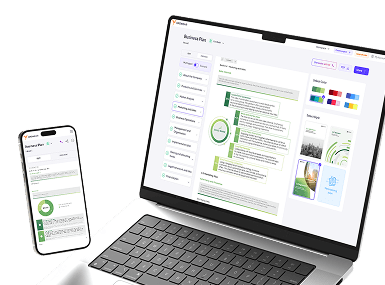
Growexa builds a complete, lender-ready business plan — with financial logic and a professionally formatted PDF
The Operations Plan explains how the eatery will deliver a consistent customer experience while controlling costs and maintaining profitability. Investors and lenders expect this section to demonstrate that the business can operate efficiently on a daily basis—not simply that it has a strong concept.
Begin by describing the operating model. Explain the service format (counter service, full-service dining, hybrid, or takeout-focused), expected operating hours, seating capacity, and daily customer volume. These assumptions should align with the financial projections presented later in the business plan. If the eatery expects to serve 180 customers per day, the seating capacity, table turnover, staffing levels, and kitchen throughput should realistically support that target.
The business plan should also describe the facility and production workflow. Outline the size of the premises, dining area, kitchen layout, storage space, and any features that improve operational efficiency, such as dedicated pickup areas for online orders or separate preparation stations for delivery and dine-in service. A well-designed workflow reduces labor costs, minimizes wait times, and improves food consistency.
Technology has become an essential part of restaurant operations rather than an optional investment. Explain which systems will be used to manage sales, inventory, scheduling, accounting, online ordering, and customer data. Integrated restaurant management platforms help reduce manual work, improve reporting accuracy, and provide management with real-time operational insights.
Staffing should reflect the actual needs of the business rather than an ideal scenario. Identify key management positions, front-of-house and kitchen roles, expected headcount, and hiring priorities. If experienced managers or chefs are critical to the concept, explain how they will contribute to operational performance and staff development. Banks often evaluate management capability as closely as financial projections because experienced leadership reduces execution risk.
Operational performance should be monitored through measurable KPIs rather than subjective assessments. While targets vary by concept, lenders and investors typically expect management to monitor the following indicators:
| Operational KPI | Typical Benchmark |
|---|---|
| Food Cost | 28–35% of food sales |
| Labor Cost | 25–35% of revenue |
| Prime Cost | Below 60–65% of revenue |
| Average Guest Check | Based on concept and market |
| Table Turnover | Consistent with service model |
| Food Waste | Continuously monitored and reduced |
| Google Rating | 4.5+ stars target |
Finally, explain how quality will be maintained as the business grows. Standard operating procedures, staff training, inventory controls, supplier management, food safety protocols, and regular performance reviews should all be documented to ensure consistency. If future expansion is planned, demonstrate that the operating model can be replicated without compromising service quality or profitability. A scalable operation is significantly more attractive to both lenders and equity investors than one that depends entirely on the founder's day-to-day involvement.
Restaurant investors consistently emphasize one principle: experienced management reduces investment risk.
Even exceptional restaurant concepts fail when leadership lacks operational discipline, financial oversight, or hiring capability.
The Management section should therefore demonstrate that the founding team possesses the expertise required to execute the business plan.
A clear reporting structure improves accountability and accelerates decision-making.
A typical organizational hierarchy might resemble the following:
| Position | Reports To |
|---|---|
| Owner / CEO | Investors or Board |
| General Manager | Owner |
| Executive Chef | General Manager |
| Kitchen Staff | Executive Chef |
| Front-of-House Manager | General Manager |
| Service Team | Front-of-House Manager |
| Finance / Bookkeeper | Owner or CFO |
| Marketing Manager | Owner |
As the business expands, additional operational layers may be introduced, including regional managers or district supervisors.
Investors pay close attention to management backgrounds because restaurants operate with relatively thin margins.
Founders should highlight relevant experience, including:
If management lacks experience in certain areas, acknowledge the gap and explain how external advisors or experienced hires will address it.
Transparency builds credibility far more effectively than exaggerated claims.
Few sections of an eatery business plan receive as much attention from lenders and investors as the funding strategy. By this stage, they have already evaluated the concept, reviewed the market opportunity, and assessed the management team. The remaining question is straightforward: How much capital does this business actually need, how will it be used, and when is it expected to generate sufficient cash flow to support debt payments or deliver an acceptable return?
One of the most common weaknesses in restaurant business plans is that the funding request appears disconnected from the operating model. Entrepreneurs often decide they need "$500,000" or "$1 million" and then work backward to justify that number. An investor-ready business plan follows the opposite approach. The funding requirement should emerge naturally from lease negotiations, contractor estimates, equipment quotations, licensing costs, technology investments, and projected working capital.
Capital requirements vary considerably across the U.S. restaurant industry. A small café occupying a second-generation restaurant space may require less than $300,000 to open, while a full-service eatery in a major metropolitan market can easily exceed $2 million before serving its first customer. The difference is driven less by cuisine than by location, construction costs, square footage, and the amount of infrastructure already in place.
| Eatery Concept | Typical Startup Investment |
|---|---|
| Coffee shop or café | $150,000–$400,000 |
| Fast-casual eatery | $350,000–$900,000 |
| Casual dining restaurant | $600,000–$2 million |
| Upscale full-service restaurant | $1.5–$5 million+ |
These figures should be treated as benchmarks rather than templates. Every business plan should explain why the proposed investment is appropriate for the concept, market, and facility being developed.
Just as important as the amount requested is the way capital will be allocated. Banks become skeptical when a large percentage of funding is described simply as "miscellaneous expenses" or "startup costs." They expect founders to understand where the money is going and how each expenditure contributes to opening the business or generating future revenue.
| Use of Funds | Typical Share |
|---|---|
| Leasehold improvements | 30–40% |
| Kitchen equipment | 20–25% |
| Furniture, fixtures, and décor | 8–12% |
| Technology and POS systems | 3–6% |
| Initial inventory | 3–5% |
| Licenses, permits, and professional fees | 2–4% |
| Pre-opening marketing | 2–4% |
| Working capital and cash reserve | 20–25% |
Notice that working capital represents one of the largest categories. That is intentional. New restaurant owners often budget carefully for construction and equipment but assume the business will quickly generate enough revenue to cover payroll, supplier invoices, rent, insurance, and utilities. In practice, most eateries need several months before customer traffic stabilizes. A business plan that includes three to six months of operating liquidity is generally viewed as substantially less risky than one that assumes immediate profitability.
The funding strategy should also identify the most appropriate financing sources. Independent eateries in the United States are commonly financed through a combination of owner equity and commercial debt, particularly when the management team has prior industry experience. SBA-backed financing remains one of the most accessible options for restaurant startups because it reduces lender risk while allowing proceeds to be used for equipment, leasehold improvements, working capital, or business acquisitions. Equipment financing is another popular solution, enabling owners to preserve cash by spreading the cost of commercial kitchen equipment over several years.
For businesses planning aggressive expansion, outside equity may become part of the capital structure. Angel investors are typically interested in experienced operators with a differentiated concept and a realistic path toward multiple profitable locations. Venture capital, by contrast, is rarely appropriate for a traditional independent eatery unless the business incorporates a highly scalable operating model, proprietary technology, or a franchising strategy capable of supporting rapid national expansion.
Regardless of the funding source, investors expect the business plan to define clear milestones. Rather than promising rapid growth, specify operational targets that demonstrate responsible use of capital. These may include completing construction on schedule, obtaining all regulatory approvals, hiring the management team, reaching break-even cash flow, securing recurring catering contracts, or achieving a predefined average monthly revenue level. Measurable milestones make it easier for lenders and investors to monitor progress and reinforce management's credibility.
Common Mistake: Many founders prepare a funding request that is large enough to build the restaurant but too small to operate it. Running out of cash during the first six months remains one of the leading causes of failure for otherwise promising restaurant concepts.
The Financial Plan is where optimism must give way to evidence. Every revenue projection, expense estimate, and profitability forecast included in an eatery business plan should be supported by operational assumptions that lenders and investors can verify. Financial institutions understand that no forecast will be perfectly accurate. What they look for is internal consistency. If projected customer traffic, pricing, staffing, and operating costs align with the proposed concept and local market conditions, the financial model becomes far more credible.
Revenue should never begin with an annual sales target. Instead, it should be built from the daily operation of the business. Start by estimating average guest traffic, average check size, operating days, and expected sales mix. Additional revenue from catering, delivery, online ordering, merchandise, or private events can then be layered into the model if those activities are supported by the operating plan.
For example, an eatery expecting to serve 170 guests per day with an average check of $28 over 360 operating days would project approximately $1.7 million in annual dine-in sales before considering catering or delivery revenue. That calculation is transparent, easy to validate, and far more convincing than presenting an unsupported annual revenue figure.
Pricing assumptions deserve equal attention. Investors rarely question whether a restaurant can increase menu prices; they question whether customers will continue purchasing at those prices. The financial model should therefore reflect local competition, target demographics, food costs, and the overall positioning of the concept. Premium pricing can strengthen margins, but only when supported by a customer experience that justifies the additional cost.
Operating expenses should be equally realistic. Underestimating payroll or occupancy costs is one of the fastest ways to undermine an otherwise strong business plan. Restaurant margins are often narrow, meaning relatively small forecasting errors can significantly affect profitability.
The following operating metrics are commonly used by lenders when evaluating independent eateries.
| Financial KPI | Typical Benchmark |
|---|---|
| Food cost | 28–35% of food sales |
| Labor cost | 25–35% of revenue |
| Prime cost (food + labor) | Below 60–65% |
| Occupancy cost | 6–10% of revenue |
| EBITDA | Varies by concept and maturity |
| Average guest check | Based on concept and location |
These benchmarks should not be treated as universal targets. A premium steakhouse, neighborhood café, and quick-service restaurant operate under very different economic models. The role of the financial plan is to explain why the proposed assumptions are appropriate for this specific eatery.
Cash flow deserves particular attention because profitable restaurants can still experience liquidity problems. Rent, payroll, supplier payments, and tax obligations occur on fixed schedules, while customer traffic may fluctuate with weather, seasonality, or local economic conditions. A twelve-month monthly cash flow forecast helps demonstrate that management has considered those fluctuations rather than relying on annual averages that may conceal temporary shortages.
Banks also appreciate sensitivity analysis because it shows how the business would respond if conditions change. Instead of assuming every forecast will be achieved exactly as planned, model several scenarios. What happens if customer traffic is 10% lower than expected during the first year? How would higher food costs affect margins? Could the business remain profitable if labor expenses increased? Addressing these questions demonstrates financial discipline and reassures lenders that management has considered risk before requesting capital.
Ultimately, the Financial Plan should tell a coherent story. Revenue assumptions should support staffing projections. Staffing should align with operating hours. Operating expenses should reflect the proposed facility, and funding requirements should match startup costs. When those elements reinforce one another, the financial section becomes much more than a collection of spreadsheets—it becomes evidence that the business can operate successfully under real market conditions.
An eatery business plan should never be viewed as a document created solely to secure financing. Its real value lies in forcing entrepreneurs to validate assumptions before committing significant capital. By combining realistic market analysis, disciplined operational planning, a well-supported funding strategy, and a defensible financial model, the business plan becomes the framework for making informed decisions long after the restaurant opens.
Whether you're seeking an SBA loan, approaching private investors, or funding the venture independently, remember that lenders invest in businesses that demonstrate preparation, not just passion. The more clearly your business plan explains how the eatery will attract customers, manage costs, generate consistent cash flow, and adapt to changing market conditions, the stronger your position will be to secure financing and build a restaurant designed for long-term success.
Startup costs vary depending on the concept, location, and size of the business. A small café or quick-service eatery may require between $150,000 and $400,000, while a fast-casual restaurant often needs $350,000 to $900,000. Full-service restaurants typically require $600,000 to $2 million or more, particularly in major metropolitan areas where construction, labor, and leasehold improvements are significantly more expensive.
Yes. Many independent restaurants and eateries are financed through SBA 7(a) loans, which can be used for leasehold improvements, equipment purchases, working capital, and startup expenses. Some businesses may also qualify for SBA 504 financing when purchasing commercial real estate or significant fixed assets. Approval depends on factors such as the owner's credit history, industry experience, available collateral, equity contribution, and the strength of the business plan.
An investor-ready eatery business plan should include a startup budget, projected income statement, cash flow forecast, balance sheet, break-even analysis, and detailed financial assumptions. Most lenders expect monthly projections for the first year and annual forecasts covering at least three to five years, supported by realistic assumptions for customer traffic, average ticket size, operating expenses, and profit margins.
Investors typically evaluate far more than the menu. They want to see evidence of market demand, an experienced management team, realistic financial projections, a clear competitive advantage, and a well-defined operating strategy. They also expect founders to explain how funding will be used, when the business is expected to reach profitability, and how risks such as rising food costs or labor shortages will be managed.
Support every financial projection with measurable assumptions instead of optimistic estimates. Include local market research, explain your pricing strategy, provide realistic startup costs, and demonstrate that you have sufficient working capital to operate beyond the opening months. A business plan that combines credible financial data, operational planning, and a clear funding strategy is significantly more likely to gain the confidence of banks, SBA lenders, and private investors.

