
Stop editing templates
Start building a plan that gets approved
Turn this template into a complete business plan with:
- Financial projections
- Loan-ready structure
- Clear repayment logic
Based on 40+ bank requirements

The idea of opening a bookstore may seem romantic in a world dominated by digital screens, but with the right strategy and market positioning, it can become a thriving business. Whether you're launching a small independent bookstore in a residential neighborhood or aiming to build a concept-driven retail space in a high-traffic urban area, a well-structured business plan is essential to translating your vision into a sustainable enterprise.
This article will guide you through the nuances of adapting a business plan template specifically for the bookstore niche, highlighting strategic considerations, critical success factors, and best practices for positioning your store in today’s competitive retail landscape.
Turn this template into a complete business plan with:
Based on 40+ bank requirements


Most business plans fail not because of the idea — but because the numbers don’t prove repayment.
Build a bank-ready business plan in minutes
(with projections, structure, and validation)
Despite the rise of e-books and online retailers, physical bookstores have seen a resurgence thanks to shifting consumer values. Shoppers increasingly seek experiences, community interaction, and curation—elements that independent bookstores are uniquely positioned to offer.
This evolving dynamic makes it even more crucial to present a bookstore business plan that reflects the hybrid nature of modern retail—combining commerce with culture, and business with purpose. Investors and lenders need to see that your concept is grounded in research, and more importantly, that it can adapt to a changing retail environment.
In a bookstore business plan, the executive summary should do more than outline financial projections. It should also capture the spirit of the concept.
Are you opening a feminist bookstore in a university town? A multilingual bookstore in a multicultural neighborhood? A family-focused space with integrated café and storytelling sessions?
Be sure to emphasize the emotional, social, and community value of the store, while grounding your vision in a realistic assessment of market potential, revenue streams, and expansion goals. For example:“Our goal is to become a local cultural anchor while generating revenue through book sales, event programming, and curated merchandise.” This approach aligns your narrative with key metrics, offering investors both vision and viability.
The business plan begins with a structured overview of the company: its name, legal setup, registration details, and operational base. Whether the bookstore is already incorporated or in pre-registration, this section clarifies its organizational foundation and introduces key team members, relevant experience, and strategic direction. It also outlines the company's mission and values, aligning them with the bookstore’s commercial and cultural positioning.
The project itself is described through both operational and market lenses. It details the concept, strategic objectives, and the specific market gap it aims to fill—whether through format innovation, local community engagement, or curated inventory. Problem-solving is at the core, supported by implementation phases and a concise SWOT analysis to assess internal strengths and market risks. Together, these elements establish a credible starting point for long-term business growth.
Your market analysis must do more than mention “rising interest in independent bookstores.” It should reflect deep knowledge of the literary retail sector.
Segment your audience based on demographics, but also psychographics. Are your customers parents looking for children’s books, working professionals seeking nonfiction, or young creatives drawn to graphic novels and zines?
Use recent industry data, such as: According to the American Booksellers Association, the number of independent bookstores in the U.S. increased by 34% between 2016 and 2023.
Then analyze how this trend intersects with local demand. Show that you understand the broader dynamics—like the value of “buying local”—while also identifying specific underserved niches in your city or region.

A bookstore is as much about community and identity as it is about inventory.
Your marketing section should present a cohesive brand strategy. Avoid generic approaches like “social media ads” or “flyer distribution.” Instead, consider:
In today’s competitive landscape, bookstores must also compete for attention online. A sleek website with real-time inventory, event signups, and integrated e-commerce features is no longer optional—it’s a business imperative.
Your operational section should demonstrate your ability to manage the backend—while elevating the customer experience on the frontend.
Key questions to answer:
Also, remember that staffing is a strategic factor. Booksellers aren’t just clerks—they’re brand ambassadors and literary guides. Your plan should reflect training strategies, hiring criteria, and scheduling tactics that ensure a high-quality customer experience.
Retail bookstores typically operate on tight margins. Your financial plan must show how you’ll stay profitable despite this.
Build out revenue projections based on realistic book turnover rates. Factor in average transaction values, seasonal sales spikes (like back-to-school or holiday periods), and recurring costs like rent, utilities, inventory purchases, and staff wages. Also, include scenarios for additional revenue.

Investors are increasingly interested in businesses that can scale or diversify. Your business plan should clearly communicate your path to profitability, sustainability, and potential expansion—whether through new locations or digital channels.
No connection between:
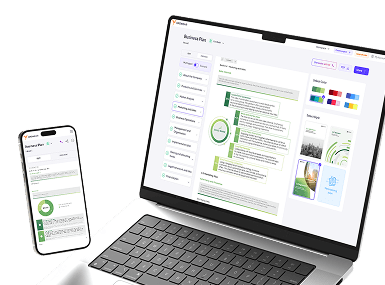
Growexa builds a complete, lender-ready business plan — with financial logic and a professionally formatted PDF
A bookstore is more than a retail concept—it’s a cultural institution with the power to shape communities, foster literacy, and promote meaningful dialogue. But to achieve this, you must build on a foundation of strategic clarity, market insight, and operational rigor.
Ready to get started? You can download the bookstore business plan template and adapt it to your own concept. Or, explore a fully completed Inkwell book store business plan example to see how the framework works in practice. And if you’d like to create something entirely unique, visit Growexa to build your own plan with customizable tools and expert guidance.

