
Stop editing templates
Start building a plan that gets approved
Turn this template into a complete business plan with:
- Financial projections
- Loan-ready structure
- Clear repayment logic
Based on 40+ bank requirements

Across the United States, daily routines are being reshaped by convenience-driven business models. Food delivery, ride-hailing, and home cleaning apps have altered consumer expectations, making instant access and frictionless transactions the norm. Laundry services, once an overlooked corner of the service economy, are now undergoing the same transformation. In major cities, the idea of spending hours each week washing, drying, and folding clothes is increasingly at odds with the pace of urban professional life.
Urban Laundry, a Seattle-based startup launched in 2024, represents one of the most compelling entrants into this market. By blending modern logistics with user-friendly technology, the company aims to create a laundry service that fits seamlessly into the lifestyles of busy urban consumers. Its plan demonstrates not only how a straightforward service can be reimagined for today’s marketplace but also how disciplined financial and operational strategies can turn an everyday necessity into an investor-ready business.
Turn this template into a complete business plan with:
Based on 40+ bank requirements


Most business plans fail not because of the idea — but because the numbers don’t prove repayment.
Build a bank-ready business plan in minutes
(with projections, structure, and validation)
Urban Laundry was conceived around a simple insight: people in fast-paced cities no longer want to sacrifice precious hours each week on chores that can be outsourced more efficiently. The founders envisioned a company that could take the inconvenience out of laundry through an easy-to-use mobile app, fast turnaround times, and professional-grade results.
From the beginning, the model was designed to balance flexibility with scale. Customers can schedule weekly or monthly pickups under a subscription plan, or they can opt for one-time services tailored to fluctuating schedules. The orders are handled at a central processing facility equipped with industrial-grade machines capable of managing thousands of pounds of laundry per day. The service also maintains a small storefront for drop-offs, ensuring accessibility for clients who prefer face-to-face interaction.
A fleet of delivery vans connects the facility to customers across Seattle, while the proprietary app allows them to track progress in real time, pay securely, and receive updates on when their clothes will arrive. This integration of physical infrastructure with digital convenience is the foundation of Urban Laundry’s value proposition. By the end of its first year, the company projects 250 recurring customers and revenues of approximately $220,000. Breakeven is expected within 29 months—a relatively short period in an industry where heavy equipment and facilities often extend payback timelines.
Seattle’s laundry services market is both crowded and under-served. On one hand, there are longstanding providers that offer competitive pricing and basic reliability. On the other, there is growing consumer dissatisfaction with the lack of digital integration and inconsistent customer service. Surveys reveal that more than a third of residents are unhappy with their current providers, citing everything from lost items to unpredictable delivery windows.
This gap in expectations creates an opening for Urban Laundry. Its target audience consists primarily of young professionals aged 25 to 40 who work long hours in technology, healthcare, and business services. Many of them earn upwards of $75,000 annually and already rely on app-based solutions for groceries, fitness, and transportation. Families with children, another important segment, are equally motivated by convenience but place an added emphasis on reliability and consistent quality.
Corporate accounts also represent a significant growth avenue. Small offices, gyms, and co-living complexes often require recurring laundry services but struggle with inconsistent vendors. Urban Laundry’s technology-driven approach, with transparent billing and customizable schedules, gives it a strong advantage in capturing these contracts.
Competitors like Rain Club and Spring Laundry currently dominate with 7 and 5 percent market shares, respectively. Rain Club is recognized for its eco-friendly focus but operates in a limited geographic footprint, while Spring Laundry has cultivated loyalty through rewards programs yet lags in app sophistication. Urban Laundry’s ability to combine broad coverage with a robust technological platform positions it as a differentiated alternative in an industry ripe for disruption.
Capturing market share in a city like Seattle requires more than just word-of-mouth. Urban Laundry has crafted a sales and marketing approach that blends digital reach with community engagement. Its mobile app is central to this effort, optimized not only for scheduling and payments but also for data collection that can inform future promotions. Through targeted digital advertising on Google and Instagram, the company plans to reach thousands of potential customers in its first year.
Partnerships are another critical element. By aligning with real estate firms, coworking spaces, and residential complexes, Urban Laundry aims to secure recurring corporate and household accounts. These relationships also create visibility and trust, two qualities essential for services that handle personal belongings. Direct mail and localized campaigns will further strengthen community presence, while referral bonuses encourage customers to introduce the service to friends and colleagues.
The company’s pricing reflects its positioning as a premium yet accessible brand. Subscription clients pay approximately three dollars per pound, while on-demand orders are closer to four dollars per pound. While this is slightly higher than the city average, the convenience of app-based scheduling, guaranteed turnaround times, and superior customer support justify the premium. Urban Laundry is confident that this model will not only attract but also retain clients in a market known for high churn rates.
The operational backbone of Urban Laundry lies in its central processing facility. Outfitted with high-capacity washers and dryers that can handle up to 8,000 pounds daily, the facility ensures efficiency and quality control. Moisture sensors, programmable cycles, and energy-efficient systems reduce utility costs while maintaining garment care standards.
Technology extends beyond the machines. The proprietary app integrates predictive analytics to optimize delivery routes, cutting down on fuel costs and ensuring timely service. This logistical sophistication sets Urban Laundry apart from competitors that often rely on outdated dispatch systems. In addition, the platform provides customers with transparency at every step, from pickup confirmation to final delivery.
Seasonal fluctuations, particularly during summer months and holiday seasons, are managed through flexible staffing arrangements. Temporary employees are brought in during peak periods, while slower months are dedicated to training and process improvements. This approach balances efficiency with quality, allowing the company to scale without sacrificing reliability.
No connection between:
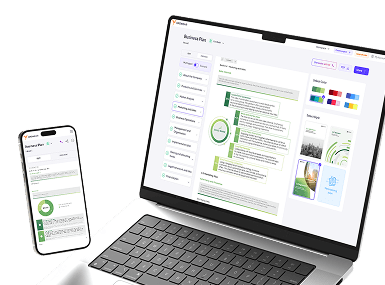
Growexa builds a complete, lender-ready business plan — with financial logic and a professionally formatted PDF
Behind Urban Laundry is a lean but capable team. The startup launched with five employees covering operations, logistics, and customer service. As the client base expands, the workforce will grow in line with demand, but the structure is intentionally designed to remain agile.
The company places a strong emphasis on employee development. Staff are trained not only in machine operations and logistics but also in customer interaction and digital systems. Compensation is competitive with local market averages, and recognition programs are in place to reward exceptional performance. This focus on employee engagement is essential for a service business, where the frontline team has a direct impact on customer satisfaction and brand reputation.
Leadership’s vision combines operational discipline with a customer-first philosophy. Rather than viewing laundry as a commodity, Urban Laundry treats it as an opportunity to enhance quality of life for its clients. This ethos is expected to resonate with the workforce and build a culture centered on professionalism and trust.
The company’s financial plan is structured for sustainability and growth. The total project cost stands at $200,000, with $150,000 sought from external investors. In return, Urban Laundry is offering a 20 percent equity stake, valuing the business at $750,000 post-investment. The allocation of funds is carefully distributed: nearly half will go toward equipment, 30 percent toward working capital, 15 percent to marketing initiatives, and the remainder to facility upgrades.
Projections show strong financial potential. Revenues in the first year are expected to reach $220,000, supported by 250 recurring clients. By the third year, revenue could exceed half a million dollars, with net income projected at $77,000. Margins are forecast to improve steadily as operations scale, rising above 40 percent by year three.
Key investment metrics underscore the attractiveness of the venture. Return on investment is projected at 144 percent, while return on equity stands at 59 percent. The payback period of 29 months is notably shorter than the industry average, which often stretches to five years or more due to the heavy capital costs of equipment and facilities. These numbers position Urban Laundry as a compelling opportunity for investors seeking exposure to the growing urban services sector.
Urban Laundry’s business plan demonstrates how even the most traditional services can be reinvented through technology and customer-centric design. What was once a weekly chore becomes, in this model, a seamless experience that aligns with the lifestyles of busy urban professionals. The combination of market demand, disciplined operations, and clear financial planning makes this venture both viable and scalable.
For entrepreneurs, the plan serves as a valuable template. It shows how to identify consumer pain points, leverage technology for differentiation, and structure finances in a way that attracts investors while ensuring sustainability. Whether you are considering a startup in the service sector, wellness, or another consumer-driven field, the lessons embedded in Urban Laundry’s approach are widely applicable.
Download the full Urban Laundry business plan to explore every section in detail—from operational strategy to financial projections. Or start with a laundry business plan template and adapt it to your own concept.
Ready to build your own business plan? Visit Growexa to access customizable templates, guided tools, and expert-backed frameworks that help you shape your idea with clarity and confidence. Turn your concept into more than viable—make it launch-ready.

