
Stop editing templates
Start building a plan that gets approved
Turn this template into a complete business plan with:
- Financial projections
- Loan-ready structure
- Clear repayment logic
Based on 40+ bank requirements

The Warehouse has become one of the most critical assets in the modern economy. Once viewed as a passive storage facility, the Warehouse is now a strategic node in global and regional supply chains, enabling speed, resilience, and scalability across commerce, manufacturing, and logistics. The rise of e-commerce, omnichannel retail, just-in-time production, and third-party logistics has elevated the Warehouse from a cost center to a value-creating business. In this environment, launching or expanding a Warehouse operation without a comprehensive business plan is no longer viable. The business plan transforms square footage, infrastructure, and location into a coherent commercial strategy. It aligns demand, operations, capital, and technology into a profitable and sustainable Warehouse business.
Many Warehouse ventures fail not because of lack of demand, but because of poor planning. Overbuilding, underutilization, inefficient layouts, and weak tenant strategy quickly erode margins. A strong business plan clarifies the purpose of the Warehouse, the customers it serves, and the role it plays in broader supply chains. It ensures that decisions around site selection, automation, labor, and pricing are financially grounded. In an industry defined by thin margins and high capital intensity, the business plan is the foundation that separates durable Warehouse operators from speculative real-estate plays.
Turn this template into a complete business plan with:
Based on 40+ bank requirements


Most business plans fail not because of the idea — but because the numbers don’t prove repayment.
Build a bank-ready business plan in minutes
(with projections, structure, and validation)
The Executive Summary presents the Warehouse business as a logistics and infrastructure enterprise designed to provide storage, handling, and distribution services to commercial clients. This section of the business plan defines the mission of the Warehouse, whether focused on general storage, fulfillment, cold storage, bonded goods, last-mile distribution, or specialized industrial use.
The business plan outlines target customers such as e-commerce companies, manufacturers, wholesalers, retailers, importers, exporters, and third-party logistics providers. Revenue streams may include space leasing, pallet storage, pick-and-pack services, cross-docking, value-added services, and long-term contracts. By summarizing strategic positioning, capacity, and financial objectives, the Executive Summary establishes the Warehouse as a structured, revenue-generating business supported by a clear business plan.
The Company Overview defines the structure, identity, and strategic foundation of the Warehouse business. This section of the business plan explains the legal entity, ownership model, and governance structure. It clarifies whether the Warehouse operates as an owner-operator facility, a managed logistics service, or part of a larger distribution network.
The business plan describes the physical characteristics of the Warehouse, including size, layout, ceiling height, dock configuration, zoning, and expandability. Infrastructure decisions are aligned with the target market, whether that involves high-throughput fulfillment, bulk storage, or specialized handling. Technology readiness, such as warehouse management systems and automation potential, is addressed as part of long-term strategy.
Location is central to Warehouse viability. The business plan explains site selection based on transportation access, labor availability, customer proximity, and regulatory environment. The Company Overview positions the Warehouse as both a real-estate asset and an operating business.
The Market Analysis examines demand drivers shaping the Warehouse industry. Growth in e-commerce, reshoring of manufacturing, inventory buffering, and supply-chain risk management have increased demand for modern Warehouse capacity. A strong business plan analyzes regional supply-demand dynamics, vacancy rates, pricing trends, and customer requirements.
The business plan evaluates competition from existing Warehouse operators, logistics parks, and alternative storage solutions. Differentiation is essential. The Market Analysis identifies opportunities in service specialization, location advantage, technology integration, or flexible contract structures.
Customer segmentation is explored in depth. Large tenants prioritize scale and efficiency, while smaller clients value flexibility and services. The business plan aligns capacity, pricing, and service levels with these segments. By grounding strategy in data and market insight, the business plan ensures the Warehouse is positioned for sustained occupancy and revenue.
The Marketing and Sales Strategy outlines how the Warehouse attracts and retains tenants or clients. Unlike consumer businesses, Warehouse marketing is relationship-driven and transaction-focused. The business plan explains how credibility, reliability, and operational capability are communicated to prospective customers.
Marketing channels include direct sales, broker relationships, industry networks, digital platforms, and long-term partnerships. The business plan emphasizes clear articulation of value, whether through location efficiency, service integration, scalability, or cost control.
Sales strategy focuses on contract structure, pricing models, and utilization optimization. Long-term leases provide stability, while short-term and value-added services enhance margins. The business plan ensures that sales commitments align with operational capacity and financial goals, protecting the Warehouse from overextension.
The Operations Plan details how the Warehouse functions on a daily basis. This section of the business plan describes inbound and outbound flows, storage systems, material handling, labor deployment, and safety protocols. Operational efficiency directly determines profitability.
The business plan explains layout optimization, equipment selection, and workflow design to maximize throughput and minimize errors. Technology such as warehouse management systems, scanning, and performance analytics supports accuracy and visibility.
Risk management is central. The Operations Plan addresses equipment downtime, labor shortages, safety incidents, and service disruptions. By defining standardized processes, the business plan ensures the Warehouse operates consistently under variable demand conditions.
No connection between:
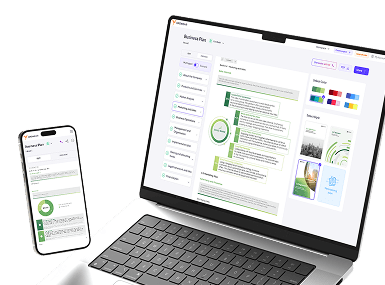
Growexa builds a complete, lender-ready business plan — with financial logic and a professionally formatted PDF
The Management and Organization section introduces the leadership responsible for the Warehouse business. It outlines experience in logistics, operations management, real estate, or supply-chain coordination. Strong leadership ensures that infrastructure investment translates into operational performance.
The business plan defines organizational roles such as warehouse manager, operations supervisors, safety officers, IT support, and administrative staff. Training programs emphasize compliance, efficiency, and customer service. Clear accountability structures support scalability and quality control.
This section demonstrates that the Warehouse is professionally managed rather than passively owned.
Establishing or expanding a Warehouse requires significant capital for land, construction, equipment, technology, and working capital. This section of the business plan outlines startup and growth costs and potential funding sources such as equity investment, debt financing, real-estate loans, or strategic partners.
The business plan explains how funds will be allocated to balance long-term asset value with near-term operational capability. Disciplined capital allocation ensures the Warehouse reaches breakeven efficiently and supports future expansion.
The Financial Plan translates the Warehouse strategy into financial projections. This section of the business plan includes revenue forecasts based on occupancy rates, service mix, pricing, and contract duration.
Expense projections include labor, utilities, maintenance, insurance, technology, and financing costs. The business plan provides cash-flow projections, breakeven analysis, and multi-year profitability scenarios. Sensitivity analysis addresses vacancy risk, pricing pressure, and cost inflation.
A successful Warehouse business is built on foresight, operational discipline, and financial clarity. While demand for Warehouse space continues to grow, only operators guided by a structured business plan achieve sustainable success. By aligning location strategy, operations, market positioning, and capital planning, the business plan transforms a Warehouse into a resilient and scalable logistics enterprise. With the right foundation, a Warehouse can become a long-term value generator at the heart of modern supply chains.
Entrepreneurs and investors ready to launch or optimize a Warehouse operation can leverage platforms like Growexa, where expert planning tools turn infrastructure concepts into polished, investor-ready business plans designed for sustainable growth.
Capital requirements vary based on location, size, and automation level. Investment typically includes land or lease costs, construction, equipment, technology systems, and working capital. A detailed business plan helps structure funding in phases and avoid overbuilding or underutilization.

