
Stop editing templates
Start building a plan that gets approved
Turn this template into a complete business plan with:
- Financial projections
- Loan-ready structure
- Clear repayment logic
Based on 40+ bank requirements

A Vineyard is more than agricultural land planted with grapevines; it is a long-term asset that blends farming, branding, patience, and capital discipline. In an era where consumers value authenticity, provenance, and craftsmanship, the Vineyard has reemerged as both an agricultural operation and a lifestyle-driven business. Yet despite its romantic image, Vineyard ownership is not inherently profitable. Long maturation cycles, climate dependency, regulatory complexity, and delayed revenue make this one of the most planning-intensive ventures in agriculture. In this context, a comprehensive business plan is essential. A well-structured business plan transforms a Vineyard from a landholding into a scalable, resilient, and financially sustainable enterprise.
Launching a Vineyard without a business plan often leads to undercapitalization, unrealistic timelines, and misaligned expectations. Grapevines take years to mature, cash flow is delayed, and early operational mistakes compound over decades. A disciplined business plan clarifies how a Vineyard will be developed, financed, operated, and positioned in the market over time. It ensures that viticultural decisions, land investments, and market strategy are aligned with financial reality. In a business defined by patience and precision, the business plan becomes the foundation of long-term success.
Turn this template into a complete business plan with:
Based on 40+ bank requirements


Most business plans fail not because of the idea — but because the numbers don’t prove repayment.
Build a bank-ready business plan in minutes
(with projections, structure, and validation)
The Executive Summary presents the Vineyard as a professionally managed agricultural and brand-driven enterprise focused on grape production, quality control, and long-term value creation. This section of the business plan defines the mission of the Vineyard, whether oriented toward grape sales, estate wine production, contract growing, agritourism integration, or premium boutique positioning.
The business plan outlines target markets such as wineries, wine producers, distributors, private-label partners, or direct-to-consumer channels if vertically integrated. Revenue streams may include grape sales, wine production, tastings, tourism experiences, or land appreciation. By summarizing scope, positioning, and financial objectives, the Executive Summary establishes the Vineyard as a strategic business guided by a clear business plan rather than a speculative agricultural project.
The Company Overview defines the structure, identity, and strategic foundation of the Vineyard. This section of the business plan explains land ownership or lease arrangements, legal structure, zoning requirements, and agricultural compliance obligations. Environmental regulations, water rights, and appellation rules are integral to the business plan.
The business plan describes the Vineyard’s location, terroir characteristics, soil composition, climate profile, and varietal selection. Decisions around grape varieties, planting density, trellising systems, and irrigation methods are aligned with long-term yield, quality, and market positioning.
Brand identity is shaped early. Even Vineyards that sell grapes rather than wine must establish a reputation for consistency and reliability. The business plan positions the Vineyard as a disciplined agricultural operation with a long investment horizon and defined market role.
The Market Analysis examines demand drivers shaping the Vineyard and wine-grape industry. Global wine consumption trends, premiumization, sustainability preferences, and regional appellation strength influence Vineyard economics. A strong business plan analyzes supply-demand dynamics, pricing cycles, and regional competitiveness.
The business plan evaluates competition from established Vineyards, emerging regions, and alternative crops. Differentiation may exist in varietal focus, organic certification, climate resilience, or consistency of yield. The Market Analysis also considers buyer concentration, contract structures, and pricing volatility.
Customer segmentation includes wineries seeking bulk grapes, premium producers, long-term contract buyers, and vertically integrated brands. Each segment values the Vineyard differently. By grounding strategy in market insight, the business plan ensures the Vineyard competes on quality, reliability, and strategic fit rather than volume alone.
The Marketing and Sales Strategy outlines how the Vineyard secures buyers and builds long-term relationships. Vineyard sales are relationship-driven and contract-based rather than transactional. The business plan explains how the Vineyard positions itself through reputation, vineyard management standards, and consistency.
Marketing focuses on visibility within the wine ecosystem through tastings, industry events, certifications, and professional networks. The business plan emphasizes credibility over mass promotion.
Sales strategy prioritizes long-term contracts, pre-harvest agreements, and diversified buyer exposure. Pricing reflects grape quality, yield predictability, and market positioning. The business plan ensures sales decisions align with production capacity and financial planning.
The Operations Plan details how the Vineyard functions throughout the agricultural cycle. This section of the business plan describes land preparation, planting schedules, canopy management, irrigation, pest control, harvesting, and post-harvest handling.
The business plan explains labor requirements, mechanization levels, seasonal staffing, and vineyard maintenance routines. Technology such as weather monitoring, soil analysis, and yield tracking supports decision-making.
Risk management is central. The Operations Plan addresses climate variability, disease pressure, water availability, and labor constraints. By defining contingency strategies, the business plan ensures the Vineyard remains resilient across seasons and market cycles.
No connection between:
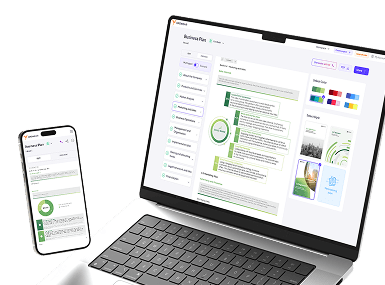
Growexa builds a complete, lender-ready business plan — with financial logic and a professionally formatted PDF
The Management and Organization section introduces the leadership behind the Vineyard. It outlines experience in viticulture, agriculture, land management, or agribusiness operations. Strong leadership balances tradition with data-driven decision-making.
The business plan defines roles such as vineyard manager, agronomist, operations supervisors, seasonal labor coordination, and administrative oversight. Training and safety protocols are emphasized.
This section demonstrates that the Vineyard is professionally managed rather than passion-driven alone.
Developing a Vineyard requires significant upfront capital for land acquisition, planting, infrastructure, equipment, and years of operating expenses before full production. This section of the business plan outlines funding sources such as owner equity, agricultural loans, investors, or grants.
The business plan explains how funds are allocated across establishment, maturation, and operational phases. Disciplined capital planning ensures the Vineyard survives its non-revenue years and reaches productive maturity.
The Financial Plan translates the Vineyard strategy into long-term financial projections. This section of the business plan includes planting timelines, yield curves, pricing assumptions, and revenue ramp-up scenarios.
Expense projections include labor, inputs, water, equipment, maintenance, insurance, and depreciation. The business plan provides cash-flow forecasts, breakeven analysis, and multi-year profitability outlooks. Sensitivity analysis addresses climate risk, price volatility, and yield variability.
A successful Vineyard is built on foresight, patience, and discipline. While passion for wine and land may inspire ownership, only businesses guided by a structured business plan achieve sustainable returns. By aligning viticulture, operations, market strategy, and financial planning, the business plan transforms a Vineyard into a resilient and enduring enterprise. With the right foundation, a Vineyard can deliver agricultural excellence, brand value, and long-term economic reward.
Entrepreneurs and landowners ready to develop or expand a Vineyard can leverage platforms like Growexa, where expert planning tools turn agricultural ambition into clear, investor-ready business plans designed for long-term success.
A Vineyard requires long-term capital commitment, delayed revenue, and exposure to climate and market risk. A structured business plan helps a Vineyard align land investment, planting decisions, and cash-flow planning over many years, reducing the risk of undercapitalization or unrealistic expectations.
Most Vineyards take several years before reaching full production and profitability. A professional business plan models this ramp-up period carefully, accounting for non-revenue years, operating expenses, and gradual yield increases so the Vineyard remains financially viable during maturation.
Yes, but expansion requires careful planning. A Vineyard can scale through additional acreage, varietal diversification, or vertical integration into wine production. A well-prepared business plan outlines expansion phases so growth strengthens long-term value rather than increasing operational strain.

