
Stop editing templates
Start building a plan that gets approved
Turn this template into a complete business plan with:
- Financial projections
- Loan-ready structure
- Clear repayment logic
Based on 40+ bank requirements

The Translation Service industry has quietly become one of the most essential infrastructures of the global economy. As companies expand across borders, platforms localize products, and governments communicate across languages, demand for professional Translation Service solutions continues to grow. What was once perceived as a purely linguistic function is now a strategic business capability tied to compliance, brand reputation, and market expansion. Despite its intellectual nature, a Translation Service is still a business with operational complexity, pricing pressure, and scalability challenges. In this environment, a comprehensive business plan is critical. A strong business plan transforms a Translation Service from a freelance-driven activity into a structured, scalable, and profitable professional services company.
Launching a Translation Service without a business plan often leads to inconsistent revenue, underpricing, overreliance on a few clients, and operational bottlenecks. Language expertise alone does not guarantee business sustainability. A well-constructed business plan clarifies how the Translation Service positions itself, which industries it serves, and how it balances quality with efficiency. It ensures that investments in talent, technology, and marketing are aligned with long-term financial goals. In a sector defined by precision, deadlines, and trust, the business plan becomes the foundation for credibility and growth.
Turn this template into a complete business plan with:
Based on 40+ bank requirements


Most business plans fail not because of the idea — but because the numbers don’t prove repayment.
Build a bank-ready business plan in minutes
(with projections, structure, and validation)
The Executive Summary presents the Translation Service as a professional language solutions provider delivering accurate, culturally adapted, and timely communication across markets. This section of the business plan defines the mission of the Translation Service, whether focused on legal translation, technical documentation, marketing localization, media content, or multilingual customer support.
The business plan outlines target clients such as corporations, law firms, healthcare providers, software companies, public institutions, and global brands. Revenue streams may include per-word translation, project-based contracts, localization services, ongoing retainers, and value-added linguistic consulting. By summarizing scope, positioning, and financial objectives, the Executive Summary establishes the Translation Service as a disciplined enterprise guided by a clear business plan.
The Company Overview defines the structure, identity, and strategic foundation of the Translation Service. This section of the business plan explains the legal entity, ownership model, and operating structure, whether centralized, remote, or hybrid. Confidentiality standards, data protection, and quality assurance frameworks are embedded into the business plan.
The business plan describes the Translation Service’s specialization areas, language pairs, and service methodology. Decisions regarding in-house linguists versus freelance networks, technology adoption, and workflow design are aligned with quality control and scalability. The Translation Service brand emphasizes accuracy, reliability, and subject-matter expertise.
Location is less about geography and more about access to talent. The business plan explains how the Translation Service sources linguists globally while maintaining consistent standards. The Company Overview positions the Translation Service as both a knowledge-driven organization and a disciplined operational business.
The Market Analysis examines demand drivers shaping the Translation Service industry. Globalization, digital content expansion, regulatory compliance, and cross-border e-commerce continue to fuel demand. A strong business plan analyzes industry growth, language demand trends, and client spending behavior.
The business plan evaluates competition from freelance translators, agencies, AI-powered tools, and hybrid platforms. Differentiation is critical. The Market Analysis identifies opportunities in specialization, quality assurance, turnaround reliability, or regulated industries where accuracy is non-negotiable.
Client segmentation is explored across corporate, legal, medical, technical, and creative sectors. Each segment has distinct pricing expectations and risk tolerance. By grounding strategy in market insight, the business plan ensures the Translation Service competes on value and trust rather than price alone.
The Marketing and Sales Strategy outlines how the Translation Service attracts clients and builds long-term relationships. Translation decisions are trust-based, making reputation and credibility central. The business plan explains how the Translation Service communicates expertise through case studies, certifications, and thought leadership.
Marketing channels include digital presence, SEO, partnerships, industry networks, and referrals. The business plan emphasizes authority-driven marketing rather than aggressive promotion.
Sales strategy focuses on consultative engagement, clear scoping, and expectation management. Pricing models reflect complexity, urgency, and subject-matter risk. The business plan ensures client acquisition supports sustainable margins and delivery capacity.
The Operations Plan details how the Translation Service functions daily. This section of the business plan describes project intake, workflow management, translation, editing, proofreading, and delivery. Operational consistency is critical because quality failures directly affect reputation.
The business plan explains resource allocation, linguist vetting, and quality assurance processes. Technology supports operations through translation management systems, terminology databases, and secure collaboration platforms. Turnaround times and revision handling are standardized.
Risk management is central. The Operations Plan addresses confidentiality breaches, deadline failures, quality disputes, and capacity constraints. By defining clear procedures, the business plan ensures the Translation Service operates reliably under pressure.
No connection between:
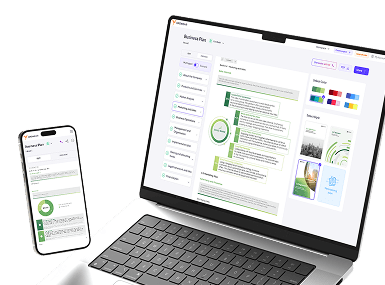
Growexa builds a complete, lender-ready business plan — with financial logic and a professionally formatted PDF
The Management and Organization section introduces the leadership behind the Translation Service. It outlines experience in linguistics, project management, or professional services. Strong leadership balances quality standards with commercial realities.
The business plan defines roles such as project managers, linguists, editors, quality reviewers, and client account managers. Training and continuous evaluation ensure consistent performance across languages and markets.
This section demonstrates that the Translation Service is professionally managed rather than ad-hoc or founder-dependent.
Launching or scaling a Translation Service requires capital for technology platforms, marketing, talent onboarding, and working capital. This section of the business plan outlines funding sources such as owner investment, loans, or strategic partners.
The business plan explains how funds are allocated to improve efficiency, quality assurance, and client acquisition. Disciplined capital planning ensures the Translation Service grows sustainably without sacrificing standards.
The Financial Plan translates the Translation Service strategy into financial projections. This section of the business plan includes revenue forecasts based on project volume, average rates, client retention, and service mix.
Expense projections include linguist costs, platform subscriptions, marketing, administration, and overhead. The business plan provides cash-flow projections, breakeven analysis, and multi-year profitability scenarios. Sensitivity analysis addresses pricing pressure and demand volatility.
A successful Translation Service is built on precision supported by structure. While linguistic skill attracts clients, only businesses guided by a structured business plan achieve long-term sustainability. By aligning specialization, operations, marketing, and financial planning, the business plan transforms a Translation Service into a resilient and scalable professional services enterprise. With the right foundation, a Translation Service can support global communication while generating enduring business value.
Entrepreneurs ready to launch or grow a Translation Service can leverage platforms like Growexa, where expert planning tools turn language expertise into polished, investor-ready business plans designed for sustainable growth.
A Translation Service operates in a highly competitive, trust-driven market where pricing pressure and tight deadlines are constant. A structured business plan helps a Translation Service define specialization, pricing logic, operational capacity, and growth strategy, turning linguistic expertise into a stable and scalable business.
Compared to asset-heavy industries, a Translation Service requires relatively modest startup capital. Typical costs include technology platforms, marketing, onboarding linguists, and working capital. A well-prepared business plan ensures investments are focused on efficiency and client acquisition rather than unnecessary overhead.

