 Ukraine
 USA
USA
 Austria





Clarifying the Concept Beyond Shelves
Every supermarket must begin with a clear concept. Will the store operate as a discount model competing on price and scale, or as a premium market focusing on organic and specialty goods? Is it neighborhood-focused, relying on proximity and loyalty, or a larger destination aiming to pull in regional traffic? These choices influence everything else—from square footage requirements to supplier contracts and marketing strategies.
The executive overview in a supermarket business plan must go beyond announcing “a new store” and instead specify tangible goals. For example: “Within the first 18 months, the supermarket will capture 12 percent of the local grocery market, generating average monthly revenues of $1.2 million with a gross margin of 22 percent.” Such precision conveys to investors that the concept is grounded in metrics, not aspiration.
Mapping the Grocery Market
The supermarket industry is vast, but also highly segmented. Global grocery sales exceed trillions annually, but success depends on hyper-local positioning. The plan must show knowledge of the specific region: What portion of the population is within a five-mile radius? What is the median household income? How many direct competitors are already established?
Competition analysis must be concrete. Discount giants like Walmart and Aldi compete on volume and price. Regional chains attract loyalty through convenience and community involvement. Niche organic players win on lifestyle alignment. An independent supermarket must articulate where it will fit among these categories and how it will secure loyalty.
Consumer expectations are evolving. Post-pandemic, online grocery delivery and curbside pickup surged, and many consumers now see them as non-negotiable. Shoppers also want transparency: clear labeling, local sourcing, and sustainability initiatives. Addressing these demands in the plan elevates the market analysis from abstract numbers to actionable insights.
The Regulatory and Supply Chain Realities
Running a supermarket is as much about compliance as it is about commerce. Licensing for food sales, alcohol distribution, health codes, and labor regulations all demand attention. The business plan should outline these requirements explicitly, demonstrating that the operator understands timelines, costs, and risks associated with each permit.
Equally critical is supply chain strategy. With margins in grocery often as low as 2–3 percent, supplier relationships can determine viability. The plan should clarify whether the supermarket will source from national distributors, regional wholesalers, or direct farm partnerships. Logistics—cold storage, just-in-time delivery, and waste management—must be explained, as inefficiencies here erode profits rapidly.
Store Design as a Strategic Tool
A supermarket’s design is not neutral; it is a profit lever. The layout determines customer flow, average basket size, and impulse purchases. The business plan should detail how the store will be organized: produce up front to signal freshness, high-margin prepared foods placed along traffic paths, and essentials like milk and bread located deeper to extend shopping time.
Technology investment is now central. Self-checkout systems, digital shelf labeling, and data-driven inventory software all reduce labor costs and increase efficiency. Beyond operational savings, they shape the customer experience. Investors want to see that the supermarket is not a relic of the past but a retail space designed for the future.
Capacity must also be addressed: How many square feet are allocated per department? What is the maximum daily traffic the store is designed to accommodate? These numbers connect the design to financial projections.
Staffing as Service Infrastructure
Unlike many retail models, supermarkets rely heavily on human infrastructure. From cashiers and stockers to department specialists in deli, bakery, or seafood, the quality of staff directly influences repeat business. The plan must describe a staffing model: how many employees per shift, how responsibilities are divided, and what training is provided.
Employee turnover is notoriously high in grocery retail. Addressing strategies for retention—such as career pathways, incentive programs, or flexible scheduling—signals foresight. Investors understand that labor instability drives operational inconsistency and customer dissatisfaction.
Management structure is equally important. A credible supermarket plan identifies not just owners but department managers, procurement officers, and operations coordinators. Even if these roles are aspirational at launch, their inclusion shows scalability.
Marketing Groceries in a Saturated Market
Supermarket marketing cannot rely solely on opening-day promotions. It must be a continuous system of visibility, loyalty, and differentiation.
Digital presence is increasingly critical. Consumers now search online for weekly deals, compare prices, and expect mobile-friendly shopping options. A plan that integrates e-commerce, delivery partnerships, and loyalty apps positions the store as competitive.
Local marketing still matters. Community sponsorships, in-store events, and partnerships with local producers create goodwill and visibility. For niche supermarkets—such as those emphasizing organic products—storytelling becomes central. Shoppers pay premiums when they feel emotionally connected to the sourcing and mission of the store.
Loyalty programs must also be highlighted. Whether through discounts, points, or subscription models, they turn occasional shoppers into recurring revenue streams.
Revenue Diversification Beyond Aisles
While traditional supermarkets rely on groceries, investors look for additional revenue streams that cushion thin margins. A strong business plan outlines these opportunities: prepared foods and café spaces, branded private labels, in-store pharmacies, or partnerships with local artisans. Some stores are also experimenting with subscription produce boxes or bundled meal kits.
The business plan should clarify which diversification avenues align with the brand identity. For example, a health-focused supermarket might prioritize a juice bar and wellness product lines, while a discount model could focus on high-turnover private-label goods.
Financial Structure and Projections
Supermarkets require significant upfront capital—often millions in leasehold improvements, refrigeration equipment, shelving, and technology. The plan must detail these investments clearly and show how they will be financed: personal equity, bank loans, private investors, or government-backed programs.
Revenue projections should be grounded in assumptions: daily traffic, average basket size, seasonal fluctuations, and loyalty program penetration. For example: “With 1,200 daily transactions averaging $38 per basket, monthly revenue is projected at $1.36 million.” Linking numbers directly to operational realities enhances credibility.
Costs must be equally explicit: labor, utilities (which are substantial due to refrigeration), shrinkage (loss from spoilage or theft), marketing, and debt servicing. Cash flow projections are especially important, as grocery businesses often face tight liquidity cycles.
Break-even analysis must reflect volume realities. Because margins are narrow, even small deviations in traffic or basket size can determine profitability. Investors expect transparency about how much market share is needed to cover fixed costs.

Addressing Risks with Strategic Foresight
Supermarkets face unique risks: price wars with discount giants, supply chain disruptions, food safety incidents, and shifting consumer preferences. A robust plan acknowledges these openly and presents mitigation strategies.
For instance, to offset supply chain volatility, a supermarket might secure multi-year contracts with key suppliers while also cultivating backup regional sources. To address competition, the plan might emphasize differentiated service offerings like 24-hour operation or exclusive local products.
Risk acknowledgment does not signal weakness—it shows preparedness. Investors prefer entrepreneurs who see the threats clearly and have frameworks to manage them.
Closing Perspective: The Supermarket as Strategy in Motion
A supermarket is not just a place where consumers pick up bread and milk. It is a hub of community life, a battleground of price and convenience, and an operation that tests managerial skill daily. Writing a supermarket business plan is not about filling templates; it is about constructing a disciplined strategy that reconciles razor-thin margins with opportunities for loyalty, scale, and innovation.
For entrepreneurs, the business plan becomes more than a fundraising document. It is a compass for daily decisions: which products to stock, which promotions to run, when to expand, and how to balance short-term pressures with long-term sustainability.
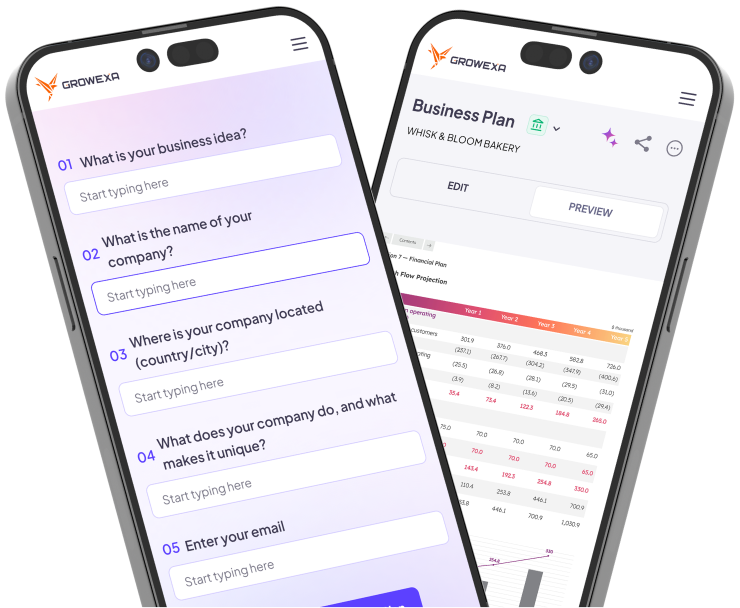
Those ready to begin can start by downloading a supermarket business plan template, adapt it to their own context, and explore completed examples to see how structure translates into practice. For anyone seeking a truly tailored approach, tools like Growexa provide customizable frameworks and expert guidance to craft a plan as dynamic as the retail world itself.