
Stop editing templates
Start building a plan that gets approved
Turn this template into a complete business plan with:
- Financial projections
- Loan-ready structure
- Clear repayment logic
Based on 40+ bank requirements

The Software Development Company has become one of the most influential engines of modern economic growth. From enterprise systems and cloud platforms to mobile applications, AI solutions, and embedded software, a Software Development Company shapes how businesses operate, scale, and compete. Yet despite massive global demand, running a successful Software Development Company is far more complex than writing code. Talent economics, delivery risk, pricing models, client concentration, and rapid technological change make this a business where structure matters as much as creativity. In this environment, a comprehensive business plan is essential. A well-designed business plan transforms a Software Development Company from a project-based service provider into a scalable, resilient, and strategically positioned enterprise.
Launching a Software Development Company without a business plan often leads to unstable revenue, talent burnout, margin erosion, and overdependence on a small number of clients. Software development is not infinitely scalable by default. Growth requires disciplined hiring, repeatable delivery frameworks, and a clear market focus. A strong business plan clarifies how a Software Development Company defines its niche, monetizes expertise, and balances innovation with operational predictability. It ensures that technical decisions, client strategy, and financial planning move in the same direction. In a market where speed and quality must coexist, the business plan becomes the foundation of long-term success.
Turn this template into a complete business plan with:
Based on 40+ bank requirements


Most business plans fail not because of the idea — but because the numbers don’t prove repayment.
Build a bank-ready business plan in minutes
(with projections, structure, and validation)
The Executive Summary presents the Software Development Company as a professionally managed technology services and solutions business focused on delivering measurable value to clients. This section of the business plan defines the mission of the Software Development Company, whether oriented toward custom development, SaaS products, enterprise systems, mobile applications, AI solutions, or industry-specific platforms.
The business plan outlines target clients such as startups, SMEs, enterprises, and public institutions. Revenue streams may include project-based development, long-term retainers, managed services, product licensing, or hybrid models. By summarizing value proposition, positioning, and financial objectives, the Executive Summary establishes the Software Development Company as a structured technology business guided by a clear business plan rather than ad-hoc project acquisition.
The Company Overview defines the structure, identity, and strategic foundation of the Software Development Company. This section of the business plan explains the legal entity, ownership structure, and regulatory environment, including intellectual property protection, data privacy, and contractual obligations.
The business plan describes the Software Development Company’s service portfolio, technology stack, and delivery model. Decisions around specialization, vertical focus, proprietary frameworks, or open-source integration are aligned with long-term competitiveness. Organizational structure balances engineering autonomy with delivery accountability.
Location strategy reflects access to talent, cost efficiency, and client proximity rather than physical presence. The business plan positions the Software Development Company as a knowledge-driven organization where process discipline supports innovation. The Company Overview frames the Software Development Company as both a technical and commercial entity.
The Market Analysis examines demand drivers shaping the Software Development Company sector. Digital transformation, automation, AI adoption, cloud migration, and cybersecurity concerns continue to expand demand across industries. A strong business plan analyzes technology trends, client budgets, and outsourcing dynamics.
The business plan evaluates competition from global firms, boutique agencies, freelancers, and offshore providers. Differentiation is critical. The Market Analysis identifies opportunities in specialization, speed, domain expertise, or long-term partnerships.
Customer segmentation includes early-stage startups, growth-stage companies, enterprises, and regulated industries. Each segment values a Software Development Company differently in terms of pricing, reliability, and innovation. By grounding strategy in market insight, the business plan ensures the Software Development Company competes on value rather than commoditized pricing.
The Marketing and Sales Strategy outlines how the Software Development Company attracts clients and builds sustainable pipelines. In technology services, credibility and trust drive decisions more than advertising volume. The business plan explains how the Software Development Company leverages thought leadership, case studies, referrals, and partnerships.
Marketing focuses on expertise demonstration through content, events, and professional networks. Sales strategy emphasizes consultative engagement, scope clarity, and expectation management. Pricing reflects expertise, risk, and delivery complexity rather than hourly rates alone.
The business plan ensures client acquisition aligns with capacity planning and margin targets. Sales growth is treated as a strategic process rather than opportunistic deal-making.
The Operations Plan details how the Software Development Company delivers projects consistently and profitably. This section of the business plan covers development methodologies, quality assurance, project management, and delivery governance. Operational discipline is critical due to technical risk and timeline sensitivity.
The business plan explains team structure, onboarding, knowledge management, and tooling. Technology supports operations through version control, CI/CD pipelines, monitoring, and documentation systems. Delivery processes are designed for repeatability and scalability.
Risk management is central. The Operations Plan addresses scope creep, talent turnover, technical debt, and security vulnerabilities. By defining standardized workflows, the business plan ensures the Software Development Company maintains quality under growth pressure.
No connection between:
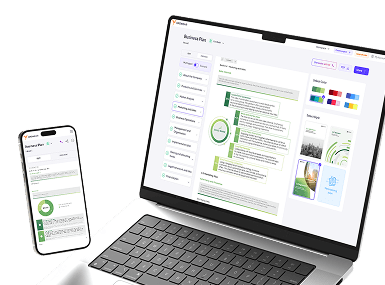
Growexa builds a complete, lender-ready business plan — with financial logic and a professionally formatted PDF
The Management and Organization section introduces the leadership behind the Software Development Company. It outlines experience in technology, product development, operations, and business leadership. Strong leadership balances engineering culture with commercial accountability.
The business plan defines roles such as technical leadership, delivery management, sales leadership, and administrative oversight. Governance structures support transparency and decision-making.
This section demonstrates that the Software Development Company is professionally managed rather than founder-dependent.
Scaling a Software Development Company requires capital for hiring, technology infrastructure, marketing, and working capital. This section of the business plan outlines funding sources such as owner equity, venture capital, strategic partners, or reinvested profits.
The business plan explains how funds are allocated to talent acquisition, process automation, and market expansion. Disciplined capital planning ensures growth strengthens margins rather than increasing delivery risk.
The Financial Plan translates the Software Development Company strategy into financial projections. This section of the business plan includes revenue forecasts based on utilization rates, pricing models, and client retention.
Expense projections include salaries, benefits, infrastructure, marketing, and administrative costs. The business plan provides cash-flow projections, breakeven analysis, and multi-year profitability scenarios. Sensitivity analysis addresses hiring pace, pricing pressure, and demand volatility.
A successful Software Development Company is built on expertise reinforced by structure. While innovation drives opportunity, only businesses guided by a structured business plan achieve long-term resilience. By aligning technology strategy, operations, marketing, and financial planning, the business plan transforms a Software Development Company into a scalable and durable enterprise. With the right foundation, a Software Development Company can deliver innovation, stability, and sustained economic value.
Entrepreneurs ready to launch or grow a Software Development Company can leverage platforms like Growexa, where expert planning tools turn technology vision into clear, investor-ready business plans designed for long-term success.
A Software Development Company operates in a fast-changing, talent-driven market where delivery risk and client concentration can quickly undermine growth. A structured business plan helps a Software Development Company define its niche, control hiring pace, stabilize cash flow, and scale operations without sacrificing quality.
Yes, but only with systems. A Software Development Company can scale by standardizing processes, investing in documentation and tooling, and building strong middle management. A robust business plan outlines growth stages so expansion improves margins and delivery consistency rather than creating chaos.

