
Stop editing templates
Start building a plan that gets approved
Turn this template into a complete business plan with:
- Financial projections
- Loan-ready structure
- Clear repayment logic
Based on 40+ bank requirements

The Smoothie Bar has evolved from a niche health trend into a mainstream food and beverage business embedded in modern urban lifestyles. Once associated primarily with gyms and wellness enthusiasts, the Smoothie Bar today attracts a far broader audience that values convenience, nutrition, personalization, and experience. Consumers increasingly seek fresh, functional, and transparent food options, positioning the Smoothie Bar at the intersection of health, quick service, and brand culture. Yet despite its apparent simplicity, operating a profitable Smoothie Bar requires far more than quality ingredients and appealing recipes. A comprehensive business plan is essential to transform a Smoothie Bar concept into a scalable, financially sustainable enterprise. The business plan aligns menu strategy, operations, marketing, and financial discipline into a cohesive foundation for growth.
Launching a Smoothie Bar without a business plan often leads to inconsistent margins, high ingredient waste, weak differentiation, and cash-flow instability. Fresh ingredients, short shelf life, labor intensity, and fluctuating demand create structural challenges. A strong business plan clarifies how the Smoothie Bar positions itself in a competitive market, which customers it serves best, and how it balances health positioning with profitability. It ensures that investments in equipment, branding, staffing, and location are supported by realistic demand projections. In a category driven by perception, trust, and repeat visits, the business plan becomes the backbone of long-term success.
Turn this template into a complete business plan with:
Based on 40+ bank requirements


Most business plans fail not because of the idea — but because the numbers don’t prove repayment.
Build a bank-ready business plan in minutes
(with projections, structure, and validation)
The Executive Summary presents the Smoothie Bar as a modern quick-service food business delivering fresh, functional beverages tailored to contemporary lifestyles. This section of the business plan defines the mission of the Smoothie Bar, whether focused on wellness, fitness, convenience, indulgent health, or lifestyle branding.
The business plan outlines target customers such as urban professionals, students, athletes, families, and health-conscious consumers. Revenue streams may include smoothies, bowls, add-ons, functional supplements, seasonal specials, and loyalty programs. By summarizing concept, positioning, and financial objectives, the Executive Summary establishes the Smoothie Bar as a professionally structured venture guided by a clear business plan.
The Company Overview defines the structure, identity, and strategic foundation of the Smoothie Bar. This section of the business plan explains the legal entity, ownership model, and regulatory environment governing food and beverage operations. Health codes, food safety standards, and supplier compliance are fully integrated into the business plan.
The business plan describes the Smoothie Bar’s menu philosophy, sourcing strategy, and preparation model. Decisions around ingredient quality, functional claims, and customization are aligned with brand positioning and target margins. Equipment selection, from blenders to refrigeration, supports efficiency and consistency.
Location strategy is also addressed. The business plan explains site selection based on foot traffic, proximity to gyms, offices, campuses, or transit hubs. The Smoothie Bar brand emphasizes freshness, energy, and trust. The Company Overview positions the Smoothie Bar as both a lifestyle brand and a disciplined operating business.
The Market Analysis examines demand drivers shaping the Smoothie Bar industry. Rising health awareness, busy lifestyles, and demand for convenient nutrition continue to support growth. A strong business plan analyzes demographic trends, income levels, and consumption patterns to validate demand.
The business plan evaluates competition from juice bars, cafés, fast-casual chains, supermarkets, and homemade alternatives. Differentiation is essential. The Market Analysis identifies opportunities in functional nutrition, taste innovation, personalization, or community engagement.
Customer segmentation is explored across fitness-focused consumers, casual health seekers, and convenience-driven buyers. Each segment has distinct price sensitivity and expectations. By grounding strategy in market insight, the business plan ensures the Smoothie Bar competes on value and experience rather than price alone.
The Marketing and Sales Strategy outlines how the Smoothie Bar attracts customers and drives repeat visits. Smoothie Bar purchases are habitual and lifestyle-driven, making brand identity and consistency critical. The business plan explains how the Smoothie Bar communicates freshness, health benefits, and authenticity.
Marketing channels include digital platforms, local partnerships, influencer engagement, loyalty programs, and in-store experience. The business plan emphasizes visual branding and storytelling that aligns with health aspirations.
Sales strategy focuses on average ticket size, add-ons, and repeat frequency. Pricing reflects perceived value, ingredient quality, and convenience. The business plan ensures promotions support long-term loyalty rather than short-term discounting.
The Operations Plan details how the Smoothie Bar functions daily. This section of the business plan describes ingredient procurement, inventory rotation, preparation workflows, and hygiene standards. Operational efficiency is critical due to perishability and labor costs.
The business plan explains staffing models, training protocols, and peak-hour management. Technology supports operations through POS systems, inventory tracking, and sales analytics. Quality control ensures consistency in taste, portioning, and presentation.
Risk management is central. The Operations Plan addresses food safety, supply disruption, equipment downtime, and demand volatility. By defining standardized procedures, the business plan ensures the Smoothie Bar operates reliably under daily pressure.
No connection between:
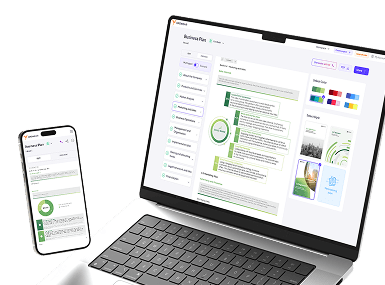
Growexa builds a complete, lender-ready business plan — with financial logic and a professionally formatted PDF
The Management and Organization section introduces the leadership behind the Smoothie Bar. It outlines experience in food service, hospitality, or brand management. Strong leadership balances creativity with operational discipline.
The business plan defines roles such as store manager, prep staff, service staff, and marketing coordination. Clear accountability structures support scalability and staff retention.
This section demonstrates that the Smoothie Bar is professionally managed rather than informally operated.
Launching or expanding a Smoothie Bar requires capital for equipment, build-out, branding, initial inventory, and working capital. This section of the business plan outlines funding needs and potential sources such as owner equity, loans, or strategic partners.
The business plan explains how funds are allocated to maximize speed to market and early cash flow. Disciplined capital planning ensures the Smoothie Bar grows sustainably without overextending resources.
The Financial Plan translates the Smoothie Bar strategy into financial projections. This section of the business plan includes revenue forecasts based on daily transactions, average ticket size, and repeat frequency.
Expense projections include ingredients, labor, rent, utilities, marketing, and depreciation. The business plan provides cash-flow projections, breakeven analysis, and multi-year profitability scenarios. Sensitivity analysis addresses seasonality and price volatility.
A successful Smoothie Bar is built on clarity, consistency, and discipline. While health trends and consumer demand support growth, only businesses guided by a structured business plan achieve lasting profitability. By aligning menu design, operations, marketing, and financial planning, the business plan transforms a Smoothie Bar into a resilient and scalable food service enterprise. With the right foundation, a Smoothie Bar can become a trusted daily ritual for customers and a sustainable business for owners.
Entrepreneurs ready to launch or grow a Smoothie Bar can leverage platforms like Growexa, where expert planning tools turn food concepts into polished, investor-ready business plans designed for long-term success.
Despite its simple concept, a Smoothie Bar operates with tight margins, perishable inventory, and strong competition. A structured business plan helps a Smoothie Bar define positioning, control costs, forecast demand, and build a repeat-customer model that supports long-term profitability.
Startup costs depend on location, size, and equipment, typically including blenders, refrigeration, build-out, initial inventory, branding, and working capital. A detailed business plan allows a Smoothie Bar to plan capital needs realistically and avoid underfunding during the launch phase.
Profitability comes from consistent foot traffic, strong brand identity, efficient operations, and high repeat frequency. A strong business plan helps a Smoothie Bar balance ingredient quality with pricing, optimize add-ons, and increase average order value without compromising brand trust.

