
Stop editing templates
Start building a plan that gets approved
Turn this template into a complete business plan with:
- Financial projections
- Loan-ready structure
- Clear repayment logic
Based on 40+ bank requirements

A modern SaaS company is not simply a software product delivered through the cloud. It is a recurring-revenue business model built on scalability, retention, data, and continuous value delivery. As digital transformation accelerates across every industry, SaaS has become the backbone of how organizations operate, collaborate, analyze, and grow. From startups and small businesses to global enterprises, customers increasingly prefer SaaS solutions for their flexibility, predictability, and speed of deployment. Yet despite the apparent elegance of the model, building a successful SaaS company is operationally complex and capital-intensive. A comprehensive business plan is essential to translate a SaaS idea into a sustainable, investable, and scalable company. The business plan aligns product vision, go-to-market strategy, technical execution, and financial discipline into a single coherent framework.
Launching a SaaS venture without a business plan often results in unfocused development, weak positioning, high churn, and inefficient capital use. The SaaS model magnifies both success and failure because growth compounds over time. A strong business plan clarifies who the SaaS product is for, what problem it solves, how it acquires and retains users, and how it converts usage into predictable revenue. In a market where customer acquisition costs rise and competition is global from day one, the business plan becomes the strategic backbone that supports long-term value creation.
Turn this template into a complete business plan with:
Based on 40+ bank requirements




Most business plans fail not because of the idea — but because the numbers don’t prove repayment.
Build a bank-ready business plan in minutes
(with projections, structure, and validation)
The Executive Summary introduces the SaaS business as a cloud-based software company delivering ongoing value through subscription access. This section of the business plan defines the mission of the SaaS venture, whether focused on productivity, analytics, finance, HR, marketing, operations, vertical-specific workflows, or infrastructure. It explains the core value proposition of the SaaS product, emphasizing efficiency, automation, insight, or cost reduction for its users.
The business plan outlines the target customer segment, such as startups, SMBs, enterprises, or niche industries, and defines the primary use cases driving adoption. Revenue streams typically include monthly or annual subscriptions, tiered pricing, usage-based fees, enterprise contracts, and optional add-ons. By summarizing product vision, market opportunity, and financial ambition, the Executive Summary positions the SaaS company as a scalable digital business grounded in a clear business plan.
The Company Overview defines the structure, identity, and strategic foundation of the SaaS business. This section of the business plan explains the legal entity, ownership structure, and long-term objectives. It clarifies whether the SaaS company is bootstrapped, venture-backed, or strategically partnered.
The business plan describes the SaaS product in functional terms, including its core features, architecture, integrations, and roadmap philosophy. It explains how the product is delivered, maintained, and updated through a cloud infrastructure. The SaaS company’s brand identity is shaped by reliability, usability, security, and trust.
The overview also addresses geographic reach. Most SaaS products operate globally from inception, and the business plan explains how localization, compliance, and support are handled across markets. By defining purpose and structure, the Company Overview establishes the SaaS business as a professional, growth-oriented enterprise.
The Market Analysis evaluates demand dynamics shaping the SaaS landscape. Organizations increasingly adopt SaaS to replace legacy software, reduce IT overhead, and improve agility. A strong business plan analyzes industry trends, customer pain points, and digital maturity levels to validate demand for the SaaS solution.
The business plan assesses competitive forces, including established SaaS platforms, emerging startups, open-source alternatives, and internal tools. Differentiation is critical. The Market Analysis identifies opportunities such as underserved niches, workflow inefficiencies, regulatory complexity, or poor user experience in existing solutions.
Customer segmentation is explored in detail. Early adopters, growth-stage companies, and enterprises have different buying behaviors and expectations. The business plan aligns product positioning, pricing, and onboarding strategy with these segments. By grounding decisions in data and market insight, the Market Analysis strengthens the strategic positioning of the SaaS business.
The Marketing and Sales Strategy outlines how the SaaS company acquires users, converts them into paying customers, and retains them over time. Growth in SaaS depends on repeatable acquisition channels and efficient conversion. The business plan explains how brand positioning, messaging, and thought leadership establish credibility.
Marketing channels may include content marketing, search, paid acquisition, partnerships, communities, and product-led growth. The business plan emphasizes education-driven marketing that demonstrates value before purchase. Free trials, freemium models, or demos play a key role in SaaS adoption.
Sales strategy varies by customer segment. The business plan explains whether the SaaS follows a self-serve model, inside sales approach, or enterprise sales cycle. Pricing strategy balances accessibility with lifetime value. Retention, expansion, and upselling are central, as long-term success depends more on customer lifetime value than initial conversion.
The Operations Plan describes how the SaaS business functions on a daily basis. This section of the business plan outlines product development workflows, release cycles, infrastructure management, and support operations. Reliability and uptime are essential, as SaaS customers expect continuous access.
The business plan explains how development teams prioritize features, fix bugs, and respond to user feedback. Security, data protection, and compliance are addressed to maintain trust. Customer support systems, onboarding processes, and documentation are designed to reduce churn and improve satisfaction.
Scalability is central to SaaS operations. The Operations Plan ensures that infrastructure and processes can handle growth without degrading performance. By defining disciplined workflows, the business plan supports sustainable expansion.
The Management and Organization section introduces the leadership behind the SaaS company. It outlines experience in software development, product management, growth marketing, sales, or operations. Strong leadership ensures alignment between vision and execution.
The business plan defines organizational roles such as engineering, product, marketing, sales, customer success, and operations. Cross-functional collaboration is emphasized, as SaaS success depends on tight feedback loops between teams.
As the company grows, the business plan outlines how management structure evolves to support scale. This section demonstrates that the SaaS business is built to operate beyond its founders.
No connection between:
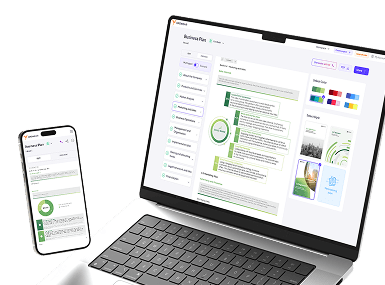
Growexa builds a complete, lender-ready business plan — with financial logic and a professionally formatted PDF
Building a SaaS business requires capital for development, infrastructure, marketing, hiring, and working capital. This section of the business plan outlines funding needs and potential sources such as bootstrapping, angel investment, venture capital, or strategic partners.
The business plan explains how funds will be allocated across product development, customer acquisition, and operational growth. Capital efficiency is critical in SaaS, as revenue accrues over time. Disciplined allocation ensures the company can reach key milestones without excessive dilution or risk.
The Financial Plan translates the SaaS strategy into metrics and projections. This section of the business plan includes forecasts for recurring revenue, customer acquisition cost, churn, lifetime value, and gross margin. SaaS economics depend on predictability and retention.
Expense projections include development costs, cloud infrastructure, sales and marketing, support, and administration. The business plan provides cash-flow projections, breakeven analysis, and growth scenarios. Sensitivity analysis addresses churn risk, pricing changes, and acquisition efficiency.
A well-constructed Financial Plan demonstrates that the SaaS business can achieve sustainable profitability over time.
A successful SaaS company is built on more than code. It requires strategic clarity, disciplined execution, and financial rigor. While SaaS offers unmatched scalability, only businesses guided by a structured business plan achieve lasting success. By aligning product vision, market strategy, operations, and financial control, the business plan transforms a SaaS idea into a durable, high-value enterprise. With the right foundation, a SaaS business can scale globally, adapt continuously, and deliver long-term value to customers and stakeholders.
Entrepreneurs ready to launch or scale a SaaS venture can leverage platforms like Growexa, where expert planning tools transform software concepts into polished, investor-ready business plans designed for sustainable growth.
A business plan is essential for a SaaS company because the model relies on long-term customer retention, predictable recurring revenue, and capital efficiency. Without a clear business plan, SaaS founders often struggle with unclear positioning, high churn, and inefficient customer acquisition strategies.

