
Stop editing templates
Start building a plan that gets approved
Turn this template into a complete business plan with:
- Financial projections
- Loan-ready structure
- Clear repayment logic
Based on 40+ bank requirements

Launching a Restaurant is not only about menu and design; it’s about mastering perception. The taste may bring guests once — but marketing brings them back. A great Restaurant Marketing Plan doesn’t chase trends; it builds trust, loyalty, and visibility in a crowded dining landscape.
Behind every full dining room is not luck, but a process — a structured Marketing Plan that aligns creative storytelling with measurable returns.
Turn this template into a complete business plan with:
Based on 40+ bank requirements


Most business plans fail not because of the idea — but because the numbers don’t prove repayment.
Build a bank-ready business plan in minutes
(with projections, structure, and validation)
A Restaurant lives and dies by awareness and repeat visits. The industry’s brutal math is well known — most venues fail not because of bad food, but because of invisible branding. A Restaurant Marketing Plan provides structure where instinct used to be. It turns emotional appeal into repeatable performance.
Marketing in hospitality is both art and arithmetic. Your Marketing Plan defines who you serve, what they believe, how they discover you, and why they return. It translates brand values into customer behavior and cash flow.
Without a written Restaurant Marketing Plan, even talented teams drift — spending on ads that don’t convert, neglecting retention, or missing local visibility. With one, a Restaurant gains focus: every message supports a measurable goal, every campaign ties back to occupancy, and every dollar spent has a reason.
Before a single post or promotion, a Restaurant Marketing Plan must start with identity. What does your Restaurant stand for — indulgence, comfort, sustainability, or innovation? What emotions should guests feel before, during, and after dining?
A brand is not a logo; it’s the consistent experience people remember. Your Restaurant Marketing Plan should articulate:
A clear identity guides every tactical choice — from menu design to Instagram captions. The most successful Restaurants use their Marketing Plan to ensure creative cohesion between chefs, designers, and social media managers. When a Restaurant controls its narrative, it controls its future.
No Restaurant can appeal to everyone. Precision wins. A professional Marketing Plan segments audiences based on demographics, psychographics, and dining motivations. Define your core segments:
Map these personas against frequency, ticket size, and loyalty potential. A Restaurant Marketing Plan should link each audience to a tailored channel — locals via Google Maps, tourists via TripAdvisor, and foodies via Instagram collaborations.

The key isn’t to be visible everywhere — it’s to be irresistible where it matters.
A Restaurant Marketing Plan without competitor analysis is like cooking blindfolded. Identify 5–7 direct competitors within your cuisine and price band. Document their tone, design, menu highlights, and promotions.
Your Restaurant must find a differentiated story: perhaps sourcing transparency, an open kitchen, or cross-cultural fusion. Then translate that edge into communication pillars — messages that repeat across every touchpoint.
Positioning defines pricing power. A Restaurant that markets itself as “local craft cuisine with global flair” can sustain higher margins than one that competes on discounts.
In your Marketing Plan, describe how positioning supports profit, not just personality.
A guest’s first impression happens long before they enter your Restaurant — it happens on screens. A professional Restaurant Marketing Plan begins with digital infrastructure:
Each of these touchpoints is a conversion funnel. The Marketing Plan should set performance targets: website conversion rate above 4%, organic traffic growth 10% monthly, review rating above 4.5. A Restaurant that manages its digital house as carefully as its kitchen never loses relevance.
Food is sensual; marketing must be too. Your Restaurant Marketing Plan should treat content as an asset, not an afterthought. Show not just dishes, but philosophy — the story behind the farmer, the culture behind a spice, the ritual of plating. Video, short reels, and chef features humanize the brand. Blogs about wine pairing, seasonal sourcing, or community initiatives create SEO traction and trust.
The rhythm matters: post consistently, not constantly. A Restaurant that controls cadence communicates reliability. Your Marketing Plan should outline tone, frequency, and creative direction — a monthly content calendar tied to events and menu updates.
Restaurants don’t exist in isolation — they’re part of local culture. Your Marketing Plan should leverage this geography as a strength. Partner with local gyms, art galleries, or coworking spaces. Host charity dinners or pop-up tastings. Sponsor local festivals or collaborate with microbreweries.
Each partnership embeds your Restaurant into neighborhood memory. Word-of-mouth still reigns — but it’s engineered through community presence. The Restaurant Marketing Plan must assign budgets and expected reach to these initiatives. A $500 local collaboration can yield better ROI than a $2,000 generic ad.
The modern Restaurant is as much a media brand as a food brand. Social platforms are your open kitchen — where transparency builds trust. A Restaurant Marketing Plan should define platform roles:
Set content metrics: engagement rate, follower conversion to reservations, and influencer ROI. Paid campaigns should amplify organic strength, not replace it. Above all, authenticity wins. The Restaurant Marketing Plan must remind teams: algorithms change, human appetite doesn’t.
PR is credibility borrowed. A Restaurant Marketing Plan should outline how to attract journalists and influencers without gimmicks. Invite curated tastings, send press kits, and track coverage ROI.
Target micro-influencers with niche authority — 10k followers who live nearby are often worth more than national figures. Feature stories on sourcing ethics, chef profiles, or interior design can drive organic mentions and backlinks — long-term marketing gold.
Your Restaurant Marketing Plan should quantify PR outcomes: impressions, link value, and bookings attributable to earned media.
The inbox remains the most powerful table in digital dining. A Restaurant Marketing Plan must structure CRM like a menu: starter (signup incentive), main (newsletter storytelling), and dessert (exclusive offers).
Collect guest data ethically through reservations, Wi-Fi, or loyalty apps. Segment communication — frequent diners get updates, first-timers get incentives, dormant guests get win-back campaigns.
Open rates above 35% and redemption rates above 10% indicate healthy engagement. A Restaurant that builds relationships by email converts curiosity into habit.
Experience marketing is the heartbeat of hospitality. Host chef’s tables, seasonal launches, or wine-pairing nights. A great Restaurant Marketing Plan connects these experiences with measurable ROI — average ticket increase, social reach, and repeat booking rate. Collaborate with wineries, breweries, or cultural institutions. Every co-branded event multiplies awareness at shared cost. A Restaurant that treats events as storytelling extensions — not just promotions — earns organic press and long-term visibility.
The most overlooked pillar in any Restaurant Marketing Plan is retention. Most owners obsess over acquisition — ads, influencers, PR — yet 70% of future profit comes from repeat guests. Loyalty is not born from discounts; it’s born from recognition.
A Restaurant should design a post-dining system as carefully as its service sequence. Thank-you emails, small surprises, or invitations to tastings transform one-time customers into recurring revenue.
The Marketing Plan must assign clear retention metrics — repeat-visit rate, loyalty enrollment, and lifetime customer value (LTV).
Every point of contact — reservation confirmation, feedback request, or follow-up offer — becomes part of an automated cycle that turns emotion into measurable loyalty.
Retention isn’t free; it’s funded by focus. The smartest Restaurants allocate 20% of their marketing budget not to reach strangers, but to reward believers.
The modern Restaurant Marketing Plan should behave like a performance dashboard, not a mood board. Every dollar spent must feed a feedback loop — trackable, comparable, improvable.
Use POS data to analyze peak hours, top-selling dishes, and spending behavior. Combine this with Google Analytics and CRM data to identify where high-value customers originate.
A Restaurant that measures doesn’t guess; it adjusts. If ad spend on social delivers fewer bookings than newsletter campaigns, pivot fast. If repeat visits drop, test loyalty triggers.

The Marketing Plan should define KPI dashboards reviewed weekly: cost per acquisition, return on ad spend (ROAS), and conversion per touchpoint.
Data transforms marketing from noise into navigation.
In the digital era, reputation is revenue. An effective Restaurant Marketing Plan makes online reviews part of daily operations, not an afterthought. Guests read at least five reviews before booking. A single unanswered complaint can cost thousands in lost bookings. Train staff to request feedback post-meal; automate review reminders via reservation systems. Responding publicly — politely, fast, and with sincerity — is part of brand marketing.
The Restaurant Marketing Plan should set review goals: 4.6+ average on Google and Yelp, with a response rate above 95%. Reputation management is the most cost-efficient marketing in existence: free, credible, and compounding.
Advertising is where intuition meets arithmetic. A mature Restaurant Marketing Plan spreads risk across channels — digital, print, outdoor, and experiential. Track cost per booking, not just impressions. Google Ads and Meta campaigns should be geofenced within delivery radius or high-income neighborhoods.
Outdoor media — bus stops, digital billboards near offices — builds top-of-mind recall for lunchtime traffic. The Restaurant must blend short-term activations (e.g., “New brunch menu”) with long-term storytelling (“Five years of culinary innovation”).
Your Marketing Plan should set ad ratios: 60% for digital performance, 25% for brand awareness, and 15% for experimental channels.
Advertising isn’t about shouting louder — it’s about speaking smarter.
No connection between:
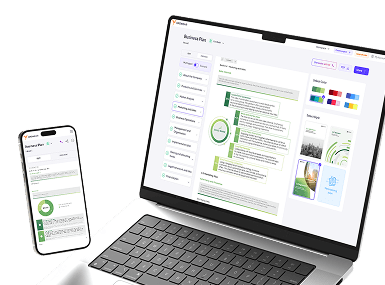
Growexa builds a complete, lender-ready business plan — with financial logic and a professionally formatted PDF
Every successful Restaurant Marketing Plan understands that guests don’t just buy meals — they move through emotional stages. Awareness, curiosity, consideration, visit, and recall each demand unique attention.
Your Restaurant should chart that path deliberately. Map where potential guests first meet your brand — a social ad, a review, or a friend’s photo — and how they convert from interest to booking.
In the Marketing Plan, assign owned, earned, and paid channels to each phase. Social content drives awareness; website and PR manage consideration; service excellence and loyalty systems secure retention.
Tracking the entire customer journey helps identify friction points. Maybe guests drop off between clicking “menu” and “book table.” Maybe the post-visit follow-up is missing.
A Restaurant that visualizes this journey can close gaps and double its ROI without increasing ad spend. The Marketing Plan becomes not just a promotion manual — but a behavioral map of desire, trust, and return.
The best Restaurant Marketing Plans use partnerships as multipliers. Team up with local brands — coffee roasters, craft brewers, boutique hotels, or delivery platforms. A Restaurant that co-creates experiences extends its audience without extra cost. Partnerships bring credibility, shared data, and new storytelling dimensions. Document collaboration ROI: new followers, referral bookings, incremental sales. If your Marketing Plan proves partnerships produce measurable lift, investors view the brand as scalable, not situational.
Public relations are the fine dining of marketing — subtle, persuasive, and enduring. A professional Restaurant Marketing Plan integrates PR as an always-on function, not an occasional stunt. Pitch media stories that reveal philosophy, not just promotions. Examples: sustainable sourcing, chef mentorship programs, or art-driven interiors. Earned media creates trust faster than paid media ever can.

Your Restaurant Marketing Plan should include a quarterly PR calendar, with goals for feature placements, interview opportunities, and event coverage.
Treat PR as the narrative extension of your kitchen — curated, consistent, and sincere.
Even top Restaurants face crises — a bad review, a supply issue, or an internal mishap. A credible Marketing Plan anticipates response protocols.
Define who speaks for the brand, how quickly statements are issued, and which channels carry the response. Transparency beats silence. When a Restaurant owns its mistakes, trust often rises, not falls.
Crisis readiness belongs inside every Marketing Plan because credibility is an asset that can vanish overnight — or double in value through integrity.
A loyalty program is a financial model disguised as hospitality. Your Restaurant Marketing Plan should quantify how loyalty lowers acquisition cost and increases visit frequency. Mobile apps, QR-driven memberships, or partnerships with dining networks can gamify loyalty — rewards points, birthday offers, or “member-only” menus.
Track redemption rates and churn monthly. A Restaurant that integrates loyalty into operations sees marketing efficiency rise by 30–40%. The Marketing Plan must ensure loyalty isn’t a gimmick — it’s a growth loop.
Restaurants breathe in seasons. A strong Marketing Plan aligns campaign calendars with menu cycles — spring produce, summer terrace dining, autumn wine pairings, winter celebrations.
Each campaign should have a pre-launch teaser, on-site activation, and post-event storytelling. Promote the chef’s creativity as much as the cuisine.
A Restaurant that links menu evolution to marketing cadence feels alive year-round. Your Marketing Plan becomes not just a promotional plan — but a rhythm for the brand itself.
Marketing isn’t just external — it’s embedded in pricing. The Restaurant Marketing Plan should analyze how price anchors shape perception. Bundle courses, introduce chef’s tastings, and use decoy pricing to frame premium options. Perceived value drives word-of-mouth as much as flavor.
If guests say, “It’s worth it,” your Restaurant has mastered emotional pricing. The Marketing Plan must tie these insights to profitability, proving that storytelling doesn’t dilute margins — it elevates them.
Every modern Restaurant Marketing Plan must close the loop between creativity and accountability. Key performance indicators (KPIs) include:
Review data monthly. Drop what underperforms. Scale what compounds. A Restaurant that measures marketing like finance grows predictably — not sporadically. Marketing that cannot be measured cannot be managed.
Automation is not cold; it’s clarity. The Restaurant Marketing Plan should automate repetitive tasks: ad scheduling, review responses, and CRM segmentation. Integrating POS, reservation systems, and email marketing saves hours weekly and ensures data integrity. That allows your Restaurant team to focus on the human part — hospitality — while systems handle the routine. The future of marketing isn’t more content; it’s smarter systems.
As a Restaurant grows to multiple venues, brand control becomes harder. A scalable Marketing Plan standardizes templates, tone, and visual language while allowing local nuance. Create shared media libraries, unified CRM databases, and brand guidelines. Track performance per location to identify best practices.
A multi-location Restaurant without a unified Marketing Plan risks brand dilution. Consistency multiplies recognition — and recognition multiplies revenue.
Consumers reward conscience. A Restaurant Marketing Plan should include sustainability storytelling — local sourcing, waste reduction, eco-friendly packaging.
Not as slogans, but as evidence. Show savings in water, energy, and emissions. When sustainability is measured and communicated authentically, it builds both reputation and resilience. Sustainability is not a trend — it’s a competitive moat.
A Restaurant without marketing is invisible, and one without structure is forgettable. A powerful Restaurant Marketing Plan fuses emotion with execution — turning awareness into action, and customers into a community.
The plan is not a one-time document; it’s a living instrument of growth. Revisit it quarterly, refine it with data, and align every campaign with the brand’s evolving story. In the end, a successful Restaurant doesn’t just serve food — it serves meaning. And a strong Marketing Plan ensures that meaning reaches every plate, post, and person.

