
Stop editing templates
Start building a plan that gets approved
Turn this template into a complete business plan with:
- Financial projections
- Loan-ready structure
- Clear repayment logic
Based on 40+ bank requirements

In the public imagination, real estate brokerage often looks deceptively simple. Agents tour homes, negotiate contracts, and collect commissions. The reality, however, is more complex. A brokerage is not just a loose collection of agents but an institutional platform that recruits, trains, and equips professionals to navigate one of the most emotional and capital-intensive transactions in a person’s life. Running a brokerage means balancing entrepreneurial drive with compliance, technology, and long-term brand building.
That is why a brokerage cannot exist without a plan. A real estate brokerage business plan is not a ceremonial binder of numbers; it is a strategic operating manual that demonstrates to investors, lenders, and future agents that the leadership understands both the cyclical nature of the housing market and the structural demands of a sales organization. For founders, it becomes the framework for making choices about growth, risk, and reputation in an industry where timing is everything.
Turn this template into a complete business plan with:
Based on 40+ bank requirements




Most business plans fail not because of the idea — but because the numbers don’t prove repayment.
Build a bank-ready business plan in minutes
(with projections, structure, and validation)
Every brokerage begins with a choice of identity. Will it focus on residential transactions, luxury condominiums, suburban family homes, or commercial leasing? Each specialization requires different expertise, client channels, and marketing strategies. A brokerage cannot be all things to all people; it must decide which slice of the market to dominate.
Identity must also translate into measurable targets. A new brokerage may set an objective of signing twenty licensed agents in its first year, closing $50 million in sales volume by year two, or capturing ten percent of listings in a defined neighborhood. By tying brand philosophy to hard numbers, the agency signals that its identity is not aspirational fluff but an operational compass.
Philosophy matters alongside metrics. Will the brokerage compete on personalized client service, on digital convenience, on sustainability in housing, or on prestige and exclusivity? Clarifying this upfront allows every decision—recruitment, marketing, even office design—to reinforce the brand promise.
The housing market is cyclical and hyperlocal. A real estate brokerage business plan must prove that leadership understands both national trends and neighborhood realities.
At the macro level, U.S. residential real estate accounts for trillions in annual transactions. Yet within that massive pool, conditions vary dramatically. Interest rate increases may slow demand nationwide, but gentrification can fuel micro-booms in urban districts. A strong brokerage plan narrows scope to explain why chosen markets are attractive and defensible. Competition analysis must be precise. National franchises dominate with brand recognition, but local boutiques thrive on community ties. Discount brokerages compete on fees, while digital platforms like Redfin and Zillow blur the boundaries of agency. A brokerage plan should articulate where it fits within this spectrum, whether as a premium service provider, a neighborhood expert, or a tech-enabled challenger.
Consumer behavior is also shifting. Younger buyers expect rapid communication, transparent fees, and virtual tours. Investors look for brokerages that can source off-market deals or manage property portfolios. Recognizing these shifts demonstrates foresight and positions the brokerage as modern rather than traditionalist.
Operations are where vision meets daily execution. A real estate brokerage business plan must show how deals will actually be facilitated at scale.
Technology is central. The plan should describe the customer relationship management system that agents will use to track leads, the digital marketing tools that will promote listings, and the compliance software that ensures contracts and disclosures meet regulatory standards. Technology is no longer an option; it is the infrastructure that allows agents to be productive.
Office strategy is another operational layer. Some brokerages thrive with high-visibility storefronts, others with flexible co-working hubs. The plan should explain why certain locations were chosen and how they reinforce brand identity.
Compliance cannot be overlooked. Brokerages hold client trust accounts, manage sensitive data, and operate under strict licensing laws. A credible plan demonstrates procedures for audits, escrow management, and dispute resolution. Finally, scalability must be built into operations. How will systems support growth from ten agents to one hundred? What training and support structures will prevent chaos as transaction volume increases? By addressing these questions, the plan shows operational maturity.
Brokerages live or die by the talent they recruit and retain. Unlike property development firms, a brokerage’s assets are not buildings but people.
Leadership credibility is the first component. Founders with track records in high-volume sales, corporate management, or legal expertise reassure stakeholders. But beyond the founding team, the plan must describe how agents will be recruited, trained, and supported.
Recruitment strategy should define the ideal profile of an agent: years of experience, local knowledge, or appetite for growth. Compensation structures—whether traditional commission splits, caps, or innovative profit-sharing models—must be detailed to show how talent will be attracted in a competitive environment.
Training and mentorship are equally vital. Many brokerages fail because they recruit aggressively but fail to onboard agents effectively. A real estate brokerage business plan should describe ongoing education, compliance refreshers, and coaching programs that ensure agents represent the brand consistently.
Retention deserves particular emphasis. High turnover damages culture and erodes market presence. Plans that highlight career progression, recognition systems, and collaborative culture show that the brokerage intends to build a stable, motivated team.
In real estate brokerage, marketing is not a side activity—it is the bloodstream of the business. Without visibility, listings stagnate and agents lose momentum.
Digital marketing is now the primary battlefield. A credible plan explains how search engine optimization, pay-per-click ads, and social media campaigns will funnel leads. It also describes how the brokerage will create high-quality listing content: professional photography, drone footage, and 3D tours.
Brand positioning extends beyond individual listings. Will the brokerage publish quarterly market reports, host community events, or produce podcasts to establish thought leadership? Demonstrating these strategies proves that marketing is not ad hoc but structured.
Sales strategy complements marketing. A brokerage must differentiate between one-time residential buyers, repeat investors, and institutional clients. The plan should show how each segment will be nurtured, from personalized follow-up to dedicated account management.
No connection between:
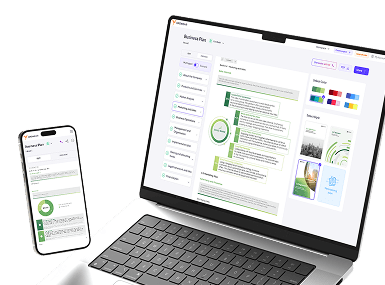
Growexa builds a complete, lender-ready business plan — with financial logic and a professionally formatted PDF
Though brokerages do not carry the heavy capital burden of developers, they still require significant startup funds. Offices, technology, licensing, compliance, and marketing all demand investment before the first commission checks arrive.
The plan should outline funding sources: founder equity, bank loans, private investors, or franchise arrangements. Each path has implications for governance and growth pace.
Equally important is fund allocation. Early expenditures often prioritize branding, technology, and marketing campaigns to generate leads. Later phases may focus on expanding offices, hiring staff, or entering new submarkets. A staged approach signals financial discipline.
Financial projections must begin with explicit assumptions: average transaction size, commission percentages, expected deal volume per agent, and marketing cost per lead. Without these inputs, forecasts lack credibility.
Revenue models in brokerage can vary. A residential brokerage may rely heavily on agent commissions, while one specializing in investment properties may generate advisory or asset management fees. Detailing these streams proves diversification.
Costs include salaries, office leases, marketing budgets, licensing fees, and technology subscriptions. Many brokerages underestimate the cost of lead generation, which can consume 20–30 percent of revenue early on.
Cash flow management is crucial. Commissions are irregular, tied to closings, while fixed expenses remain constant. Plans must demonstrate how liquidity gaps will be bridged through reserves or credit facilities.
Break-even timelines must be honest. Brokerages rarely turn profits in their first year; two to three years is a more credible horizon. Stating this openly enhances trust.
While transactions are episodic, brokerage firms that thrive treat the business as a platform. They build value not only through commissions but through brand equity, agent networks, and proprietary data.
A forward-looking real estate brokerage business plan highlights diversification strategies: expanding into property management, mortgage referral partnerships, or commercial advisory services. It also emphasizes resilience—planning for market downturns with disciplined cost structures and diversified revenue.
By embedding this perspective, the plan communicates that the brokerage is not a short-term hustle but a long-term enterprise with scalable value.
A real estate brokerage is more than an office full of agents. It is a structured organization that channels ambition into systems, people, and markets. Its true assets are trust, credibility, and operational discipline.
A business plan in this field is not a generic fundraising exercise. It is the architecture that transforms vision into measurable outcomes, ensures compliance with demanding regulations, and positions the brokerage for growth in a cyclical market.
For those ready to step into this arena, clarity is the first tool. Draft your real estate brokerage business plan, adapt completed examples to your own circumstances, and explore the customizable resources at Growexa. In a business defined by trust and timing, planning is not paperwork—it is the foundation of lasting influence.

