
Stop editing templates
Start building a plan that gets approved
Turn this template into a complete business plan with:
- Financial projections
- Loan-ready structure
- Clear repayment logic
Based on 40+ bank requirements

Pharmacies occupy a unique position in the economy. They are not simply retail outlets, nor are they purely clinical institutions. They sit at the intersection of healthcare and commerce, providing access to life-saving medicines, everyday wellness products, and trusted advice that often carries more weight than a doctor’s note. For entrepreneurs, the pharmacy business offers both opportunity and responsibility. Unlike other retail ventures, pharmacies are governed by stringent regulations, shifting reimbursement models, and the need to maintain credibility in communities where trust is currency.
A pharmacy business plan is therefore not a generic financial document. It is a comprehensive guide that must demonstrate how the business will navigate regulatory frameworks, manage supply chains, serve diverse customer needs, and remain resilient in an industry where margins are narrow and competition is fierce. For lenders and investors, it is proof of discipline. For the pharmacist-entrepreneur, it becomes a compass for daily decisions that balance patient care with financial viability.
Turn this template into a complete business plan with:
Based on 40+ bank requirements




Most business plans fail not because of the idea — but because the numbers don’t prove repayment.
Build a bank-ready business plan in minutes
(with projections, structure, and validation)
The first question a pharmacy business plan must address is what kind of pharmacy the venture intends to be. Will it focus on independent community services, competing on personal relationships and local trust? Or will it operate as part of a larger chain, where scale provides pricing power and logistical efficiency? Some entrepreneurs choose specialization, such as compounding pharmacies, specialty drug providers, or wellness-focused retail hybrids that integrate natural products with conventional medicine.
Each choice carries implications for target demographics, supplier relationships, and compliance. For instance, a community-focused pharmacy may highlight family-centered services, while a specialty operation must explain how it will secure contracts with insurers and distributors for high-cost medications. Investors expect clarity: without a defined identity, the business risks being perceived as just another drugstore.
Vision must also translate into numbers. An independent pharmacy might set goals such as filling 2,000 prescriptions per month within the first year, growing to 5,000 monthly by year three, while maintaining front-end retail sales at 20 percent of revenue. Aligning philosophy with measurable targets transforms identity from aspiration into actionable strategy.
The pharmacy industry is vast, but growth is uneven and competitive forces are intensifying. In the United States alone, pharmacies account for hundreds of billions of dollars in annual sales. Yet consolidation is accelerating, with national chains capturing significant market share while online platforms like Amazon Pharmacy disrupt traditional channels.
A business plan must zoom in on the chosen geography. Urban markets often face saturation, with multiple pharmacies within walking distance, while rural areas may present opportunities due to scarcity of access. An independent operator must show not only that demand exists but that it can be captured sustainably.
Competitive mapping is essential. Large chains compete on price and convenience, but they often lack the personal service that independent pharmacies can provide. Mail-order and online pharmacies compete on delivery speed, yet many customers still prefer face-to-face interaction for trust and immediacy. The plan should articulate how the new pharmacy will differentiate—whether through clinical services like vaccinations, personalized consultations, wellness programs, or unique product assortments.
Consumer expectations are also shifting. Patients increasingly want pharmacies to act as health hubs, offering services beyond prescription dispensing. Immunizations, chronic disease management, and digital medication reminders are no longer optional; they are competitive necessities. A credible plan must show how these evolving preferences will be addressed.
Operations in a pharmacy business are not just about stocking shelves. They are about ensuring precision, compliance, and efficiency in an environment where errors can have life-or-death consequences.
The business plan should outline how prescriptions will be processed, verified, and dispensed. Workflow design is critical: from prescription intake to pharmacist verification, compounding, and counseling. Technology systems such as pharmacy management software and electronic health record integration must be described in detail.
Supply chain management is another pillar. Pharmacies depend on reliable relationships with wholesalers, distributors, and in some cases direct manufacturer contracts. The plan should explain how inventory will be monitored to prevent stockouts of critical medications while minimizing losses from expired drugs. Cold-chain storage for vaccines and biologics may require specialized infrastructure.
Compliance and licensing are non-negotiable. Every state and federal regulation governing pharmacy practice must be anticipated in the plan, from controlled substance reporting to HIPAA compliance for patient data. Investors and regulators alike want reassurance that governance structures are robust. Staffing is also part of operations. Pharmacists, pharmacy technicians, and front-end staff each play specific roles. The plan should outline how many employees will be hired, how they will be trained, and how performance will be evaluated to maintain service consistency.
In pharmacies, people are the face of the brand. Patients often build trust with a pharmacist who knows their history, answers their questions, and provides continuity of care. A business plan must therefore emphasize the human side of the operation.
Leadership credibility is crucial. A licensed pharmacist with prior management experience brings confidence to investors and patients alike. But beyond the owner, the plan must detail recruitment and retention strategies for staff. Pharmacy technicians, for instance, handle much of the dispensing workload, so turnover here can disrupt operations and reduce customer satisfaction.
Training programs must be described in depth. Pharmacists and technicians require continuing education to stay updated on drug interactions, regulatory changes, and emerging therapies. Embedding this into the plan signals foresight.
Culture matters too. Pharmacies that foster empathy, patient-centered communication, and team collaboration build reputations that no chain can replicate. Demonstrating how culture will be cultivated is as important as showing how revenue will be generated.
Pharmacy marketing has historically been understated, but in a crowded landscape it becomes a vital differentiator. The business plan must detail how the pharmacy will position itself and communicate its value.
Digital visibility is fundamental. Patients now search online for “pharmacy near me” or compare reviews before choosing where to fill prescriptions. Search optimization, social media engagement, and online scheduling tools are essential investments.
Community integration provides another edge. Sponsoring local health fairs, offering free blood pressure screenings, or collaborating with nearby clinics positions the pharmacy as a trusted health partner. Unlike chains, independent pharmacies can tailor their presence to local culture.
Pricing strategy must be transparent. Prescription margins are tightly controlled by reimbursement systems, but front-end retail products and clinical services allow more flexibility. Explaining how prices will align with perceived value—whether through premium wellness products, loyalty programs, or bundled health services—demonstrates strategic thinking.
Branding must extend beyond price. The store layout, design, and even scent communicate identity. An inviting pharmacy that feels more like a health boutique than a sterile dispensary can attract new demographics and create loyalty.
No connection between:
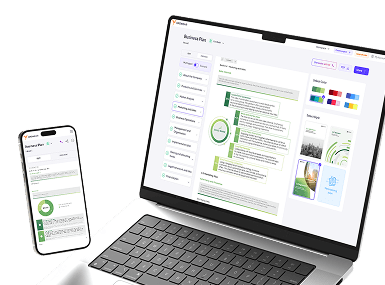
Growexa builds a complete, lender-ready business plan — with financial logic and a professionally formatted PDF
Starting a pharmacy requires significant upfront capital. Leasehold improvements, dispensing technology, licensing fees, inventory, and staffing costs accumulate quickly. A business plan must present a transparent financing roadmap.
Funding sources may include personal equity, bank loans, investor contributions, or in some cases franchising partnerships. Each has trade-offs in terms of control and growth pace. Investors want evidence that founders have skin in the game, signaling commitment.
Allocation of funds should be phased. The launch phase requires heavy spending on build-out, licensing, and initial inventory. Growth phases may involve expanding clinical services, hiring additional staff, or investing in marketing technology. A staged approach shows prudence and avoids overextension.
Financial projections in a pharmacy must begin with assumptions rooted in clinical realities. How many prescriptions are expected per day? What is the average reimbursement rate? How much revenue will come from over-the-counter products, clinical services, and wellness retail? Each assumption must be explicit.
Revenue streams should be separated clearly. Prescription sales may provide the bulk of volume but thin margins. Front-end retail, immunizations, and chronic care services often carry higher profitability. Demonstrating this balance reassures investors that the model is not overly reliant on one stream. Expenses must be detailed realistically. Payroll, inventory, insurance, utilities, and compliance costs can be substantial. Many pharmacies underestimate the cost of expired drugs or insurance clawbacks; addressing these risks upfront builds credibility.
Cash flow management is critical. Unlike many retailers, pharmacies often face reimbursement delays from insurers and pharmacy benefit managers. Showing how liquidity gaps will be managed—through reserves, credit lines, or disciplined expense control—reassures stakeholders.
Break-even timelines must be conservative. Independent pharmacies rarely achieve profitability in the first year; two to three years is more realistic. Acknowledging this upfront enhances trust.
A pharmacy business plan should not end with survival; it must show a path to durable value. That includes strategies for differentiation, resilience, and scalability.
Diversification is key. Pharmacies that expand into specialty medications, compounding, or clinical services build stronger revenue bases. Some add telehealth partnerships or subscription models for recurring wellness products.
Resilience against industry shifts is also essential. Regulatory changes, insurer reimbursement cuts, or supply chain disruptions can destabilize weak operators. A credible plan anticipates these risks with contingency strategies.
Scalability rounds out the picture. Whether opening multiple locations, developing a franchise, or adding e-commerce delivery, long-term growth pathways should be described clearly.
A pharmacy is more than a storefront with shelves of medication. It is a community anchor where commerce meets care, where precision meets empathy. A pharmacy business plan must reflect that duality. It must prove to investors that financial discipline underpins the venture while reassuring patients that trust and safety are non-negotiable.
For entrepreneurs ready to step into this demanding but rewarding industry, the first step is clarity. Draft a pharmacy business plan that ties vision to measurable strategy, adapt proven examples for context, and use customizable tools at Growexa to shape a plan that reflects your own vision. In a business where health and trust are the product, planning is not optional—it is the prescription for success.

