
Stop editing templates
Start building a plan that gets approved
Turn this template into a complete business plan with:
- Financial projections
- Loan-ready structure
- Clear repayment logic
Based on 40+ bank requirements

Meal Prep has evolved from a niche fitness habit into a mainstream food and lifestyle business. As modern consumers juggle demanding schedules, health goals, and rising food costs, Meal Prep offers a solution that combines convenience, nutrition, and predictability. What once served bodybuilders and athletes now appeals equally to busy professionals, families, seniors, and corporate clients. Despite this strong demand, Meal Prep is not a simple food venture. Tight margins, perishability, regulatory compliance, and operational scale make disciplined execution essential. In this environment, a comprehensive business plan is critical. A well-designed business plan transforms Meal Prep from a kitchen-based operation into a scalable, financially resilient food service enterprise.
Launching a Meal Prep business without a business plan often leads to inconsistent quality, inventory waste, pricing mistakes, and unstable cash flow. Ingredient costs fluctuate, demand varies week to week, and customer retention depends on reliability rather than novelty. A strong business plan clarifies how Meal Prep positions itself in the market, which customer segments it prioritizes, and how production volume aligns with sales forecasts. It ensures that decisions around menus, sourcing, packaging, and delivery are grounded in financial logic. In a category where trust and repetition drive success, the business plan becomes the foundation of long-term sustainability.
Turn this template into a complete business plan with:
Based on 40+ bank requirements


Most business plans fail not because of the idea — but because the numbers don’t prove repayment.
Build a bank-ready business plan in minutes
(with projections, structure, and validation)
The Executive Summary presents Meal Prep as a structured food production and delivery business focused on consistency, nutrition, and operational efficiency. This section of the business plan defines the mission of the Meal Prep operation, whether centered on weight management, athletic performance, medical diets, family meals, or convenience-driven nutrition.
The business plan outlines target customers such as professionals, fitness enthusiasts, health-conscious consumers, seniors, and corporate wellness programs. Revenue streams may include subscription meal plans, à la carte orders, corporate contracts, and specialized dietary programs. By summarizing concept, positioning, and financial objectives, the Executive Summary establishes Meal Prep as a professionally managed venture guided by a clear business plan.
The Company Overview defines the structure, identity, and strategic foundation of the Meal Prep business. This section of the business plan explains the legal entity, ownership structure, and regulatory environment governing food preparation and distribution. Health department compliance, food safety protocols, labeling standards, and allergen management are fully integrated into the business plan.
The business plan describes the Meal Prep service model, including menu design, sourcing strategy, and production workflow. Decisions around centralized kitchens, cloud kitchens, or distributed preparation are aligned with scale and cost control. Packaging choices balance food quality, shelf life, sustainability, and brand presentation.
Location strategy is driven by logistics rather than foot traffic. The business plan explains how Meal Prep facilities are selected based on delivery radius, supplier access, and operational efficiency. The Meal Prep brand emphasizes trust, transparency, and reliability. The Company Overview positions Meal Prep as both a food brand and a logistics-driven service business.
The Market Analysis examines demand drivers shaping the Meal Prep industry. Rising health awareness, time scarcity, remote work, and dietary personalization continue to fuel growth. A strong business plan analyzes demographic trends, income levels, lifestyle patterns, and eating habits to validate demand.
The business plan evaluates competition from restaurants, grocery stores, meal kits, and homemade alternatives. Differentiation is essential. The Market Analysis identifies opportunities in nutrition expertise, dietary specialization, consistency, or subscription convenience.
Customer segmentation includes fitness-focused clients, weight-management customers, families seeking convenience, and institutional buyers. Each segment values Meal Prep differently in terms of price, variety, and frequency. By grounding strategy in market insight, the business plan ensures Meal Prep competes on value and reliability rather than price alone.
The Marketing and Sales Strategy outlines how Meal Prep attracts customers and builds recurring revenue. Meal Prep success depends heavily on retention rather than one-time orders. The business plan explains how Meal Prep communicates benefits such as time savings, health outcomes, and predictability.
Marketing channels include digital advertising, content marketing, partnerships with gyms or healthcare providers, referrals, and corporate programs. The business plan emphasizes education and trust-building rather than aggressive promotion.
Sales strategy focuses on subscriptions, plan upgrades, and long-term customer relationships. Pricing reflects ingredient quality, labor, and logistics while remaining accessible. The business plan ensures sales growth aligns with production capacity and operational discipline.
The Operations Plan details how Meal Prep functions daily. This section of the business plan describes menu planning, ingredient procurement, batch cooking, portioning, packaging, and delivery coordination. Operational precision is critical due to perishability and food safety requirements.
The business plan explains staffing models, kitchen workflows, quality control checkpoints, and sanitation procedures. Technology supports operations through order management systems, inventory tracking, and production forecasting. Delivery logistics are optimized for cost and freshness.
Risk management is central. The Operations Plan addresses food safety incidents, supply disruptions, demand variability, and labor shortages. By defining standardized procedures, the business plan ensures Meal Prep operates reliably under daily pressure.
No connection between:
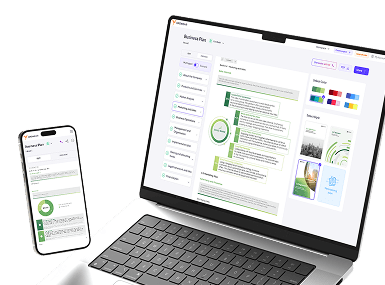
Growexa builds a complete, lender-ready business plan — with financial logic and a professionally formatted PDF
The Management and Organization section introduces the leadership behind the Meal Prep business. It outlines experience in food service, operations management, nutrition, or logistics. Strong leadership balances culinary creativity with operational discipline.
The business plan defines roles such as kitchen management, nutrition planning, operations coordination, marketing leadership, and customer support. Training systems emphasize consistency, safety, and efficiency.
This section demonstrates that Meal Prep is professionally managed rather than informally run.
Launching or expanding a Meal Prep business requires capital for kitchen equipment, initial inventory, packaging, technology, marketing, and working capital. This section of the business plan outlines funding sources such as owner equity, loans, or strategic investors.
The business plan explains how funds are allocated to maximize production efficiency and speed to breakeven. Disciplined capital planning ensures Meal Prep growth is sustainable rather than reactive.
The Financial Plan translates the Meal Prep strategy into financial projections. This section of the business plan includes revenue forecasts based on subscription volume, average order value, and retention rates.
Expense projections include ingredients, labor, rent, utilities, packaging, marketing, and delivery costs. The business plan provides cash-flow projections, breakeven analysis, and multi-year profitability scenarios. Sensitivity analysis addresses food cost inflation and demand fluctuations.
A successful Meal Prep business is built on repetition supported by discipline. While nutrition trends create demand, only businesses guided by a structured business plan achieve long-term profitability. By aligning menu strategy, operations, marketing, and financial planning, the business plan transforms Meal Prep into a resilient and scalable food service enterprise. With the right foundation, Meal Prep can deliver health, convenience, and enduring economic value.
Entrepreneurs ready to launch or grow a Meal Prep business can leverage platforms like Growexa, where expert planning tools turn food concepts into polished, investor-ready business plans designed for sustainable success.
Startup costs depend on kitchen size, equipment, menu complexity, and delivery model. Typical expenses include commercial kitchen setup, initial inventory, packaging, technology, marketing, and working capital. A detailed business plan ensures a Meal Prep operation is properly funded through its early growth phase.

