
Stop editing templates
Start building a plan that gets approved
Turn this template into a complete business plan with:
- Financial projections
- Loan-ready structure
- Clear repayment logic
Based on 40+ bank requirements

In today’s economy, every brand is in a battle for relevance, visibility, and conversion. That battle is won not by the company with the best product, but by the company with the best strategy to communicate value. This is why the demand for a strategically-led Marketing Agency has never been higher—and why a professionally structured Business Plan is essential before launching or scaling one.
A Marketing Agency Business Plan is not just a funding document; it is the operating system of the agency. It defines positioning, structures service offerings, identifies target markets, projects financial outcomes, and engineers scalability. In a sector crowded with freelancers and generic service providers, only a Marketing Agency built on a clear Business Plan can differentiate, win high-value clients, and retain them through measurable performance.
The Business Plan also protects the Marketing Agency from common pitfalls—underpricing, scope creep, inconsistent sales flow, and reliance on a single acquisition channel. Instead of reacting to market changes, a well-built Marketing Agency Business Plan anticipates them. It outlines a pathway from initial launch to predictable monthly retainers, recurring revenue, and long-term enterprise value.
In short, this Business Plan ensures that the Marketing Agency is not just a creative venture—but a scalable business built for longevity, profitability, and leadership in the market.
Turn this template into a complete business plan with:
Based on 40+ bank requirements




Most business plans fail not because of the idea — but because the numbers don’t prove repayment.
Build a bank-ready business plan in minutes
(with projections, structure, and validation)
The Executive Summary is the strategic snapshot of this Marketing Agency Business Plan, providing a high-level view of the agency’s mission, service model, target clients, and projected financial outcomes. It establishes the value proposition of the Marketing Agency: to offer data-driven marketing solutions that generate measurable ROI for businesses in a competitive landscape.
This Business Plan presents a Marketing Agency designed to deliver services such as digital advertising, branding, content strategy, SEO, performance marketing, and campaign automation. The agency aims to operate under a hybrid model—serving both retainer-based clients for recurring revenue and project-based clients for accelerated cash flow. This diversified revenue structure, outlined clearly in the Business Plan, allows the Marketing Agency to maintain financial stability while pursuing high-growth opportunities.
The Executive Summary also defines the agency’s positioning: modern businesses no longer need generic marketing—they need strategic marketing that is accountable to performance. This Marketing Agency is not an ad vendor; it is a growth partner. The Business Plan articulates this transformation, showing investors and stakeholders why the agency will thrive in the current market.
Financial highlights projected within this Business Plan include achieving profitability within the first 12 months, reaching six-figure monthly recurring revenue in year two, and expanding through either franchising or acquisition by year three. The Business Plan also outlines initial capital needs for staffing, software, branding, and sales infrastructure, with clear justification for ROI.
This section confirms that the Marketing Agency is built to scale—not as a freelance service model, but as an asset capable of generating long-term enterprise value.
The Marketing Agency Business Plan positions the agency not as a service provider, but as a strategic growth partner engineered for scalability. Unlike freelance-style agencies that rely on one individual's expertise, this Marketing Agency is structured as a performance-focused enterprise with defined departments, replicable systems, and brand equity designed to attract mid-market and enterprise-level clients.
This Business Plan outlines the vision to establish the Marketing Agency as a leader in data-driven marketing solutions, leveraging AI-enhanced analytics, omnichannel campaign integration, and proprietary frameworks that optimize client ROI. The Marketing Agency will differentiate itself by offering clarity over creativity—grounding every campaign in measurable metrics such as customer acquisition cost, lifetime value, conversion rates, and return on ad spend.
At its core, the Marketing Agency Business Plan defines a hybrid service model:
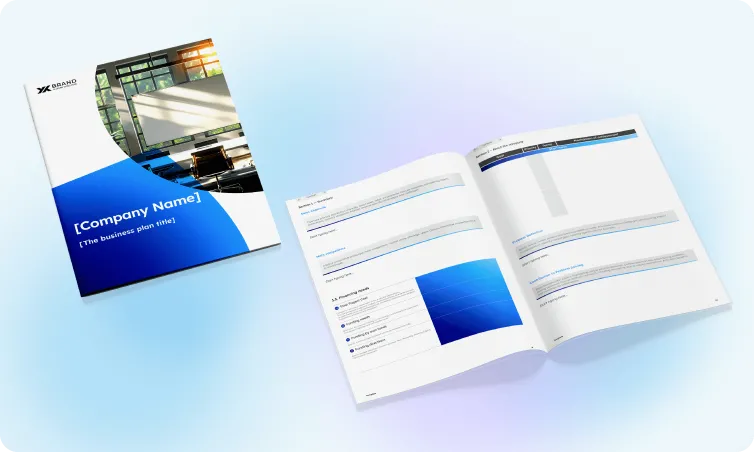
The Business Plan also clearly states mission and vision statements that set the strategic tone:
This section confirms that the Marketing Agency represented in this Business Plan is not entering the market as another small agency—it is designed as a future market leader.
The success of any Marketing Agency Business Plan depends on the accurate understanding of the market landscape, industry trends, and evolving client expectations. The marketing industry is currently undergoing a transformation—from creative-led decision-making to data-centric growth models. Businesses no longer invest in vanity metrics; they demand measurable outcomes and predictive performance insights. This shift creates immense opportunity for a strategically positioned Marketing Agency built on performance discipline.
The Marketing Agency Business Plan identifies several high-growth segments: e-commerce, professional services, healthcare, technology startups, and franchise-based businesses. These sectors increasingly rely on outsourced marketing teams rather than building in-house departments due to cost efficiency, access to expertise, and faster time-to-market. This creates strong demand for an agency model that offers both strategic leadership and executional capacity—a critical advantage highlighted throughout the Business Plan.
The Marketing Agency will also benefit from the fragmentation of digital platforms. As algorithmic complexity rises across Google, Meta, TikTok, and emerging channels, companies seek agencies with the ability to optimize campaigns across platforms simultaneously. The Business Plan uses this reality as a competitive driver—positioning the Marketing Agency as a specialized navigator of the modern digital ecosystem.
Competitive analysis within the Business Plan showcases that most small agencies compete on price or design quality, but few offer deep financial alignment or results-based engagement models. By focusing on accountability and revenue-driven outcomes, this Marketing Agency fills an unmet market demand. This Business Plan uses this differentiation strategy as a core growth lever.
The Business Plan also incorporates macroeconomic insights. During economic downturns, companies cut branding budgets but increase performance marketing spend. This Marketing Agency is built precisely for that environment—offering essential, revenue-linked services rather than discretionary creative campaigns. The Business Plan concludes that market conditions are not just favorable—they are actively shifting in favor of this agency model.
In a modern economy where attention is fragmented and consumer behavior shifts at algorithmic speed, a Marketing Agency must excel not only at promoting clients, but at marketing itself with precision. This Business Plan positions the Marketing Agency as a market-facing authority—building visibility, capturing demand, and converting leads into long-term contracts using a multi-channel, performance-driven approach.
The Marketing Agency Business Plan emphasizes that marketing is not an expense—it is the engine of revenue scalability. Therefore, this section defines both inbound and outbound acquisition strategies, demand nurturing systems, and retention mechanisms designed to maximize client lifetime value. Positioning Strategy
The Business Plan frames the Marketing Agency as a strategic partner, not a vendor. Unlike generic providers who sell isolated services, this Marketing Agency sells business outcomes—growth roadmaps, full-funnel optimization, and ROI-based solutions. This allows the agency to command premium pricing and build authority rather than compete on cost. The Business Plan states clearly: the agency’s brand is built on trust, metrics, and strategic clarity.
The Business Plan outlines the development of a powerful content ecosystem designed to attract high-intent decision-makers. This includes SEO-optimized thought leadership, downloadable strategy guides, webinars, and AI-assisted marketing resources. Each piece of content is positioned as part of a lead-generation funnel, capturing emails, scheduling consultations, and segmenting potential clients. The Marketing Agency follows an expert-first model, where authority drives acquisition.
While inbound generates qualified leads, the Business Plan integrates outbound prospecting to accelerate growth. This includes targeted outreach to industries with recurring revenue potential, such as healthcare, SaaS platforms, and franchise systems. The Marketing Agency Business Plan highlights scripted outreach frameworks, pitch sequencing, and ROI case studies as tools for systematic client conversion. The Business Plan ensures that every outreach effort is measurable, tracked through a CRM, and tied to conversion KPIs. This positions the Marketing Agency as a sales-driven organization, not an agency waiting passively for referrals.
The Marketing Agency Business Plan identifies four core channels for sustained growth:
Acquiring clients is only one part of the growth formula. The Business Plan emphasizes that client retention and recurring revenue are the foundation of long-term profitability. The Marketing Agency introduces performance reviews, quarterly business reviews (QBRs), and KPI dashboards that demonstrate ROI to clients in real-time. This consultative model transforms the agency from a cost center into a revenue partner—dramatically increasing retention.
The Business Plan further introduces upsell frameworks tied to strategy milestones, allowing clients to scale services as their businesses grow. This creates a built-in revenue expansion engine within the Marketing Agency.
The Marketing Agency Business Plan uses brand differentiation as a strategic moat. It positions the agency not as a provider of ads, but as an architect of revenue systems. Through proprietary methods, case-based storytelling, and visible leadership presence in industry media, the Marketing Agency becomes synonymous with marketing performance—not just design.
In summary, this section of the Marketing Agency Business Plan demonstrates that growth is not accidental—it is architected. Through a multi-channel strategy, performance-aligned messaging, and scalable retention mechanics, the Marketing Agency establishes itself as a revenue-generating machine, positioned for national and international expansion.
A successful Marketing Agency Business Plan must demonstrate operational discipline, because execution—not creativity—is what determines profitability and scalability. The operations section outlines how the Marketing Agency will deliver services, manage workflow, control quality, optimize resource allocation, and ensure consistent performance across all client accounts. Investors and clients want evidence that the agency is engineered to produce results at scale, and this Business Plan provides exactly that.
The Marketing Agency operates under a structured production model that manages projects across defined stages: onboarding, strategy development, execution, optimization, and reporting. Each stage is supported by standardized procedures and automation tools to maintain efficiency. The Business Plan highlights the use of CRM platforms, project management software, analytics dashboards, and AI tools to reduce human error and improve time-to-delivery. Rather than depending on individual output, the Marketing Agency follows a repeatable operational blueprint.
This Business Plan further explains how workflows are aligned with financial goals. Each service—from SEO and paid advertising to branding and email marketing—is tied to time-based resource forecasting. The Marketing Agency allocates hours per client according to contract value and projected ROI. This ensures that all deliverables are profitable and strategically aligned with client retention. A poorly managed agency burns resources on low-yield projects; this Marketing Agency Business Plan proves that operational focus preserves margins and accelerates growth.
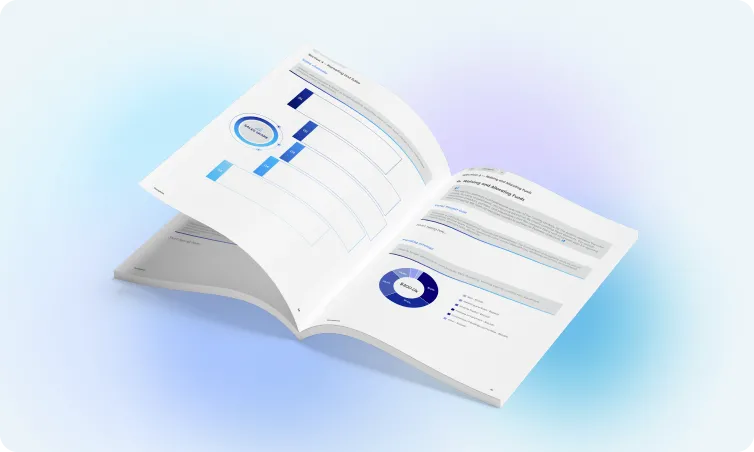
Vendor and partnership operations are also defined. The Marketing Agency may subcontract specialized services such as video editing or influencer outreach, and the Business Plan explains the evaluation process, vetting standards, and cost benchmarks. This ensures that outsourcing enhances scale rather than diluting quality. The Marketing Agency functions as a central strategic hub while using external resources to expand capacity with minimal overhead. This operational hybrid model—detailed in the Business Plan—provides agility while preserving control.
Reporting and accountability are core operational pillars. The Business Plan details weekly performance meetings, client strategy reviews, and revenue forecasting sessions. Each department—creative, paid media, analytics, and client success—operates with defined KPIs. The Marketing Agency is driven by metrics such as campaign ROAS, client retention rate, and billable utilization rate. By integrating these metrics into daily operations, the Business Plan shows how decisions will be made based on performance data, not assumption.
Quality assurance is built into the operational framework. The Business Plan outlines scheduled audits of campaigns, messaging, and brand compliance. Every deliverable passes through a quality checkpoint to ensure it aligns with the Marketing Agency’s standards and client agreements. This consistency creates client trust—and client trust creates long-term contract value. A Business Plan that includes quality control demonstrates to investors that this Marketing Agency is not a freelance operation, but a performance-engineered enterprise.
Finally, scalability is part of operational DNA. The Business Plan introduces a multi-location or remote-first operational structure. This allows the Marketing Agency to hire top talent from different geographic markets while minimizing fixed overhead costs. The agency grows by increasing capacity through replicable teams rather than overloading leadership. With centralized training, replicable processes, and well-defined performance metrics, the Marketing Agency is built to grow without losing agility or profitability.
In essence, the Operations Plan proves that this Marketing Agency Business Plan is not hypothetical—it is executable. It gives investors confidence, attracts high-value clients, and provides a clear roadmap for expansion.
In a service-based enterprise such as a Marketing Agency, leadership is not symbolic—it is directly responsible for revenue performance, client retention, and operational discipline. This is why the Management and Organization section is one of the most scrutinized parts of any Business Plan. It demonstrates not only who is running the agency, but how decisions will be made, how accountability is enforced, and how the structure supports long-term scalability.
The Marketing Agency Business Plan establishes a clear governance model with defined executive roles. At the top sits the Founder or Managing Director, responsible for strategic direction, financial oversight, and high-level brand partnerships. Reporting to the Founder is the Director of Operations (COO), who ensures all internal workflows align with efficiency targets outlined in the Business Plan. The Chief Marketing Officer or Strategy Director oversees all client campaigns, creative direction, and market positioning initiatives. This leadership trio forms the decision-making core of the Marketing Agency.
Mid-level management is structured to support scalability. The Business Plan outlines departmental heads for performance marketing, content strategy, brand design, analytics, and client success. Each department operates with its own KPIs tied directly to agency revenue and client performance metrics. This eliminates ambiguity—everyone in the Marketing Agency knows what success means, how it’s measured, and who is accountable.
Talent acquisition is defined as a strategic priority in the Business Plan. Rather than hiring generalists, the Marketing Agency recruits specialists in paid media, SEO, social strategy, automation, and copywriting. This is essential to maintain expertise-driven differentiation. The Business Plan details an onboarding and training system to align all hires with the agency’s proprietary frameworks, ensuring consistency across all campaigns regardless of who executes them.
An essential feature of the Business Plan is its approach to culture. The Marketing Agency is designed to operate on a culture of high performance, data accountability, and creative excellence. Compensation models include performance bonuses tied to revenue growth and client ROI to retain top talent. The Business Plan also incorporates succession planning and leadership development to prove the agency is built for longevity, not personality-driven dependency.
In summary, the Management and Organization strategy within this Marketing Agency Business Plan transforms the agency from an idea into an institution—structured, scalable, and investable.
No connection between:
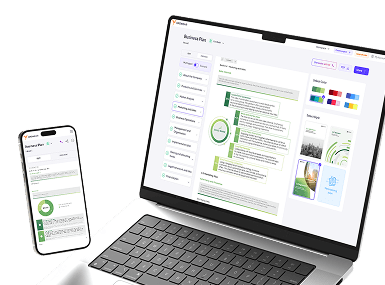
Growexa builds a complete, lender-ready business plan — with financial logic and a professionally formatted PDF
In the world of professional services, a Marketing Agency does not scale through creativity alone—it scales through financial strategy. This section of the Marketing Agency Business Plan demonstrates how capital will be secured, how it will be deployed, and how that deployment drives measurable returns. Investors and lenders want to see not just need, but purpose. A strong Business Plan shows how each dollar becomes capacity, revenue, and long-term enterprise value.
The Business Plan outlines two primary capital requirements: initial setup investment and growth capital. Initial funding is allocated to brand positioning, legal setup, technology infrastructure, recruiting top-tier talent, and sales acquisition systems. Because a Marketing Agency is a service-based business, the upfront capital is significantly lower than asset-heavy industries, but intelligent allocation is still critical. The Business Plan makes clear that the objective is not just to launch the Marketing Agency, but to ensure it reaches cash-flow-positive status within the first six to nine months.
A portion of capital is designated for client acquisition infrastructure. The Business Plan clarifies that the agency will invest in sales funnels, paid campaigns, CRM setup, and a high-impact website designed to convert traffic into discovery calls. Unlike agencies that wait for referrals or market goodwill, this Marketing Agency Business Plan shows an aggressive, performance-based approach to growth—capital is not an expense, but an acquisition engine.
The Business Plan also allocates funds for strategic hires. Recruiting senior-level marketing talent early is essential for securing enterprise-level clients. These roles generate immediate revenue impact, making human capital the most important investment. By clearly outlining compensation models, projected ROI per role, and scalability value, the Business Plan assures stakeholders that investment in people directly multiplies the valuation of the Marketing Agency.
Growth funding strategy is included to support future expansion. The Business Plan discusses optional financing routes such as equity partnerships, performance-based investor agreements, or reinvestment of retained earnings. In all scenarios, capital usage is tied to ROI metrics, not vague operational padding. Investors reviewing this Marketing Agency Business Plan can clearly see where returns are made possible—and why the agency is positioned to deliver them.
In summary, the Business Plan positions the Marketing Agency as a low-risk, high-growth professional services asset. Funding is not treated as a survival mechanism, but as a strategic lever to dominate market share.
The Financial Plan is the definitive proof that this Marketing Agency Business Plan is not built on theory, but on financial logic and strategic foresight. In the rapidly evolving digital economy, a Marketing Agency can generate high profit margins with relatively low operational overhead, but only when revenue streams are structured intelligently, pricing models are optimized, and cash flow is proactively managed. This section of the Business Plan positions the Marketing Agency as a scalable financial asset capable of attracting investors, securing credit facilities, and generating predictable monthly recurring revenue.
The Business Plan identifies three core revenue models: monthly retainers, performance-based contracts, and strategic consulting fees. By securing long-term retainers, the Marketing Agency ensures recurring revenue that compounds month over month, allowing expenses to be forecasted and managed with precision. Performance contracts, where fees scale based on achieved results, provide an upside multiplier effect and attract growth-focused clients. Consulting services offer immediate cash flow at premium rates, supporting liquidity during early expansion.
The Business Plan includes projections based on conservative, moderate, and accelerated growth scenarios. Under the conservative model, the Marketing Agency achieves break-even within six months and profitability in month nine. Under the standard growth model, projected in this Business Plan, the agency reaches seven-figure annual revenue by the second fiscal year with a 28–35% net profit margin—consistent with industry-leading financial benchmarks.

Operational expenses are disciplined and tied to growth levers. The Business Plan breaks costs into fixed (software, salaries of key leadership, office or remote operations infrastructure) and variable (contractor fees, ad spend, commission-based sales). This flexible structure ensures that costs scale proportionately with revenue. As outlined in the Business Plan, the Marketing Agency maintains lean operational overhead and maximizes billable utilization rates, ensuring that over 70% of agency time generates direct revenue.
Cash flow is the heartbeat of any service business. The Marketing Agency Business Plan projects positive cash flow by month four through upfront retainers, strategic payment schedules, and milestone-based invoicing. The Business Plan emphasizes maintaining working capital reserves to protect against client churn or macroeconomic fluctuations, ensuring financial resilience.
The Business Plan includes a detailed break-even analysis demonstrating that once the Marketing Agency secures six mid-tier retainer clients or three enterprise-level accounts, fixed costs are fully covered and subsequent contracts contribute directly to net profit. Investor return on capital is projected within 18–24 months in the standard scenario, with accelerated ROI possible if performance-based contracts scale faster than forecast.
The Marketing Agency Business Plan positions the firm not only for profitability, but for enterprise valuation. The exit pathways include franchising, licensing proprietary marketing systems, acquisition by a larger agency network, or transformation into a platform-based digital marketing group. The Financial Plan confirms that this Marketing Agency is not just a revenue generator—it is a capital asset built to appreciate in value year over year.
Every guest walks into a Cafe seeking more than caffeine — they’re seeking belonging, ritual, identity. Every entrepreneur who builds a Cafe business understands that turning those human moments into sustainable revenue requires more than intuition — it requires a Business Plan engineered for performance.
Your Cafe is not just a space where drinks are served; it is a brand ecosystem where atmosphere, hospitality, and repeat behavior translate directly into margins. A strategic Cafe Business Plan bridges imagination with execution — transforming your personal vision into an operational model that attracts investment, builds loyalty, and scales with precision.
The most successful Cafes don’t compete on coffee alone. They compete on experience, efficiency, and emotional relevance. They understand that profit is not a result of popularity, but of planning. A powerful Business Plan ensures that every square foot generates value, every menu item contributes to the bottom line, and every customer touchpoint drives lifetime loyalty.
As the coffee market grows more competitive, only those Cafes built on systems — not spontaneity — will thrive. The Cafe Business Plan becomes your differentiator, your proof of concept, and your long-term growth strategy. It aligns creativity with cash flow and converts passion into performance.
If you are ready to build more than a coffee shop — if you’re ready to build an enduring brand — this is where it begins. Download the Growexa Cafe Business Plan Template, customize it to your concept, and turn your vision into a franchise-ready model. For entrepreneurs seeking a fully tailored solution, Growexa offers strategic tools and AI-powered guidance that build your plan step-by-step.
Because in the end, success in the cafe industry is not brewed in the cup — it’s built in the plan.

