
Stop editing templates
Start building a plan that gets approved
Turn this template into a complete business plan with:
- Financial projections
- Loan-ready structure
- Clear repayment logic
Based on 40+ bank requirements

A modern Logistics Company operates at the core of global commerce, enabling the movement of goods that power industries, retailers, and consumers worldwide. As supply chains become more complex and customer expectations shift toward speed, transparency, and reliability, logistics has evolved from a back-office function into a strategic advantage. Today’s Logistics Company must manage transportation, warehousing, inventory coordination, technology integration, and regulatory compliance while maintaining cost efficiency. To navigate this complexity, a comprehensive business plan is essential. The business plan transforms logistical capability into a scalable, resilient enterprise capable of adapting to market volatility and long-term growth.
Launching a Logistics Company without a business plan exposes founders to operational inefficiencies, capital misallocation, and competitive pressure. A strong business plan clarifies service scope, target industries, infrastructure needs, staffing strategy, and financial sustainability. It aligns daily operations with long-term objectives, ensuring the Logistics Company can deliver consistent performance even as volumes increase. In an industry defined by precision and reliability, the business plan becomes the framework that supports trust, scalability, and profitability.
Turn this template into a complete business plan with:
Based on 40+ bank requirements


Most business plans fail not because of the idea — but because the numbers don’t prove repayment.
Build a bank-ready business plan in minutes
(with projections, structure, and validation)
The Executive Summary introduces the Logistics Company as an integrated transportation and supply-chain services provider designed to move goods efficiently across regional, national, or international markets. This section of the business plan defines the company’s mission, whether focused on freight forwarding, last-mile delivery, warehousing and distribution, cold-chain logistics, or multimodal transportation solutions. It outlines the value proposition of the Logistics Company, emphasizing reliability, speed, visibility, and cost control.
The business plan highlights target customers such as manufacturers, wholesalers, retailers, e-commerce platforms, and institutional clients. Revenue streams may include transportation contracts, storage fees, fulfillment services, value-added logistics solutions, and long-term service agreements. By summarizing strategic intent, operational focus, and financial goals, the Executive Summary positions the Logistics Company as a disciplined, growth-oriented enterprise backed by a clear business plan.
The Company Overview defines the identity, structure, and strategic direction of the Logistics Company. This section of the business plan explains the legal formation, ownership model, and governance framework. It clarifies whether the Logistics Company operates independently, as a regional carrier, or as part of a broader logistics network.
The business plan describes core services such as transportation management, warehousing, inventory control, customs coordination, and route optimization. It explains how technology—tracking systems, fleet management software, and data analytics—supports operational efficiency. Brand positioning focuses on trust, consistency, and performance, key factors in long-term logistics partnerships.
Geographic scope is also addressed. The business plan explains how service areas are selected based on infrastructure access, demand density, and cost efficiency. Whether serving urban hubs, industrial corridors, or cross-border routes, the Logistics Company’s footprint aligns with its operational strengths. The Company Overview establishes the foundation for sustainable expansion.
The Market Analysis examines economic, industrial, and consumer trends shaping demand for logistics services. Growth in e-commerce, global trade, and just-in-time manufacturing continues to increase reliance on professional logistics providers. A strong business plan analyzes these trends to forecast demand accurately and identify growth opportunities.
Competitive analysis evaluates other Logistics Company operators, including regional carriers, global integrators, digital freight platforms, and specialized niche providers. The business plan identifies differentiation opportunities such as superior service reliability, flexible pricing, advanced tracking, or industry-specific expertise.
Customer segmentation is critical. Retail clients prioritize speed and last-mile efficiency, manufacturers focus on reliability and cost control, and e-commerce platforms demand scalability and transparency. The business plan aligns the Logistics Company’s service design with these distinct needs. Through data-driven insight, the Market Analysis reinforces strategic positioning.
The Marketing and Sales Strategy outlines how the Logistics Company will secure contracts, build long-term partnerships, and maintain steady volumes. Marketing in logistics emphasizes credibility, performance history, and operational capability. The business plan explains how branding, case studies, and performance metrics communicate value to potential clients.
Sales strategy focuses on relationship-based engagement rather than transactional selling. The business plan outlines how account management, tailored solutions, and service-level agreements convert prospects into long-term partners. Pricing strategy balances competitiveness with margin protection, ensuring the Logistics Company remains profitable.
Digital presence, industry networking, and strategic partnerships also play a role. The business plan highlights how technology-enabled visibility and proactive communication enhance client confidence. By aligning marketing and sales with operational excellence, the Logistics Company builds sustainable demand.
The Operations Plan details how the Logistics Company functions daily. This section of the business plan describes fleet management, warehouse operations, route planning, load optimization, and delivery execution. Operational efficiency is central, as margins depend on precision and cost control.
The business plan explains asset utilization, maintenance schedules, fuel management, and safety protocols. Technology integration—tracking systems, inventory software, and real-time reporting—supports transparency and accountability. Compliance with transportation regulations, labor standards, and environmental requirements is also addressed.
Operational scalability is emphasized. The business plan ensures that the Logistics Company can increase volume without compromising service quality. By defining standardized workflows and performance benchmarks, the Operations Plan supports reliable execution.
The Management and Organization section introduces the leadership guiding the Logistics Company. It outlines experience in transportation, operations management, supply-chain coordination, and business leadership. Strong management ensures consistency, compliance, and strategic alignment.
The business plan defines organizational roles such as operations managers, dispatch coordinators, warehouse supervisors, drivers, and administrative staff. Training programs emphasize safety, efficiency, and customer service. Clear reporting structures support accountability and performance monitoring.
This section demonstrates that the Logistics Company is built on professional leadership rather than ad-hoc decision-making, reinforcing confidence among clients and investors.
No connection between:
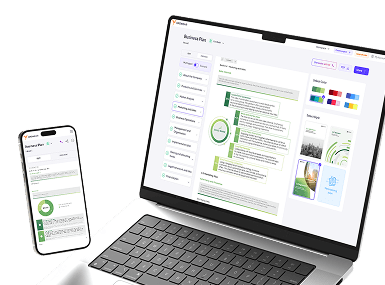
Growexa builds a complete, lender-ready business plan — with financial logic and a professionally formatted PDF
Establishing a Logistics Company requires significant capital for vehicles, facilities, technology, staffing, and working capital. This section of the business plan outlines startup costs and identifies funding sources such as equity investment, bank loans, equipment financing, or strategic partnerships.
The business plan explains how funds will be allocated across fleet acquisition, warehouse setup, technology systems, marketing, and contingency reserves. Disciplined capital allocation ensures the Logistics Company can operate reliably during early growth phases.
The Financial Plan translates the Logistics Company strategy into financial projections. This section of the business plan includes revenue forecasts based on transportation volumes, storage utilization, service contracts, and seasonal demand. It models cost structures including fuel, labor, maintenance, insurance, and facility expenses.
Cash-flow projections, breakeven analysis, and profitability scenarios demonstrate financial resilience. The business plan also includes sensitivity analysis to address fuel price volatility, demand fluctuations, and regulatory changes. A robust Financial Plan reassures stakeholders that the Logistics Company can sustain long-term operations.
A successful Logistics Company depends on precision, reliability, and strategic foresight. While demand for logistics services continues to grow, only companies guided by a structured business plan can navigate complexity and scale responsibly. By aligning operations, market strategy, and financial discipline, the business plan ensures that the Logistics Company delivers consistent value while adapting to industry change. With the right foundation, a Logistics Company can evolve from a regional operator into a trusted supply-chain partner.
Entrepreneurs ready to build or expand a Logistics Company can leverage platforms like Growexa, where expert planning tools transform operational concepts into polished, investor-ready business plans designed for long-term success.
Startup costs depend on the service scope and scale. A Logistics Company may require investment in vehicles, warehouse space, technology systems, licenses, insurance, and working capital. A detailed business plan breaks down fixed and variable costs, helping founders understand capital requirements and plan sustainable growth from day one.
Yes, profitability is achievable with efficient operations and long-term contracts. Successful Logistics Company models rely on optimized routes, high asset utilization, recurring client agreements, and cost control. A strong business plan shows how margins are protected through operational efficiency and disciplined pricing strategies.
Beyond transportation, a Logistics Company can generate revenue through warehousing, fulfillment, inventory management, last-mile delivery, cold-chain logistics, and value-added services. The business plan identifies which services align best with market demand and the company’s operational strengths.
Absolutely. A Logistics Company can expand regionally or nationally through fleet growth, strategic partnerships, and standardized operations. A well-structured business plan maps expansion phases, capital needs, staffing plans, and risk management to ensure growth does not compromise service quality.

