
Stop editing templates
Start building a plan that gets approved
Turn this template into a complete business plan with:
- Financial projections
- Loan-ready structure
- Clear repayment logic
Based on 40+ bank requirements

Walk down a city block or a suburban strip mall and you’ll often see a liquor store tucked between restaurants, convenience shops, or pharmacies. At first glance, the business looks deceptively straightforward: purchase alcohol from wholesalers, display it attractively, and sell at a margin. But those who enter the trade quickly learn that liquor retail is an industry defined as much by regulatory complexity and inventory management as by consumer demand. Margins depend on licenses, supplier agreements, and marketing strategy just as much as on customer loyalty.
A liquor store business plan, then, is not just paperwork for lenders. It is the blueprint that reconciles legal frameworks with operational execution, outlines the competitive landscape, and projects financial outcomes grounded in reality. For investors, it signals that an entrepreneur understands both compliance and commerce. For operators, it serves as a daily guide for managing stock, building customer relationships, and maintaining profitability in a sector where risk and reward are tightly interwoven.
Turn this template into a complete business plan with:
Based on 40+ bank requirements



Most business plans fail not because of the idea — but because the numbers don’t prove repayment.
Build a bank-ready business plan in minutes
(with projections, structure, and validation)
The first step in writing a credible liquor store business plan is to define positioning. Not all stores serve the same clientele, nor do they carry the same product mix. Some aim for mass-market appeal, offering discount spirits and large-format beer. Others cultivate a boutique identity, specializing in rare wines, craft beers, or premium whiskeys. The business plan must articulate clearly which lane the store will occupy. This positioning informs everything else: location, licensing requirements, supplier contracts, pricing, and marketing strategy. For instance, a store that presents itself as a premium wine destination must budget for more sophisticated shelving, climate-controlled storage, and higher staff training costs. A discount-oriented outlet, by contrast, may focus on volume, competitive pricing, and rapid turnover.
Narrative can add weight to this section. A founder who grew up in a winemaking family or spent years in hospitality brings credibility to a premium concept. An operator with experience in convenience retail might instead highlight efficiency and local knowledge. The key is to connect personal vision with market need.
Liquor retail sits at the intersection of steady demand and intense competition. Alcohol is a resilient product category, with consumption less vulnerable to economic downturns than many other discretionary goods. Yet this resilience also means many players want a share of the market. The business plan must therefore analyze demand not in abstract terms but in the context of the specific city or neighborhood.
Who are the customers? In an urban setting, demand may lean toward younger demographics seeking craft beer, ready-to-drink cocktails, or artisanal spirits. In affluent suburbs, premium wine and whiskey may dominate. In areas with heavy tourism, convenience purchases such as canned beverages and local specialties might drive sales. Mapping this demand to demographics demonstrates awareness of the customer base.
Competition must be addressed head-on. Are there chain stores nearby with deep discounts? Independent shops known for knowledgeable staff and curated selections? Supermarkets with liquor licenses competing on convenience? Identifying not just the number but the type of competitors allows the plan to highlight differentiation.
Consumer behavior trends also matter. Surveys show rising interest in low-alcohol and alcohol-free alternatives, sustainable packaging, and local craft producers. Ignoring these signals risks appearing outdated. By integrating them, the plan shows adaptability.
Unlike many retail businesses, liquor stores operate under complex and highly localized regulations. Licensing structures, permissible sales hours, age verification requirements, and distribution laws vary dramatically by jurisdiction. Any credible business plan must devote significant attention to this reality. Licensing is often the most significant barrier to entry. Some regions cap the number of licenses, making them scarce and expensive. Others attach conditions related to zoning, distance from schools, or minimum square footage. A strong plan outlines which licenses are required, how they will be obtained, and what costs are involved.
Compliance extends beyond licenses. Recordkeeping for sales, mandatory reporting to regulatory agencies, and adherence to labeling rules all add operational complexity. Including these in the plan reassures lenders and investors that the entrepreneur has accounted for the true cost of doing business legally.
This section should also note risk management. Penalties for non-compliance can be severe, including license revocation. A credible plan demonstrates systems for staff training, regular audits, and technology solutions such as ID scanners to prevent underage sales.
Operations in a liquor store involve much more than stocking shelves. The business plan must outline the systems that keep inventory fresh, compliant, and profitable.
Location again plays a crucial role. A store near residential areas benefits from convenience-driven purchases, while one near nightlife districts captures late-evening demand. Accessibility, parking availability, and foot traffic are all decisive factors. The plan should justify site selection not only with intuition but with data on traffic counts, demographics, and competitive density.
Inventory strategy is central. Liquor stores carry hundreds, sometimes thousands, of SKUs. The plan must explain how the store will balance breadth and depth: wide variety to attract diverse customers, but enough volume per SKU to secure favorable pricing. Seasonal adjustments—stocking champagne during the holidays, rosé in summer—also need to be built into projections.
Supply chain management affects margins. Direct relationships with distributors, participation in buying groups, or importing specialty items all shape both costs and differentiation. A plan that articulates sourcing strategy builds credibility.
Technology integration is increasingly vital. Point-of-sale systems that track inventory, forecast demand, and prevent shrinkage are now standard. Some stores also use e-commerce platforms for delivery or pickup orders. Outlining these systems demonstrates operational sophistication.
No connection between:
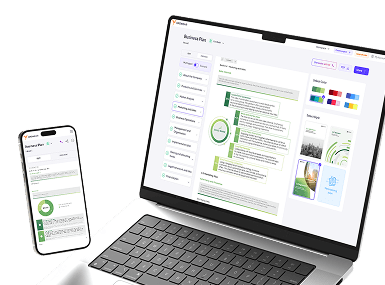
Growexa builds a complete, lender-ready business plan — with financial logic and a professionally formatted PDF
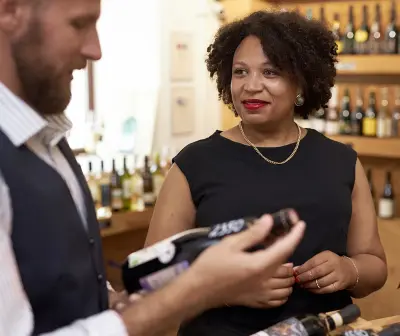
While liquor retail is not labor-intensive compared to hospitality, staff still play critical roles. Cashiers and floor associates are responsible not just for transactions but for legal compliance. Mistakes in age verification can jeopardize the entire business. A strong business plan therefore treats human resources as more than an afterthought.
Management structure should be described in detail. Who is responsible for daily operations, compliance oversight, supplier negotiations, and financial management? Even in small stores, clarity of roles signals professionalism.
Staffing plans should highlight training in regulatory compliance, product knowledge, and customer service. For premium-focused stores, associates may act as consultants, guiding customers through wine pairings or introducing craft spirits. For discount-driven outlets, efficiency and speed may be prioritized. Retention strategies are also important. While liquor retail can attract transient workers, building loyalty among staff reduces turnover costs and enhances consistency. Competitive wages, performance incentives, and a positive work environment contribute to stability.
Marketing liquor requires a nuanced approach. Unlike many retail categories, advertising alcoholic products is subject to additional regulations. Some jurisdictions limit digital campaigns, mandate health warnings, or restrict promotional activities. A credible business plan must acknowledge these constraints while still presenting creative strategies.
Brand identity is crucial. A store that positions itself as a neighborhood hub may emphasize community engagement—wine tastings, partnerships with local restaurants, or participation in cultural events. A boutique-focused shop may highlight exclusivity, rare labels, and expert staff. A discount outlet might lean on loyalty programs and bulk purchase incentives.
Digital channels remain powerful but must be used responsibly. Social media can showcase new arrivals, educational content on spirits, or behind-the-scenes stories of sourcing. Search engine optimization ensures visibility when customers search for “liquor store near me.” Email marketing can drive repeat visits with promotions or event invitations.
Packaging and in-store design also serve as marketing. The way products are displayed, the ambiance of the store, and the ease of navigation influence customer perception as much as external advertising.
Opening a liquor store is costly. Licenses alone can run into six figures in some markets. Build-out costs for shelving, refrigeration units, security systems, and point-of-sale technology add to the total. Initial inventory purchases represent a significant cash outlay before the first dollar of revenue is collected. The business plan must provide a transparent breakdown of these startup costs. Lenders and investors expect to see how much capital is required, how it will be secured, and what portion will be owner equity versus external financing.
Sources of funding may include personal savings, bank loans, private investors, or specialized small business lending programs. A plan that diversifies funding sources shows prudence.
Allocation of funds over time also matters. Initial phases emphasize securing licenses and completing build-out. Subsequent investments may target inventory expansion, marketing campaigns, or e-commerce integration. Mapping these phases prevents concerns about front-loaded spending without a sustainability plan.
Numbers are the most scrutinized part of any liquor store business plan. They must be both ambitious and realistic.
Revenue projections should begin with assumptions: expected daily foot traffic, conversion rates, average transaction value, and seasonal peaks. For instance, holiday seasons often account for disproportionate sales in liquor retail. Mapping these cycles into projections adds credibility.
Profit and loss statements should separate categories—wine, beer, spirits, and ancillary items like mixers or snacks. This breakdown highlights diversification and potential margin differences.
Expenses require rigorous attention. Beyond rent and payroll, liquor stores must budget for license renewals, insurance, shrinkage, security, and compliance costs. Underestimating these can make projections collapse under scrutiny.
Cash flow forecasting is critical given the upfront cost of inventory purchases. Liquidity must be managed carefully, especially when credit terms with distributors are limited. Investors want reassurance that the store can cover expenses even during slower months.
Break-even analysis is often sobering. Depending on location, licensing costs, and scale, profitability may take two to three years. A plan that acknowledges this reality, rather than promising immediate returns, signals maturity.
Beyond initial projections, a liquor store business plan must demonstrate a vision for resilience. How will the store adapt to shifts in consumer preferences, such as growth in alcohol-free alternatives? What if regulatory environments tighten, or taxes increase?
Growth strategies should also be outlined. Will the store expand to multiple locations, develop an online sales channel, or introduce private-label products? Each path requires capital and planning but signals ambition.
Technology adoption strengthens resilience. Delivery apps, loyalty programs, and data analytics provide insights into purchasing patterns and customer retention. Including these in the roadmap highlights sophistication.
Risk management cannot be overlooked. Shrinkage through theft, supply disruptions, or regulatory violations all threaten stability. Describing contingency measures builds confidence.
A liquor store may look like a simple retail business from the outside, but in reality, it is a sector defined by regulatory complexity, operational intensity, and cultural nuance. Success requires balancing compliance with customer experience, broad product variety with disciplined inventory management, and ambition with realistic financial planning.
A liquor store business plan, therefore, is not just a tool for securing financing. It is the framework that translates an entrepreneurial vision into a sustainable, compliant, and profitable enterprise. For those ready to enter this competitive market, the first step is clarity on paper. With a well-structured plan, an entrepreneur is not just opening a store; they are building an institution that can serve communities for years to come.
Ready to start drafting? Explore a liquor store business plan template, review completed examples for practical insights, and use the customizable tools at Growexa to design a strategy as disciplined as the industry demands.

