
Stop editing templates
Start building a plan that gets approved
Turn this template into a complete business plan with:
- Financial projections
- Loan-ready structure
- Clear repayment logic
Based on 40+ bank requirements

IT Consulting has become one of the most strategically important services in the modern economy. As organizations accelerate digital transformation, migrate to cloud infrastructure, adopt artificial intelligence, and strengthen cybersecurity, demand for professional IT Consulting continues to grow across industries. What once focused on technical troubleshooting has evolved into advisory work that shapes business models, operational efficiency, and competitive advantage. In this environment, an IT Consulting firm cannot rely solely on technical expertise. A comprehensive business plan is essential to convert knowledge into a scalable, profitable, and resilient professional services business. The business plan aligns specialization, market positioning, delivery models, and financial discipline into a coherent strategy.
Launching or expanding an IT Consulting firm without a business plan often leads to unpredictable revenue, overreliance on founders, pricing pressure, and burnout. IT Consulting is a people-driven business with long sales cycles, complex projects, and high client expectations. A strong business plan clarifies which services the IT Consulting firm delivers best, which clients it serves, and how it creates repeatable value rather than one-off engagements. It ensures that investment in talent, certifications, tools, and marketing is supported by realistic demand and sustainable margins. In a sector defined by constant technological change, the business plan becomes the anchor that allows IT Consulting firms to grow with confidence.
Turn this template into a complete business plan with:
Based on 40+ bank requirements


Most business plans fail not because of the idea — but because the numbers don’t prove repayment.
Build a bank-ready business plan in minutes
(with projections, structure, and validation)
The Executive Summary presents the IT Consulting firm as a strategic technology advisory and implementation partner. This section of the business plan defines the mission of the IT Consulting practice, whether focused on digital transformation, cloud migration, cybersecurity, enterprise systems, data analytics, or IT strategy.
The business plan outlines target clients such as small and mid-sized businesses, enterprises, startups, or regulated industries. Revenue streams may include consulting retainers, project-based engagements, managed services, and advisory subscriptions. By summarizing service focus, positioning, and financial objectives, the Executive Summary establishes IT Consulting as a professionally structured business guided by a clear business plan.
The Company Overview defines the structure, identity, and strategic foundation of the IT Consulting firm. This section of the business plan explains the legal entity, ownership model, and governance structure. It clarifies whether the IT Consulting firm operates as a boutique specialist, a full-service consultancy, or a hybrid advisory and delivery organization.
The business plan describes the IT Consulting service portfolio, methodology, and delivery approach. Core competencies, certifications, and intellectual property are aligned with client needs and market demand. Operating model decisions, including remote delivery, on-site consulting, or global teams, are integrated into the business plan.
Brand positioning emphasizes credibility, expertise, and reliability. The business plan ensures the IT Consulting firm is perceived as a trusted advisor rather than a commodity vendor. The Company Overview positions IT Consulting as a knowledge-driven enterprise with disciplined execution.
The Market Analysis examines demand drivers shaping the IT Consulting industry. Digital transformation, regulatory complexity, cybersecurity threats, and rapid technology adoption continue to fuel demand. A strong business plan analyzes these macro trends alongside industry-specific needs and regional market dynamics.
The business plan evaluates competition from global consulting firms, boutique specialists, in-house IT teams, and freelance consultants. Differentiation is essential. The Market Analysis identifies opportunities in niche expertise, industry focus, or outcome-based consulting.
Client segmentation is explored in depth. Enterprises value scale and governance, while smaller businesses prioritize flexibility and ROI. The business plan aligns IT Consulting services, pricing, and engagement models with these segments. By grounding strategy in data, the business plan ensures the IT Consulting firm competes on value and insight rather than price alone.
The Marketing and Sales Strategy outlines how the IT Consulting firm attracts clients and builds long-term relationships. IT Consulting is trust-based, making reputation and thought leadership central. The business plan explains how the IT Consulting brand communicates expertise through content, case studies, and professional networks.
Marketing channels include inbound content, partnerships, referrals, industry events, and targeted outreach. The business plan emphasizes credibility-driven marketing that demonstrates problem-solving ability rather than generic promotion.
Sales strategy focuses on consultative selling, clear scoping, and expectation management. Pricing models reflect value delivered and project complexity. The business plan ensures client acquisition supports profitability and sustainable delivery capacity.
The Operations Plan details how the IT Consulting firm functions day to day. This section of the business plan describes project management, delivery workflows, knowledge sharing, and quality assurance. Operational clarity is critical because human capital is the primary asset.
The business plan explains staffing models, utilization targets, and workload balancing. Technology supports operations through collaboration platforms, documentation systems, and performance tracking. Continuous improvement processes ensure consistent delivery across clients.
Risk management is central. The Operations Plan addresses project overruns, scope creep, dependency on key personnel, and cybersecurity responsibilities. By defining standardized procedures, the business plan ensures IT Consulting engagements are delivered predictably and profitably.
No connection between:
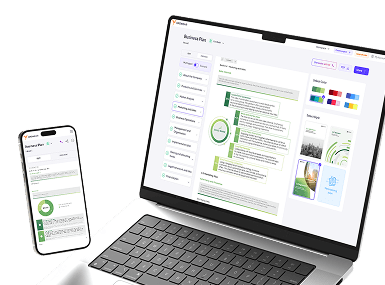
Growexa builds a complete, lender-ready business plan — with financial logic and a professionally formatted PDF
The Management and Organization section introduces the leadership behind the IT Consulting firm. It outlines experience in technology, consulting, business development, and operations. Strong leadership balances innovation with discipline.
The business plan defines organizational roles such as consultants, architects, project managers, sales leads, and support staff. Training and professional development ensure the IT Consulting team remains current with evolving technologies.
This section demonstrates that IT Consulting is professionally managed rather than founder-dependent.
Launching or scaling an IT Consulting firm requires capital for hiring, certifications, tools, marketing, and working capital. This section of the business plan outlines funding sources such as founder investment, loans, or strategic partners.
The business plan explains how funds are allocated to talent development, intellectual property, and growth initiatives. Disciplined capital planning ensures IT Consulting growth is sustainable rather than opportunistic.
The Financial Plan translates the IT Consulting strategy into financial projections. This section of the business plan includes revenue forecasts based on billable rates, utilization, client mix, and contract duration.
Expense projections include salaries, benefits, software, marketing, and overhead. The business plan provides cash-flow projections, breakeven analysis, and profitability scenarios. Sensitivity analysis addresses client concentration and market volatility.
A successful IT Consulting firm combines deep expertise with strategic discipline. While technology evolves rapidly, only businesses guided by a structured business plan achieve lasting success. By aligning specialization, delivery, operations, and financial planning, the business plan transforms IT Consulting into a resilient and scalable professional services enterprise. With the right foundation, IT Consulting firms can deliver long-term value to clients while building enduring business equity.
Entrepreneurs ready to launch or grow an IT Consulting firm can leverage platforms like Growexa, where expert planning tools turn consulting concepts into polished, investor-ready business plans designed for sustainable growth.
An IT Consulting firm operates in a knowledge-intensive, highly competitive environment with long sales cycles and project-based revenue. A structured business plan helps IT Consulting companies define specialization, pricing models, delivery capacity, and growth strategy, ensuring expertise translates into predictable profitability.
Compared to asset-heavy industries, IT Consulting requires relatively modest startup capital. Typical investments include hiring skilled consultants, certifications, software tools, marketing, and working capital. A well-prepared business plan ensures capital is focused on revenue-generating talent rather than unnecessary overhead.
Yes, with structure. An IT Consulting firm can scale through standardized methodologies, knowledge sharing, leadership development, and client diversification. A comprehensive business plan outlines systems and organizational design that reduce founder dependency and support sustainable growth.

