
Stop editing templates
Start building a plan that gets approved
Turn this template into a complete business plan with:
- Financial projections
- Loan-ready structure
- Clear repayment logic
Based on 40+ bank requirements

Hydroponics has moved from experimental agriculture into the center of modern food systems. As urbanization accelerates, climate volatility increases, and supply chains face constant disruption, Hydroponics offers a controlled, scalable, and resource-efficient alternative to traditional farming. What was once perceived as a niche technology is now a commercially viable service model serving restaurants, retailers, institutions, and municipalities. Yet despite its technological promise, a Hydroponics operation is not immune to business fundamentals. Capital intensity, technical complexity, and long sales cycles demand discipline. In this environment, a comprehensive business plan is essential. A strong business plan transforms Hydroponics from an engineering solution into a sustainable, investable service business.
Launching a Hydroponics service without a business plan often leads to underutilized systems, unclear pricing, operational inefficiencies, and cash-flow instability. The technology itself does not guarantee profitability. A well-constructed business plan clarifies how Hydroponics is positioned in the market, which customers are served, and how production capacity aligns with demand. It ensures that decisions around system design, crop selection, service scope, and expansion are grounded in financial logic. In a sector where innovation must coexist with reliability, the business plan becomes the foundation of long-term success.
Turn this template into a complete business plan with:
Based on 40+ bank requirements


Most business plans fail not because of the idea — but because the numbers don’t prove repayment.
Build a bank-ready business plan in minutes
(with projections, structure, and validation)
The Executive Summary presents the Hydroponics service as a modern agricultural and infrastructure solution delivering consistent, high-quality produce through controlled growing environments. This section of the business plan defines the mission of the Hydroponics operation, whether focused on fresh produce supply, turnkey system installation, managed growing services, or integrated food solutions.
The business plan outlines target customers such as restaurants, grocery chains, food distributors, corporate campuses, schools, hospitals, and municipalities. Revenue streams may include crop sales, subscription supply contracts, system installation, maintenance services, and consulting. By summarizing concept, positioning, and financial objectives, the Executive Summary establishes Hydroponics as a professionally structured enterprise guided by a clear business plan.
The Company Overview defines the structure, identity, and strategic foundation of the Hydroponics service. This section of the business plan explains the legal entity, ownership model, and regulatory environment governing agricultural production and food safety. Compliance with health standards, environmental regulations, and zoning requirements is embedded throughout the business plan.
The business plan describes the Hydroponics service model, including system types, crop focus, and operational scope. Decisions around vertical farming, greenhouse systems, or container-based solutions are aligned with target markets and scalability goals. Technology selection, nutrient management, and automation levels are chosen to balance reliability with cost control.
Location strategy is central. The business plan explains site selection based on proximity to customers, logistics efficiency, energy availability, and expansion potential. The Hydroponics brand emphasizes sustainability, consistency, and transparency. The Company Overview positions Hydroponics as both a technology-enabled service and a disciplined production business.
The Market Analysis examines demand drivers shaping the Hydroponics industry. Urban population growth, demand for local food, sustainability mandates, and climate instability continue to expand market opportunity. A strong business plan analyzes demographic trends, food consumption patterns, and regulatory incentives to validate demand.
The business plan evaluates competition from traditional agriculture, imported produce, vertical farms, and alternative controlled-environment systems. Differentiation is essential. The Market Analysis identifies opportunities in freshness, reliability, reduced water usage, year-round supply, or customized production.
Customer segmentation includes restaurants seeking consistency, retailers prioritizing shelf life, institutions focused on sustainability, and corporate clients investing in food security. Each segment values Hydroponics differently. By grounding strategy in market insight, the business plan ensures Hydroponics competes on value and reliability rather than price alone.
The Marketing and Sales Strategy outlines how the Hydroponics service attracts and retains clients. Hydroponics decisions are often strategic and long-term, making education and trust critical. The business plan explains how the Hydroponics brand communicates reliability, sustainability, and performance.
Marketing channels include direct sales, partnerships, industry events, sustainability networks, and content marketing. The business plan emphasizes credibility through data, certifications, and case studies rather than mass promotion.
Sales strategy focuses on long-term contracts, subscriptions, and integrated service agreements. Pricing reflects production costs, service reliability, and value delivered. The business plan ensures sales growth aligns with production capacity and operational discipline.
The Operations Plan details how the Hydroponics service functions daily. This section of the business plan describes growing cycles, nutrient management, monitoring systems, harvesting, and logistics. Operational precision is critical due to biological sensitivity and system dependency.
The business plan explains staffing models, technical oversight, maintenance routines, and quality control. Technology supports operations through sensors, automation, and data analytics. Standardized procedures ensure consistency across sites and crops.
Risk management is central. The Operations Plan addresses system failures, disease outbreaks, supply interruptions, and energy dependency. By defining contingency protocols, the business plan ensures Hydroponics operates reliably under variable conditions.
No connection between:
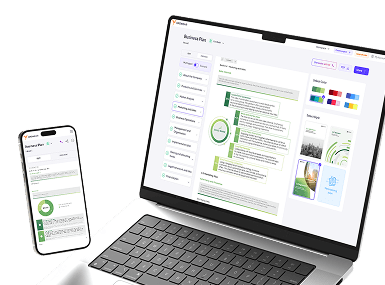
Growexa builds a complete, lender-ready business plan — with financial logic and a professionally formatted PDF
The Management and Organization section introduces the leadership behind the Hydroponics service. It outlines experience in agriculture, engineering, operations, or environmental systems. Strong leadership balances innovation with operational discipline.
The business plan defines roles such as operations manager, agronomists, technicians, sales leadership, and support staff. Training and continuous improvement ensure the Hydroponics team maintains technical excellence and service consistency.
This section demonstrates that Hydroponics is professionally managed rather than experiment-driven.
Launching or expanding a Hydroponics service requires capital for infrastructure, systems, technology, land or facilities, and working capital. This section of the business plan outlines funding sources such as owner equity, loans, impact investors, or strategic partners.
The business plan explains how funds are allocated to maximize capacity utilization, reliability, and scalability. Disciplined capital planning ensures Hydroponics growth is sustainable and resilient.
The Financial Plan translates the Hydroponics strategy into financial projections. This section of the business plan includes revenue forecasts based on production volume, contract pricing, and utilization rates.
Expense projections include energy, labor, nutrients, maintenance, logistics, and depreciation. The business plan provides cash-flow projections, breakeven analysis, and multi-year profitability scenarios. Sensitivity analysis addresses energy costs, yield variability, and demand fluctuations.
A successful Hydroponics service is built on control, consistency, and discipline. While technology enables growth, only businesses guided by a structured business plan achieve long-term sustainability. By aligning production, operations, marketing, and financial planning, the business plan transforms Hydroponics into a resilient and scalable agricultural service enterprise. With the right foundation, Hydroponics can contribute to food security, environmental sustainability, and durable economic value.
Entrepreneurs ready to launch or scale a Hydroponics service can leverage platforms like Growexa, where expert planning tools turn advanced agricultural concepts into polished, investor-ready business plans designed for long-term success.
Hydroponics combines agriculture, technology, and infrastructure, making it capital-intensive and operationally complex. A structured business plan helps a Hydroponics service align production capacity with demand, manage technical risks, and present a credible model to investors, partners, and large clients.

