
Stop editing templates
Start building a plan that gets approved
Turn this template into a complete business plan with:
- Financial projections
- Loan-ready structure
- Clear repayment logic
Based on 40+ bank requirements

Starting a Restaurant Business is not simply about serving meals — it’s about orchestrating an experience that must balance creativity, precision, and resilience. The journey from idea to opening day is a test of both imagination and endurance. Every Restaurant Business starts with passion, but only those that translate emotion into structure survive beyond the first season. To start a Restaurant successfully means building a system that transforms taste into trust and operations into profit.
Turn this template into a complete business plan with:
Based on 40+ bank requirements


Most business plans fail not because of the idea — but because the numbers don’t prove repayment.
Build a bank-ready business plan in minutes
(with projections, structure, and validation)
Before you invest in décor, recipes, or equipment, you must start with understanding the ecosystem you are entering. The Restaurant industry is notoriously competitive and capital-intensive, yet it continues to attract dreamers who underestimate its complexity. Studying the landscape means going beyond trends; it requires analyzing consumer habits, local demographics, and spending behavior. Ask what drives dining decisions in your area — convenience, novelty, social validation, or comfort?
A successful Restaurant doesn’t fight the market; it fits into its rhythm. Analyze existing venues across cuisines and price levels. Identify which neighborhoods show saturation and which are under-served. Understand seasonality, lunch-versus-dinner dynamics, and the impact of delivery culture. The Restaurant Business has evolved into an omnichannel model — part dine-in, part digital — and founders must adapt accordingly. The more data you gather now, the fewer surprises await after launch.
A concept is the soul of a Restaurant — the lens through which every decision is made. Without it, even the best menu loses coherence. Ask yourself: what emotion should guests feel in your Restaurant? Relaxed, inspired, nostalgic, or energized? The answer determines everything from music to plating.
Concept clarity also defines economics. A fine-dining Restaurant requires different labor ratios, inventory systems, and seating capacity than a fast-casual outlet. The mistake most founders make is mixing signals — designing ambiance for one audience while pricing for another. Your Restaurant Business Plan should express the concept in a single sentence: what you serve, whom you serve, and why it matters. Once that statement is clear, brand identity, interior design, and marketing fall naturally into alignment.
Great Restaurant concepts also contain cultural narratives. They link food with meaning — sustainability, craftsmanship, nostalgia, or innovation. When your Restaurant tells a story that resonates with its community, it stops being just a place to eat and becomes part of local identity.
In hospitality, brand is behavior made visible. Guests experience your brand long before they step through the door — in the tone of your website, the typography on your menu, and the response to their first booking inquiry. Your Restaurant Brand must express consistency across every touchpoint.
Building identity starts with promise: what does your Restaurant Business guarantee emotionally? A brand rooted in warmth will design lighting, music, and service rituals to amplify that feeling. A brand built on sophistication will invest in precision and restraint. Every color, scent, and sentence should reinforce that promise.

For founders, branding is not an afterthought; it’s operational strategy. The more clearly you define your identity, the easier it becomes to hire staff who embody it, select suppliers who align with it, and attract investors who understand its value. A disciplined Restaurant Business treats brand as its operating system, not its decoration.
In the Restaurant world, location is both destiny and design constraint. A perfect concept in the wrong space can collapse within months, while a modest Restaurant in a strategic corner can thrive for decades. Choosing location means analyzing more than rent — it’s about visibility, accessibility, and fit.
Start with studying pedestrian flow, parking ease, and nearby anchors such as offices, schools, or nightlife zones. A Restaurant targeting weekday professionals needs heavy lunch traffic; one built for families depends on weekend dynamics. Visit the site at different hours and imagine your future operations.
Financially, the lease should align with realistic sales. Industry benchmarks suggest occupancy costs shouldn’t exceed 10% of revenue, yet many Restaurant Businesses cross that line early. When modeling rent, include utilities, maintenance, and local taxes. The right space is one your Restaurant can grow into — not one it must grow out of.
Spatial design also defines operational flow. The distance between kitchen and service line, the size of storage, and the visibility of the bar all affect labor efficiency and guest comfort. The Restaurant that optimizes space creates both aesthetic appeal and cost advantage.
A Restaurant menu is a financial document disguised as creativity. It determines inventory complexity, training demands, and gross margin structure. When starting a Restaurant, founders often overbuild menus, confusing variety with value. The result is waste, inconsistency, and burnout.
A disciplined Restaurant Business builds its menu backward — from margin targets to flavor narrative. Identify high-margin anchor dishes, balanced by a few signature items that define brand identity even if their cost is higher. Each category — appetizers, mains, desserts, beverages — must justify its shelf space in profitability terms.
Sourcing strategy completes the architecture. Local ingredients may enhance storytelling but increase volatility; imported goods stabilize quality but raise cost. The Restaurant Business must strike equilibrium between emotion and efficiency. Menu engineering software and contribution-margin analysis should be standard tools from day one.
Above all, the menu should evolve without betraying its DNA. Guests love innovation only when it feels authentic. A well-crafted menu turns a first visit into a habit, and habit into predictable revenue.
The Restaurant Business is capital-hungry and time-delayed. Before the first meal is served, thousands of dollars flow into construction, permits, equipment, and payroll. A sound Restaurant Financial Plan anticipates not only startup costs but the slow ramp to stability.
Break initial investment into categories: leasehold improvements, kitchen equipment, furniture, pre-opening marketing, and working capital. Then calculate a six-month cash runway — most new Restaurants lose money initially while building traffic and refining operations.
Funding sources vary: personal savings, family capital, investors, or bank loans. Whichever you choose, transparency and discipline are non-negotiable. A professional Restaurant Business presents investors with cash-flow forecasts, break-even analysis, and ROI projections grounded in conservative assumptions.
Control, not expansion, is the first financial goal. Avoid overleveraging; a Restaurant must prove unit economics before dreaming of second locations. Cash-flow monitoring, supplier credit management, and expense tracking systems should be in place from the first week. Financial literacy is not optional — it’s survival.
Behind every thriving Restaurant stands a team that believes in the same story. Talent in hospitality isn’t only about culinary skill — it’s about consistency, empathy, and discipline. The Restaurant Business depends on people who can translate vision into daily service, even under stress.
Recruitment must start with clarity of roles. Define what kind of general manager your Restaurant needs: an operational tactician or a guest-experience evangelist. Identify your chef’s leadership philosophy — collaborative or authoritarian — and ensure it aligns with brand tone. Every hire becomes a brand ambassador, so emotional intelligence matters as much as experience.
Training transforms potential into performance. A structured Restaurant Business start program should cover not only technical tasks but also cultural principles: why the menu exists, how service scripts express personality, how body language communicates value. Continuous feedback loops — pre-shift briefings, post-service reviews, and performance metrics — create rhythm. A Restaurant that trains daily avoids the chaos that destroys consistency.
Culture sustains morale when volume spikes. Recognize effort publicly, share numbers transparently, and give staff a voice in operational refinement. The modern Restaurant Business competes not just for customers but for labor; turnover is a financial liability. Retention incentives — fair scheduling, shared tips, internal mobility — turn employees into advocates. A strong team culture converts human energy into guest loyalty.
A Restaurant Operations Plan is the unseen engine behind hospitality. Guests notice ambiance and flavor; investors notice control. Operations translate vision into execution hour by hour. Without systems, even the best ideas collapse under repetition.
Start with process mapping: from receiving ingredients to delivering a plate, each step must have ownership and timing. Establish standard operating procedures (SOPs) for prep, service, cleaning, and closing. The Restaurant that measures flow time discovers where profit leaks occur — idle staff, delayed tickets, or wasted stock. Efficiency doesn’t mean speed alone; it means predictability.
Technology amplifies discipline. Point-of-sale integration, inventory software, scheduling tools, and digital checklists create real-time transparency. Data from these systems fuels smarter decisions — identifying top sellers, peak hours, and loss patterns. The Restaurant Business has entered a phase where operations and analytics are inseparable.
Above all, accountability is cultural. Every shift should start with targets — covers, upsell goals, guest-satisfaction benchmarks — and end with results. The Restaurant that treats daily review as ritual evolves faster than competitors who rely on intuition. Precision becomes the new artistry.
Regulatory readiness separates professional Restaurant Businesses from short-lived experiments. Every jurisdiction imposes specific permits — health, fire safety, liquor, signage, and waste management — each with its own timeline and inspection process. Delays here can erase months of profit.

Create a compliance calendar before signing any lease. Include buffer time for municipal approvals and build relationships with local authorities early. Transparency earns cooperation. A Restaurant that maintains organized documentation reduces audit risk and builds credibility with investors and landlords alike.
Insurance completes the safety net. General liability, workers’ compensation, and property insurance protect both operations and staff. For the Restaurant Business, risk management is financial hygiene — unseen yet essential. In an industry built on thin margins, one incident without coverage can erase years of effort.
Compliance isn’t bureaucracy; it’s brand trust. Guests feel safer and partners more confident when a Restaurant operates by the book.
Opening day may look glamorous, but it’s the culmination of a thousand quiet rehearsals. The pre-opening phase defines whether a Restaurant starts strong or stumbles publicly.
Start with internal simulations: test service flow, ticket timing, and kitchen coordination. Conduct mock lunches for friends or staff families, collecting feedback on pacing and temperature control. Document every issue and refine the playbook. The Restaurant Business thrives on iteration before exposure.
Marketing should start weeks before the first service. Build anticipation through local partnerships, influencer previews, and digital teasers — but promise only what you can deliver. Understated authenticity creates curiosity; over-hype breeds disappointment.
The soft launch is a stress test. Offer limited menus, controlled bookings, and encourage honest feedback. A Restaurant Business that listens early builds humility into its DNA. Record all data — revenue per cover, waste percentages, guest sentiment — and make daily adjustments. When the official opening arrives, your Restaurant will perform with practiced confidence rather than anxious improvisation.
Once doors open, emotion takes over — but systems must hold. The first ninety days of a Restaurant Business decide its trajectory. This is when founders must balance presence with perspective: staying close enough to guide service but detached enough to analyze patterns.
Track everything from day one: table turns, check averages, labor percentage, and feedback trends. Set weekly financial reviews, even if revenue is low. Visibility is power. A Restaurant that reacts early to negative reviews, stock shortages, or cost spikes can correct course before losses compound.
Guest retention starts here. Build recognition rituals — remembering names, celebrating repeat visits, personal thank-you notes. Every impression counts twice in the opening months. Marketing should reinforce real experiences, not illusions. Share authentic stories of your kitchen and team instead of generic promotions.
Most crucially, protect quality from fatigue. Founders often overwork themselves during launch, leading to burnout that radiates through staff. Delegate, rest, and review strategically. The Restaurant is a marathon business; pace determines survival.
No connection between:
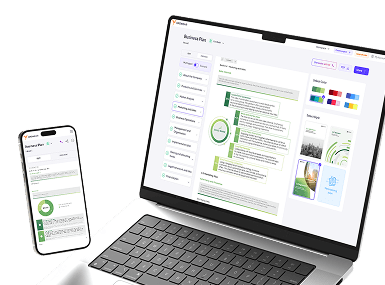
Growexa builds a complete, lender-ready business plan — with financial logic and a professionally formatted PDF
Even the finest cuisine is invisible without communication. Post-launch, marketing transitions from awareness to advocacy. Integrate your Restaurant into the fabric of its neighborhood — sponsor events, feature local artists, collaborate with nearby brands. Community marketing builds emotional equity.
Digital visibility remains the main discovery driver. Update listings, encourage reviews, and invest in photography that reflects real ambiance. Every platform — Google, Instagram, TripAdvisor — acts as a satellite of your Restaurant Brand. Respond to feedback promptly and with sincerity.
The best Restaurant Businesses treat guests as participants in storytelling, not as transactions. Encourage user-generated content, highlight regulars, and celebrate milestones publicly. Marketing becomes sustainable when it mirrors authentic culture rather than campaigns.
After the opening wave, the Restaurant enters the stabilization phase — where discipline separates survivors from casualties. Profitability is not a one-time event but a continuous negotiation between cost and value.
Implement weekly inventory audits, vendor reviews, and cost-of-goods (COGS) tracking. Align menu pricing with fluctuating supply costs. A Restaurant that understands contribution margin per dish can adjust quickly without sacrificing quality.
Labor remains the largest variable expense. Cross-training staff, optimizing shift patterns, and monitoring sales per labor hour are essential. Technology aids efficiency but only if management reads the data. Each Restaurant Business must define its financial dashboard: daily sales, prime cost ratio, and net profit percentage.
Beyond control lies optimization — the art of doing more with the same space. Introduce brunch, private dining, or retail merchandise to expand revenue without expanding rent. A Restaurant that maximizes every hour of its footprint compounds profitability organically.
Retention is cheaper than acquisition and twice as stable. Designing a repeat-guest strategy is as critical as recipe design. Capture guest data ethically through reservations and Wi-Fi sign-ups, then personalize outreach. A birthday message or early invitation to new menu tastings turns satisfaction into loyalty. The Restaurant Business operates on trust cycles — every returning customer is a small endorsement.

Feedback loops drive evolution. Analyze reviews not defensively but diagnostically. If multiple guests mention noise or wait times, it’s a management signal. Use digital surveys to complement anecdotal insights. A Restaurant that measures perception manages reputation proactively.
Consistency is the final luxury. Guests return not just for flavor but for reliability — the certainty that tomorrow’s meal will taste as good as today’s. Operational stability is therefore the purest marketing tool a Restaurant can possess.
Expansion seduces every ambitious Restaurant owner, but scaling too early kills more brands than poor food ever could. A second location makes sense only when unit economics are proven and systems are replicable. Document everything — recipes, service protocols, supplier lists, brand guidelines. Standardization is freedom; it allows creativity to scale without chaos. The Restaurant Business becomes scalable when it can reproduce quality under distance and pressure.
Growth can also mean depth, not width. Adding catering, delivery, or packaged goods can multiply reach while staying within one flagship location. Investors prefer Restaurant Businesses that demonstrate layered growth instead of reckless multiplication.
When expansion starts, assign a corporate layer to oversee culture, finance, and marketing consistency. The difference between a brand and a chain is coherence. A well-governed Restaurant can expand nationally without losing its soul.
Every Restaurant Business will face volatility — supply shocks, staff turnover, pandemics, or trend fatigue. The winners are those that adapt visibly and quickly.
Build contingency plans: backup suppliers, cash reserves, and flexible menus that can adjust pricing within a week. Train staff to communicate transparently during disruption. When a Restaurant owns its challenges publicly, loyalty often increases rather than declines.
Innovation protects relevance. Introduce seasonal updates, technology-driven delivery, or experiential events to maintain curiosity. The Restaurant Businesss that evolves with its audience stays essential even when fashions shift. Adaptation isn’t reaction; it’s design.
The true goal of starting a Restaurant is not merely to open but to endure. Longevity demands the same curiosity that fueled inception. Review your Restaurant Business Plan annually, replacing assumptions with data, and redefining goals. Measure not only profit but influence — the reputation you build among guests, staff, and the broader community. A mature Restaurant becomes a cultural node — a place where relationships are formed, and memories anchored. Its impact outlives menu trends and interior design. The founder’s challenge evolves from daily survival to stewardship: keeping the brand honest, generous, and evolving.
Starting a Restaurant Business is not a one-time leap; it’s an ongoing education in resilience, empathy, and precision. Those who approach it as both craft and enterprise create more than restaurants — they create institutions.
Most founders underestimate pre-opening costs and overestimate early sales. They focus on décor over working capital. A sustainable Restaurant Business reserves at least six months of operating expenses, monitors cash flow weekly, and delays expansion until one location proves profitable. Financial discipline is marketing’s silent partner.
Typically between 12 and 24 months, depending on scale, location, and management quality. A well-planned Restaurant can reach break-even in 9–12 months if occupancy, menu margins, and labor ratios stay within targets. The secret is not speed, but consistency — tracking numbers daily and adjusting quickly when assumptions fail.
Crucial, but not infinite. The founder should stay close during the first 90 days to establish culture and service tone, then shift into strategic oversight. A Restaurant Business that cannot operate smoothly without its founder hasn’t built a system yet. Leadership means designing processes that make excellence repeatable.

