
Stop editing templates
Start building a plan that gets approved
Turn this template into a complete business plan with:
- Financial projections
- Loan-ready structure
- Clear repayment logic
Based on 40+ bank requirements

Few industries have adapted as dynamically to the digital age as Bookkeeping. Once confined to ledgers, calculators, and office desks, today it operates in the cloud — a service at the heart of every thriving business. Understanding how to start a Bookkeeping business in this new era isn’t about managing numbers; it’s about managing trust, technology, and transformation.
Across industries, small and medium-sized companies are outsourcing financial management at an unprecedented rate. They don’t want full-time accountants — they want accurate, transparent, and tech-enabled support. That’s why the modern Bookkeeping entrepreneur has one of the strongest entry points into the service economy: low overhead, high demand, and recurring revenue. But knowing how to start effectively means building more than a skill-based practice — it means creating a scalable business model that blends expertise, automation, and strategy.
The evolution of Bookkeeping parallels the broader business transformation. Entrepreneurs no longer view it as a back-office task; they see it as a growth tool — the data layer that informs every smart decision. Whether you’re a certified accountant or an organized professional with a head for detail, learning how to start your own Bookkeeping business is about aligning precision with purpose.
This guide breaks down the process step-by-step — not just to help you get started, but to help you stay ahead. From defining your services and pricing to choosing the right tech stack and scaling sustainably, here’s everything you need to know about turning your financial skills into a modern, trusted Bookkeeping business.
Turn this template into a complete business plan with:
Based on 40+ bank requirements


Most business plans fail not because of the idea — but because the numbers don’t prove repayment.
Build a bank-ready business plan in minutes
(with projections, structure, and validation)
The first step in mastering how to start a Bookkeeping business is understanding what the industry has become — and what role you’ll play within it. Traditional bookkeeping revolved around manual entries and reactive reporting. Today, it’s proactive, digital, and data-driven. A modern Bookkeeping professional is part analyst, part advisor, and part technology integrator.
Start with perspective: Bookkeeping is not accounting — it’s the foundation beneath it. Bookkeepers handle daily financial data — transactions, payroll, invoices, reconciliations — ensuring that accountants and decision-makers can rely on accurate information. When you understand how to start in this space, your mission isn’t just to record; it’s to interpret and empower.
The industry now runs on three trends: automation, outsourcing, and advisory integration. Cloud tools like QuickBooks, Xero, and Zoho Books have replaced spreadsheets. This shift has democratized entry — you no longer need a corporate background to build a serious Bookkeeping business. Instead, clients look for responsiveness, transparency, and workflow mastery.
When planning how to start your Bookkeeping journey, clarity about your role is essential. You might serve as a solo practitioner offering remote bookkeeping to small clients, or as the founder of a boutique financial management firm that scales with staff. Either way, your credibility rests on reliability. In this business, errors don’t just cost time — they cost trust.
Finally, understand that Bookkeeping sits at the intersection of law, finance, and technology. Compliance matters, but so does client communication. You’re not just balancing accounts — you’re helping entrepreneurs sleep better at night. That’s what separates a professional Bookkeeping business from a side hustle: systems, accountability, and vision.
The most successful entrepreneurs who master how to start a Bookkeeping business begin not by trying to serve everyone but by identifying precisely whom they serve best. In a market filled with generalists, specialization becomes your competitive edge. The tighter your niche, the faster you build authority.
Begin by mapping your expertise and interests. If you’ve worked in eCommerce, target online retailers who struggle with inventory reconciliation and payment gateway data. If you understand the healthcare industry, position your Bookkeeping services around compliance and insurance reimbursement accuracy. Each industry has unique pain points — and that’s where your opportunity lies.
Understanding how to start a Bookkeeping business also means designing service tiers that match different client needs. A basic package might include transaction recording and reconciliation; a premium one could add cash flow forecasting, payroll management, and quarterly financial reviews. Clients love clarity — and transparent packaging makes decision-making frictionless.

The key is to articulate outcomes, not tasks. You’re not selling “bookkeeping hours”; you’re selling peace of mind, accurate insights, and strategic visibility. In every pitch, shift the conversation from “what I do” to “what changes for you.” That’s how to build emotional value into a technical service.
Choosing a niche doesn’t limit growth — it accelerates it. Specialists attract higher fees, fewer competitors, and deeper trust. So when you design your business around a defined audience — like startups, real estate investors, or nonprofits — you’re not narrowing possibilities, you’re owning your market. That’s the secret to learning how to start a Bookkeeping business that scales through reputation instead of advertising.
Every professional who truly understands how to start a Bookkeeping business begins with structure. Numbers love systems, and so does success. Your business plan isn’t just a bank requirement — it’s your operational compass. It defines how you’ll attract clients, allocate resources, price services, and measure progress.
Start with your vision and objectives. Are you building a solo consultancy or a multi-employee firm? Will you focus locally, or serve remote clients nationwide? The answers shape everything from your pricing strategy to your software ecosystem. A solid Bookkeeping business plan should include an executive summary, market analysis, operations outline, and detailed financial forecasts.
Next comes your legal foundation. Register your business — most bookkeepers choose an LLC for liability protection and credibility. Research licensing requirements in your region; some jurisdictions require tax registration or professional certifications. Obtain insurance — professional liability coverage protects against human or system errors, which in Bookkeeping can be costly.
Setting up compliance is also part of how to start a Bookkeeping business responsibly. Understand data protection laws, privacy obligations, and client confidentiality rules. You’ll handle sensitive financial information — one mistake can break a reputation that took years to build. Create clear engagement letters outlining services, payment terms, and confidentiality clauses.
Finally, build an internal audit rhythm from day one. Review your own financials monthly. Many new bookkeepers ironically neglect their own books — don’t make that mistake. Treat your firm like a model of the discipline you promise clients. That mindset alone separates amateurs from professionals.
A structured plan and legal base don’t just keep your Bookkeeping business compliant — they signal maturity to banks, partners, and clients. When you start organized, you scale effortlessly. That’s the essence of how to start not just any business, but a trustworthy financial brand.
Modern Bookkeeping thrives on technology. The days of paper receipts and manual spreadsheets are long gone; automation is now the backbone of accuracy and scalability. Anyone studying how to start a Bookkeeping business today must treat technology not as an expense, but as infrastructure — the digital skeleton of the entire operation.
Start by choosing your core accounting platform. QuickBooks and Xero dominate the small-business market for their ease of use, integrations, and remote access. FreshBooks and Zoho Books serve freelancers and microbusinesses. Your choice depends on your niche, but the golden rule remains: pick one system, master it deeply, and standardize your workflows around it. This is how you create consistency across clients and team members.
Next, assemble complementary tools. Use document-sharing platforms like Google Workspace or Dropbox for client uploads. Adopt practice management software like Jetpack Workflow or Karbon to track deadlines and recurring tasks. A CRM system, even a lightweight one like HubSpot or Pipedrive, will help you nurture leads and maintain client relationships — a key element of learning how to start a Bookkeeping business that grows beyond referrals.
Security should sit at the core of your tech strategy. Bookkeepers handle sensitive financial data, so invest in password managers, encrypted backups, and multi-factor authentication. Compliance with data privacy standards such as GDPR or local equivalents isn’t optional; it’s part of your brand promise. Remember, in Bookkeeping, trust is not just earned — it’s engineered.
Finally, automate wherever possible. Set up bank feeds, auto-categorization rules, and recurring invoices. The beauty of mastering how to start a Bookkeeping business in the digital age is that you can handle more clients with less effort, scaling profitability without proportional stress. Technology doesn’t replace your expertise — it amplifies it.
Pricing defines perception. When learning how to start a Bookkeeping business, most beginners underprice — assuming clients buy on cost. In truth, they buy on confidence. A well-defined pricing strategy not only ensures profitability but also communicates value and professionalism.
Begin by determining your pricing structure. You can charge hourly, per project, or via subscription models. Hourly billing is simple for ad hoc work but limits scalability. Project-based pricing works for clear deliverables like system setups or financial cleanups. The real stability, however, comes from retainer or monthly subscription models — where clients pay for ongoing support. These recurring contracts transform your Bookkeeping into predictable cash flow.
When figuring out how to start pricing your Bookkeeping services, benchmark the market — but also consider your efficiency and specialization. A niche expert in eCommerce reconciliation can charge far more than a generalist because they solve complex, high-stakes problems quickly. Don’t be afraid of premium pricing if your systems, response time, and expertise justify it.
Create transparent service packages. For example:
Clients appreciate clarity — it eliminates friction during negotiations and reinforces your credibility. Your financial model should also include cost forecasting. Account for software subscriptions, insurance, taxes, and your own salary. Understanding how to start a Bookkeeping business successfully means treating your finances like your clients’: budgeted, tracked, and analyzed.

Finally, bake review cycles into your pricing structure. Reassess your rates annually as your experience, inflation, or client volume changes. A growing firm that fails to update prices risks running profitless. The best Bookkeeping entrepreneurs know: value compounds when systems, service, and pricing evolve together.
When professionals study how to start a Bookkeeping business, they often underestimate one crucial truth — perception drives conversion. You may be an expert in numbers, but clients first buy the story behind those numbers. Your brand is how you translate precision into personality.
Start with your positioning. What kind of trust do you want to represent — corporate formality or approachable expertise? Every detail, from your business name to your tone of voice, should communicate consistency. For a Bookkeeping business, clarity is elegance: clean visuals, calm colors, and concise messaging speak volumes about reliability.
Next, build your online presence. A website is no longer optional; it’s your proof of legitimacy. Use it to highlight your services, client industries, and testimonials. Don’t overload it with jargon — show outcomes instead: “saving 10 hours weekly for business owners,” “reducing audit errors by 30%,” or “helping startups stay investor-ready.” The key to how to start building a credible Bookkeeping brand is to make complex work feel simple and empowering.
Leverage LinkedIn — it’s where decision-makers live. Share practical content: tips on cash flow management, tax prep checklists, or industry updates. This not only demonstrates expertise but triggers inbound interest. Social proof matters here; consistent, informative content builds brand gravity.
Your marketing strategy should blend organic and targeted outreach. Register on Google Business, claim listings on professional directories, and encourage satisfied clients to leave reviews. If your audience is local, invest in SEO and referral partnerships with accountants and business consultants.
Finally, think long-term. The best marketers in Bookkeeping are educators. Write blog posts, host webinars, or create simple financial guides. Knowledge builds trust, and trust builds clients. That’s the most sustainable form of marketing — one that compounds over time.
No connection between:
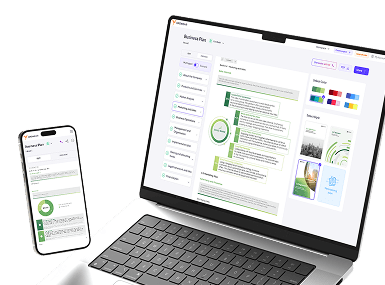
Growexa builds a complete, lender-ready business plan — with financial logic and a professionally formatted PDF
You can master software, pricing, and processes, but until you understand how to start attracting and keeping clients, your Bookkeeping business remains theory. The client relationship is your most valuable asset — treat it as such. Start with your network. Tell past employers, peers, and local entrepreneurs about your services. Word-of-mouth still fuels most Bookkeeping growth because it’s built on credibility. Join business associations, attend networking breakfasts, or participate in online communities where founders discuss operational pain points. Many of your first contracts will come from simply being visible where trust circulates.
Referrals are powerful, but they’re not scalable alone. Build a simple client acquisition funnel. Offer free consultations or audits to demonstrate your expertise. Use follow-up sequences — an email series explaining how proper Bookkeeping can reduce costs, prevent tax errors, or improve cash flow. You’re not selling numbers; you’re selling peace of mind and better business decisions.
Once clients come onboard, invest in retention. Create structured onboarding experiences: welcome packets, clear expectations, transparent communication channels. Set review meetings quarterly — not to justify your fees, but to show insights. “Here’s what changed in your revenue mix,” or “Your expenses increased 5% last quarter; here’s why.” These conversations turn bookkeepers into strategic partners.
Technology again becomes your ally. Use CRMs to track client satisfaction, birthdays, renewals, and referral history. Automate updates and reminders but personalize interactions. Knowing how to start nurturing relationships at scale means designing systems that feel human even when automated.
And when mistakes happen — own them fast. Transparency turns potential churn into loyalty. In a trust-based business like Bookkeeping, recovery done right is more powerful than perfection. Remember: you don’t just keep books — you keep promises. And that’s what keeps clients coming back.
Once you’ve mastered how to start a Bookkeeping business and built steady revenue, the next question becomes: how do you scale without losing quality? Growth in this industry isn’t about doing more of the same — it’s about designing systems that multiply your time.
The first stage of scaling is process standardization. Document every workflow: onboarding, reconciliation, client reporting, communication cadence. When every task is defined, you can delegate confidently. Hiring your first junior bookkeeper or virtual assistant becomes less about trust and more about training. Clear SOPs turn your Bookkeeping business into a replicable model.

Next comes technology leverage. Automation doesn’t just streamline daily tasks — it makes scaling affordable. Tools that integrate data entry, receipt capture, and real-time dashboards allow you to serve twice as many clients with the same headcount. Many professionals learning how to start scaling their Bookkeeping practice underestimate the compounding effect of automation on profit margins.
Strategic partnerships can also accelerate expansion. Collaborate with accountants, CFO-for-hire consultants, and business coaches. You handle the financial backbone; they handle advisory and growth strategy. These alliances create referral loops — a cornerstone of how the best Bookkeeping firms grow.
Brand expansion is another scaling path. Once your firm gains traction, you can franchise your model, launch a white-label service for other accountants, or build a digital course teaching how to start a Bookkeeping business to aspiring professionals. Education not only adds revenue — it reinforces your authority.
Finally, as your team grows, shift your role from “doer” to “leader.” Focus on vision, culture, and client experience. Your mission evolves from keeping books to building confidence — in your clients, your team, and your systems. That’s what sustainable scaling looks like in the modern Bookkeeping world.
Bookkeeping isn’t just a support function — it’s the nervous system of business. Every transaction tells a story, every balance sheet reveals a truth. And those who truly understand how to start a Bookkeeping business know that success lies not in the spreadsheets, but in the systems behind them.
This field rewards discipline, consistency, and trust. It’s one of the few professional services that combine stability with scalability. When you master client relationships, leverage automation, and maintain integrity, your growth becomes inevitable.
A Bookkeeping business isn’t built overnight — it’s earned over time, ledger by ledger, client by client. But once it’s established, it becomes one of the most resilient business models in the service economy. Low overhead, recurring revenue, and evergreen demand make it a perfect vehicle for financial freedom.
Ready to build yours? Download the Bookkeeping Business Plan Template, or explore a complete example to see how structure meets strategy. And if you’re ready to design something entirely your own, visit Growexa — where you can create, refine, and automate your Bookkeeping business plan with AI-powered precision and Forbes-level insight.
The startup cost depends on your setup. A home-based Bookkeeping business can start with as little as $3,000–$5,000 for software, insurance, and marketing. A more formal firm with employees, branding, and dedicated office space may require $20,000 or more. The key to mastering how to start a Bookkeeping business affordably is leveraging cloud software and operating virtually in the early stages.
No — certification is not mandatory to learn how to start a Bookkeeping business, though it enhances credibility. In most countries, you can operate as a bookkeeper without a CPA license, but you should understand local tax laws, compliance standards, and financial ethics. Many professionals gain credibility through experience and client results rather than formal credentials.
Client acquisition is about visibility and trust. Begin with your existing network — local entrepreneurs, freelancers, and small-business owners. Build a strong LinkedIn presence, join professional groups, and offer free educational content like checklists or webinars. Those who truly know how to start a Bookkeeping business focus on consistent networking and reputation-building, not cold calling.
QuickBooks Online and Xero are the most widely used and ideal for beginners. They offer automation, bank reconciliation, and integrations with hundreds of business tools. The secret to how to start a scalable Bookkeeping business is picking one core platform and mastering it deeply — this streamlines onboarding and creates operational consistency.
Absolutely. Once you understand how to start and structure your Bookkeeping business properly, profits become predictable. The recurring nature of monthly contracts means steady cash flow and compounding client relationships. Margins can reach 40–60% when operations are systematized and automation is fully integrated.

