
Stop editing templates
Start building a plan that gets approved
Turn this template into a complete business plan with:
- Financial projections
- Loan-ready structure
- Clear repayment logic
Based on 40+ bank requirements

The way people think about home has changed. What was once viewed primarily as shelter is now increasingly understood as identity, atmosphere, and emotional architecture. Homes have become offices, sanctuaries, gathering spaces, and creative expressions of personal taste. In that evolution, the Home Decor Store has moved from being a discretionary retail concept to becoming a highly relevant lifestyle business positioned at the intersection of design, commerce, and self-expression. Consumers no longer purchase decor solely to fill empty rooms; they purchase it to communicate who they are, how they live, and what kind of environment they want to create around themselves.
This shift has expanded the commercial potential of the Home Decor Store. Customers now invest in lighting, textiles, wall art, accent furniture, storage pieces, candles, ceramics, mirrors, seasonal styling, and curated objects with an intensity once reserved for fashion. Social platforms have accelerated this behavior by turning interiors into visual narratives, while remote work and home-centered lifestyles have made domestic environments more economically and emotionally significant. As a result, the Home Decor Store occupies a powerful place in contemporary retail, appealing not only to homeowners but also to renters, interior enthusiasts, gift buyers, short-term rental hosts, real estate stylists, and design-conscious professionals.
Yet the opportunity is matched by complexity. A successful Home Decor Store requires more than aesthetic instinct. It requires merchandising discipline, vendor strategy, brand identity, pricing architecture, inventory control, and a customer experience that translates inspiration into revenue. It must balance trend responsiveness with timelessness, product variety with curation, and emotional appeal with commercial logic. In that context, a robust business plan becomes indispensable. A well-structured business plan transforms a Home Decor Store from a beautiful idea into a scalable retail enterprise with operational clarity and long-term financial purpose.
This Home Decor Store Business Plan provides that framework. It aligns concept, customer demand, product strategy, operations, and financial performance into a coherent model designed for sustainable growth in a visually driven, highly competitive market.
Turn this template into a complete business plan with:
Based on 40+ bank requirements


Most business plans fail not because of the idea — but because the numbers don’t prove repayment.
Build a bank-ready business plan in minutes
(with projections, structure, and validation)
The Executive Summary presents the Home Decor Store as a specialized retail business built around curated design, lifestyle positioning, and high-emotion consumer purchasing. The mission outlined in this business plan is to create a Home Decor Store that helps customers elevate their living spaces through stylish, functional, and accessible decor products while building a recognizable retail brand grounded in aesthetic trust and merchandising excellence.
The Home Decor Store differentiates itself through curation, storytelling, and design consistency. Rather than functioning as a generic home goods outlet, the business plan positions the Home Decor Store as a destination where customers discover thoughtfully selected products that work together visually and emotionally. The store’s role is not simply to sell objects, but to help customers imagine environments. That distinction matters. In a category where purchase decisions are often aspirational, the Home Decor Store must become a source of inspiration, not just inventory.
Core product categories may include wall decor, decorative pillows, throws, lighting accents, mirrors, vases, candles, planters, tabletop accessories, small furniture, storage items, decorative trays, scent products, seasonal collections, and gift-ready home pieces. The business plan emphasizes a merchandise strategy that combines evergreen staples with trend-sensitive releases, allowing the Home Decor Store to remain commercially agile without sacrificing brand cohesion.
Revenue is generated through in-store retail sales, e-commerce transactions, seasonal campaigns, styling bundles, gifting programs, and potentially trade relationships with designers, property stylists, and hospitality clients. The business plan highlights the importance of average order value, repeat purchasing behavior, visual merchandising, and customer retention as key drivers of profitability. By combining design-driven merchandising with disciplined retail operations, the Home Decor Store is positioned as both a lifestyle brand and a financially sustainable retail business.
The Company Overview defines the identity, structure, and commercial philosophy of the Home Decor Store. The business operates as a specialty retail concept focused on products that improve the visual quality, functionality, and emotional resonance of domestic spaces. The Home Decor Store may be positioned as contemporary, minimalist, rustic, elevated everyday, artisan-led, modern organic, or trend-forward depending on the intended audience. That positioning shapes every strategic decision in the business plan, from packaging and store layout to product sourcing and price point.
The Home Decor Store is established as a legally registered retail business with a defined ownership structure, tax registration, supplier agreements, and consumer compliance procedures. The business plan outlines the basic legal and operational foundations required to run a retail store responsibly, including licensing, point-of-sale systems, inventory accounting, return policies, vendor terms, and consumer protection standards.
A defining principle of the Home Decor Store is curation. Unlike broad-format general retail, this store does not attempt to be everything to everyone. The business plan emphasizes selection over excess. Each product is chosen not only for standalone appeal but also for how it contributes to a larger visual narrative. This allows the Home Decor Store to build a coherent brand environment and guide customers toward multi-item purchases through coordinated merchandising.
The store format may be physical, digital, or hybrid, but the business plan assumes a strong visual identity across all channels. If a physical location is included, the Home Decor Store should be designed as an experiential retail environment where product display, texture, lighting, and spatial flow encourage exploration. If digital-first, the store must replicate that inspiration through editorial product photography, style collections, room-based merchandising, and curated category pages. In either format, the Home Decor Store succeeds when the shopping experience feels intentional, elevated, and emotionally relevant.
Location strategy depends on the business model. A physical Home Decor Store performs best in lifestyle-oriented districts, mixed-use shopping zones, design neighborhoods, or affluent residential corridors where customers are already browsing for aspirational retail. The business plan also recognizes that the Home Decor Store may serve customers beyond its immediate geography through e-commerce, social commerce, and event-based retail extensions.
The Market Analysis explores the forces driving demand in the Home Decor Store sector. Consumer spending on interiors has expanded alongside broader shifts in lifestyle behavior, especially as the home has become more central to work, leisure, wellness, and social life. The modern Home Decor Store benefits from the fact that decor purchases are both practical and emotional. They may be triggered by a move, renovation, life transition, seasonal refresh, gift occasion, content inspiration, or simply the desire to improve mood through environment.
The business plan identifies several core customer segments. First are homeowners and renters who want to personalize their spaces without undertaking full-scale renovation. Second are design-conscious consumers who regularly update interiors through layered decor purchases. Third are gift buyers seeking aesthetically pleasing, useful products for housewarmings, weddings, and holidays. Fourth are property professionals such as real estate stylists, Airbnb hosts, and interior designers who purchase decor strategically to improve visual appeal and guest perception. Each segment interacts differently with a Home Decor Store, and the business plan is structured to serve this range without diluting brand clarity.
The competitive landscape includes large-format home retailers, department stores, digital marketplaces, boutique design shops, furniture chains, handmade artisan platforms, and direct-to-consumer interior brands. The business plan acknowledges that a Home Decor Store cannot win this category by scale alone. It must compete through edit, brand point of view, customer experience, merchandising quality, and speed of emotional connection. Large retailers often offer abundance but lack intimacy. Marketplaces offer convenience but lack curation. A strong Home Decor Store bridges this gap by delivering trust, taste, and discoverability in a way mass retail often cannot.
Trends also support category growth. Consumers increasingly value nesting, wellness-centered interiors, tactile materials, neutral palettes with character, sustainable craftsmanship, multifunctional decor, and products that photograph well in digital environments. The Home Decor Store benefits from these shifts because it sits inside a category where purchase intent is frequently driven by inspiration rather than necessity alone. The business plan therefore treats visual merchandising, editorial storytelling, and lifestyle positioning as market-facing assets rather than secondary details.
Seasonality is also important. The Home Decor Store can generate recurring demand through holiday styling, spring refreshes, autumn collections, outdoor-living transitions, and gift-focused merchandising. This allows the business to build annual retail rhythms that support inventory turnover and marketing momentum. The business plan integrates these cycles into both merchandising and revenue strategy.
Marketing for a Home Decor Store is inherently visual, but effective growth requires more than attractive imagery. The marketing and sales strategy in this business plan is built around inspiration, trust, and conversion. The Home Decor Store must inspire customers to imagine better spaces, while also making it easy for them to act on that desire. The goal is not merely traffic, but commercially valuable attention.
Brand positioning sits at the center of the strategy. The Home Decor Store must stand for a distinct aesthetic and emotional promise. Whether the identity is calm sophistication, playful warmth, elevated simplicity, or artisan texture, the customer should understand the point of view immediately. The business plan emphasizes consistency across store design, product photography, packaging, social media, email communication, and in-store styling. In a category defined by taste, inconsistency quickly erodes trust.
Digital marketing is a primary acquisition channel. The Home Decor Store uses social media platforms to present styled vignettes, seasonal edits, before-and-after inspiration, tabletop stories, shelf styling, and product combinations that show how individual items live inside real spaces. The business plan recommends content that is both aspirational and practical. Customers want beauty, but they also want usability. A mirror should not merely look elegant; it should be shown in a hallway, above a console, or paired with sconces. A vase should not simply sit on white background; it should live inside a table setting or styled shelf.
Email marketing supports retention and repeat purchasing. The Home Decor Store uses email not only for promotions but for style guidance, new arrivals, room-specific collections, gifting edits, and seasonal curation. The business plan prioritizes customer lifetime value, which means marketing should extend beyond acquisition into relationship-building. Decor consumers often return when the brand continues to inspire them.
Partnership marketing also plays an important role. The Home Decor Store can collaborate with interior designers, real estate stagers, lifestyle influencers, cafes, florists, and local artisans whose audiences overlap with its own. Pop-up events, styling workshops, local market appearances, and design evenings help translate brand identity into community engagement. The business plan includes these tactics as lower-cost, high-trust methods for increasing visibility.
Sales strategy focuses on increasing average basket size through coordinated merchandising. Because decor purchases often occur in sets or layered combinations, the Home Decor Store should build product adjacencies that encourage bundled buying. A candle displayed next to a tray, matches, and vase tells a more compelling story than each product sitting alone. The business plan also supports room-based merchandising, gift bundles, and styled collections that reduce decision fatigue and increase conversion.
Promotional strategy should be disciplined. Excess discounting can damage perceived value in a design-led category. The Home Decor Store should rely more on seasonal launches, limited editions, loyalty incentives, and curated campaigns than constant markdowns. The business plan treats margin protection as a strategic priority.
The Operations Plan translates the visual promise of the Home Decor Store into day-to-day execution. Retail success in this category depends on operational discipline because decorative products often vary in size, fragility, sourcing complexity, and seasonality. The Home Decor Store must maintain enough inventory to meet demand while avoiding overstock that ties up capital or creates visual stagnation.
Inventory planning begins with category architecture. The business plan divides inventory into core, seasonal, trend-led, and experimental segments. Core products provide continuity and dependable revenue. Seasonal items create urgency and allow the Home Decor Store to remain fresh. Trend-led products maintain relevance. Experimental items test emerging tastes without overwhelming open-to-buy budgets. This balance supports both stability and discovery.
Vendor management is a central operational function. The Home Decor Store works with wholesalers, small-batch producers, artisans, import partners, or private-label manufacturers depending on its positioning. The business plan emphasizes supplier reliability, margin structure, quality consistency, lead times, packaging standards, and reorder flexibility. In a category where presentation matters, damaged or poorly packaged products can create disproportionate commercial loss.
Store operations include receiving, tagging, visual merchandising, replenishment, stockroom organization, e-commerce fulfillment if applicable, and returns processing. The Home Decor Store must maintain a high standard of presentation because customers evaluate product value visually before touching or purchasing. Dust, clutter, inconsistent spacing, and weak lighting all erode trust. The business plan therefore treats visual upkeep as an operational requirement, not a stylistic luxury.
If the Home Decor Store includes e-commerce, fulfillment operations must be particularly strong. Fragile products such as ceramics, glassware, and mirrors require careful packaging systems and clear shipping policies. The business plan includes shipping material selection, pick-and-pack workflows, damage prevention protocols, order confirmation systems, and returns handling procedures as part of core operations.
Data also matters. The Home Decor Store should monitor sell-through by category, conversion rates, average order value, repeat customer behavior, seasonal demand spikes, and margin by product line. The business plan uses this data to inform future buying, markdown decisions, and product expansion. In an emotionally driven category, intuition matters, but data keeps intuition commercially useful.
No connection between:
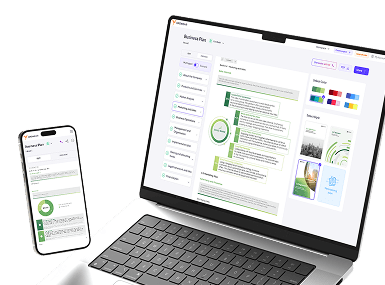
Growexa builds a complete, lender-ready business plan — with financial logic and a professionally formatted PDF
The Management and Organization section outlines how the Home Decor Store is led and how responsibilities are distributed. At launch, the business may be founder-led, particularly if the founder is closely tied to the store’s aesthetic vision. However, the business plan is designed to prevent overreliance on one individual by defining repeatable systems and role clarity.
The Home Decor Store typically requires leadership across retail operations, merchandising, customer experience, and financial oversight. In a smaller structure, one person may handle multiple functions, but the business plan still separates these responsibilities conceptually. Someone must own inventory discipline, someone must own visual execution, someone must own marketing consistency, and someone must own financial control, even if those roles overlap at first.
Store associates are not passive cashiers in this model. They are style guides, product storytellers, and brand representatives. The business plan emphasizes hiring people who can communicate taste without intimidation and support customers without pressure. In a Home Decor Store, the quality of staff interaction influences not just conversion but brand perception. Customers should feel helped, not sold to.
Training focuses on product knowledge, styling basics, upselling through coordination rather than force, customer empathy, and operational routines such as receiving, stock control, and display maintenance. If the Home Decor Store expands, additional roles may include e-commerce coordinator, inventory manager, assistant buyer, visual merchandiser, and content creator.
The business plan also supports a culture of design discipline and commercial awareness. Aesthetic instinct alone is not enough. Teams should understand that the Home Decor Store succeeds when beauty and business reinforce each other.
Launching a Home Decor Store requires strategic capital allocation because the category is inventory-heavy and presentation-sensitive. This section of the business plan outlines the funding requirements necessary to move from concept to operational readiness.
Primary funding needs include leasehold improvements or showroom setup, store fixtures, shelving, lighting, point-of-sale systems, branding materials, packaging, website development, opening inventory, and early-stage marketing. If the Home Decor Store includes e-commerce, additional investment may be required for photography, shipping supplies, digital infrastructure, and online merchandising assets.
Funding may come from founder capital, retail loans, private investors, strategic partners, or a staged growth model where the Home Decor Store begins digitally and expands into physical retail once demand is validated. The business plan emphasizes disciplined use of capital, particularly in relation to inventory. Overbuying is one of the fastest ways to destabilize a decor retail business, especially in categories driven by visual freshness and seasonal transitions.
Capital should be allocated first to the assets that define customer experience and inventory quality. A Home Decor Store can survive with modest square footage more easily than it can survive with weak product selection or poor visual presentation. The business plan therefore prioritizes merchandise, customer-facing design, and systems that support clean retail execution.
Working capital is equally important. The Home Decor Store must be able to absorb seasonal fluctuations, slow-moving categories, and reorder opportunities without creating liquidity pressure. The business plan includes reserve planning to ensure the store can maintain product flow and marketing continuity during its early phases.
The Financial Plan converts the Home Decor Store concept into a structured economic model. Revenue projections are based on average transaction value, foot traffic or digital traffic, conversion rate, repeat purchase behavior, and seasonal demand cycles. Because decor purchases are often discretionary, the business plan uses realistic assumptions rather than relying on idealized customer behavior.
The Home Decor Store’s revenue mix may include core decor sales, gifting occasions, seasonal collections, styling bundles, and online transactions. Higher-margin items such as candles, decorative accessories, and textiles can complement lower-turn, higher-ticket categories such as mirrors, furniture accents, or lighting. The business plan emphasizes category mix as a financial lever, not just a merchandising decision.
Operating expenses include inventory procurement, staff wages, rent, utilities, packaging, digital tools, marketing, merchant processing fees, fixtures maintenance, and insurance. The Home Decor Store must also plan for markdowns, breakage, and seasonal transition costs. These are normal realities in a decor-led business and should be modeled rather than ignored.
Cash flow management is especially important. The Home Decor Store often pays for inventory before revenue is realized, and seasonal buying cycles can create timing pressure. The business plan therefore incorporates working capital analysis, reorder planning, and scenario modeling for slower periods. Margin discipline is a recurring theme. Visual retail can create the illusion of abundance, but financial stability comes from understanding sell-through, shrinkage, and contribution margin by category.
Long-term growth may come from broader e-commerce reach, proprietary collections, B2B sales to interior stylists or hospitality clients, additional locations, or private-label development. The business plan treats expansion as something that should follow proof of concept, not precede it. A strong Home Decor Store grows best when its identity and economics are already working.
The Home Decor Store sits inside one of the most emotionally resonant categories in modern retail. It serves a consumer desire that is both timeless and contemporary: the desire to make spaces feel more beautiful, more personal, and more alive. That demand creates meaningful opportunity for entrepreneurs who understand that decor is not simply about objects, but about environment, aspiration, and identity.
At the same time, beauty alone does not build durable businesses. A successful Home Decor Store requires curation, inventory discipline, operational structure, customer insight, and financial clarity. That is why a comprehensive business plan is not a formality in this category; it is a strategic necessity. It provides the roadmap that turns aesthetic instinct into retail performance and transforms a store concept into a sustainable brand.
For founders building in this space, platforms such as Growexa can support that process by helping organize strategy, model financial performance, and shape investor-ready business plans that bring structure to creative retail ventures. With a disciplined business plan at its foundation, a Home Decor Store can become more than a shop. It can become a trusted lifestyle brand, a design destination, and a resilient business with long-term relevance.
A Home Decor Store operates in a highly visual and trend-driven retail category where inventory decisions, brand identity, and merchandising strategy directly affect profitability. A well-structured business plan outlines product sourcing, pricing architecture, marketing strategy, and financial projections, ensuring the Home Decor Store grows as a sustainable retail business rather than relying only on aesthetic intuition.
A comprehensive business plan usually includes product categories such as decorative pillows, wall art, mirrors, lighting accents, candles, vases, rugs, planters, decorative trays, and seasonal decor items. A balanced assortment allows a Home Decor Store to attract customers seeking both everyday styling pieces and statement design items.
The typical audience includes homeowners, renters, interior design enthusiasts, gift buyers, and professionals such as real estate stylists or short-term rental hosts. A strong business plan defines these segments clearly and develops merchandising and marketing strategies that resonate with each group.
A successful Home Decor Store differentiates itself through curated collections, in-store styling inspiration, personalized customer service, and a consistent design point of view. A strategic business plan emphasizes brand identity and customer experience—advantages that large marketplaces often struggle to replicate.
A Home Decor Store should review and update its business plan when expanding product categories, launching e-commerce capabilities, opening additional retail locations, or responding to changes in design trends and customer demand. Regular updates help maintain competitiveness in the fast-moving home lifestyle market.

