
Stop editing templates
Start building a plan that gets approved
Turn this template into a complete business plan with:
- Financial projections
- Loan-ready structure
- Clear repayment logic
Based on 40+ bank requirements

Global commerce depends on the seamless movement of goods across borders, transportation networks, and regulatory systems. As supply chains become more interconnected and trade volumes expand, the role of logistics coordination has grown increasingly complex. At the center of this operational landscape stands Freight Forwarding, a service model that manages the planning, routing, documentation, and transportation of cargo across international and domestic networks. Modern trade would be nearly impossible without structured freight coordination.
Freight Forwarding has evolved far beyond basic shipment arrangement. Today, it integrates compliance management, multimodal transport coordination, risk mitigation, and real-time tracking into a single logistics framework. Clients expect efficiency, cost optimization, and transparency throughout the shipping process. Establishing a successful Freight Forwarding company therefore requires far more than access to transportation providers. It requires operational infrastructure, regulatory expertise, and financial discipline. In this environment, a comprehensive business plan becomes essential. A structured business plan transforms Freight Forwarding from transactional logistics support into a scalable supply chain management enterprise capable of sustained growth.
This Freight Forwarding Business Plan provides the framework necessary to build such an enterprise. It aligns transport coordination, regulatory compliance, operational systems, and financial performance to ensure long-term success in a highly competitive logistics sector.
Turn this template into a complete business plan with:
Based on 40+ bank requirements


Most business plans fail not because of the idea — but because the numbers don’t prove repayment.
Build a bank-ready business plan in minutes
(with projections, structure, and validation)
The Executive Summary presents the Freight Forwarding company as a logistics coordination provider specializing in the efficient movement of goods across domestic and international transportation networks. The Freight Forwarding service manages shipment planning, carrier selection, documentation, and cargo tracking to ensure reliable delivery outcomes. The business plan defines the mission as delivering structured logistics solutions supported by operational precision and regulatory expertise.
This Freight Forwarding company differentiates itself through route optimization, compliance management, and service reliability. Rather than competing solely on pricing, the business plan emphasizes logistical coordination, shipment visibility, and risk management. Service offerings may include air freight, sea freight, land transport, and multimodal logistics solutions depending on strategic positioning.
From a financial perspective, the business plan outlines infrastructure requirements, operational systems, and revenue streams. Income is generated through service fees, coordination charges, and contract-based logistics agreements. The Executive Summary positions Freight Forwarding as a structured logistics enterprise supported by disciplined planning rather than ad-hoc shipment arrangement.
The Company Overview defines the identity and operational structure of the Freight Forwarding company. It clarifies whether the organization focuses on international shipping, regional logistics, specialized cargo handling, or integrated supply chain management. This positioning informs every strategic decision within the business plan, including network partnerships, service scope, and pricing models.
The Freight Forwarding company operates as a licensed logistics provider with defined ownership and governance. The business plan addresses regulatory requirements, customs compliance, and documentation standards. Legal and procedural compliance are treated as foundational elements of operational reliability.
Operationally, Freight Forwarding is structured around shipment planning, carrier coordination, and cargo tracking. Documentation systems manage customs clearance, insurance coverage, and transport agreements. The business plan explains how standardized workflows support consistent delivery performance.
Infrastructure access, including warehousing partnerships and transportation networks, is strategically aligned with service capacity.
The Market Analysis examines demand drivers shaping the Freight Forwarding sector. Growth in global trade, e-commerce expansion, and supply chain diversification continue to generate strong demand for logistics coordination. Businesses increasingly rely on specialized providers to manage transportation complexity and regulatory requirements.
The business plan evaluates competitive dynamics including multinational logistics firms, regional forwarding companies, and integrated transport providers. Differentiation within Freight Forwarding depends on reliability, compliance expertise, and service responsiveness rather than price competition alone.
Client segmentation includes manufacturers, distributors, and import-export businesses. Each segment has distinct shipment volumes and service requirements. The business plan aligns service offerings with these operational needs.
Market opportunities include supply chain integration, real-time tracking solutions, and specialized cargo management. This analysis ensures that Freight Forwarding aligns with evolving global trade patterns.
Marketing for Freight Forwarding is credibility-driven and relationship-based. This section of the business plan outlines a strategy centered on professional reputation, industry partnerships, and service performance.
The Freight Forwarding company builds relationships with manufacturers, exporters, and logistics partners. Digital platforms and industry networks support customer acquisition. The business plan emphasizes reliability and operational transparency as primary marketing drivers.
Sales strategy focuses on long-term contracts, recurring shipment coordination, and integrated logistics solutions. Pricing reflects service complexity and coordination value.
Client retention is treated as a central growth driver.
The Operations Plan details the daily functioning of Freight Forwarding services. It outlines shipment scheduling, carrier coordination, and cargo monitoring. Operational precision is essential to maintaining delivery timelines.
The business plan addresses documentation processing, customs clearance, and risk management procedures. Technology supports operations through tracking systems and logistics platforms.
Quality assurance ensures shipment accuracy and regulatory compliance.
No connection between:
Growexa builds a complete, lender-ready business plan — with financial logic and a professionally formatted PDF
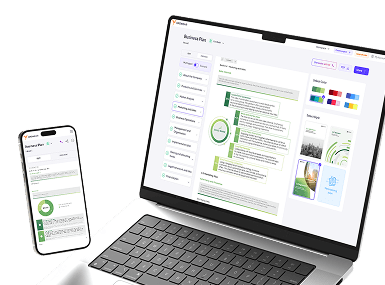
The Management and Organization section outlines the leadership structure of the Freight Forwarding company. It defines roles across logistics coordination, compliance oversight, and customer service.
The business plan emphasizes performance monitoring, workforce training, and operational accountability. Organizational culture prioritizes efficiency and reliability.
Scalable management systems support network expansion.
Establishing Freight Forwarding operations requires investment in technology infrastructure, licensing, and operational resources. This section of the business plan outlines funding needs and capital allocation priorities.
Funding sources may include logistics financing, investment capital, or strategic partnerships. Capital allocation prioritizes operational systems and network capability.
Financial governance supports long-term sustainability.
The Financial Plan translates Freight Forwarding operations into a structured economic framework. Revenue projections are based on shipment volume, service fees, and logistics contracts. Expense assumptions include staffing, technology, and compliance costs.
The business plan addresses profitability thresholds, cash flow management, and growth scenarios. Scenario modeling accounts for trade fluctuations and operational costs.
This financial rigor demonstrates that Freight Forwarding operates as a disciplined logistics enterprise.
Operating a successful Freight Forwarding company requires more than transport coordination. It requires structured logistics management, regulatory expertise, and strategic planning. In a global trade environment defined by complexity and precision, a comprehensive business plan provides the framework necessary to transform shipment coordination into sustainable enterprise value.
By aligning operational efficiency with compliance management and financial discipline, this Freight Forwarding company is positioned for long-term resilience. Strategic planning platforms such as Growexa support founders in structuring logistics ventures, forecasting performance, and building investor-ready business plans that bring clarity to complex supply chain operations. With a structured business plan as its foundation, Freight Forwarding can deliver enduring value to clients, partners, and long-term stakeholders alike.
Freight Forwarding operates in a complex logistics environment that involves carrier coordination, regulatory compliance, and international documentation. A formal business plan defines operational workflows, service structure, pricing strategy, and risk management procedures, ensuring the company operates as a structured logistics enterprise rather than a reactive shipment coordinator.
A Freight Forwarding company should revise its business plan when expanding service regions, introducing new transport modes, responding to regulatory changes, or adjusting to shifts in global trade activity. In a dynamic logistics environment, the business plan must function as an evolving strategic framework.

