
Stop editing templates
Start building a plan that gets approved
Turn this template into a complete business plan with:
- Financial projections
- Loan-ready structure
- Clear repayment logic
Based on 40+ bank requirements

Consumer behavior in the food industry has shifted dramatically with the rapid expansion of digital platforms, urban density, and on-demand convenience culture. What was once a supplementary service offered by restaurants has evolved into a fully independent and highly competitive sector. Today, the Food Delivery Service operates as a logistics-driven business model that integrates technology, operations, and customer experience into a single coordinated system. Speed, reliability, and seamless digital interaction define success.
The growth of this sector has created substantial opportunity, but it has also introduced significant operational complexity. A Food Delivery Service must coordinate order processing, routing, customer communication, and quality control simultaneously while maintaining cost efficiency. Competition is intense, margins are sensitive, and customer expectations are continuously rising. In this environment, a comprehensive business plan becomes essential. A well-structured business plan transforms a Food Delivery Service from a convenience offering into a scalable logistics enterprise capable of sustained profitability.
This Food Delivery Service Business Plan provides the framework required to build such an enterprise. It aligns technology infrastructure, service reliability, and financial discipline to support long-term growth in a fast-moving market.
Turn this template into a complete business plan with:
Based on 40+ bank requirements


Most business plans fail not because of the idea — but because the numbers don’t prove repayment.
Build a bank-ready business plan in minutes
(with projections, structure, and validation)
The Executive Summary presents the Food Delivery Service as a technology-enabled logistics provider specializing in fast, reliable, and coordinated food distribution. The Food Delivery Service connects customers with meal providers through structured ordering and delivery systems designed to maximize efficiency and convenience. The business plan defines the mission as delivering consistent, timely, and high-quality service supported by optimized logistics and customer communication.
This Food Delivery Service differentiates itself through operational efficiency, delivery reliability, and customer experience management. Rather than competing solely on price, the business plan emphasizes service precision, technological integration, and brand trust. The service model may include restaurant partnerships, centralized kitchen distribution, or multi-provider aggregation depending on market positioning.
From a financial perspective, the business plan outlines startup investment, operational costs, and revenue streams. Income is generated through delivery fees, service commissions, and partnership agreements. The Executive Summary positions the Food Delivery Service as a structured logistics business guided by disciplined planning rather than opportunistic demand fulfillment.
The Company Overview defines the identity and operational structure of the Food Delivery Service. It clarifies whether the company operates as an independent delivery provider, a platform aggregator, or a vertically integrated service with proprietary meal production. This positioning informs every strategic decision within the business plan, from technology systems to fleet management.
The Food Delivery Service operates as a legally compliant logistics provider with defined ownership and governance. The business plan addresses licensing requirements, food handling regulations, and liability considerations. Compliance and operational transparency are treated as core elements of credibility.
Operationally, the Food Delivery Service is structured around real-time order processing, route optimization, and delivery coordination. Technology platforms manage scheduling, tracking, and communication. The business plan explains how integrated systems support reliability and scalability.
Geographic coverage and delivery zones are defined to balance speed and operational cost efficiency.
The Market Analysis examines demand drivers shaping the Food Delivery Service sector. Urban lifestyles, time constraints, and digital convenience have significantly increased demand for delivered meals. Consumers prioritize speed, reliability, and ease of ordering.
The business plan evaluates competitive dynamics including platform-based delivery networks, restaurant-operated delivery, and specialized logistics providers. Differentiation within the Food Delivery Service market depends on service consistency, technology performance, and operational efficiency rather than price competition alone.
Customer behavior analysis highlights expectations for accuracy, delivery speed, and communication transparency. The business plan integrates these expectations into service design.
Market opportunities include subscription models, corporate meal programs, and specialized dietary delivery. This analysis ensures that the Food Delivery Service aligns with evolving consumption patterns.
Marketing for a Food Delivery Service is convenience-driven and technology-focused. This section of the business plan outlines a strategy centered on digital visibility, brand reliability, and customer retention.
The Food Delivery Service leverages mobile platforms, promotional campaigns, and partnership networks to build awareness. The business plan emphasizes consistent service delivery as the primary driver of brand reputation.
Sales strategy includes subscription programs, loyalty incentives, and corporate contracts. Pricing reflects service speed and reliability rather than discount competition.
Customer retention is treated as a central growth driver.
The Operations Plan details the daily functioning of the Food Delivery Service. It outlines order intake, dispatch coordination, and delivery routing. Operational precision is essential to meeting customer expectations.
The business plan addresses driver management, fleet coordination, and performance monitoring. Technology supports operations through real-time tracking and route optimization.
Quality control ensures order accuracy and delivery timing.
No connection between:
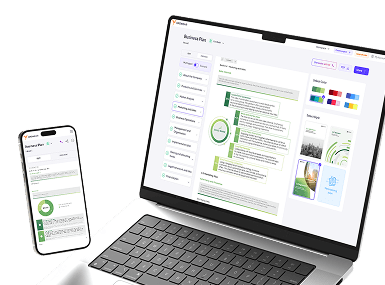
Growexa builds a complete, lender-ready business plan — with financial logic and a professionally formatted PDF
The Management and Organization section outlines the leadership structure of the Food Delivery Service. It defines roles across operations management, logistics coordination, and customer service.
The business plan emphasizes performance tracking, workforce training, and process standardization. Organizational culture prioritizes efficiency and responsiveness.
Scalable management systems support expansion.
Establishing a Food Delivery Service requires investment in technology infrastructure, logistics systems, and operational resources. This section of the business plan outlines funding needs and capital allocation priorities.
Funding sources may include investment capital, operational financing, or strategic partnerships. Capital allocation prioritizes platform development and delivery infrastructure.
Financial governance supports sustainable growth.
The Financial Plan translates the Food Delivery Service model into a structured economic framework. Revenue projections are based on order volume, service fees, and partnerships. Expense assumptions include labor, technology, and logistics.
The business plan addresses profitability thresholds, cash flow management, and scaling scenarios. Scenario modeling accounts for demand variability and operational costs.
This financial rigor demonstrates that the Food Delivery Service operates as a disciplined logistics enterprise.
Building a successful Food Delivery Service requires more than transportation—it requires coordination, technology integration, and operational discipline. In a market defined by speed and reliability, a comprehensive business plan provides the structure necessary to transform delivery logistics into sustainable enterprise value.
By aligning technology, service reliability, and financial control, this Food Delivery Service is positioned for long-term success. Strategic planning platforms such as Growexa support founders in structuring logistics models, forecasting performance, and building investor-ready business plans that bring clarity to complex operational ventures. With a structured business plan as its foundation, a Food Delivery Service can deliver enduring value to customers, partners, and long-term stakeholders alike.
A Food Delivery Service operates in a logistics-intensive environment where speed, coordination, and cost control directly affect profitability. A formal business plan defines delivery infrastructure, pricing strategy, operational workflows, and technology requirements, ensuring the service is built for scalability rather than reactive growth.
A Food Delivery Service should revise its business plan when expanding delivery zones, introducing new service models, upgrading technology platforms, or responding to regulatory changes. In a fast-moving logistics sector, the business plan must function as a continuously evolving strategic framework.

