
Stop editing templates
Start building a plan that gets approved
Turn this template into a complete business plan with:
- Financial projections
- Loan-ready structure
- Clear repayment logic
Based on 40+ bank requirements

Event planning is one of those industries that outsiders often underestimate. From the outside, it looks like a glamorous career of stylish galas, destination weddings, and corporate conferences. But behind the scenes, success in event planning is built on rigorous logistics, supplier management, and the ability to stay calm under pressure when something inevitably goes wrong.
That’s why a business plan for an event planning company cannot be generic. This is not just about listing services; it’s about showing that your firm can combine creativity with discipline, imagination with execution. Whether you’re targeting weddings, corporate functions, or large-scale festivals, your plan must convince investors, lenders, and clients alike that you can deliver experiences that run smoothly and create lasting impact.
In this article, we’ll break down how to write a business plan tailored specifically for the event planning industry—section by section, with insights into what really matters.
Turn this template into a complete business plan with:
Based on 40+ bank requirements


Most business plans fail not because of the idea — but because the numbers don’t prove repayment.
Build a bank-ready business plan in minutes
(with projections, structure, and validation)
In most industries, the executive summary is a recap of goals and projections. In event planning, it must capture both vision and execution. Investors and clients alike want to see that your company not only has a creative spark but also the discipline to handle complex logistics.
Begin by defining your niche. Are you a boutique wedding planner specializing in luxury ceremonies? A corporate events firm focused on conferences and product launches? Or a full-service agency that manages everything from private parties to large community gatherings? Each positioning has its own market dynamics, pricing model, and required network of vendors.
Numbers belong here, but they must be realistic. For instance: “We will coordinate 50 weddings and 20 corporate events in our first two years, with an average contract size of $15,000, generating projected revenues of $1.2 million by year three.” Framing growth in terms of contracts and average spend ties your projections directly to industry metrics.
Most importantly, use this section to highlight your competitive edge. Is it your vendor network? A proprietary project management system? A focus on eco-friendly or inclusive events? The executive summary should read like a compelling invitation: creative yet grounded in operational detail.
Event planning companies live and die by reputation. That makes the company description more than just a formality. This section should establish your brand identity and articulate what sets you apart.
Start with the founder’s story. Many successful planners began after noticing gaps in the market—perhaps the lack of affordable yet stylish wedding planning in their city, or frustration with the impersonal nature of corporate events. This backstory anchors your firm in authenticity.
Translate the vision into SMART goals: “Within three years, we aim to secure 100 recurring corporate clients, achieve a 90% satisfaction rating from post-event surveys, and generate 20% of revenue from destination events.” Such goals prove you are building for sustainability, not one-off success stories.
A SWOT analysis strengthens this section. Strengths could include creative talent and strong vendor relationships; weaknesses might be limited brand recognition early on. Opportunities often come from trends like hybrid virtual events or sustainable planning practices, while threats include economic downturns that shrink discretionary budgets. Showing awareness of these dynamics builds credibility.
The event planning market is large but cyclical, highly sensitive to cultural trends, and deeply tied to economic conditions. This makes market analysis one of the most critical parts of the plan.
Start with macro trends. Globally, the events industry is worth hundreds of billions of dollars, with growth driven by corporate spending on conferences, experiential marketing, and social celebrations. Weddings remain a robust driver, particularly in markets where families prioritize lavish ceremonies. More recently, hybrid and virtual events have become part of the landscape, accelerated by the pandemic.
Zoom into your local market. Is your region saturated with wedding planners but underserved in corporate events? Are destination weddings on the rise in nearby resorts? Investors want to see that you’ve mapped your territory with precision.
Competitor analysis must be concrete. Identify categories: independent planners, large agencies, in-house corporate teams, and DIY digital platforms. Then, position yourself clearly against them. For example, if competitors focus heavily on luxury weddings, perhaps your firm targets mid-market clients with transparent, flat-rate packages. Don’t forget consumer pain points. Couples often complain about hidden fees and lack of personalization. Corporations worry about logistics and professionalism. By presenting your company as the solution to these frustrations, you show investors and clients alike that you understand both opportunity and demand.
Event planning is a relationship-driven business. Marketing must therefore be more than advertising—it’s about creating visibility, credibility, and personal trust.
Digital channels are critical. Most clients begin their search online, so a polished website, strong SEO, and active social media presence are non-negotiable. Instagram and Pinterest drive wedding inspiration, while LinkedIn is essential for corporate clients. Your plan should detail how you’ll build a portfolio of case studies, testimonials, and visuals that showcase both creativity and flawless execution.
Referrals are the backbone of the industry. Outline how you’ll build referral pipelines through past clients, venue partnerships, or vendor networks. A single satisfied bride can generate multiple new clients; one successful corporate conference can lead to repeat annual contracts.
Sales processes should be described clearly. Event planning often requires long consultative sales cycles. Explain how you’ll handle inquiries, present proposals, and close contracts. Transparency in pricing helps build trust. Consider offering tiered packages—basic coordination, full-service planning, or premium experiences—that appeal to different budget levels.
Operations are the heart of an event planning business. Investors and clients alike want to know how you will turn ideas into seamless experiences.
Location matters. While many planners operate from small offices or even remotely, proximity to venues and vendors can reduce costs and improve responsiveness. Explain why your base of operations supports your service area. Vendor networks are critical. Florists, caterers, photographers, decorators, audiovisual teams, and venues form the backbone of execution. A strong plan will highlight how you’ve built relationships with trusted partners and how you’ll negotiate favorable terms without compromising quality.
Capacity should be quantified. How many events can your team handle at once? What systems ensure nothing slips through the cracks? Many firms rely on project management software to coordinate timelines, budgets, and vendor communication. Detail how technology will help you deliver consistently.
Service offerings should be described in depth. Weddings, conferences, private parties, fundraisers, and hybrid events each require distinct skills. Outline what you provide in each category—concept design, vendor sourcing, budget management, on-site coordination—and how you ensure quality.
No connection between:
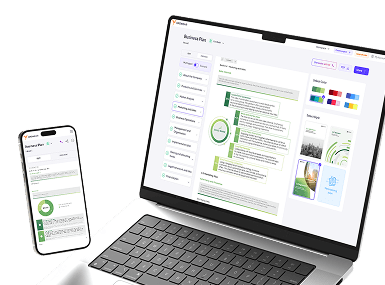
Growexa builds a complete, lender-ready business plan — with financial logic and a professionally formatted PDF
Event planning is high-stress, deadline-driven work. Clients judge the company not by its name but by the individuals who make their big day or important conference run smoothly. This makes management and organization a pivotal section of the plan.
Introduce the leadership team, emphasizing both creative and operational expertise. Investors want reassurance that the firm balances artistry with logistical discipline.

Explain staffing strategies. Will you rely on full-time coordinators, freelance specialists, or seasonal contractors? How will you recruit and train staff to maintain consistent standards?
Retention is critical, especially in wedding planning where clients often recommend specific planners by name. Describe how you’ll motivate staff with fair compensation, recognition, and opportunities for advancement. High turnover can damage credibility.
A scalable organizational model reassures investors. Show how roles like event assistants, vendor managers, or logistics coordinators will be added as demand grows. This proves the business won’t collapse under its own weight when scaling.
Launching an event planning company may not require heavy machinery, but it does demand significant upfront investment in branding, marketing, and vendor relationships. A business plan must be clear about funding sources and allocation.
Funding may come from personal savings, small business loans, or angel investors. Some firms bootstrap, but external funding may be needed to establish credibility in competitive markets.
Initial expenses should be broken down: marketing campaigns, office setup, project management tools, professional insurance, and staff salaries. For firms specializing in luxury events, investments in décor, sample designs, or showrooms may also be required.
Explain how funds will be allocated over time. Early spending might emphasize marketing to secure clients, while later stages could focus on hiring staff or expanding service offerings. Showing a phased approach demonstrates financial discipline.
Financial projections in event planning must capture both creativity and realism. Start with assumptions: average contract size, number of events per month, seasonal fluctuations, and vendor cost percentages. On the expense side, include staff salaries, marketing, transportation, insurance, and administrative overhead.
A profit and loss projection should follow, showing revenues broken down by category: weddings, corporate events, private parties, and hybrid services. Expenses should be detailed to show how margins will be protected.
Cash flow forecasting is especially important. Event planners often face upfront costs for deposits and vendor payments while client payments may be staggered. A clear plan for managing liquidity—through deposits, milestone billing, or credit facilities—provides reassurance.
Performance metrics round out the plan. Gross margin, net margin, client acquisition cost, and break-even point should all be presented. For event planning firms, break-even may take 18–24 months, depending on contract size and volume. Demonstrating this timeline with credible assumptions strengthens your credibility.
An event planning company is not just a business—it is a creator of experiences, memories, and moments that define people’s lives and companies’ reputations. But behind the glamour lies a demanding enterprise that requires strategic clarity, operational discipline, and financial rigor. A strong business plan bridges that gap, showing investors, clients, and partners that your firm can deliver both inspiration and flawless execution.
Ready to get started? You can download the event planning business plan template and adapt it to your own vision. Or, explore a fully completed Event Planning Business Plan example to see how the framework works in practice. And if you’d like to design something entirely unique, visit Growexa to build your plan with customizable tools and expert guidance.

