
Stop editing templates
Start building a plan that gets approved
Turn this template into a complete business plan with:
- Financial projections
- Loan-ready structure
- Clear repayment logic
Based on 40+ bank requirements

Learning how to start a Dairy Farm today means stepping into one of the world’s oldest industries at a moment of transformation. Modern consumers want transparency, sustainability, and nutrient-dense food from trusted sources. Retailers demand reliability. Processors expect consistent volume and predictable quality. Farmers operate in an environment shaped by fluctuating feed costs, labor shortages, climate pressure, and increasingly strict regulations. Yet despite these challenges, a well-run Dairy Farm remains one of the most resilient and profitable agribusiness models globally.
The secret lies not in tradition, but in strategy. Understanding how to start a Dairy Farm requires a long-term entrepreneurial mindset, not just an agricultural one. It means building a business that combines biology with economics, land stewardship with technology, and animal welfare with operational efficiency. This guide shows exactly how to turn a Dairy Farm from an idea into a scalable enterprise by following a structured approach rooted in data, discipline, and clear financial logic.
Turn this template into a complete business plan with:
Based on 40+ bank requirements



Most business plans fail not because of the idea — but because the numbers don’t prove repayment.
Build a bank-ready business plan in minutes
(with projections, structure, and validation)
Understanding how to start a Dairy Farm begins with defining the vision that will shape every decision that follows. Before acquiring land, animals, or equipment, you must articulate the operating concept: what type of Dairy Farm you plan to build, how it will function, and what unique value it brings to the market. Some entrepreneurs focus on high-quality milk production with strict breed selection; others invest in value-added dairy products such as artisan cheeses or yogurt; some choose intensive production systems with advanced automation; others lean toward pasture-based, regenerative models that appeal to eco-conscious consumers.
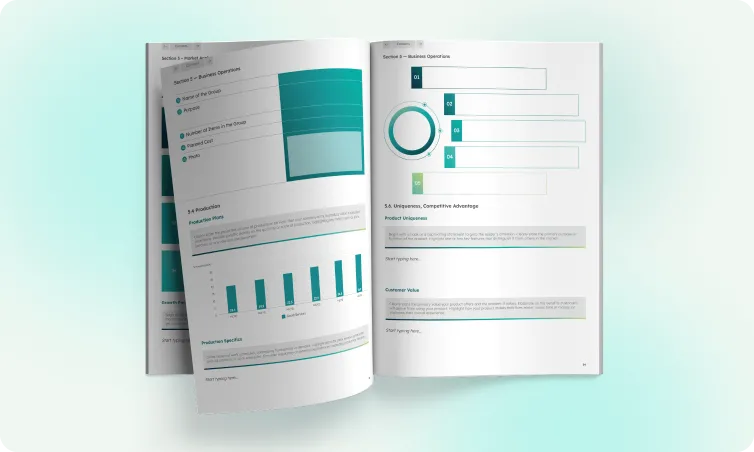
A strong business plan becomes the roadmap translating your concept into operations. It explains how to start with clarity and how to grow with intention. Investors and lenders want to see more than enthusiasm — they expect financial projections, herd strategies, operational workflows, environmental management, compliance structures, risk assessments, and a clearly defined customer base. A Dairy Farm must justify not only the initial investment but also the long-term economic viability of the herd, which depends on reproduction cycles, milk yield efficiency, feed costs, and market prices.
Your business plan should also address branding and positioning. Modern consumers increasingly choose products not just for price, but for values: animal welfare, traceability, local sourcing, and environmental responsibility. Clarifying how your Dairy Farm aligns with these trends elevates your competitiveness. Understanding how to start a Dairy Farm means understanding how to communicate what makes your farm different, trustworthy, and worthy of a premium.
This is where concept becomes strategy. A Dairy Farm business plan ties together mission, vision, economic logic, and marketing identity. Without it, even the best farmland and highest-quality herd can fail to achieve profitability. With it, you set the foundation for a future-ready agricultural enterprise.
Financial strategy is at the center of understanding how to start a Dairy Farm with long-term success. Dairy operations require significant upfront investment, often more than new entrepreneurs anticipate. Land acquisition, facility construction, feed inventory, milking equipment, cooling tanks, genetic stock, fencing, water systems, and labor all carry substantial cost. A clear financial model ensures that each dollar serves the long-term health of the operation rather than becoming a sunk cost.
Investors and lenders consider Dairy Farms high-potential but high-complexity ventures. They want proof that you understand the cyclical nature of dairy income, the volatility of feed prices, the impact of milk yield fluctuations, and the realities of herd health management. Demonstrating this understanding in your business plan shows you know how to start with realistic expectations and strategic foresight.
A strong financial model connects production capacity with revenue projections. It links breeding cycles with output, maps feed consumption to yield, and calculates labor hours against herd size. A Dairy Farm must operate with precision: small inefficiencies compound quickly, turning a profitable operation into a fragile one. Understanding how to start a Dairy Farm financially means acknowledging that this business does not reward vague planning — it rewards disciplined modeling.
Capital sources can include agricultural loans, private investment, government subsidies, sustainability grants, or personal capital. Regardless of the mix, your Dairy Farm must be structured to withstand seasonal swings and unexpected challenges such as veterinary emergencies, extreme weather, or cost spikes. Reserves, insurance, and contingency funds become essential protective tools.
Financial sustainability also depends on diversification. Many successful Dairy Farms generate income beyond liquid milk sales — breeding stock, manure sales, agritourism, contract processing, or branded retail products. Understanding how to start a Dairy Farm today requires designing a business resilient enough to adapt while strong enough to grow.
A crucial part of learning how to start a Dairy Farm is mastering the legal and regulatory landscape that governs livestock agriculture. Unlike many industries, dairy production is regulated at multiple levels — animal health, milk handling, waste management, zoning, food safety, environmental compliance, and labor law all intersect. A Dairy Farm cannot operate on good intentions alone; it must demonstrate full adherence to the legal framework that protects consumers, animals, and communities.
The registration process begins by establishing your legal entity. Whether you form a sole proprietorship, partnership, corporation, or agricultural LLC, the structure you choose determines your tax obligations, liability protections, and eligibility for grants or loans. Understanding how to start correctly means building the business on a foundation that supports long-term expansion, not just short-term functionality.
Regulatory approval for a Dairy Farm typically involves veterinary certifications, facility inspections, animal identification protocols, and documentation of your herd health program. Authorities require assurance that your Dairy Farm follows protocols for disease prevention, vaccination, sanitation, and humane treatment. These certifications are not bureaucratic hurdles; they are essential components of a reputable brand in a marketplace where consumers increasingly want assurances about the origins of their food.
Environmental compliance plays a major role as well. A Dairy Farm must demonstrate proper management of manure, wastewater, and grazing land to prevent contamination of water systems and soil degradation. Sound environmental practices not only satisfy regulators but strengthen your business identity, especially if sustainability plays a central role in your market positioning.
Understanding how to start a Dairy Farm legally means recognizing that compliance is not an event — it is an ongoing commitment. Maintaining certifications, record-keeping, and documentation is continuous work. A strong business plan builds these responsibilities into everyday operations, ensuring the business moves forward without regulatory interruptions.
The physical foundation of a successful Dairy Farm lies in thoughtful land acquisition and careful infrastructure development. Learning how to start effectively means understanding that land is more than acreage — it is a living system that directly influences herd health, milk yield, and long-term economic stability. Soil quality, water availability, climate, terrain, and access to transportation corridors all shape the potential of a Dairy Farm.
Once land is secured, infrastructure becomes the defining factor in daily performance. A Dairy Farm must be designed to optimize animal comfort, production efficiency, and hygiene. Well-ventilated barns, dry bedding areas, durable fencing, safe calving spaces, and efficient feed distribution systems ensure the herd’s well-being, which in turn drives higher productivity. Understanding how to start correctly means prioritizing infrastructure that reduces stress on animals and increases workflow efficiency for workers.
The milking system is the core of the Dairy Farm’s production capacity. Whether you choose automated rotary parlors, pipeline systems, or smaller-scale setups suited to limited herds, the facility must meet strict sanitation and cooling standards. Milk must be cooled immediately after milking and stored in regulated tanks to preserve quality. Your business plan should demonstrate a clear grasp of the technology and routines involved in maintaining purity and preventing contamination.
Feeding infrastructure is equally important. A Dairy Farm requires systems for storing silage, grains, hay, and supplemental nutrition. Efficient feeding reduces waste, controls costs, and ensures consistent milk yield. When learning how to start a Dairy Farm, many newcomers underestimate the importance of accessibility and workflow — feed must move easily from storage to distribution with minimal labor, particularly as the herd grows.
Supporting systems such as water access, ventilation, manure handling, lighting, and electricity determine whether the farm can operate smoothly year-round. Every aspect of infrastructure should support safety, sanitation, and scalability. A Dairy Farm designed with expansion in mind will grow gracefully rather than chaotically, and that kind of foresight is exactly what investors expect when reviewing your business plan.
After establishing facilities and regulatory compliance, the next challenge in understanding how to start a Dairy Farm is mastering daily operations. This is where vision becomes routine — where hundreds of small tasks compound into either consistent productivity or costly inefficiency. A Dairy Farm operates on a precise rhythm: milking schedules, feeding cycles, breeding timelines, veterinary care, cleaning routines, data tracking, and logistical coordination must all function without interruption.
Daily operations begin with herd management. A Dairy Farm must monitor milk yield, body condition, behavior patterns, and health indicators continuously. Early identification of illness or stress can prevent major losses. Understanding how to start properly means building systems that support proactive, not reactive, herd care. Consistency in milking reduces udder pressure; consistency in feeding stabilizes digestion; consistency in environment reduces disease risk. Discipline is the invisible engine of performance.
The supply chain is equally important. Feed suppliers, veterinary service providers, equipment manufacturers, transport partners, and processing plants all become part of the Dairy Farm’s ecosystem. A strong business plan explains how relationships will be formed and maintained to ensure reliability. Disruptions in feed delivery or delays in milk pickup can create cascading operational problems. Learning how to start a Dairy Farm involves building redundancy and trust into every supplier relationship.
Milk handling and transportation require careful coordination. Milk must move from cow to tank to processing facility under strict temperature control. Any break in this chain compromises quality. Establishing strong logistics partnerships ensures that your Dairy Farm consistently meets buyer expectations and protects its brand reputation.
Technology also plays a transformative role. Modern Dairy Farms use sensors, automated feeding systems, herd management software, and data tracking tools to enhance efficiency. Understanding how to start with a technology-forward mindset allows your farm to optimize resources, predict issues early, and scale operations intelligently.

Mastering daily operations is where a Dairy Farm becomes more than a rural enterprise — it becomes a modern agribusiness defined by predictability, quality, and unwavering routine. This section of your business plan proves to investors that you can execute at the level required to succeed in today’s agricultural landscape.
A critical part of understanding how to start a Dairy Farm is recognizing that people, not equipment, determine consistency. Even with modern automation, dairy production remains a labor-intensive discipline where timing, judgment, and hands-on care directly influence yield and herd health. The workforce becomes an extension of your philosophy — their skill, reliability, and commitment shape the entire culture and performance of the farm.
Hiring for a Dairy Farm requires clarity about the physical and technical demands of the work. Workers must handle livestock confidently, follow strict hygiene standards, react quickly to changes in animal behavior, and move seamlessly through repetitive routines that require precision. A Dairy Farm cannot afford inconsistency — every missed feeding, delayed milking, or overlooked symptom impacts productivity. When studying how to start effectively, entrepreneurs must prioritize finding individuals capable of managing both urgency and routine.
Training transforms new employees into practitioners of your system. A Dairy Farm thrives when everyone follows the same procedures for feeding, milking, sanitation, and safety. Your business plan should emphasize the importance of structured onboarding: teaching workers the logic behind each routine, reinforcing animal welfare principles, and establishing consistent communication across shifts. Employees who understand why routines matter perform with more discipline and ownership.
Ongoing management keeps operations synchronized. A Dairy Farm is a 365-day enterprise, and leadership must ensure every task — from bedding changes to milking sessions — flows without interruption. Clear delegation, daily coordination, and performance tracking help prevent operational lapses. Understanding how to start a Dairy Farm at scale means understanding how to manage people with empathy, structure, and accountability.
Retention is also part of operational excellence. Labor turnover is costly in agriculture, and many farms suffer because they underestimate the value of stable teams. Offering predictable schedules, respectful working conditions, fair wages, and opportunities for skill development allows your Dairy Farm to build a workforce that grows with the business rather than rotates through it. The success of a Dairy Farm does not rest solely on land or cows — it rests on the people who care for them.
No connection between:
Growexa builds a complete, lender-ready business plan — with financial logic and a professionally formatted PDF

Launching production is the moment your planning becomes reality. Understanding how to start a Dairy Farm means understanding how to transition from construction and preparation into daily milking cycles, herd monitoring routines, and full compliance with sanitation and safety protocols. The first weeks of production set the tone for your entire operation: they reveal your strengths, expose inefficiencies, and establish habits that influence long-term performance. The launch phase requires extraordinary attention to detail. A Dairy Farm must monitor milk yield daily, track the condition of every animal, and ensure that feeding, watering, bedding, and milking occur at exact intervals. Milk is highly sensitive, and even minor deviations in handling temperature, equipment sanitation, or storage timing can compromise your output. The business plan must reflect an understanding of these risks and explain how your systems protect both product quality and herd welfare.
Quality control becomes your farm’s identity. Buyers — whether processors, retailers, or direct consumers — judge your Dairy Farm by its consistency. From somatic cell counts to butterfat content, from cooling efficiency to milking technique, every detail matters. When learning how to start correctly, you must prioritize documenting processes, logging data, and refining protocols as early as possible. This allows the Dairy Farm to correct weak points before they become long-term obstacles.

Optimization is a continuous pursuit. Over time, you will identify patterns: certain feed combinations that improve milk yield, specific milking routines that reduce stress, or environmental adjustments that enhance cow comfort. A successful Dairy Farm constantly refines its systems based on data, not assumptions. This analytical approach elevates your competitive advantage and should be embedded in the culture you create.
Ultimately, launching production is the first proof that your Dairy Farm can operate as a true agribusiness — not just a concept, but a functioning system capable of scaling responsibly.
Once production stabilizes, the next step in learning how to start a Dairy Farm is entering the market with confidence and clarity. This stage determines the financial trajectory of the entire operation. A Dairy Farm succeeds not only by producing excellent milk but by building strong, reliable relationships with buyers and understanding how to position its products in a competitive landscape.
Entering the market begins with identifying the right buyers. Processors, specialty retailers, local grocers, restaurants, and farmer’s markets each offer different pricing models and volume expectations. A Dairy Farm must understand which channels align with its production capacity and long-term goals. A smaller Dairy Farm might prioritize premium local markets, while a larger one may seek consistent volume through contracts with major processors. Understanding how to start effectively means choosing markets that strengthen, not strain, your operation.
Branding plays an increasingly influential role. Consumers want transparency about farming practices, animal welfare, environmental stewardship, and milk quality. A Dairy Farm with a compelling story, supported by real practices, can differentiate itself and command premium pricing. Marketing becomes a strategic asset, not an afterthought, and your business plan should highlight how visibility and trust will be built over time.
Scaling requires intention. Expansion should follow proven operational success, not precede it. Increasing herd size, diversifying into cheese or yogurt production, or opening on-site retail facilities all demand additional labor, technology, and management. Understanding how to start with scale in mind means designing your Dairy Farm so that each phase of growth is supported by strong systems, not improvisation. Growth should increase profitability, not complexity.
Long-term value emerges when the Dairy Farm evolves from a production-focused business into a stable, brand-driven agribusiness with a clear identity and a reliable supply chain. The more consistently your farm delivers quality, the stronger its reputation becomes — and reputation is the most powerful asset in agriculture.
Learning how to start a Dairy Farm is ultimately about more than agriculture. It is about building a resilient business in an industry undergoing rapid change. A Dairy Farm thrives when its owner understands animals, respects the land, manages finances with precision, treats employees with integrity, and approaches operations with discipline. But true long-term success requires vision — the ability to see beyond today’s production cycles toward a scalable, future-ready agribusiness.
A well-structured business plan becomes the foundation of that vision. It guides daily work, aligns stakeholders, attracts investors, and creates a roadmap for expansion. It turns the challenge of how to start into the opportunity to lead with excellence.
If you’re ready to move from planning to execution, you can explore professional planning tools, tailored templates, or platforms like Growexa, where structured guidance and expert frameworks help you craft a Dairy Farm business plan that stands strong in any market.
There is no universal number — it depends on land capacity, available capital, and your operational goals. Some farmers learning how to start a Dairy Farm begin with a small herd to refine routines, while others launch with larger numbers to reach scale faster. What matters most is alignment with your business plan, not herd size alone.
Yes, but only with disciplined planning. A newcomer who understands how to start properly — selecting the right breeds, controlling feed costs, optimizing milk yield, securing strong buyers, and building a resilient financial model — can turn a Dairy Farm into a high-performing venture. Profitability is the result of precision, not luck.
Land requirements depend on whether your system is pasture-based, semi-intensive, or fully intensive. When learning how to start a Dairy Farm, the key is not just acreage but soil quality, water availability, and the farm’s ability to support sustainable forage production. The right land supports both herd health and long-term economics.
Major challenges include feed price volatility, labor shortages, disease management, and fluctuating milk prices. A strong business plan anticipates these issues with preventive strategies, diversified income, and operational discipline. Understanding how to start includes understanding how to mitigate risk from day one.
Formal education helps but is not mandatory. Many successful dairy entrepreneurs learn through mentorship, training programs, on-farm experience, and continuous research. What matters is the willingness to understand how to start a Dairy Farm scientifically — using data, animal health knowledge, and strategic planning to guide every decision.

