
Stop editing templates
Start building a plan that gets approved
Turn this template into a complete business plan with:
- Financial projections
- Loan-ready structure
- Clear repayment logic
Based on 40+ bank requirements

The Construction Materials sector sits at the core of global economic activity. Every building, infrastructure project, and urban development initiative depends on a reliable supply of Construction Materials. From cement and aggregates to steel, timber, insulation, and finishing products, this industry underpins residential, commercial, and industrial growth. Despite its scale and apparent stability, Construction Materials is not a simple commodity business. Price volatility, logistics complexity, capital intensity, and cyclical demand require rigorous planning. In this environment, a comprehensive business plan is essential. A strong business plan transforms a Construction Materials operation from a volume-driven supplier into a disciplined, scalable, and financially resilient enterprise.
Launching a Construction Materials business without a business plan often leads to inventory misalignment, cash-flow stress, supplier dependency, and margin erosion. Construction cycles fluctuate, transportation costs shift rapidly, and customers demand reliability under tight timelines. A well-designed business plan clarifies how the Construction Materials business positions itself in the market, which product categories it prioritizes, and how procurement, storage, and distribution are aligned with demand. It ensures that operational decisions are driven by financial logic rather than short-term market pressure. In an industry where scale must be matched by control, the business plan becomes the foundation of long-term success.
Turn this template into a complete business plan with:
Based on 40+ bank requirements


Most business plans fail not because of the idea — but because the numbers don’t prove repayment.
Build a bank-ready business plan in minutes
(with projections, structure, and validation)
The Executive Summary presents the Construction Materials business as a professionally managed supply and distribution enterprise focused on reliability, efficiency, and long-term client relationships. This section of the business plan defines the mission of the Construction Materials operation, whether centered on wholesale distribution, manufacturing, regional supply, or specialized material categories.
The business plan outlines target customers such as construction firms, developers, contractors, infrastructure projects, and public institutions. Revenue streams may include bulk material sales, long-term supply contracts, value-added logistics services, and specialized product offerings. By summarizing concept, positioning, and financial objectives, the Executive Summary establishes Construction Materials as a structured industrial business guided by a clear business plan.
The Company Overview defines the structure, identity, and strategic foundation of the Construction Materials business. This section of the business plan explains the legal entity, ownership structure, and regulatory environment governing construction products, safety standards, and environmental compliance.
The business plan describes the Construction Materials product portfolio, sourcing strategy, and supplier relationships. Decisions around domestic versus imported materials, vertical integration, or private-label products are aligned with margin targets and risk management. Facility strategy covers warehouses, yards, manufacturing plants, or distribution hubs designed for operational efficiency.
Location plays a strategic role. The business plan explains site selection based on proximity to demand centers, transportation infrastructure, and supplier access. The Construction Materials brand emphasizes reliability, consistency, and technical competence. The Company Overview positions Construction Materials as both a logistics-driven operation and a relationship-based service provider.
The Market Analysis examines demand drivers shaping the Construction Materials industry. Urbanization, infrastructure investment, housing development, and renovation cycles continue to fuel long-term demand. A strong business plan analyzes regional construction activity, government spending, private development trends, and economic indicators.
The business plan evaluates competition from large national suppliers, regional distributors, manufacturers, and alternative materials providers. Differentiation is critical. The Market Analysis identifies opportunities in specialized materials, faster delivery, consistent availability, or technical support.
Customer segmentation includes large contractors, small builders, infrastructure firms, and retail buyers. Each segment values Construction Materials differently in terms of price sensitivity, delivery speed, and service expectations. By grounding strategy in market insight, the business plan ensures Construction Materials competes on value and reliability rather than price alone.
The Marketing and Sales Strategy outlines how the Construction Materials business secures clients and maintains long-term contracts. Construction Materials sales are relationship-driven, where reliability often outweighs marginal price differences. The business plan explains how the Construction Materials brand communicates dependability, technical knowledge, and supply continuity.
Marketing focuses on industry presence, partnerships, direct sales teams, and reputation within construction networks. The business plan emphasizes trust-based selling rather than mass promotion.
Sales strategy prioritizes contract agreements, volume discounts, and recurring accounts. Pricing reflects procurement costs, logistics expenses, and market conditions. The business plan ensures sales growth aligns with inventory capacity and cash-flow stability.
The Operations Plan details how the Construction Materials business functions daily. This section of the business plan describes procurement, inventory management, quality control, storage, and distribution. Operational discipline is critical due to high inventory value and transportation costs.
The business plan explains logistics coordination, fleet management, supplier scheduling, and safety protocols. Technology supports operations through inventory systems, demand forecasting tools, and logistics tracking.
Risk management is central. The Operations Plan addresses supply disruptions, price volatility, transportation delays, and inventory obsolescence. By defining standardized procedures, the business plan ensures Construction Materials operations remain efficient under fluctuating market conditions.
No connection between:
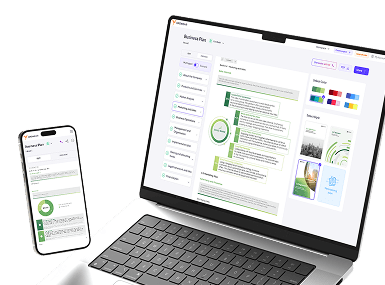
Growexa builds a complete, lender-ready business plan — with financial logic and a professionally formatted PDF
The Management and Organization section introduces the leadership behind the Construction Materials business. It outlines experience in construction supply, logistics, manufacturing, or industrial operations. Strong leadership balances scale with operational control.
The business plan defines roles such as operations management, procurement specialists, sales leadership, logistics coordination, and administrative oversight. Training emphasizes safety, efficiency, and customer reliability.
This section demonstrates that the Construction Materials business is professionally managed rather than purely volume-driven.
Establishing or expanding a Construction Materials business requires significant capital for inventory, facilities, equipment, vehicles, and working capital. This section of the business plan outlines funding sources such as owner equity, bank financing, supplier credit, or strategic investors.
The business plan explains how funds are allocated to support inventory turnover, logistics efficiency, and growth initiatives. Disciplined capital planning ensures the Construction Materials business can withstand market cycles and price fluctuations.
The Financial Plan translates the Construction Materials strategy into financial projections. This section of the business plan includes revenue forecasts based on sales volume, average pricing, and contract stability.
Expense projections include procurement costs, transportation, labor, facility expenses, insurance, and depreciation. The business plan provides cash-flow projections, breakeven analysis, and multi-year profitability scenarios. Sensitivity analysis addresses demand shifts, fuel price changes, and material cost volatility.
A successful Construction Materials business is built on scale supported by discipline. While demand is driven by construction activity, only enterprises guided by a structured business plan achieve sustainable profitability. By aligning procurement, operations, marketing, and financial planning, the business plan transforms Construction Materials into a resilient and scalable industrial enterprise. With the right foundation, Construction Materials businesses can support economic growth while generating long-term value.
Entrepreneurs ready to launch or expand a Construction Materials operation can leverage platforms like Growexa, where expert planning tools turn industrial concepts into polished, investor-ready business plans designed for durable success.
A Construction Materials operation is capital-intensive, inventory-heavy, and highly sensitive to market cycles. A structured business plan helps a Construction Materials business manage procurement timing, inventory turnover, cash flow, and pricing discipline while reducing exposure to demand volatility.
Yes, with structured systems. A Construction Materials business can scale through standardized warehouses, supplier agreements, logistics networks, and sales processes. A robust business plan outlines expansion stages so growth improves efficiency rather than increasing financial exposure.

