
Stop editing templates
Start building a plan that gets approved
Turn this template into a complete business plan with:
- Financial projections
- Loan-ready structure
- Clear repayment logic
Based on 40+ bank requirements

If you’re looking for a Construction Company business plan template, this guide helps you turn your construction business idea into a structured, investor-ready plan in minutes using Growexa AI. Whether you are starting a new contracting company or scaling an existing construction business, this template gives you a clear framework to plan operations, secure funding, and manage growth — without starting from scratch.
The template is organized into clear sections that cover every stage of building a complete construction business plan.
Turn this template into a complete business plan with:
Based on 40+ bank requirements




Most business plans fail not because of the idea — but because the numbers don’t prove repayment.
Build a bank-ready business plan in minutes
(with projections, structure, and validation)
The executive summary is the first impression your reader — whether an investor, banker, or partner — will have of your construction company business plan. It should be concise but compelling, distilling your vision, market position, and financial outlook into a clear snapshot.
Begin with your company’s mission: what kind of construction company you are, what you build, and why your business matters. For example: “At Apex Builders, we deliver innovative commercial and residential construction solutions that combine efficiency, sustainability, and craftsmanship.”
Include a brief overview of your target market — perhaps your construction company focuses on high-end residential development, municipal infrastructure, or eco-friendly renovation. Follow this with your competitive advantage: what differentiates your company from other contractors. It could be advanced project management software, a specialized construction technique, or a reputation for timely delivery under budget.
Finally, summarize financial highlights: projected annual revenue, funding sought, and profit margin goals. An investor reading your business plan should immediately understand both the opportunity and the competence behind your construction company.
The best executive summaries balance confidence with realism. Acknowledge market challenges, but demonstrate that your construction company business plan anticipates and manages them with data-driven strategies.
The company overview section of your construction company business plan defines the identity of your firm — its structure, services, and strategic purpose. While the executive summary sells the idea, this section builds credibility. Begin with the basics: your construction company name, legal form (LLC, partnership, corporation), and location. Include a short origin story — how and why the company was founded. Investors and clients alike respond to purpose-driven narratives.
For instance: “Founded in 2022, Titan Construction Company began as a small family business specializing in residential remodels. Today, it has evolved into a regional leader in mid-scale commercial projects.”
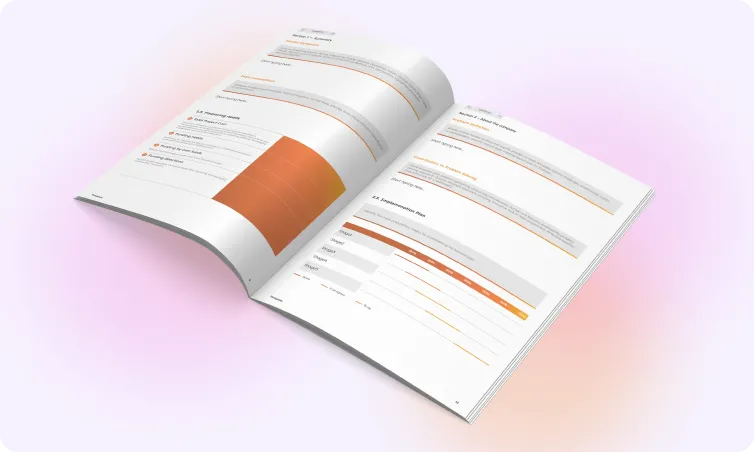
Then describe your core services. Does your construction company handle design-build projects? Offer general contracting, engineering, or subcontracting? Be explicit about scope — framing, roofing, electrical, plumbing, or turnkey development. The clearer you define capabilities, the more focused and scalable your business plan will be.
Include your mission and vision statements. These should articulate what success looks like for your construction company in both the short and long term. A mission focuses on current objectives (“to deliver reliable and cost-efficient construction services”), while a vision looks ahead (“to redefine sustainable construction across the Midwest”).
Next, identify your value proposition — what your construction company does better than anyone else. This might include safety excellence, LEED-certified sustainability, or mastery of modern building information modeling (BIM) systems. Support this with a summary of relevant licenses, certifications, and insurance coverage that prove your firm’s operational readiness.
Lastly, discuss your location advantage and client base. If your construction company operates in a high-growth region, highlight infrastructure spending, housing demand, or regional development incentives. Show how your business plan is not abstract — it’s grounded in a thriving, data-supported market environment.
Every construction company business plan must rest on a precise understanding of the market. In construction, opportunity is often local — influenced by zoning regulations, population growth, economic cycles, and infrastructure budgets. Your business plan should capture both macro trends and micro realities that shape your target area.
Begin with an overview of the construction industry. The global construction market exceeds $10 trillion annually and continues to grow due to urbanization, housing shortages, and the demand for sustainable buildings. Yet, the industry is cyclical, and a resilient construction company knows how to balance aggressive growth with risk control. Your business plan should include data on regional demand: housing starts, government infrastructure projects, or corporate real estate development.
Next, define your market segments. A residential-focused construction company faces different dynamics than a commercial or industrial one. Home construction depends on consumer credit and mortgage rates, while commercial development follows business expansion and local policy incentives. A strong business plan identifies which segment the company can dominate and why.
Analyze competitors. Identify established contractors, their pricing structures, and their customer base. A good construction company business plan doesn’t ignore competitors — it uses them to highlight strategic gaps. Perhaps your construction company offers faster completion times, energy-efficient materials, or specialized labor that others lack.
Include a customer profile. Who hires your construction company — property developers, municipalities, homeowners, or investors? What motivates their choice? Price, reputation, sustainability, or speed? Understanding this allows you to tailor both operations and marketing.
Finally, address market risks and entry barriers. Construction is capital-intensive, heavily regulated, and dependent on skilled labor availability. Your business plan should demonstrate that you recognize these realities and have strategies — such as supplier partnerships, insurance, and training — to mitigate them. Investors appreciate realism more than optimism.
A construction company business plan must do more than describe buildings — it must describe how to win contracts. Marketing in construction isn’t about flashy ads but about credibility, relationships, and reputation. Your construction company succeeds when decision-makers trust that you will deliver quality on time and on budget.
Start with your positioning. Is your construction company a cost leader, a premium contractor, or a sustainability innovator? Define what makes your brand distinct and ensure this focus runs consistently across all communications, proposals, and client interactions.
Your business plan should detail both digital and traditional marketing channels. In today’s environment, even a construction company benefits from an active online presence — a professional website, SEO optimization for local searches, case studies of completed projects, and client testimonials. Content marketing, such as educational posts about construction trends, can build thought leadership. Offline, trade shows, local sponsorships, and partnerships with architects and developers can generate steady deal flow.
Sales strategy is equally crucial. Many construction companies rely on bidding for contracts, but a sophisticated business plan goes beyond reactive bidding. It includes relationship-based selling, prequalification with government agencies, and targeted outreach to commercial developers. Building trust before tenders are announced often determines who wins the job.
Include a client retention component. The best construction company business plans recognize that repeat business from satisfied clients is more profitable than constant prospecting. Set measurable goals for client satisfaction, referrals, and long-term maintenance contracts.
Finally, integrate marketing with forecasting. For example, if your business plan projects a 25% annual growth rate, show how your marketing funnel — from inquiries to signed contracts — will support that trajectory. Tie your marketing spend directly to revenue generation, demonstrating disciplined strategic management.
The operations section of your construction company business plan transforms strategy into execution. It describes how your projects are managed, how resources are allocated, and how your construction company ensures safety, quality, and efficiency.
Start with workflow. Detail each project phase: pre-construction planning, permitting, procurement, on-site execution, and closeout. A well-organized construction company relies on standardized processes and project management systems that reduce delays and cost overruns. Mention your use of tools such as project scheduling software, BIM modeling, or lean construction principles — these demonstrate professionalism and scalability.
Next, cover your resource management. Explain how your construction company balances in-house teams with subcontractors. Investors will want to see that you understand capacity limits and have strategies to manage multiple projects without quality decline. Include your approach to equipment ownership versus leasing — a key financial decision that affects liquidity and balance sheet flexibility.
Address safety and compliance. A strong business plan underscores the importance of regulatory adherence, employee training, and risk management. Safety incidents can destroy both profit and reputation; therefore, show how your construction company invests in prevention through regular audits, certifications, and staff education.
Include supply chain and vendor relationships. Reliable suppliers ensure timely material delivery and cost control. Highlight partnerships that support sustainability or innovation — for example, sourcing eco-friendly materials or adopting modular construction techniques. These not only strengthen your operational narrative but also align your business plan with evolving industry standards.
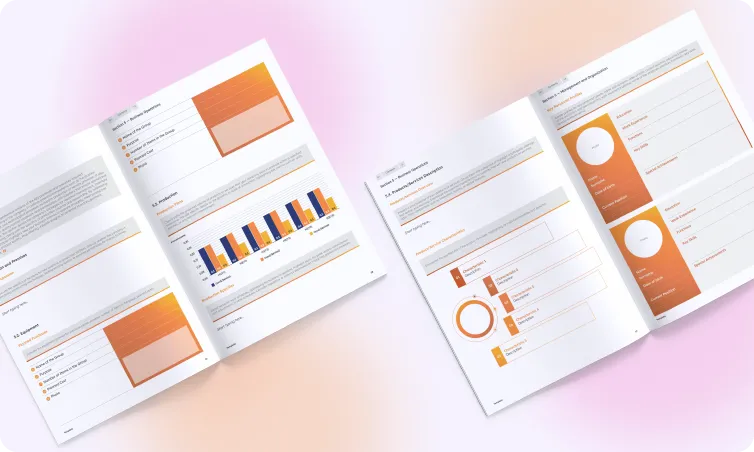
Finally, touch on scalability. The best construction company business plans don’t just describe current operations; they forecast how the company can grow without losing efficiency. This might involve opening satellite offices, expanding the project management team, or diversifying into new service lines such as design-build or property maintenance. Operational scalability is the bridge between a small contractor and a regional powerhouse.
A construction company business plan must inspire confidence not only in what will be built but also in who is building it. Investors, lenders, and partners assess the strength of your leadership team as closely as your project portfolio. A well-structured management section presents your construction company as disciplined, transparent, and led by professionals with complementary expertise.
Begin with ownership. Specify whether your construction company is privately held, family-owned, or structured as an equity partnership. Transparency about ownership builds trust, especially in the construction sector, where projects often involve large sums and multi-year commitments.
Then introduce the leadership team. A strong construction company business plan profiles key executive — the founder, project managers, financial officers, and site supervisors — and explains how their experience contributes to operational success. Highlight backgrounds in engineering, architecture, safety compliance, or project finance. If your construction company is still growing, outline your plan for filling skill gaps through strategic hires or consulting partnerships.
Next, define your organizational structure. Construction projects involve coordination across departments: estimating, procurement, site operations, safety, and finance. A clear reporting hierarchy demonstrates that your construction company can handle complex workflows without confusion or redundancy. Use your business plan to show how communication flows from leadership to field teams, ensuring accountability and performance.
Include corporate governance and culture. A professional construction company emphasizes ethical practices, diversity, and continuous improvement. Outline policies that ensure fairness in bidding, transparency with clients, and compliance with labor and environmental laws. This not only strengthens your business plan but also reflects the long-term sustainability of your brand.
Finally, address external partners — architects, engineers, subcontractors, and consultants — who extend your company’s capabilities. In construction, no organization operates alone; your ability to build reliable networks defines how efficiently your business plan becomes a reality.
No connection between:
Growexa builds a complete, lender-ready business plan — with financial logic and a professionally formatted PDF

Capital is the lifeblood of every construction company. Equipment purchases, payroll, insurance, and materials require steady financing, even before project revenues arrive. The raising and allocating funds section of your construction company business plan should demonstrate a deep understanding of your financial structure and funding strategy.
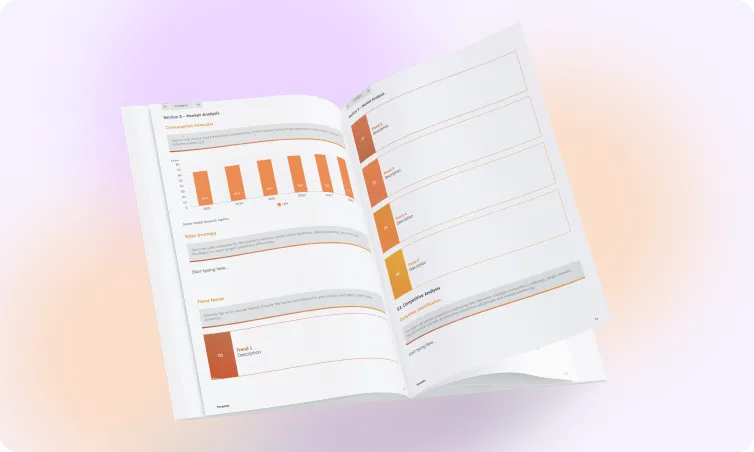
Begin by identifying capital needs. Estimate startup or expansion costs: machinery, vehicles, software systems, office setup, and working capital for project mobilization. Investors should see clearly how much your construction company requires and how funds will be deployed.
Then, specify funding sources. Many construction companies combine owner equity with bank loans, lines of credit, or private investors. Some pursue strategic partnerships with developers or suppliers. A strong business plan explains why your chosen capital structure minimizes risk while supporting growth. For example, short-term debt might finance machinery, while long-term equity backs expansion into new regions.
Transparency in fund allocation is essential. Break down how your construction company will use the raised capital — what percentage goes to operations, equipment, marketing, or reserves. This signals financial discipline. If you’re seeking external funding, include projected returns for investors and repayment timelines.
Address contingency planning. The construction industry is unpredictable — project delays, cost spikes, or payment lags can strain liquidity. A professional construction company business plan should include a financial cushion and clear risk-mitigation strategies, such as progress-based billing or project insurance.
Finally, connect funding to milestones. Show how capital will accelerate growth — hiring additional crews, upgrading technology, or expanding geographic reach. This transforms your funding section from a simple request into a compelling case for investment in a forward-looking construction company.
Numbers are the foundation of credibility. The financial plan in your construction company business plan translates all strategic and operational goals into measurable outcomes. It gives investors a clear view of profitability, liquidity, and sustainability.
Start with revenue projections. A strong construction company estimates income based on realistic contract pipelines, historical performance, and confirmed bids. Break down revenue by segment — residential, commercial, or government projects — to show diversified income streams. Overly optimistic numbers can damage trust; balance ambition with credible market logic.
Next, present your cost structure. Construction is labor- and material-intensive, so your business plan must detail direct costs (materials, labor, equipment) and indirect costs (administration, insurance, licensing). Use this to demonstrate efficient cost control — an essential trait for a successful construction company.
Include cash flow forecasts. Because payments often arrive in stages, your construction company business plan should emphasize cash management. Delays in receivables can destabilize even profitable firms. Show how you maintain liquidity through staggered billing, credit facilities, or reserve funds.
Add a break-even analysis and profit margin expectations. A well-prepared business plan quantifies the point where your construction company covers its fixed and variable costs, highlighting the scale needed to achieve consistent profit. This allows investors to understand the business’s resilience under different demand scenarios.
Finally, include long-term projections — three to five years. These should align with your growth strategy: expanding crews, increasing project volume, or moving into higher-margin sectors like infrastructure or green construction. The numbers must tell a coherent story that matches the operational and marketing plans described earlier. When every part of your construction company business plan aligns, financial forecasts become not just plausible, but persuasive.
A construction company is more than bricks and contracts. It is a carefully orchestrated system where vision, people, capital, and execution must align. A well-prepared construction company business plan is not simply paperwork; it is the architecture of discipline that allows a contractor to move from ambition to execution without collapsing under complexity.
For entrepreneurs ready to break ground, the first step is strategic clarity. Download your construction company business plan template and adapt it to your own goals. Explore a completed example to see how the framework works in practice. And if you want something entirely customized, visit Growexa, where expert guidance and digital tools can help you design a plan as robust as the structures you intend to build.
A construction company business plan is more than an administrative document — it’s a financial, operational, and strategic compass. It defines how your construction company will win contracts, manage risk, and grow sustainably. Without a structured business plan, it’s easy to lose control over costs, project timelines, or funding — the three areas that determine long-term survival in the construction industry.
A comprehensive construction company business plan should include an executive summary, company overview, market analysis, marketing and sales strategy, operations plan, management structure, funding requirements, and financial projections. Each part connects to the next: your market analysis supports your marketing strategy, which in turn influences your financial forecasts. Together, they show that your construction company understands both the business and the craft.
Investors want to see realism and scalability. A strong construction company business plan demonstrates that your team can handle large, complex projects while maintaining profitability. Show that your construction company operates efficiently, controls costs, manages risk, and has a predictable revenue pipeline. Clear financials, transparent governance, and evidence of market demand make your business plan compelling and trustworthy.
A construction company business plan is a living document. It should evolve as the market, regulations, and project portfolio change. Most construction companies revisit their business plans annually — adjusting forecasts, updating funding needs, and refining operational goals. Regular updates show discipline and allow your construction company to anticipate challenges rather than react to them.
Absolutely. A clear, data-backed construction company business plan strengthens your credibility during bidding and partnership discussions. It proves that your construction company has a professional management structure, reliable financing, and operational consistency. Clients, especially institutional ones, are more likely to trust and award projects to contractors who present a well-prepared business plan backed by numbers, not promises.

