Ukraine
 USA
USA
 Austria

Stop editing templates
Start building a plan that gets approved
Turn this template into a complete business plan with:
- Financial projections
- Loan-ready structure
- Clear repayment logic
Based on 40+ bank requirements

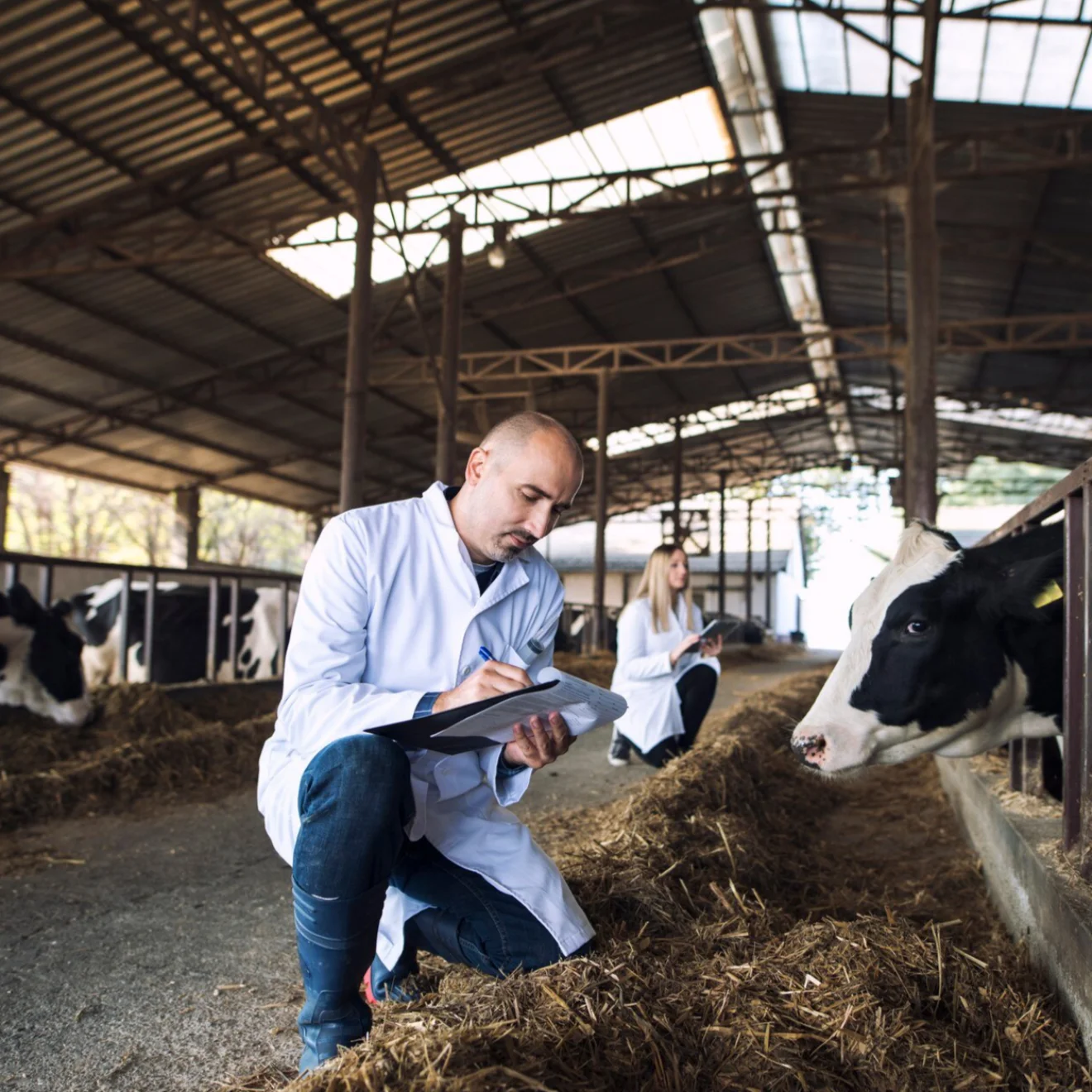
Starting a Cattle Farm is often romanticized as a return to land, independence, and control over production. In reality, it is one of the most demanding business models to execute well. A Cattle Farm operates at the intersection of biology, capital, and time — and unlike many industries, mistakes are not easily reversible. Animals grow on their own timeline, markets move independently of your plans, and costs accumulate whether you are ready or not. Anyone can learn how to start, but far fewer understand how to start in a way that leads to stability rather than constant recovery.
To understand how to start a Cattle Farm properly, you have to shift your perspective. This is not a project you “launch.” It is a system you design, test, and gradually bring under control. The difference between a struggling Cattle Farm and a resilient one is rarely effort — it is structure.
Turn this template into a complete business plan with:
Based on 40+ bank requirements



Most business plans fail not because of the idea — but because the numbers don’t prove repayment.
Build a bank-ready business plan in minutes
(with projections, structure, and validation)
The first mistake people make when thinking about how to start a Cattle Farm is assuming that cattle farming is a single, uniform activity. It is not. A Cattle Farm can be structured around meat production, dairy output, breeding programs, or hybrid models. Each version behaves differently — economically, operationally, and strategically.
If you are serious about how to start, the question is not “Do I want a Cattle Farm?” but “What type of Cattle Farm fits my conditions and capabilities?” A pasture-based beef operation requires different land management compared to an intensive dairy Cattle Farm. A breeding-focused Cattle Farm is built on genetics and long-term herd value rather than short-term turnover.
Clarity at this stage determines everything that follows. Without it, decisions about feed, infrastructure, and sales channels become inconsistent. Those who understand how to start define their niche early and build around it.
Equally important is understanding demand. A Cattle Farm does not operate in isolation — it exists within a supply chain. Are you selling to processors, local markets, exporters, or direct consumers? Each path changes how your Cattle Farm should be structured. Learning how to start includes aligning your concept with real demand, not assumptions.
A Cattle Farm without a business plan is not a business — it is an experiment. Learning how to start means translating your idea into numbers, constraints, and timelines.
Revenue in a Cattle Farm is rarely immediate. Animals take time to grow, production cycles are long, and income may be seasonal. This makes forecasting more complex than in many other industries. Those who understand how to start build conservative projections and focus on consistency rather than optimistic peaks.
Costs are equally critical. Feed alone can represent a significant portion of expenses, and it fluctuates based on external factors such as weather and supply. Veterinary care, equipment, labor, and land maintenance add layers of complexity. A Cattle Farm that ignores cost structure quickly becomes unstable.
Cash flow is where most new operators fail. You may invest heavily at the beginning while revenue lags behind. Understanding how to start includes planning for this gap. A well-structured business plan ensures that your Cattle Farm can operate through low-income periods without collapsing.
Break-even analysis brings clarity. How many animals must be sold? What level of production must be reached? Those who understand how to start do not guess — they calculate.
A Cattle Farm is capital-heavy from day one. Land, fencing, water systems, livestock, and equipment all require upfront investment. Understanding how to start means being realistic about how much capital is needed — and how it will be managed.
Many new operators underestimate this phase. They focus on getting started rather than staying operational. A Cattle Farm does not fail because it cannot begin; it fails because it cannot sustain itself through its first cycles.
Funding can come from savings, loans, investors, or agricultural programs. Each option has implications. Debt introduces pressure. Partnerships require alignment. Grants may come with restrictions. Learning how to start includes choosing a structure that matches your risk tolerance.
Financial discipline is non-negotiable. A Cattle Farm generates multiple expense streams, often simultaneously. Without tracking, inefficiencies remain invisible. Those who understand how to start implement systems that provide clarity from the beginning.
Liquidity matters more than profit in early stages. A Cattle Farm that cannot cover its ongoing costs will not survive long enough to become profitable. Understanding how to start includes managing cash, not just planning income.
Regulation in agriculture is not optional. A Cattle Farm operates within frameworks designed to ensure safety, traceability, and environmental responsibility. Learning how to start includes understanding and complying with these requirements from the outset.
Legal structure affects taxation, liability, and access to funding. Choosing the right setup is part of how to start strategically, not just administratively. Permits, registrations, and certifications vary by region, but they all serve the same purpose: ensuring that your Cattle Farm operates within defined standards.
Compliance is ongoing. Health inspections, animal identification, and record-keeping are continuous responsibilities. Those who understand how to start treat compliance as part of operations, not a separate task.
Insurance is another layer of protection. A Cattle Farm is exposed to risks that cannot always be predicted — disease, weather events, accidents. Proper coverage ensures that one incident does not end the business.
Location defines efficiency in a Cattle Farm more than almost any other factor. Land quality, access to water, and proximity to markets all influence performance. Understanding how to start includes evaluating these elements not just for today, but for future growth.
A poorly chosen location increases costs in ways that are difficult to fix later. Transportation becomes expensive, feed access becomes inconsistent, and operational efficiency declines. Those who understand how to start prioritize long-term viability over short-term convenience.
At the same time, visibility matters. Even a traditional Cattle Farm benefits from a digital presence. Buyers, partners, and distributors increasingly rely on online information. A clear, professional presence reinforces credibility.
Understanding how to start means balancing physical infrastructure with market access. A Cattle Farm must be both operationally efficient and commercially visible.
Running a Cattle Farm is not a solo activity, even if it starts that way. Labor, knowledge, and consistency define outcomes. Understanding how to start includes building systems that people can execute reliably.
Daily operations are structured around animal care. Feeding, monitoring health, managing breeding cycles — these are not occasional tasks, but continuous processes. A Cattle Farm that lacks routine quickly becomes unstable.
Hiring is not just about availability, but about reliability. Those who understand how to start prioritize people who can maintain consistency under pressure. Agriculture does not pause for convenience.
Technology can support operations. Tracking systems, data collection, and automation improve visibility. A modern Cattle Farm is not just physical — it is informational. Understanding how to start includes using data to make better decisions.
No connection between:
Growexa builds a complete, lender-ready business plan — with financial logic and a professionally formatted PDF

The launch of a Cattle Farm is not a single moment — it is a phase of adjustment. Plans meet reality, and assumptions are tested. Those who understand how to start treat this period as feedback, not failure.
Marketing in a Cattle Farm is built on trust. Buyers are not looking for branding — they are looking for reliability. Delivering consistent quality matters more than visibility. Understanding how to start includes focusing on relationships rather than transactions.
Adaptation is constant. Prices change, input costs fluctuate, and external conditions shift. A Cattle Farm that cannot adjust becomes vulnerable. Those who understand how to start build flexibility into their operations.
Learning continues after launch. Monitoring results, identifying inefficiencies, and refining processes allow the Cattle Farm to evolve. Growth comes from iteration, not assumption.
Once the Cattle Farm is operational, the focus shifts from survival to optimization. Understanding how to start includes recognizing that growth without control creates new problems rather than solving existing ones.
Metrics provide clarity. Feed efficiency, growth rates, production output, and cost structure all indicate performance. A Cattle Farm that tracks these consistently can improve systematically.
Improvements are often small but cumulative. Reducing waste, improving animal health, and optimizing processes create long-term gains. Those who understand how to start focus on these incremental changes.
Scaling is a decision, not a default. Expanding herd size or production capacity increases complexity. A Cattle Farm should only scale when its systems can handle that complexity. Understanding how to start includes knowing when to wait.
A Cattle Farm is not built through enthusiasm. It is built through structure, patience, and continuous adjustment. Learning how to start is not about reaching a milestone — it is about creating a system that can endure.
The difference between a fragile and a resilient Cattle Farm lies in how it is designed. Those who approach how to start with discipline, clarity, and long-term thinking build operations that survive volatility and grow over time.
In the end, a Cattle Farm is not just about producing livestock. It is about managing a system where every decision compounds. Those who understand how to start do not chase quick results — they build foundations that last.
The most common mistake is underestimating time and capital cycles. Many assume that once the Cattle Farm is operational, revenue will follow quickly. In reality, livestock production takes time, and costs begin immediately. Without a clear financial structure, the business becomes reactive before it becomes stable.
The required capital depends on land, herd size, and production model. A small Cattle Farm may start with moderate investment, but scaling requires significant funding. More important than the exact amount is having enough capital to sustain operations through the first full production cycle without relying on immediate returns.
The required capital depends on land, herd size, and production model. A small Cattle Farm may start with moderate investment, but scaling requires significant funding. More important than the exact amount is having enough capital to sustain operations through the first full production cycle without relying on immediate returns.м
Initial demand usually comes from local markets, processors, or existing agricultural networks. Relationships matter more than marketing. A Cattle Farm that proves reliability and consistency early builds trust, which becomes the foundation for long-term demand.
Profitability depends on the production model, but most Cattle Farm operations require multiple cycles to stabilize. It is common for a Cattle Farm to take several years before reaching consistent profitability, especially if infrastructure and herd development are built from scratch.