Ukraine
 USA
USA
 Austria

Stop editing templates
Start building a plan that gets approved
Turn this template into a complete business plan with:
- Financial projections
- Loan-ready structure
- Clear repayment logic
Based on 40+ bank requirements

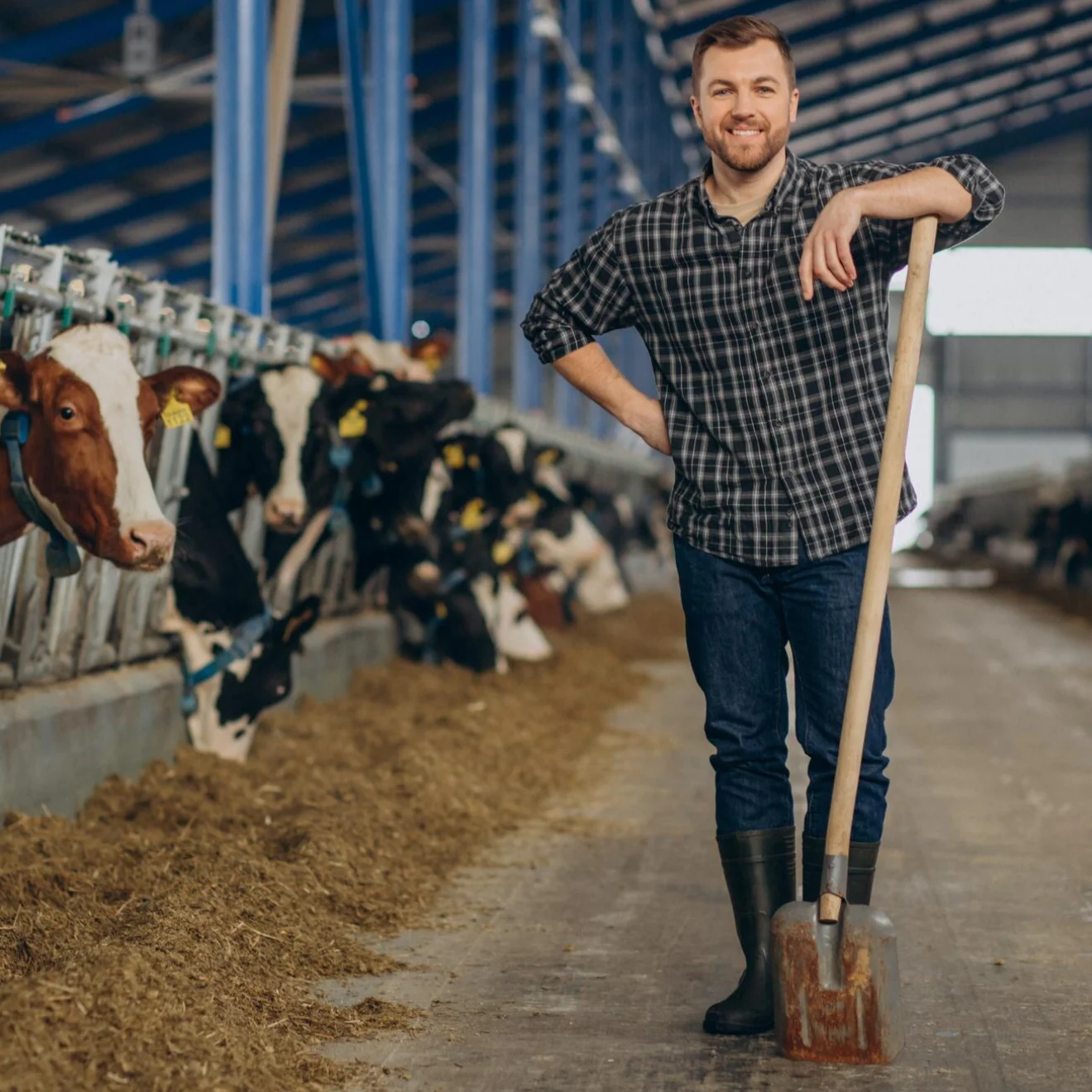
A Cattle Farm does not compete in a market of attention — it operates inside a system of necessity. Food supply chains are not driven by curiosity or impulse; they are driven by continuity, reliability, and risk management. This changes everything about how a marketing plan for a Cattle Farm should be built. Growth is not a result of being visible. Growth is a result of being predictable, reachable, and dependable in moments when buyers need certainty.
Most new operators misunderstand what a marketing plan actually means in the context of a Cattle Farm. They associate it with promotion, branding, or outreach volume. In reality, a marketing plan in this environment is a structural layer that connects production with demand in a controlled way. Without it, a Cattle Farm is forced into opportunistic selling — reacting to market conditions instead of shaping its position within them.
A strong marketing plan turns a Cattle Farm into a stable node within the supply chain. It defines how the farm is perceived, how demand is accessed, and how relationships evolve over time. The difference between selling livestock and building a business is found here.
Turn this template into a complete business plan with:
Based on 40+ bank requirements



Most business plans fail not because of the idea — but because the numbers don’t prove repayment.
Build a bank-ready business plan in minutes
(with projections, structure, and validation)
Demand for a Cattle Farm is not created — it already exists. The challenge is understanding where it concentrates, how it shifts, and what drives its movement. A marketing plan begins with this recognition. It is not about generating interest but about aligning with demand that is already active.
The agricultural market is influenced by factors that are often external to the farm itself. Feed prices, consumer consumption trends, import-export regulations, and processing capacity all shape demand patterns. A Cattle Farm that ignores these forces operates blindly. A marketing plan introduces awareness of these dynamics and builds strategy around them.
Demand is also uneven. There are periods of high activity and periods of contraction. A marketing plan anticipates these fluctuations and positions the Cattle Farm accordingly. Instead of reacting to price drops or oversupply, the business prepares for them. This reduces pressure and increases control.
Understanding context is what allows a marketing plan to be strategic rather than reactive. A Cattle Farm that aligns with demand cycles gains leverage. One that ignores them competes under pressure.
In a Cattle Farm, the idea of a “customer” is more complex than it appears. Buyers can include processors, distributors, wholesalers, retailers, or direct consumers. Each group evaluates a Cattle Farm differently, and a marketing plan must reflect these differences.
Segmentation is not about categorizing broadly. It is about understanding decision-making logic. A processor values consistency and volume. A local retailer may prioritize quality and traceability. A direct consumer may focus on origin and transparency. A marketing plan identifies which segments align with the strengths of the Cattle Farm.
Trying to serve everyone weakens positioning. A focused Cattle Farm builds depth within a segment rather than spreading attention across multiple ones. A marketing plan ensures that the business attracts the right demand instead of adjusting constantly to mismatched expectations.
Segmentation also affects communication and pricing. Different audiences respond to different signals. A marketing plan defines how the Cattle Farm speaks to each segment and what it emphasizes.
A Cattle Farm is not selected because it exists. It is selected because it reduces risk for the buyer. This is the foundation of positioning. A marketing plan defines how that value is communicated and understood.
Generic claims do not work in this space. Saying a Cattle Farm is “high quality” or “reliable” has little impact without evidence. A marketing plan translates operational strengths into clear, credible signals. This could include consistency of supply, traceability, specific breeding standards, or geographic advantages.
Positioning is also about trade-offs. A Cattle Farm cannot be everything at once. Competing on price requires a different structure than competing on quality or specialization. A marketing plan ensures that positioning is consistent and reinforced across all interactions.
Over time, positioning becomes identity. A Cattle Farm that communicates clearly builds recognition and trust. A marketing plan maintains this consistency.
The buying process in a Cattle Farm is not linear, but it follows a pattern. A need emerges, options are evaluated, and decisions are made under constraints of time and risk. A marketing plan maps this process and aligns the farm’s presence with it.
In many cases, the first interaction is not initiated by marketing activity but by necessity. A buyer requires supply and looks for options that are already known or easily verified. A marketing plan ensures that the Cattle Farm appears credible at this stage.
Evaluation is driven by trust signals. Past performance, responsiveness, and clarity matter more than presentation. A marketing plan strengthens these signals, making it easier for the buyer to decide.
After the first transaction, the journey continues. Retention becomes the priority. A marketing plan supports this transition by maintaining communication and reinforcing reliability.
Understanding the journey allows the Cattle Farm to operate in sync with buyer behavior rather than attempting to change it.
Access to demand depends on where the Cattle Farm operates within the market. A marketing plan defines which channels are used and how they are managed.
Some channels are transactional, such as marketplaces or intermediaries. They provide access to demand but often at lower margins. Others are relationship-driven, offering stability and long-term value. A marketing plan balances these options.
Direct relationships are often the most valuable. They reduce dependency on volatile channels and create predictability. However, they require time and consistency to build. A marketing plan outlines how these relationships are developed.
Digital presence also plays a role. Even in traditional sectors, credibility is influenced by visibility. A Cattle Farm that presents itself clearly online strengthens trust. A marketing plan ensures that this presence supports positioning rather than distracting from it.
Communication in a Cattle Farm is not about persuasion. It is about clarity. Buyers need to understand what the farm does, how it operates, and why it can be relied upon. A marketing plan defines how this information is presented.
Content should reflect operational reality. Explaining processes, demonstrating standards, and providing transparency all contribute to trust. A marketing plan ensures that communication is consistent and aligned with positioning.
Tone matters. Overly promotional language reduces credibility. Clear, direct communication reinforces reliability. A marketing plan defines this tone and maintains it across all channels.
Consistency is more important than volume. A Cattle Farm that communicates clearly and regularly builds recognition over time. A marketing plan supports this continuity.
No connection between:
Growexa builds a complete, lender-ready business plan — with financial logic and a professionally formatted PDF

In a Cattle Farm, conversion is not impulsive. It is a decision based on confidence. A marketing plan defines how inquiries are handled and how agreements are reached.
Response time is critical. Buyers often operate under pressure and choose partners who respond quickly and clearly. A marketing plan ensures that processes are in place to handle communication efficiently.
Clarity in pricing and terms reduces friction. A Cattle Farm that communicates transparently increases its chances of securing agreements. A marketing plan defines how this information is structured.
Conversion should not depend on improvisation. A structured approach ensures consistency and reliability. A marketing plan creates this structure.
Long-term stability in a Cattle Farm comes from retention. Acquiring new buyers repeatedly is inefficient compared to maintaining existing relationships. A marketing plan prioritizes retention as a core function.
Consistency in delivery builds trust. Meeting expectations repeatedly creates confidence. A Cattle Farm that performs reliably reduces the need for constant acquisition. A marketing plan reinforces this through communication and relationship management.
Loyalty is not created through incentives alone. It is built through performance. A marketing plan ensures that service quality aligns with expectations over time.
Strong relationships become a competitive advantage. A Cattle Farm that retains its buyers operates with greater stability.
Marketing in a Cattle Farm is often informal, but this does not mean it should be unstructured. A marketing plan defines how resources are allocated and how effectiveness is measured.
Spending should focus on activities that generate consistent demand. A marketing plan identifies these areas and prioritizes them. Activities that do not produce results are adjusted or removed.
ROI is not always immediate. Some investments build long-term relationships rather than short-term revenue. A marketing plan balances these timelines.
Discipline in budgeting ensures that marketing supports growth rather than becoming an uncontrolled expense.
A marketing plan is not static. It evolves based on performance. Tracking key metrics allows a Cattle Farm to understand what is working and what is not.
Metrics may include repeat clients, conversion rates, and revenue stability. These indicators provide insight into the effectiveness of the marketing plan.
Optimization is continuous. Adjustments in communication, channels, and processes improve outcomes over time. A Cattle Farm that learns from its data becomes more efficient.
Growth loops emerge when successful patterns are repeated. A marketing plan identifies these patterns and scales them. This allows the Cattle Farm to grow without losing control.
A Cattle Farm does not grow through exposure. It grows through alignment, consistency, and trust. A marketing plan is what connects these elements, turning production into a stable flow of demand.
Without a marketing plan, a Cattle Farm reacts to the market. With it, the business positions itself within it. The difference is not in effort, but in structure.
In the long run, the most successful Cattle Farm operations are not those that reach the most buyers, but those that build the most reliable relationships. A marketing plan makes that possible.
Because demand is not evenly distributed or automatically accessible. A Cattle Farm without a structured marketing plan often relies on opportunistic sales, which leads to unstable revenue. A marketing plan helps position the farm within consistent demand flows rather than chasing them.
The most effective approach is not mass promotion but building credibility and relationships. Buyers prioritize reliability, consistency, and clear communication. A strong marketing plan focuses on trust signals and long-term partnerships rather than short-term visibility.
Both can play a role, but they serve different purposes. Intermediaries provide faster access to demand, while direct relationships offer better margins and stability. A well-structured marketing plan balances both, gradually shifting toward higher-value, direct channels.
Differentiation comes from clarity, not complexity. A Cattle Farm can stand out through consistency, specialization, traceability, or service reliability. A marketing plan defines and reinforces these strengths so they are recognized by the right audience.
Key metrics include repeat customers, conversion rates, revenue per client, and stability of demand over time. A strong marketing plan uses these indicators to refine strategy, improve efficiency, and build sustainable growth rather than relying on isolated transactions.