
Stop editing templates
Start building a plan that gets approved
Turn this template into a complete business plan with:
- Financial projections
- Loan-ready structure
- Clear repayment logic
Based on 40+ bank requirements

The Call Center has become a critical backbone of the global service economy. Far from being a simple phone-based support function, the modern Call Center is a sophisticated customer experience engine that connects brands with customers across voice, chat, email, and digital platforms. As companies outsource non-core operations, scale globally, and prioritize customer satisfaction as a competitive advantage, demand for professional Call Center services continues to grow. However, success in this industry is no longer driven by headcount alone. A comprehensive business plan is essential to transform a Call Center concept into a scalable, profitable, and resilient enterprise. The business plan aligns technology, talent, operations, and financial discipline into a single strategic framework.
Launching a Call Center without a business plan often leads to high turnover, inconsistent service quality, margin erosion, and operational chaos. Call Center operations involve tight cost control, complex staffing models, and performance-based contracts. A strong business plan clarifies how the Call Center differentiates itself, which industries it serves, and how it balances efficiency with quality. It ensures that investments in infrastructure, training, and systems are justified by sustainable demand. In a service sector where reputation and reliability determine longevity, the business plan becomes the foundation of credibility and long-term value.
Turn this template into a complete business plan with:
Based on 40+ bank requirements


Most business plans fail not because of the idea — but because the numbers don’t prove repayment.
Build a bank-ready business plan in minutes
(with projections, structure, and validation)
The Executive Summary presents the Call Center as a professional business services provider delivering inbound, outbound, and omnichannel customer support solutions. This section of the business plan defines the mission of the Call Center, whether focused on customer service, technical support, sales, lead generation, collections, or a hybrid model.
The business plan outlines target clients such as e-commerce companies, financial institutions, healthcare providers, SaaS businesses, and telecom operators. Revenue streams may include per-minute billing, per-agent contracts, performance-based fees, and long-term service agreements. By summarizing service scope, market positioning, and financial objectives, the Executive Summary establishes the Call Center as a structured enterprise guided by a clear business plan.
The Company Overview defines the structure, identity, and strategic foundation of the Call Center. This section of the business plan explains the legal entity, ownership model, and geographic footprint. It clarifies whether the Call Center operates onshore, nearshore, offshore, or through a hybrid delivery model.
The business plan describes the Call Center’s service capabilities, language coverage, operating hours, and technology stack. Infrastructure decisions, including cloud telephony, CRM integration, data security, and redundancy, are aligned with client expectations and regulatory requirements. Compliance with data protection, privacy, and industry standards is embedded within the business plan.
Brand positioning is also addressed. The business plan explains how the Call Center differentiates through service quality, industry specialization, scalability, or cost efficiency. The Company Overview positions the Call Center as a professional outsourcing partner rather than a commodity labor provider.
The Market Analysis examines demand drivers shaping the Call Center industry. Digital commerce growth, subscription business models, regulatory complexity, and rising customer expectations continue to fuel outsourcing demand. A strong business plan analyzes these trends alongside regional labor availability, wage levels, and technology adoption.
The business plan evaluates competition from global outsourcing firms, niche providers, in-house teams, and AI-driven automation. Differentiation is essential. The Market Analysis identifies opportunities in vertical specialization, multilingual support, compliance-heavy industries, or high-touch customer experience.
Client segmentation is explored in depth. Large enterprises prioritize scalability and compliance, while smaller businesses value flexibility and responsiveness. The business plan aligns service design, pricing, and staffing with these segments. By grounding strategy in market insight, the business plan ensures the Call Center competes on value rather than price alone.
The Marketing and Sales Strategy outlines how the Call Center attracts clients and builds long-term contracts. Call Center services are trust-based, making credibility and proof of performance central. The business plan explains how the Call Center communicates expertise through case studies, certifications, and measurable outcomes.
Marketing channels include direct sales, partnerships, industry events, digital outreach, and referrals. The business plan emphasizes consultative selling that positions the Call Center as a strategic extension of the client’s operations.
Sales strategy focuses on contract structure, service-level agreements, and scalability. Pricing reflects service complexity, staffing intensity, and performance metrics. The business plan ensures sales commitments align with operational capacity, protecting margins and service quality.
The Operations Plan details how the Call Center functions daily. This section of the business plan describes workforce management, shift planning, call routing, quality assurance, and performance monitoring. Operational efficiency is critical due to labor-intensive cost structures.
The business plan explains recruitment, onboarding, and training processes that prepare agents for specific client requirements. Technology supports operations through analytics, monitoring, and automation. Continuous improvement systems ensure consistent service delivery.
Risk management is central. The Operations Plan addresses turnover, absenteeism, system outages, and data breaches. By defining standardized procedures, the business plan ensures the Call Center operates reliably under fluctuating demand.
No connection between:
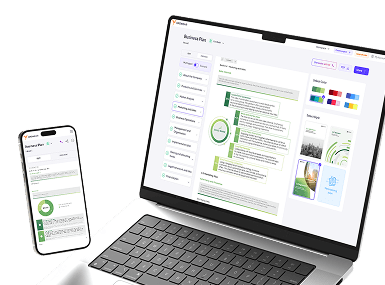
Growexa builds a complete, lender-ready business plan — with financial logic and a professionally formatted PDF
The Management and Organization section introduces the leadership behind the Call Center. It outlines experience in operations management, outsourcing, technology, or client relations. Strong leadership balances cost control with employee engagement.
The business plan defines organizational roles such as operations managers, team leaders, quality analysts, trainers, IT support, and HR. Performance metrics and accountability structures support scalability and service consistency.
This section demonstrates that the Call Center is professionally managed rather than purely volume-driven.
Establishing or scaling a Call Center requires capital for technology, recruitment, training, facilities, and working capital. This section of the business plan outlines startup or expansion costs and potential funding sources such as owner equity, loans, or strategic investors.
The business plan explains how funds are allocated to maximize utilization and flexibility. Disciplined capital planning ensures the Call Center can onboard clients efficiently without financial strain.
The Financial Plan translates the Call Center strategy into financial projections. This section of the business plan includes revenue forecasts based on agent count, utilization rates, pricing models, and contract duration.
Expense projections include labor, technology, rent, connectivity, training, and overhead. The business plan provides cash-flow projections, breakeven analysis, and multi-year profitability scenarios. Sensitivity analysis addresses client churn, wage inflation, and utilization variability.
A successful Call Center combines operational precision, human talent, and strategic clarity. While customer interaction remains its core function, only businesses guided by a structured business plan achieve sustainable success. By aligning market positioning, operations, technology, and financial planning, the business plan transforms a Call Center into a resilient and scalable service enterprise. With the right foundation, a Call Center can deliver measurable value to clients while building long-term business equity.
Entrepreneurs ready to launch or scale a Call Center can leverage platforms like Growexa, where expert planning tools turn service concepts into polished, investor-ready business plans designed for sustainable growth.
Startup costs depend on location, scale, and service model but typically include technology infrastructure, recruitment, training, facilities, and working capital. A detailed business plan allows a Call Center to phase growth and match agent capacity with signed contracts rather than speculative hiring.
Yes, with disciplined systems. A Call Center can scale through standardized training, quality assurance frameworks, workforce management tools, and strong leadership. A well-structured business plan outlines expansion stages that protect service consistency while increasing capacity and profitability.

