
Stop editing templates
Start building a plan that gets approved
Turn this template into a complete business plan with:
- Financial projections
- Loan-ready structure
- Clear repayment logic
Based on 40+ bank requirements

Few ventures capture the entrepreneurial imagination like a Food Truck. The combination of low overhead, creative freedom, and direct connection with customers has turned Food Trucks from a fringe novelty into a billion-dollar global movement. But mobility doesn’t mean simplicity. Behind every successful Food Truck lies the same discipline, structure, and foresight required of any brick-and-mortar restaurant — only compressed into tighter margins, faster cycles, and constant adaptation.
A Food Truck Business Plan is not just a bureaucratic requirement; it’s a control panel for a moving business. It translates recipes into route strategies, foot traffic into forecasts, and local taste trends into sustainable revenue. In the world of mobile kitchens, agility replaces real estate as the primary asset — and only a disciplined Business Plan ensures that agility turns into profit rather than chaos.
Turn this template into a complete business plan with:
Based on 40+ bank requirements


Most business plans fail not because of the idea — but because the numbers don’t prove repayment.
Build a bank-ready business plan in minutes
(with projections, structure, and validation)
The romance of the open road can disguise the reality of operational rigor. Many aspiring owners think a Food Truck is an easier entry point into hospitality — cheaper, faster, more flexible. And while the startup costs may be lower, the complexity is higher. A single Food Truck operator wears the hats of chef, driver, marketer, accountant, and mechanic all at once.
A Food Truck Business Plan brings order to that chaos. It defines not just what you will serve, but where, when, and how — and at what cost per mile. Investors and lenders see it as proof that your enthusiasm is backed by structure. For founders, it becomes the operating manual for every day on the street.
Unlike a fixed restaurant, a Food Truck operates in multiple micro-markets. Demand shifts by neighborhood, weather, and event calendar. A solid Business Plan accounts for this variability — outlining schedules, revenue targets per location, and contingency strategies when rain or regulations disrupt service. The Food Truck entrepreneur who plans in advance is the one who survives the first year.
Every Food Truck starts with an idea — but only a Business Plan can turn that idea into an identity that scales. The concept should be narrow enough to execute efficiently yet distinctive enough to attract loyal customers in a crowded scene.

Are you offering Korean-Mexican fusion tacos, farm-to-table bowls, plant-based street food, or gourmet coffee on wheels? Each decision drives the menu, equipment, permitting requirements, and target audience. The Food Truck Business Plan must clearly articulate this concept in language investors and regulators understand. Beyond cuisine, define the experience. Will your Food Truck serve at festivals, corporate campuses, or rotating city blocks? Is your tone playful and youthful, or refined and minimalist? Consistency in brand personality transforms a truck into a destination.
End this section with a mission and vision statement. A mission defines the daily purpose: “To deliver chef-crafted street meals that combine speed with sustainability.” A vision defines scale: “To operate a fleet of five eco-friendly Food Trucks across the region within three years.” These statements give your Business Plan direction and credibility.
A Food Truck doesn’t compete on location alone — it competes on movement. Market analysis in a Food Truck Business Plan must cover not just demographics but mobility economics: where people gather, how they move, and when their hunger peaks.
Start with macro data. The U.S. Food Truck industry surpasses $1.4 billion annually, growing 7–8% year over year. But those averages mean little without hyperlocal insight. A strong Business Plan identifies the specific zones where your Food Truck can thrive — downtown lunch corridors, brewery parking lots, or weekend farmers markets. Use public data, foot-traffic analytics, and event calendars to estimate sales opportunities by daypart. For instance, weekday lunch downtown might yield 150 transactions at $14 average ticket, while a weekend festival could triple that. Your Business Plan should forecast not just total sales but sales by route.
Competitive analysis is equally critical. Visit other Food Trucks and nearby quick-service outlets. Note pricing, menu rotation, and wait times. Then position your brand around an unmet demand — for example, faster service for professionals, authentic cuisine missing in the area, or superior sustainability credentials.
Include a SWOT analysis — strengths (mobility, low overhead), weaknesses (weather dependency), opportunities (corporate catering), and threats (rising permit fees). A credible Business Plan acknowledges both promise and risk.
Running a Food Truck is a logistical ballet. You’re not just cooking; you’re managing transportation, refrigeration, waste disposal, power supply, and staffing — all within a few hundred square feet.
Your Food Truck Business Plan should detail every operational element:
Investors and lenders expect precision here. A Food Truck’s success depends on uptime — mechanical or regulatory downtime kills cash flow faster than bad food. A well-written Business Plan demonstrates proactive maintenance, compliance tracking, and vendor partnerships for repairs.

Operational efficiency is also about time per transaction. Detail how your service line is optimized for peak throughput. A two-person team producing 80–100 meals per hour is profitable; a slow line turns opportunity into backlog. The Business Plan should quantify these metrics to prove scalability.
A Food Truck is a mobile brand experience — a billboard that feeds people. Every surface, sound, and scent communicates who you are. Use the Business Plan to describe your brand architecture. Visual identity (logo, color palette, typography) must be bold enough to stand out across a parking lot. The name should be memorable, pronounceable, and conceptually aligned with the cuisine.
The customer journey begins long before the order window. How does your Food Truck appear on social media? What’s your tone of voice — cheeky, artisanal, or mission-driven? Every detail, from menu board typography to staff uniforms, must reinforce the brand promise.
Beyond aesthetics, define the sensory experience. The smell of grilled meat, the sound of sizzling oil, or the visual rhythm of plating can become brand signatures. The Business Plan should show investors that you treat brand as strategy, not decoration.
Most importantly, Food Trucks thrive on human connection. Guests often meet the chef directly — an intimacy brick-and-mortar restaurants rarely achieve. Codify that advantage. Describe how you’ll engage customers, collect feedback, and turn casual visitors into repeat followers.
A Food Truck’s menu is a performance under constraint. Limited space and storage force discipline — which is why menu engineering is central to every Food Truck Business Plan.
Each item should justify its place through contribution margin and operational simplicity. Cross-utilize ingredients to minimize waste and prep time. Balance high-margin staples (fries, beverages) with hero dishes that define your brand.
Keep the total menu short — ideally 6 to 10 items. Speed is revenue. If it takes more than three minutes to assemble, it’s probably slowing down throughput. The Business Plan should illustrate how the menu drives both identity and efficiency.
Pricing must reflect not only ingredient cost but logistical cost — fuel, travel time, permits, and event fees. A $12 entrée might cost $6 in inputs but $2 in mobility overhead. Build those realities into your cost model.
Don’t overlook beverage strategy. Bottled drinks, cold brew, and branded water often carry the highest margins. In your Food Truck Business Plan, highlight how such add-ons lift average ticket value and buffer against fluctuations in meal demand.
Food Trucks live or die by visibility. Unlike a restaurant, your audience doesn’t come to you — you go to them. Marketing in a Food Truck Business Plan must integrate digital tools with local relationships.
Start with discovery. How will customers know where to find you each day? Use social media geotagging, real-time location updates, and integration with platforms like StreetFoodFinder or Instagram stories. A consistent posting schedule creates habitual awareness.
Then focus on retention. Collect customer data through QR codes, loyalty apps, or email sign-ups. Offer free drinks after ten visits or discounts for social media shares. A Food Truck’s community grows through engagement loops, not advertising budgets.
Partnerships multiply exposure. Park near breweries, concerts, or coworking hubs where complementary audiences gather. Collaborate with event organizers or other Food Trucks for themed rallies. The Business Plan should quantify expected traffic and conversion per collaboration.
Finally, manage reputation. Encourage reviews, respond to feedback, and treat every online comment as a public storefront. Investors reading your Business Plan will look for a defined reputation strategy — proof you understand that digital sentiment equals revenue.
A Food Truck may be small, but its team culture must be world-class. Space constraints mean one weak link affects everything. Define staffing structure clearly in the Business Plan. Typically, that includes an owner-operator, one cook, and one cashier or expediter. For multi-truck operations, include an operations manager and maintenance coordinator.
Training should focus on speed, safety, and guest interaction. Create scripts for greetings, upselling, and problem resolution. In a Food Truck, every second counts, so choreographed communication is essential.
Discuss compensation models — hourly wages plus tip pools or revenue-sharing incentives. Outline labor ratios: target 25–30% of sales for labor in your Business Plan. Show how cross-training reduces idle time.
Culture is equally critical. Food Truck teams endure long hours, heat, and weather. Define values like respect, composure, and consistency. A founder who codifies culture in the Business Plan signals leadership maturity.
Numbers tell the truth about dreams. The financial section of a Food Truck Business Plan transforms excitement into viability.
List capital expenditures — truck purchase or retrofit ($60,000–$150,000), kitchen equipment, permits, commissary setup, branding, and initial inventory. Add 10–15% contingency for repairs or customization.
Model revenue by route and event type. Example: $1,200 average daily sales × 25 days/month = $30,000 gross monthly revenue. Adjust for seasonality and downtime.
Include labor, food cost (30–35%), fuel, maintenance, event fees, insurance, and marketing. Rent or commissary fees often replace restaurant rent but still average 5–8% of revenue.
Track inflows and outflows weekly. A Food Truck requires higher liquidity than restaurants because of upfront event costs and pre-purchases. The Business Plan should show buffer capital or a credit line.
Calculate the number of service days required to recover startup costs. Investors expect break-even within 12–18 months and ROI within 24–30 months. Present base, optimistic, and conservative scenarios.
Transparency builds credibility. A Food Truck Business Plan that confronts margins honestly inspires more confidence than one that hides behind buzzwords.

Mobility doesn’t exempt regulation; it multiplies it. Each city, county, or state has unique rules for Food Trucks. Your Business Plan must demonstrate mastery of compliance. Address the following explicitly:
Include timelines for application, renewal, and inspection. Noncompliance can ground your Food Truck indefinitely. By listing all permits and renewal cycles, your Business Plan reassures investors that legal risk is contained.
No connection between:
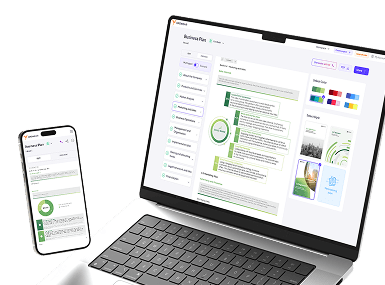
Growexa builds a complete, lender-ready business plan — with financial logic and a professionally formatted PDF
The mobile nature of Food Trucks amplifies volatility: mechanical breakdowns, event cancellations, or supply shortages can derail revenue. A comprehensive Business Plan includes countermeasures.
Add insurance specifics: business interruption, food spoilage, and accident coverage. In a Food Truck Business Plan, risk acknowledgment equals managerial credibility.
The best Food Truck founders don’t chase one-off profits — they build replicable systems. A visionary Business Plan must articulate how a single truck can evolve into a fleet or diversified brand.
Document standard operating procedures (SOPs): menu recipes, sourcing lists, maintenance routines, and customer service playbooks. These are the building blocks of replication.
Explore revenue extensions: branded merchandise, event catering, or packaged sauces. Each adds margin without adding square footage. Include potential franchising or licensing models in the Business Plan for long-term scalability.
But scalability only works if quality travels with it. Describe how you’ll preserve standards across units — shared commissary, centralized purchasing, and unified brand management. Investors back Food Truck systems, not one-time concepts.
Modern diners want purpose with their portions. A forward-thinking Food Truck Business Plan must address sustainability and innovation as core strategies, not afterthoughts.
Show how you’ll minimize environmental impact — using compostable packaging, biodiesel vehicles, or local sourcing. These practices cut waste and attract eco-conscious customers.
Innovation extends to technology. Adopt mobile POS systems, predictive inventory software, and contactless payment. Use data analytics to forecast peak hours and minimize idle time.
Tie sustainability to profitability: lower fuel costs, faster service, and customer loyalty. A Food Truck that represents ethical and operational intelligence becomes a brand customers champion.
A Food Truck’s mobility doesn’t end with movement — it defines the culture of iteration. A Business Plan must outline how you’ll review and refine performance continuously. Set a cadence:
Build dashboards for KPIs: average ticket size, speed of service, customer repeat rate, and fuel efficiency. Use these to make data-driven adjustments. The Food Truck Business Plan should emphasize agility — the ability to pivot routes, menus, or pricing within days, not months. The entrepreneurs who thrive are those who treat planning as a living habit, not a static document.
Once your plan is complete, presentation determines perception. Investors and partners must feel both passion and precision. Design matters. Use clean visuals, high-contrast typography, and photography that reflects your actual Food Truck aesthetic. The Business Plan should look like your brand — bold, clear, and efficient.
Your executive summary should tell the story in one page: concept, market, revenue model, and growth path. For lenders, highlight repayment reliability; for investors, emphasize scalability and ROI.
Prepare to pitch the Food Truck Business Plan aloud. Communicate operational command and emotional conviction equally. When you can explain your unit economics and your brand purpose with the same confidence, you’re ready to roll.
Update the plan quarterly during year one, then annually. Replace projections with real data — route performance, sales by event, customer feedback. A Food Truck that keeps its plan alive keeps its business alive.
The allure of a Food Truck is freedom — the ability to go where the customers are, to experiment, to tell stories through food on wheels. But freedom without structure burns out fast.
A well-constructed Food Truck Business Plan transforms motion into mastery. It keeps creativity tethered to cash flow, ensures compliance amid chaos, and builds a roadmap from single-truck hustle to enduring brand.
The entrepreneurs who endure are not those with the flashiest designs or viral TikToks — but those whose Business Plan evolves as quickly as the streets they serve.
You can start by downloading the Food Truck Business Plan Template and shaping it to your own concept. To see what a full plan looks like in action, check the completed Business Plan Example for a Food Truck. And if you’d rather build from scratch, visit Growexa to use guided tools that make your vision launch-ready.
Investors expect to see clear, defensible unit economics. Focus on revenue per service day, average ticket size, food cost percentage (typically 30–35%), labor ratio (25–30%), and operating profit margin after mobility costs (fuel, permits, event fees). Include cash flow projections for at least 12 months, a break-even analysis based on realistic transaction volumes, and sensitivity tests showing how profitability changes if sales drop by 15% or ingredient prices rise by 10%. A Food Truck Business Plan built on transparent, testable numbers earns far more credibility than one built on enthusiasm.
Treat the plan as a living system, not a one-time document. The first revision should occur after the first 90 days of operations, when actual route data, transaction counts, and cost ratios replace assumptions. Thereafter, review the Business Plan quarterly during year one and semiannually thereafter. The Food Truck environment shifts quickly — gas prices, event permits, and consumer preferences all fluctuate — so your Business Plan must evolve at the same speed. Continuous updates transform it from a proposal into a performance dashboard.
Three errors appear repeatedly:
A disciplined Food Truck Business Plan anticipates all three. It replaces excitement with execution, ensuring that mobility becomes a strategic advantage — not a financial liability.


