Ukraine
 USA
USA
 Austria

Stop editing templates
Start building a plan that gets approved
Turn this template into a complete business plan with:
- Financial projections
- Loan-ready structure
- Clear repayment logic
Based on 40+ bank requirements


Every Restaurant is more than its menu. Behind every memorable dining room lies a system — a web of processes, people, and principles that transform chaos into consistency. Guests see ambience, aroma, and artistry; managers see coordination, labor ratios, and timing. What unites both worlds is one essential document — the Restaurant Operations Plan.
A well-structured Restaurant Operations Plan is the bridge between vision and execution. It defines how a Restaurant performs at scale — whether it’s one neighborhood bistro or a multi-unit group expanding regionally. It’s the management architecture that keeps creativity accountable and operations profitable.
Turn this template into a complete business plan with:
Based on 40+ bank requirements
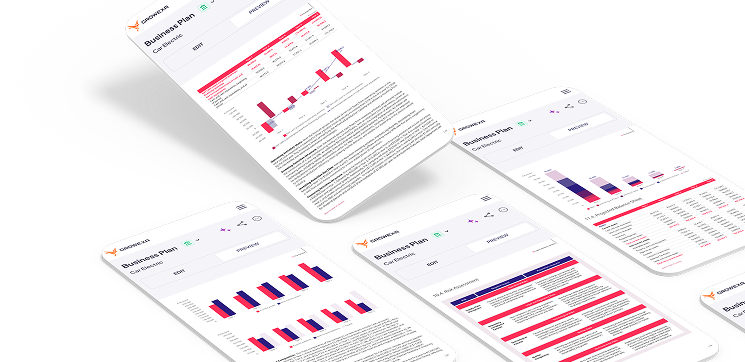

Most business plans fail not because of the idea — but because the numbers don’t prove repayment.
Build a bank-ready business plan in minutes
(with projections, structure, and validation)
Passion may ignite a Restaurant, but only process keeps it open. The hospitality landscape is littered with great menus and failed systems — venues that mastered flavor but collapsed under inconsistency, turnover, or cash-flow strain.
A Restaurant Operations Plan imposes rhythm. It converts inspiration into measurable routines — from prep schedules to guest communication standards. It ensures that every Restaurant, regardless of size or cuisine, delivers reliability without suppressing creativity.
For investors, the Restaurant Operations Plan signals maturity: a founder who treats hospitality as an enterprise, not a hobby. For teams, it defines expectations, accountability, and autonomy. Without it, even an award-winning chef becomes hostage to daily improvisation.
Restaurants don’t fail because people stop eating — they fail because people stop returning. Consistency keeps them coming back, and consistency is a function of systemized operations.
Every Restaurant begins as a concept — an idea of what the experience should feel like. But until that idea is translated into repeatable mechanics, it remains fragile. The Restaurant Operations Plan converts philosophy into playbook.
Start with your service model. Is the Restaurant fine dining, casual, quick-service, or hybrid? The answer determines everything: staffing ratios, equipment layout, table turns, and menu engineering. Each decision must appear in the Restaurant Operations Plan, tied to rationale and cost implications.
Define the guest promise: what emotion should every diner leave with? Warm familiarity? Aspirational sophistication? Each element — lighting, soundtrack, plating — should reinforce that outcome. The Restaurant Operations Plan connects those sensory choices to measurable standards, such as serving time per course or table reset efficiency.
Operationalizing concept also means balancing ambition with capacity. A Restaurant that seats 80 but cooks for 50 will disappoint everyone. Throughput must match aspiration, and the Restaurant Operations Plan is where that alignment lives.
The back of house is the heartbeat of any Restaurant, and the Operations Plan keeps that heartbeat steady. Outline clear hierarchies — executive chef, sous chefs, line cooks, prep and dish teams. Specify decision authority: who controls ordering, who signs invoices, who manages waste.
Standardize prep lists and recipes. Every dish should have exact portion weights, cooking times, and plating diagrams. This ensures the guest experience remains identical whether cooked by the head chef or a new hire.
Integrate inventory discipline: daily count sheets, FIFO rotation, and waste logs. Food cost leakage of even 2 % can erase profit margins. The Restaurant Operations Plan should define reorder thresholds and preferred vendor agreements to stabilize pricing.
Finally, embed food-safety culture. Specify sanitation checklists, temperature controls, allergen labeling, and inspection protocols. When the kitchen treats compliance as culture rather than policing, the Restaurant earns both efficiency and trust.
The front of house is where systems meet psychology. A Restaurant that delivers effortless hospitality does so because its Operations Plan choreographs every movement. Design guest flow from door to dessert. Map waiting zones, host stand placement, server paths, and bussing routes. Efficiency here reduces labor pressure and improves perception.
Create scripts for greetings, menu introductions, and check presentations. Consistency doesn’t mean robotic service — it means every guest receives equal attention regardless of table or time.
Define table-turn targets and reservation pacing rules. A well-timed floor plan can add thousands in weekly revenue without expanding seating. Technology supports the rhythm. POS terminals, handheld order tablets, and kitchen-display screens synchronize orders and payments. The Restaurant Operations Plan should name each platform, outline training protocols, and assign data responsibility to managers.
In short, the front-of-house system is the choreography that turns staff coordination into guest satisfaction — and the Restaurant Operations Plan is the sheet music.
Restaurants are physical theaters of timing. A crowded entry, delayed host greeting, or blocked aisle destroys first impressions. An advanced Restaurant Operations Plan includes a section on guest flow optimization — treating movement as data.
Track dwell time at each stage: entry to seating, order to service, service to payment. Use analytics or direct observation to spot friction points. Small adjustments — a relocated POS terminal, a clearer signage, or pre-bussed tables — can raise hourly revenue by 10–15 %.
Consider sensory flow too. Music tempo, lighting transitions, and staff visibility affect how long guests stay. The Restaurant Operations Plan should document design logic so future remodels preserve that flow.
When a Restaurant masters movement, guests feel comfort without knowing why — and efficiency turns ambience into profit.
Every Restaurant depends on its people. The Operations Plan translates leadership intent into daily behavior. Start with organizational design. Define each role, reporting line, and KPI. A general manager controls budgets and culture; a floor manager enforces service rhythm; a sous chef maintains kitchen consistency. The Restaurant Operations Plan should describe interdepartmental communication — pre-shift meetings, nightly debriefs, weekly reviews.
Recruitment strategy matters. Identify channels — culinary schools, referrals, online portals — and create structured interviews focusing on both skill and attitude. Training transforms culture. The Restaurant Operations Plan must include onboarding timelines, skill assessments, and mentoring systems. Provide detailed service standards, menu tastings, and safety workshops.

Add performance-tracking: quarterly reviews tied to wage progression or bonuses. Measured growth builds retention, and retention stabilizes operations. Culture completes the system. The best Restaurants document values — respect, accountability, composure — directly in the Operations Plan, turning them into measurable behavior, not slogans.
A beautiful dining room cannot mask weak arithmetic. Every Restaurant must tether its creativity to fiscal control, and the Operations Plan ensures that tether is tight. Document cost structures — food cost, labor cost, occupancy, utilities, and marketing — as target percentages of revenue. A sustainable Restaurant keeps controllables below 75 %.
Include procurement protocols: vendor comparison, purchasing limits, and sign-off authority. Detail daily cash-out routines, safe drops, and POS reconciliations. Schedule weekly P&L reviews with department heads to identify variances early. If the Restaurant exceeds its labor target, adjust shifts or pricing before losses compound. Finally, embed forecasting. Use historical data to project sales by weekday and season. A living Restaurant Operations Plan anticipates fluctuations instead of reacting to them.
In hospitality, perception equals revenue. The Restaurant Operations Plan formalizes how quality is monitored, maintained, and recovered. Implement guest-feedback systems — table touches, QR surveys, and review-site monitoring. Assign responsibility for response within 24 hours. Create mystery-dining programs or peer audits to test standards anonymously. Track KPIs such as complaint rate, return visits, and average check growth. For recovery, include empowerment policies: what compensation managers may offer and how issues are escalated. A structured recovery process turns mistakes into loyalty.
Codify presentation standards — from uniform guidelines to plating photos. Guests should experience the same signature identity whether they visit the Restaurant next week or next year.
Modern Restaurants are data ecosystems. The Operations Plan must specify how data informs decisions at every level. Collect metrics across POS, reservation systems, inventory software, and guest-feedback tools. Consolidate them into dashboards tracking revenue per seat hour, table turns, and food waste.
Use this data to forecast purchasing, plan staff levels, and design menus. The Restaurant that predicts beats the one that reacts. Equally important is data culture — training managers to interpret insights, not drown in them. The Operations Plan should outline meeting rhythms where numbers translate into action.
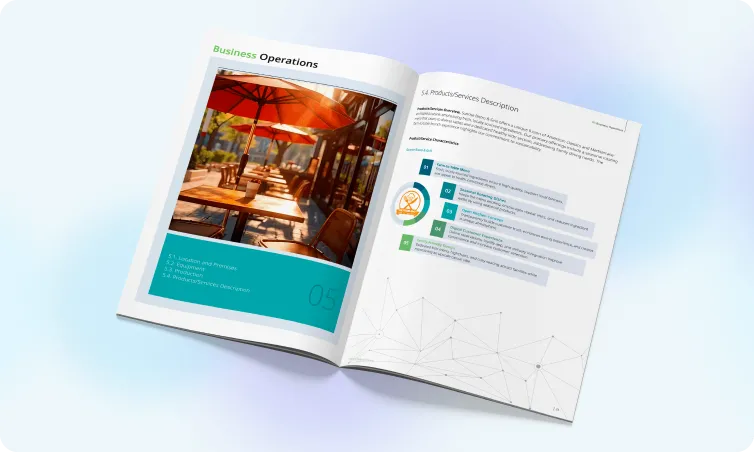
When leadership decisions are data-driven, emotion becomes strategy, and the Restaurant evolves from reactive to proactive management.
Compliance isn’t bureaucracy; it’s business continuity. Each Restaurant must treat regulation as a competitive strength. In the Restaurant Operations Plan, list all required permits — business license, health inspection, liquor license, music royalties, and fire clearance — with responsible parties and renewal dates.
Add detailed safety procedures: emergency exits, first-aid kits, equipment maintenance, and reporting channels. Conduct quarterly drills. Outline insurance coverage — property, liability, workers’ compensation, and business interruption.
Crisis management deserves its own protocol. Whether it’s a power outage or social-media incident, the Restaurant should know who speaks, who acts, and how. Document escalation ladders and media statements.
The result: a resilient Restaurant whose reputation survives turbulence.
No connection between:
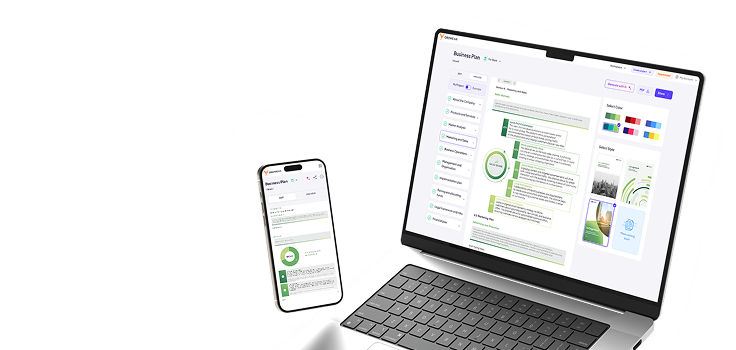
Growexa builds a complete, lender-ready business plan — with financial logic and a professionally formatted PDF
The modern Restaurant operates in an ecosystem of social expectations. The Operations Plan should embed sustainability into daily operations, not treat it as marketing. Specify sourcing policies — local suppliers, seasonal menus, ethical seafood, fair-trade coffee. Track metrics like percentage of local produce or waste diverted from landfill. Introduce energy-efficiency protocols: LED lighting, smart refrigeration, low-flow dishwashing. Over time, operational sustainability reduces both cost and carbon. Community integration strengthens brand equity. The Restaurant that supports neighborhood events or partners with local farms becomes a social anchor. The Operations Plan can outline outreach goals and budget allocations.
Ethical operations are not a trend; they’re an investment in resilience and reputation.
Every contemporary Restaurant runs partly on code. The Operations Plan must define its digital nervous system. List all core technologies — POS, reservation apps, HR and payroll software, accounting platforms, and digital inventory management. Define responsibilities for updates, cybersecurity, and access rights.
Establish data integration protocols so managers see unified dashboards instead of siloed reports. Technology also drives guest convenience: contactless payment, online ordering, digital gift cards. Including these in the Operations Plan shows awareness of evolving consumer expectations.
When technology is documented, trained, and monitored, it becomes a multiplier rather than a dependency.
The difference between a stable Restaurant and a scalable one is rhythm. Leadership cadence turns best practices into muscle memory.
Set regular meetings: daily pre-shift huddles for communication, weekly leadership reviews for tactical updates, monthly performance sessions for strategic alignment. Include reflection rituals in the Operations Plan — post-service debriefs, quarterly innovation sprints, annual staff surveys. These create a feedback economy inside the Restaurant.
Continuous improvement depends on transparency. Share key metrics with the team. Celebrate milestones, dissect challenges. When data becomes dialogue, engagement rises.
A living Operations Plan evolves as quickly as the market — and that evolution is what keeps a Restaurant alive long after opening night.
For many founders, the long-term goal is not a single venue but a brand ecosystem. The Restaurant Operations Plan must therefore scale without dilution. Define replication frameworks: training manuals, vendor contracts, design templates, and shared purchasing. Centralize bookkeeping and marketing but decentralize hospitality — allow each Restaurant local flexibility within global standards.
Implement opening playbooks for new sites: timeline from lease signing to launch, procurement checklists, and pre-opening training modules.
A scalable Restaurant is not one that grows fast, but one that grows consistently. The Operations Plan is the DNA that ensures every new unit inherits the same operational integrity.
Ultimately, every Restaurant Operations Plan must answer one question: Is the system working? List clear KPIs: revenue per available seat hour (RevPASH), gross margin, labor ratio, guest satisfaction score, health-inspection grade, and employee retention rate. Assign ownership for each metric.
Develop dashboards that track progress weekly and visualize trends monthly. Tie bonuses or recognition to these outcomes. Accountability turns metrics into motivation. Success isn’t perfection — it’s adaptation. The Restaurant that measures learns; the one that ignores data repeats mistakes.
Great food launches a Restaurant; great systems sustain it. The Restaurant Operations Plan is not a static binder — it’s the heartbeat of a living enterprise. It converts artistry into process, unpredictability into control, and daily motion into measurable momentum.
Every thriving Restaurant shares one trait: operational self-awareness. Leaders know what happens, why, and how it connects to profit and guest joy. That awareness comes from documentation, iteration, and discipline — the essence of a true Restaurant Operations Plan.
If you’re designing your own framework, you can start with a structured template or build one in Growexa, aligning every checklist, cost model, and service ritual into a single, intelligent system. The right Restaurant Operations Plan doesn’t stifle creativity; it protects it — ensuring your passion survives the pressure of scale.
A strong Restaurant Operations Plan must cover three layers: structure, rhythm, and measurement.
When these three layers connect, the Restaurant transforms from a reactive organization into a predictable, scalable enterprise.
The Operations Plan is not a one-time manual — it’s a dynamic management tool.
After opening, the first update should occur within 90 days, once real operating data replaces theoretical projections. Then, each Restaurant should review the plan quarterly in year one and at least biannually thereafter.
Whenever the Restaurant expands, adds delivery channels, or revises menus, the Operations Plan must evolve accordingly. Static documents create operational drag; adaptive plans create resilience.
The same three breakdowns appear across the industry:
A disciplined Restaurant Operations Plan prevents all three. It centralizes decision logic, distributes accountability, and preserves the founder’s intent as the business scales. In other words, it turns the Restaurant from personality-driven to process-driven — without losing soul.